Zojoji Temple guide: history, hidden spots and events nearby
Founded in 1393, Zojoji is a head temple of the Jodo sect of Buddhism and the family temple of the Tokugawa shoguns. Six shoguns are buried here, and a single precinct holds the 1622 Sangedatsumon gate, a 15-ton bell cast in Edo and a main hall with Tokyo Tower rising behind it. The national-treasure mausoleum lost in the war can still be seen, as a model that came back from London.
Kyochika's tips
- Our recommendation: start in the Treasure Gallery under the main hall. See the 4 × 6 m model of the 2nd shogun Hidetada's mausoleum, destroyed in the war, and then walk the grounds with a sense of how vast Edo-period Zojoji was.
- From the front of the main hall, look back: Tokyo Tower rises beyond the vermilion Sangedatsumon gate. The great bell is struck every day at 5:30 and 17:00, so arrive a little before 5 pm and you may take home the same time-bell sound Edo people heard.
- The shoguns' mausoleum is closed until December 1, 2026. If you want to see it too, come from December and use the ¥1,000 combined ticket with the Treasure Gallery.
Events near Zojoji Temple now and coming up
Within 1.5 km, nearest first. Checked against official pages.
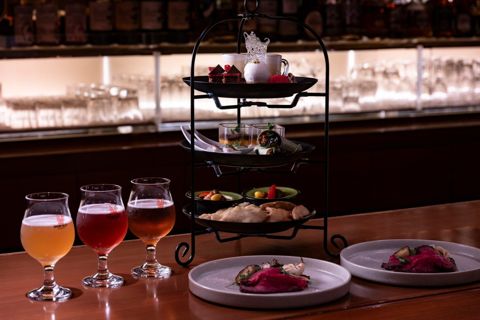 Seasonal Afternoon Beer with Spring Valley Brewery (Tokyo Prince Hotel)Nov 2 (Mon) – Jan 30 (Sat) · Tokyo Prince Hotel 1F Main Bar Windsor · 0.1 km
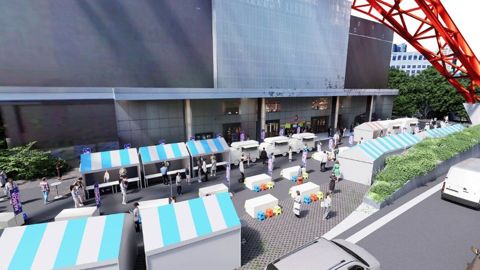 KOREAN Culture Fes. in TOKYO TOWER 2026Oct 31 (Sat) – Nov 3 (Tue, holiday) · Tokyo Tower, 1F front entrance · 0.3 km · free
 TOKYO TOWER Christmas Market 2026Nov 13 (Fri) – Dec 25 (Fri) · Tokyo Tower front entrance plaza (special venue) · 0.3 km · free
 Minato City Hall Lobby Concert No. 5 (Koto & Shamisen)Oct 29 (Thu) · Minato City Hall main building, 1F lobby · 0.3 km · free
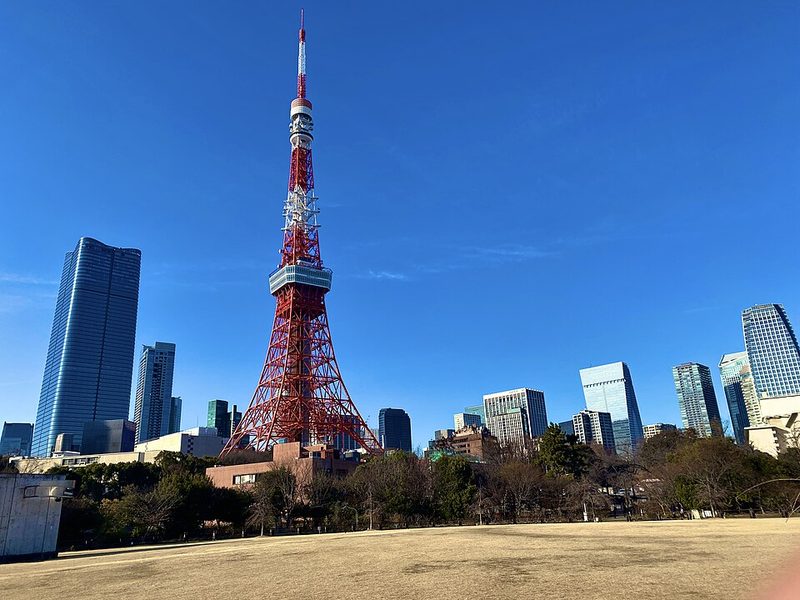 Orange Ribbon Day @ Minato 2026Nov 1 (Sun) · Shiba Park (Minato City) · 0.3 km
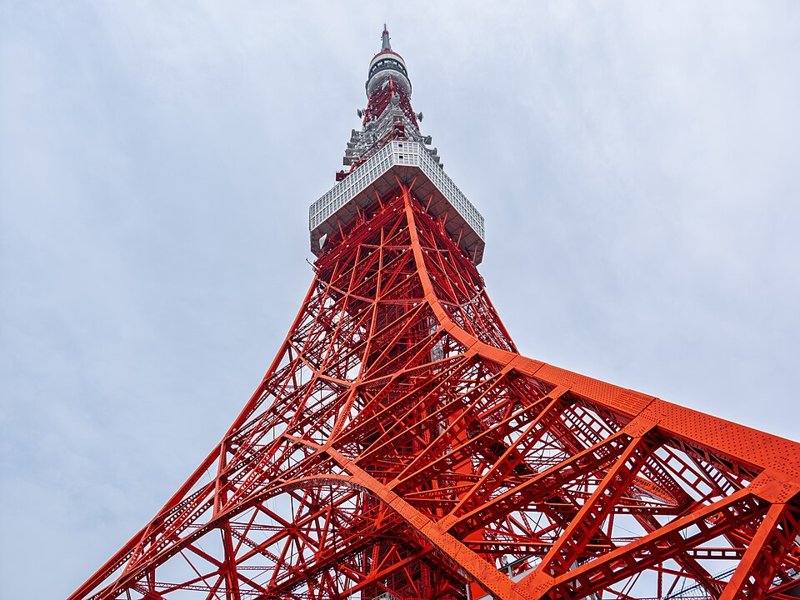 Tokyo Tower City Light Fantasia – Halloween Party 2026Sep 11 (Fri) – Oct 31 (Sat) · Tokyo Tower Main Deck 2F · 0.3 km
- Tokyo Christmas Market 2026 in Shiba ParkDec 4 (Fri) – Dec 25 (Fri) · Shiba Park Area 4 (Onarimon Station Plaza) · 0.5 km
- Yamanashi Nouveau Matsuri 2026 Tokyo (Shiba Park)Nov 3 (Tue, holiday) · Shiba Park Area 4, Multipurpose Ground · 0.5 km · free
 Minato City Kids' Club Festival 2026Nov 14 (Sat) · Shinmei Ikiiki Plaza, 6F gym · 0.7 km
 Hamamatsucho Kids Lab #2 (nerikiri sweets & Kyu-Shiba-rikyu Garden exploration)Nov 1 (Sun) – Nov 3 (Tue, holiday) · World Trade Center Building South Tower 5F / Kyu-Shiba-rikyu Garden · 0.8 km
 Azabudai Hills Christmas Market 2026Nov 21 (Sat) – Dec 25 (Fri) · Azabudai Hills Central Square · 0.8 km · free
 You're a Shark Scientist Too! Shark Secrets from Their Shapes (October, Minato Science Museum)Oct 31 (Sat) · Minato City Science Museum · 0.9 km
Visiting info
| Main hall (Daiden) | Open for worship 6:00–17:30 |
|---|---|
| Ankokuden hall | 9:00–17:00. Goshuin stamps and amulets are available here during the same hours |
| Treasure Gallery | Weekdays 11:00–15:00, weekends and holidays 10:00–16:00. Closed Tuesdays (open if a holiday). Adults ¥700, junior high and high school students ¥300, elementary school age and under free |
| Tokugawa Shogun Family Mausoleum | Weekdays 11:00–15:00 (last entry 14:45), weekends and holidays 10:00–16:00 (last entry 15:45). Closed Tuesdays (open if a holiday). Adults ¥500, high school students and under free. Combined ticket with the Treasure Gallery: adults ¥1,000. Closed October 27 – December 1, 2026 while the ticket booth is rebuilt (the Treasure Gallery stays open) |
| Address | 4-7-35 Shibakoen, Minato-ku, Tokyo |
| Getting there | 3 min walk from Onarimon or Shibakoen Station (Toei Mita Line), 5 min from Daimon Station (Toei Asakusa and Oedo lines), 7 min from Akabanebashi Station (Oedo Line), 10 min from Hamamatsucho Station (JR, Tokyo Monorail) or Kamiyacho Station (Hibiya Line). The temple asks visitors to use public transport |
Checked on 2026-10-27 against the official pages. Hours and fees can change; please check before you go.
Sources: Zojoji: FAQ (Japanese) / Zojoji: Treasure Gallery (Japanese) / Zojoji: Tokugawa Shogun Family Mausoleum (Japanese) / Zojoji: Access (Japanese)
Why is Zojoji in Shiba?
Zojoji was founded in 1393 by Yuyo Shoso, the 8th patriarch of the Jodo sect, at Kaizuka in Toshima District, Musashi Province (around today's Hirakawacho and Kojimachi in Chiyoda). According to the National Diet Library, it began as Komyo-ji, a Shingon temple founded by Shuei, a disciple of Kukai, and Shoso converted it to the Jodo sect and renamed it Zojoji. Its mountain name is Sanenzan.
In 1590 Tokugawa Ieyasu, newly arrived in the Kanto region, is said to have chosen Zojoji as his family temple out of devotion to its abbot, Genyo Zonno. In 1598, as Edo Castle expanded, the temple moved to its present site in Shiba, and the Sangedatsumon gate, the sutra repository and the main hall were built. When Ieyasu died in 1616 at the age of 75, his funeral was held here as he had wished. At its height the temple had grounds of 250,000 tsubo, 48 subtemples and about 3,000 monks, and it was the center of the Jodo sect in eastern Japan.
In the early Meiji era its land was confiscated, and fires in 1873 (arson) and 1909 destroyed the main hall. Part of the huge precinct became Shiba Park, one of Japan's first public parks. The 1945 air raids burned the mausoleums and many rebuilt halls; the current main hall took four years from 1971 and cost 3.5 billion yen. Today the grounds cover about 16,000 tsubo, roughly one-fifteenth of their peak size.
Sources: Zojoji: History (Japanese) / Zojoji: Chronology (Japanese) / National Diet Library: Zojo-ji Temple / Shiba Park / Japan Tourism Agency multilingual commentary: History of Zojoji Temple / Sumitomo Mitsui Trust Realty: Town Archives, Shiba (Japanese)
The lost national-treasure mausoleum that came back from London
The Taitokuin Mausoleum of the 2nd shogun Hidetada was built in 1632 by the 3rd shogun Iemitsu. It was designated a National Treasure in 1930, but burned in the 1945 air raids.
In the late Meiji era, though, a 1:10 model had been made under the supervision of professors from the Tokyo School of Fine Arts (now Tokyo University of the Arts), with sculptor Takamura Koun overseeing the carving. Tokyo City commissioned it for the 1910 Japan-British Exhibition in London, and it was presented to King George V. After being shown at Kew Gardens it entered the British Royal Collection, then returned to Japan in April 2014. Restored, it has been on display in the Treasure Gallery since 2015: main sanctuary, connecting hall, worship hall, middle gate and openwork fence, 4 × 6 m in all.
Sources: Zojoji: Treasure Gallery (Japanese) / Japan Tourism Agency multilingual commentary: Treasures Gallery
How far did the Shiba bell carry?
The great bell was cast in 1673 at Gotenyama in Shinagawa by a founder from Kanda Nabecho, on the orders of the 4th shogun Ietsuna. It took seven attempts, and women of the shogun's inner palace are said to have donated their hairpins. It is 3.3 m tall, weighs about 15 tons and is called the largest bell in eastern Japan.
It is counted with the bells of Kan'eiji in Ueno and Sensoji as one of Edo's Three Great Bells (opinions differ), and a senryu poem asks, "Is that Shiba ringing now, or Ueno, or Asakusa?" The Edo Meisho Zue guidebook says it was called the "One-ri Bell" because you could walk one ri (about 4 km) and still hear it, and it is said to have reached Kisarazu across the bay. It is still struck daily at 5:30 and 17:00, and 108 times on New Year's Eve.
Sources: Nippon Tabi Magazine: Zojoji Great Bell (Japanese) / Japan Tourism Agency multilingual commentary: Bell Tower / Zojoji: Zojoji in numbers (Japanese)
Walk through the gate, lose three afflictions
The Sangedatsumon was first built in 1611, blown down by a storm in 1621 and rebuilt in 1622. Passing through it is said to free you from three afflictions: greed, anger and ignorance. It is 19.5 m wide and 21 m tall, the only building surviving from the temple's early days, and an Important Cultural Property.
It has no Nio guardian statues like most temple gates, reportedly because Jodo Buddhism was meant for ordinary people. The upper floor holds Edo-period statues of Shakyamuni with two bodhisattvas and 16 arhats, normally closed to the public. Conservation work is scheduled from January 2025 to June 2032.
Sources: Japan Tourism Agency multilingual commentary: Sangedatsumon Gate / Zojoji: Guide to the grounds (Japanese) / Zojoji: Zojoji in numbers (Japanese)
Princess Kazunomiya's hundred prayers
Ankokuden enshrines the Kuro-honzon, a hidden Amida Buddha that Ieyasu deeply revered, known for bringing victory. It is shown only on the 15th of January, May and September.
In 1865, when the 14th shogun Iemochi set out on the expedition against Choshu, his wife Princess Kazunomiya made a hundred-visit prayer to the Kuro-honzon for his safety. The couple now rest in the mausoleum on the grounds. The Keitokusai festival on May 10 celebrates her birth, and a memorial service for her is held on October 2.
Sources: Zojoji: Chronology (Japanese) / Zojoji: Guide to the grounds (Japanese) / Zojoji: Annual events (Japanese) / Nippon Tabi Magazine: Zojoji (Japanese)
The shoguns' graves were moved
Most of the temple grounds were once the shoguns' mausoleums. They burned in the air raids of March and May 1945 and were left that way for more than ten years. In summer 1958, under the Cultural Properties Protection Commission, the remains were excavated and studied, cremated at Kirigaya and reburied together at the present site.
Six shoguns lie here — Hidetada, Ienobu, Ietsugu, Ieshige, Ieyoshi and Iemochi — along with five wives, five concubines and others, 38 people in all. The bronze Inukimon gate at the entrance survives from the mausoleum of the 6th shogun Ienobu.
Sources: Zojoji: Tokugawa Shogun Family Mausoleum (Japanese) / Zojoji: Guide to the grounds (Japanese) / Japan Tourism Agency multilingual commentary: Tokugawa Shogun Family Mausoleum
Getting there by taxi and bus
🚌 Bus
- Shibaen-bashi (芝園橋), Shibakoen Station bus platforms 1 and 2 Toei Bus: To06 for Shimbashi Station (platform 1) or Shibuya Station (platform 2) Walking time not given in the source
- Kanasugi-bashi (金杉橋), Shibakoen Station bus platforms 3 and 4 Toei Bus: To06 for Shimbashi Station (platform 3) or Shibuya Station (platform 4) Walking time not given in the source
Zojoji has no parking lot and asks visitors to use public transport. For bus or taxi questions you can call the temple (+81-3-3432-1431, 9:00-17:00). Toei Bus charges a flat fare of 210 yen for adults and 110 yen for children. A taxi stand location could not be confirmed. You can also book a taxi by app: GO works in English with foreign phone numbers and cards, Uber books licensed taxis in Tokyo, and since early 2026 visitors can call S.RIDE taxis through DiDi in the 23 wards and nearby.
Sources: Toei Bus platform guide: Shibakoen (Japanese) / Zojoji, GLT (Japanese) / GO TOKYO: Buses (Japanese) / Taxi app comparison, car-me (Japanese) / Japan Taxi Apps for Tourists (Oct 12, 2026)
Our suggested route
- Start at the Daimon gate From the Daimon gate, right by Daimon Station, it is 108 ken (about 195 m) to the Sangedatsumon, a distance said to echo the 108 worldly desires. About 3 minutes on foot.
- Sangedatsumon gate The vermilion gate dating from 1622. Conservation work is scheduled until June 2032, so how much you can see depends on the work.
- Bell tower On the right after the gate. See the 15-ton bell and its dragon head.
- Main hall (Daiden) 48 ken (about 86 m) from the gate, after Amida's 48 vows. Climb 18 and then 25 steps, 43 in all. The worship hall is on the 2nd floor. Look back for the gate and Tokyo Tower.
- Treasure Gallery In the basement of the main hall. See the Taitokuin Mausoleum model. Allow about 30 minutes.
- Ankokuden, the Jizo statues and Nishimuki Kannon Get a goshuin at Ankokuden, then the rows of Jizo and the Kamakura-period Nishimuki Kannon (No. 21 of Edo's 33 Kannon pilgrimage).
- Tokugawa Shogun Family Mausoleum From December 2. See the bronze Inukimon gate at the entrance (visitors normally use the small gate on its left), then the graves of six shoguns.
We found no source giving a walking time. Our estimate: about 1 hour including the Treasure Gallery, 1.5 hours if you add the mausoleum. The Treasure Gallery and mausoleum are closed on Tuesdays.
Sources: Zojoji: Guide to the grounds (Japanese) / Zojoji: Zojoji in numbers (Japanese) / Zojoji: Treasure Gallery (Japanese) / Zojoji: Tokugawa Shogun Family Mausoleum (Japanese)
What to see by season
| January 1–3 | New Year visits begin with the midnight Shushoe service. New Year prayers at Ankokuden |
|---|---|
| January 15, May 15, September 15 | The hidden Kuro-honzon is shown, with a prayer service |
| February 3 | Setsubun bean-throwing ceremony |
| April 2–8 | Gyoki memorial for Honen (2–7) and the Fureai Fair market on the grounds (2–8). Sweet amacha tea for the Buddha's birthday on the 8th |
| July 7 | Zojoji Tanabata festival |
| Autumn | Koshoden ceiling paintings shown during the Minato Citizens' Festival; Shichi-Go-San prayers for children in October and November |
| November 15 | Juya service with a huge rosary passed hand to hand |
| December 31 | The bell is rung 108 times on New Year's Eve |
Sources: Zojoji: Annual events (Japanese) / Zojoji: Koshoden ceiling paintings (Japanese)
Zojoji or Kan'eiji?
Zojoji and Kan'eiji in Ueno were both family temples of the Tokugawa shoguns, and six shoguns are buried at each. That puts 12 of the 15 shoguns in these two temples. Zojoji belongs to the Jodo sect and was its center in eastern Japan, second only to Chion-in in Kyoto.
Their bells, together with Sensoji's, are known as Edo's Three Great Bells (opinions differ).
Our take: to see an Edo temple and modern Tokyo in a single view, Zojoji with Tokyo Tower beside it. If you want to imagine how splendid the lost mausoleums were, Zojoji with its model is the one for you.
Sources: National Diet Library: Zojo-ji Temple / Shiba Park / Japan Tourism Agency multilingual commentary: History of Zojoji Temple / Nippon Tabi Magazine: Zojoji Great Bell (Japanese)
Nearby: combine with
- Tokyo Tower Zojoji sits right by Shiba Park and Tokyo Tower. Walk straight over to the tower you see from the grounds.
- Shiba Park, Shiba Toshogu and Shiba Maruyama Kofun Zojoji's own Model Course A: through Shiba Park to the shrine and the ancient burial mound, ending at Tokyo Tower.
- Shiba Daijingu On the temple's Model Course C. A shrine said to date from 1005, shown together with Zojoji in Hiroshige's prints.
- Kyu-Shiba-rikyu and Hama-rikyu Course C continues to Kyu-Shiba-rikyu Gardens, Takeshiba and Hinode Pier. Go on to Hama-rikyu and you connect the Grant Pine with the Enryokan site: General Grant in 1879.
Sources: GO TOKYO: Zojoji (Japanese) / Zojoji: Sightseeing model courses (Japanese) / Sumitomo Mitsui Trust Realty: Town Archives, Shiba (Japanese) / Nippon Tabi Magazine: Zojoji in ukiyo-e by Hiroshige and Toyokuni (Japanese)
Little-known spots
- The bell's dragon head
- The great bell hangs from a large bronze dragon head, visible if you look in from the west side of the bell tower. Many bronze objects were melted down during the war, but this bell survived because it was too big and heavy to move.
- Who owns the Daimon gate?
- The Daimon gave the nearby station its name. The gate Ieyasu donated in 1598 was moved after the Great Kanto Earthquake and burned in 1945; the current concrete gate dates from 1937. After the Meiji-era separation of Buddhism and Shinto it came under Tokyo Prefecture, was later left off the prefecture's property records, and was returned to Zojoji free of charge in spring 2016.
- The Grant Pine
- A Himalayan cedar planted in 1879 by former US president Ulysses S. Grant during his visit. That same year Grant met Emperor Meiji at the Enryokan in Hama-rikyu.
- The Me-gumi memorial
- Erected in 1716 for members of the Me-gumi town fire brigade who died fighting fires.
- Thousand Jizo for children
- Offerings of these statues for children's healthy growth began around 1975; there are now about 1,300 lined up. Festivals are held in April and July.
- Koshoden ceiling paintings
- On the ceiling of a 108-tatami hall, 120 Japanese-style painters each painted a flower of the four seasons. The work began in 1997 and took about three years. It is planned to be shown each autumn during the Minato Citizens' Festival.
Sources: Zojoji: Guide to the grounds (Japanese) / Zojoji: Zojoji in numbers (Japanese) / Japan Tourism Agency multilingual commentary: Bell Tower / Nippon Tabi Magazine: Zojoji in ukiyo-e by Hiroshige and Toyokuni (Japanese) / Zojoji: Koshoden ceiling paintings (Japanese) / Japan Center for Asian Historical Records: Enryokan
FAQ
What are the opening hours of Zojoji Temple?
Open for worship 6:00–17:30
How do I get to Zojoji Temple?
3 min walk from Onarimon or Shibakoen Station (Toei Mita Line), 5 min from Daimon Station (Toei Asakusa and Oedo lines), 7 min from Akabanebashi Station (Oedo Line), 10 min from Hamamatsucho Station (JR, Tokyo Monorail) or Kamiyacho Station (Hibiya Line). The temple asks visitors to use public transport
Why is Zojoji in Shiba?
Zojoji was founded in 1393 by Yuyo Shoso, the 8th patriarch of the Jodo sect, at Kaizuka in Toshima District, Musashi Province (around today's Hirakawacho and Kojimachi in Chiyoda). According to the National Diet Library, it began as Komyo-ji, a Shingon temple founded by Shuei, a disciple of Kukai, and Shoso converted it to the Jodo sect and renamed it Zojoji. Its mountain name is Sanenzan.
What are some little-known spots in Zojoji Temple?
The bell's dragon head, Who owns the Daimon gate?, The Grant Pine, The Me-gumi memorial, Thousand Jizo for children, Koshoden ceiling paintings.