Temples in Kyoto · Sagano, Ukyo Ward, Kyoto
Jojakko-ji Temple
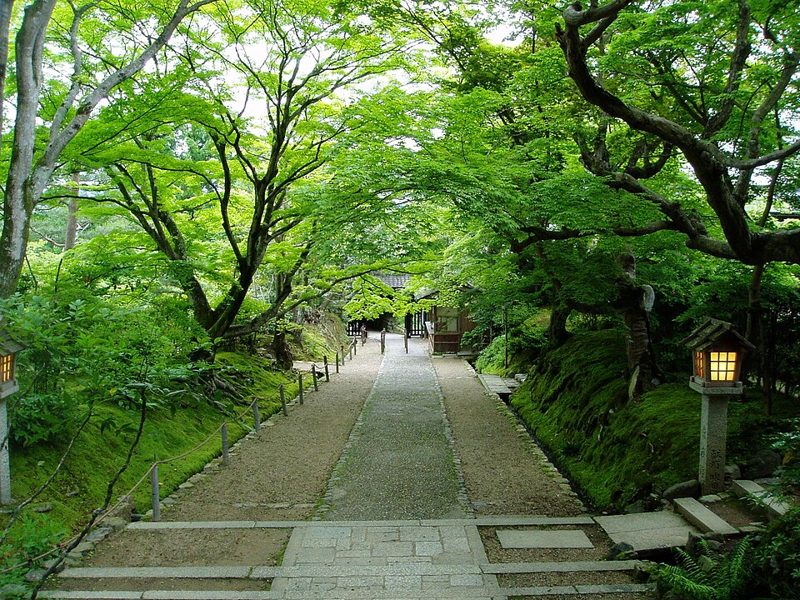
In 1596, the Buddhist priest Nisshin established Jojakko-ji on Mount Ogura after refusing to participate in a religious ceremony associated with Toyotomi Hideyoshi. Its Niomon gate was transferred from Honkoku-ji in 1616, while its main hall originated as a guest hall at Momoyama Castle. The mountainside is also connected to Fujiwara no Teika, the classical poet whose retreat is traditionally believed to have stood nearby.
Kyochika's take
Kyochika recommends Jojakko-ji to visitors interested in classical Japanese poetry, Buddhist architecture, and the history of Sagano. Its significance lies not only in its buildings but in the relationship between those buildings and Mount Ogura.
For autumn foliage, consider visiting from mid to late November, which the temple identifies as its usual peak. A rewarding approach is to begin with the history of Nisshin at the entrance, then follow the permitted paths toward the Niomon gate, pagoda, and literary memorials.
The temple occupies a hillside with numerous steps, so visitors with limited mobility should ask reception which sections are accessible before entering.
Hours, admission and access
- Hours
- 9:00 AM–5:00 PM (last admission 4:30 PM)
- Closed
- Open year-round; no regular closing days.
- Admission
- 600 yen, according to the temple's current official website.
- Access
- 12 minutes on foot from Saga Shogakko-mae bus stop; 15 minutes from JR Saga-Arashiyama Station; 20 minutes from Keifuku Arashiyama Station; 30 minutes from Hankyu Arashiyama Station.
- Nearest station
- JR Saga-Arashiyama Station
Checked against official information on 2026-10-28. Details change, so check the official website before you go.
Sources: Jojakko-ji Official Website, Jojakko-ji Official History and Grounds, Jojakko-ji Official FAQ, Jojakko-ji Official Access
 Pochikichi's story corner
Why did a Buddhist priest defy Toyotomi Hideyoshi and retreat to Mount Ogura?
Jojakko-ji was founded by Nisshin, a priest whose career began unusually early. Born in Kyoto in 1561, he was the son of the aristocrat Hirohashi Kunimitsu. As a child, he studied under Nissei, the fifteenth head priest of Honkoku-ji, an important Nichiren Buddhist temple. At the age of eighteen, Nisshin succeeded his teacher as the sixteenth head priest. His religious scholarship and literary interests brought him supporters among Kyoto townspeople and military leaders, including Kato Kiyomasa, Miyoshi Yoshifusa, and Koide Hidemasa. These connections help explain why his later decision to leave Honkoku-ji was significant: he was an established religious leader, not an unknown hermit.
The decisive dispute occurred in 1595. Toyotomi Hideyoshi had established a great Buddha at Hoko-ji, and controversy developed among Nichiren institutions over participation in an associated Buddhist ceremony. Nisshin refused to attend, adhering to the religious regulations he believed his sect required him to observe. His refusal brought him into conflict with the political expectations surrounding Hideyoshi. Nisshin subsequently left Honkoku-ji and founded Jojakko-ji on Mount Ogura in 1596. According to the temple's account, land was provided by the Suminokura family. Nisshin was thirty-six years old at the time and died at the temple in 1617.
Mount Ogura suited Nisshin for reasons beyond its separation from Kyoto's political center. The area already possessed a rich literary reputation. Fujiwara no Toshinari, Fujiwara no Teika, and the priest-poet Saigyo were among the figures associated with the mountain. Nisshin himself was accomplished in poetry, making this landscape a meaningful place for his new religious community. The buildings gradually established the retreat's material identity. With assistance from Kobayakawa Hideaki, a guest hall from Momoyama Castle was relocated and became the main hall. In 1616, the southern gate of Honkoku-ji's guest hall was transferred to Jojakko-ji and became its Niomon gate. The gate had originally been built during the Jowa era, between 1345 and 1349, making it the oldest structure in the temple grounds.
The gate's guardian statues are traditionally attributed to the sculptor Unkei, although the temple presents this as an attribution rather than a documented commission. Other religious structures and memorials accumulated on the slope over subsequent generations. The Tahoto pagoda is connected with devotion to the Lotus Sutra, while memorials to poets preserve the literary identity of Mount Ogura. Jojakko-ji's history therefore joins religious independence, elite patronage, reused architecture, and classical poetry. So when you visit, look for the old thatched roof of the Niomon gate, the architectural character of the main hall, and the memorials that connect the hillside to Kyoto's literary past.
Sources: Jojakko-ji Temple, Official History and Grounds Guide, Jojakko-ji Temple, Official Website
Long ago, around hereWhat occupied Mount Ogura before Jojakko-ji existed?
Approximately 1,200 years ago, Sagano belonged to a landscape favored by members of the imperial family, aristocrats, and poets. During the Heian period, detached palaces and mountain villas were established around Mount Ogura, Kameyama, and Arashiyama. The temple's official history identifies residences associated with Prince Kaneakira and Fujiwara no Teika, alongside locations connected with the retired Emperor Go-Saga and other members of court society. Poetry helped establish the mountain's identity: its deer, autumn leaves, and changing seasons supplied imagery for classical verse. A location north of the present Niomon gate is traditionally associated with Teika's retreat, Shigure-tei, although the precise original site remains uncertain.
About 400 years ago, the mountain had acquired a new institutional purpose. Nisshin's religious retreat had developed into Jojakko-ji, supported by patrons who helped supply buildings and land. Its transferred main hall and Niomon gate show how structures originating elsewhere could be integrated into a new temple. By the Meiji period, approximately 150 years ago, the temple had also become a repository of historical memorials. Its official account records that a tombstone associated with Prince Kaneakira remained in the cemetery north of the pagoda until around that period. The present landscape consequently preserves several overlapping histories: aristocratic retreats, Nichiren Buddhist worship, literary commemoration, and later conservation.
Hidden highlights
- Niomon Gate
- Originally the southern gate of Honkoku-ji's guest hall, this structure was transferred in 1616. Its thatched roof is particularly distinctive, and the guardian statues are traditionally attributed to Unkei.
- Guardian Statues and Straw Sandals
- The Niomon guardian figures stand approximately 210 centimeters tall. The temple explains that worshippers have offered straw sandals while praying for relief from illnesses affecting the eyes, back, and legs.
- Shigure-tei Memorial
- The memorial recalls the mountain retreat traditionally associated with Fujiwara no Teika. The temple acknowledges differing theories about its original location, making the site a reminder that literary geography often preserves traditions rather than archaeological certainty.
- Kinoshita Choshoshi Memorial
- A stone monument west of the pagoda commemorates the poet Kinoshita Choshoshi. The temple connects him with Nisshin, whose interests extended beyond Buddhist scholarship to classical verse.
- Main Hall
- The building originated as a guest hall at Momoyama Castle and was transferred with support from Kobayakawa Hideaki. Its story illustrates the movement of significant buildings between military and religious settings.
- Myoken Hall
- The temple preserves a tradition concerning a Myoken Bodhisattva statue discovered after a Hozu River flood. Its worship became connected with the western, or Rooster, direction within Kyoto's network of Myoken devotional sites.
Sources: Jojakko-ji Official Grounds and History
The priest who helped transform river transportation
Jojakko-ji's founder was connected with the commercial history of western Kyoto. In 1606, Suminokura Ryoi undertook improvements to the Oi River to support the transportation of goods from Tanba toward Kyoto. The temple records that Nisshin assisted this undertaking, drawing on relationships with boatmen associated with his religious supporters.
According to the temple's historical account, boatmen from Bizen helped operate the route and taught navigation techniques to local communities. Their work contributed to the river transport tradition associated with the Hozu River. This episode offers an unexpected perspective on Nisshin: although he had withdrawn from a major religious institution, he remained connected to the economic and practical development of the region.
Sources: Jojakko-ji Temple, Founder Nisshin
The imperial musical instrument that cannot be seen
Among Jojakko-ji's treasures is a kurumagoto, a small portable stringed instrument. According to the temple, Emperor Takakura presented it to the court lady Kogo no Tsubone. Kobayakawa Hideaki subsequently donated the instrument to Jojakko-ji.
The instrument is not on public display. Its documented place in the temple's collection nevertheless connects the site with a different world from that of Nisshin's religious retreat: the aristocratic culture of imperial music, courtly relationships, and objects passed between influential patrons.
Sources: Jojakko-ji Official History
How to walk it
- Main Entrance — Begin by reading the site's historical information and orienting yourself toward the hillside paths. (5 min)
- Niomon Gate — Examine the thatched roof, old timber structure, and guardian statues. (8 min)
- Main Hall — Consider the building's connection with Momoyama Castle and the establishment of Nisshin's community. (8 min)
- Tahoto Pagoda — Follow the permitted hillside route and examine the pagoda's place within the temple's Lotus Sutra tradition. (10 min)
- Literary Memorials — Look for memorials associated with Fujiwara no Teika and Kinoshita Choshoshi. (10 min)
- Return Descent — Retrace the permitted path while viewing the gate and surrounding trees from the opposite direction. (9 min)
The suggested 50-minute visit and all individual stop times are Kyochika estimates, not official walking times. The temple has numerous steps, so allow additional time according to mobility and seasonal conditions. Follow current visitor signs and access restrictions.
Sources: Jojakko-ji Official Grounds Guide, Jojakko-ji Official FAQ
Through the seasons
- Spring
- Look for seasonal flowering and fresh growth. The temple publishes seasonal notices, including updates on cherry blossoms.
- Summer
- Explore the contrast between the temple's wooden buildings and the surrounding foliage, while preparing for warm weather and the hillside steps.
- From the second week of November
- The temple says autumn coloration normally begins around this time.
- Mid to late November
- The official FAQ identifies this as the usual peak period for autumn foliage.
- First week of December
- The temple notes that some autumn color may still be visible, depending on conditions.
- Winter
- Focus on the Niomon gate, main hall, pagoda, and literary memorials as architectural and historical features independent of foliage.
Getting there by taxi or bus
- Taxi
- Ask for Jojakko-ji Temple in Sagano, Ukyo Ward. The temple confirms parking for five private cars, while large buses cannot enter its access area. Taxi fares and journey times were not verified.
- Bus
- Saga Shogakko-mae (嵯峨小学校前), approximately 12 minutes on foot. The temple identifies Kyoto City Bus service but does not specify a route number in its FAQ.
- Other
- JR Saga-Arashiyama Station: approximately 15 minutes on foot. Keifuku Arashiyama Station: approximately 20 minutes. Hankyu Arashiyama Station: approximately 30 minutes.
Sources: Jojakko-ji Official FAQ, Jojakko-ji Official Access
Pair it with
- Nison-in Temple — Another historic temple identified by Jojakko-ji as a nearby destination; combine the visit to explore the religious landscape of Mount Ogura.
- Rakushisha — A nearby destination identified in the temple's official FAQ; it complements the literary associations of Sagano.
- Arashiyama Bamboo Grove — A nearby attraction listed by the temple; contrast its bamboo landscape with Mount Ogura's temple grounds.
Good to know before you go
- Ordinary admission does not require advance reservations.
- The temple has no regular closing days.
- Tripods and monopods may not be brought onto the grounds. Reception does not store them.
- The official FAQ states that nighttime visits and illumination were not offered as of its September 1, 2022 notice; no newer arrangement was independently confirmed.
- Pets must remain in carriers or be held. Large dogs and animals walking on the ground are not permitted.
- Wheelchair visitors should inform reception. The many steps restrict the accessible area.
- Goshuin are available as prepared paper sheets rather than being written directly into visitors' books.
- The temple offers an English-language grounds guide on its official website.
- The kurumagoto associated with Emperor Takakura and Kogo no Tsubone is not publicly displayed.
- The official material reviewed did not confirm credit-card or electronic-payment acceptance.
- Check current on-site notices before photographing interiors or areas used for worship.
Next stop: book for later today PR
Tickets and experiences in Kyoto you can book on Klook. Filter by “Today” to see what is still open.
Kimono rental in Kyoto→Tea ceremony experiences in Kyoto→Kyoto one-day sightseeing tours→All things to do in Kyoto on Klook →Compare on GetYourGuide: Kimono rental in Kyoto · Tea ceremony experiences in Kyoto · Kyoto one-day sightseeing tours
Ad: Klook and GetYourGuide affiliate links.
🍜 Where to eat after
Restaurants near here on Google Maps→Many restaurants in Kyoto take reservations, and some are cash only. Check the restaurant page before you go.
Events nearby
Festival & seasonal event
Arashiyama Tsukitouro: Bamboo Grove Light-up
Arashiyama Bamboo Grove Path (Arashiyama Sta.)
Sep 30 (Wed) – Nov 8 (Sun) 18:00 – 21:00
A lantern-lit night walk along about 1 km of paths, including the famous bamboo grove. Every date sold out last year. Last entry 8:40 PM; open daily, canceled in stormy weather.
Details →Festival & seasonal event
Autumn Special Opening 2026 at Hogonin Temple
Hogonin Temple (Arashiyama Sta.)
Oct 3 (Sat) – Dec 6 (Sun) 09:00 – 17:00
Explore the Shishiku Garden, which incorporates the Arashiyama mountains into its scenery, and wall paintings by artist Noriko Tamura. Last admission to the garden is 4:45 PM; the main hall is open until 4:30 PM.
Details →Art exhibition
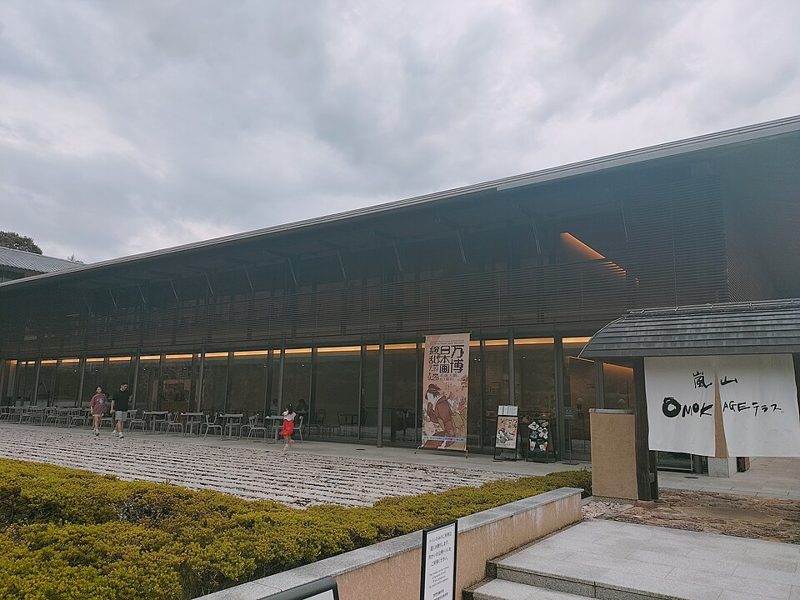
Discover Kyoto Through Art — See More, Enjoy More at Saga Arashiyama Museum of Arts and Culture
Saga Arashiyama Museum of Arts and Culture (Arashiyama Sta.)
Oct 3 (Sat) – Feb 28 (Sun) 10:00 – 17:00
Explore artworks depicting Kyoto's seasonal traditions and culture. Displays change between the first and second exhibition periods, featuring subjects such as geiko and maiko, Kyoto vegetables, and traditional Japanese confectionery wrappers.
Details →Art exhibition
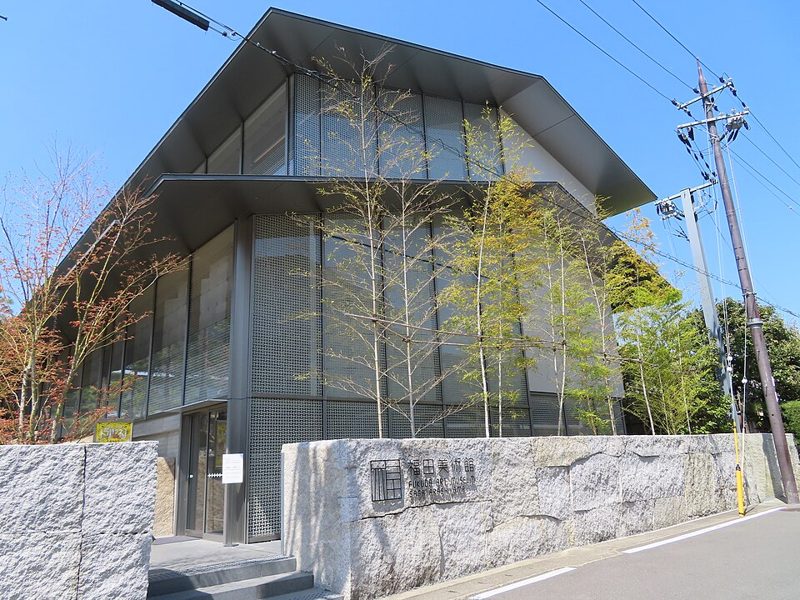
Forms of Love — The Rediscovered Erotic Scroll Chigo Zoshi at Fukuda Art Museum
Fukuda Art Museum (Arashiyama Sta.)
Sep 19 (Sat) – Jan 17 (Sun) 10:00 – 17:00
An exhibition of Japanese art highlighting the erotic illustrated scroll Chigo Zoshi. Visitors under 18 are not permitted. Some works will change between the first and second exhibition periods.
Details →Festival & seasonal event
Sagano Scenic Railway Light Fantasy Train (Autumn Foliage Light-up)
Sagano Scenic Railway (Torokko Saga to Torokko Kameoka) (Saga-Arashiyama Sta.)
Oct 24 (Sat) – Dec 29 (Tue) 16:30 – 19:28
Autumn leaves and mountains along the Hozu Gorge are lit after dark for views from the train windows. The current cars retire on December 29, so this is the last season to ride them. Lights on from the 4:30 PM departure from Torokko Kameoka.
Details →
Tips from visitors
Been here? Leave a short tip for the next traveler — in any language. No name, no sign-up.
Thank you! We check every tip by hand and post it within a day or two.
How we post tips: we read every one before it goes up. We remove swear words, insults, ads, links and anything that could identify a person. Tips are shown in the language they were written in, with a translate link. Kyochika never writes or pays for tips, and there are no star ratings.
FAQ
- What is Jojakko-ji Temple?
- In 1596, the Buddhist priest Nisshin established Jojakko-ji on Mount Ogura after refusing to participate in a religious ceremony associated with Toyotomi Hideyoshi. Its Niomon gate was transferred from Honkoku-ji in 1616, while its main hall originated as a guest hall at Momoyama Castle. The mountainside is also connected to Fujiwara no Teika, the classical poet whose retreat is traditionally believed to have stood nearby.
- Hours at Jojakko-ji Temple?
- 9:00 AM–5:00 PM (last admission 4:30 PM)
- Closed at Jojakko-ji Temple?
- Open year-round; no regular closing days.
- Admission at Jojakko-ji Temple?
- 600 yen, according to the temple's current official website.
- Access at Jojakko-ji Temple?
- 12 minutes on foot from Saga Shogakko-mae bus stop; 15 minutes from JR Saga-Arashiyama Station; 20 minutes from Keifuku Arashiyama Station; 30 minutes from Hankyu Arashiyama Station.
- Do I need a reservation?
- No. Jojakko-ji's official FAQ confirms that ordinary admission requires no advance reservation.
- When is the best time for autumn leaves?
- The temple identifies mid to late November as its normal peak, with colors beginning around the second week of November and sometimes remaining into early December.
- Can I visit with a wheelchair?
- Yes, but access is limited. The temple has many steps and asks wheelchair visitors to inform reception.
- Can I take photographs with a tripod?
- No. Both tripods and monopods are prohibited, and the temple does not provide temporary storage for them.