Yoyogi Park guide: history, hidden spots and events nearby
A 54-hectare metropolitan park three minutes from Harajuku Station, its woods joined to the forest of Meiji Jingu. It was an army parade ground, then the US military housing area Washington Heights, then the Olympic Village of the 1964 Tokyo Games, before opening as a park in 1967. It is also where an airplane first flew in Japan.
Kyochika's tips
- Our recommendation: take a break on the lawn before or after shopping in Harajuku and Omotesando. Entry is free and there are no set hours.
- According to the Tokyo Metropolitan Government, the fountain area is being remade into a waterside space with colored lights and mist, due to open in early November 2026. Autumn color usually peaks from mid-November to early December, so this autumn you may be able to see the leaves by day and the new fountain by night on one visit.
- The 1964 Olympic Village lodge was rebuilt as a cafe in April 2026. It opens at 7:00, which makes it a good end point for a morning walk.
Events near Yoyogi Park now and coming up
Within 1.5 km, nearest first. Checked against official pages.
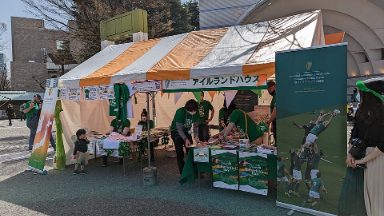 JAZZ FESTIVAL in Yoyogi park 2026Nov 3 (Tue, holiday) · Yoyogi Park, Central Lawn (Chuo Hiroba) · on site · free
- Yoyogi Park Festa: "Moist Potpourri with Herbs"Nov 3 (Tue, holiday) · Yoyogi Park, Herb Garden in Flower Land · 0.1 km
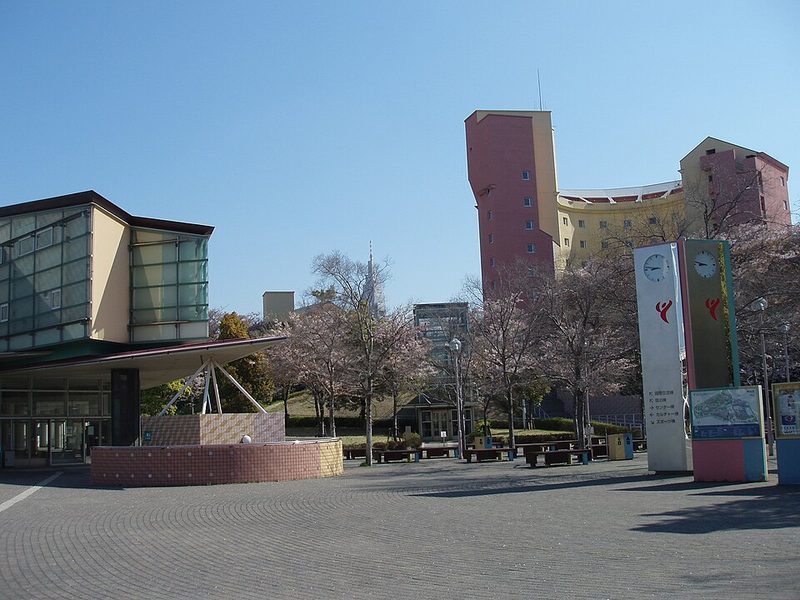 Wan-Fes.with 2026: A Festival to Enjoy with Your DogNov 28 (Sat) – Nov 29 (Sun) · National Olympics Memorial Youth Center · 0.2 km
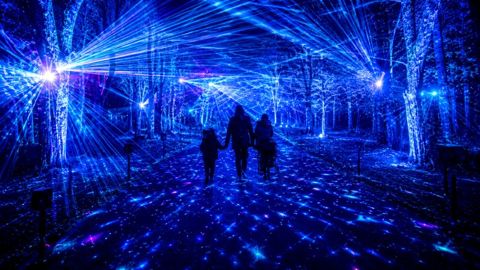 Yoyogi Forest of LightsNov 13 (Fri) – Jan 11 (Mon) · Yoyogi Park (Cycling Course Area) · 0.3 km
- Santa Parade Tokyo 2026 (Yoyogi Park)Nov 15 (Sun) · Yoyogi Park Event Plaza · 0.4 km
- 49th Shibuya Kumin no Hiroba: Furusato Shibuya Festival 2026Nov 7 (Sat) – Nov 8 (Sun) · Yoyogi Park Event Plaza and other areas · 0.4 km · free
- Tokyo Yuki Matsuri SNOWBANK PAY IT FORWARD 2026Oct 31 (Sat) – Nov 1 (Sun) · Yoyogi Park Event Plaza and Outdoor Stage · 0.5 km · free
- Fiesta de España 2026Nov 14 (Sat) – Nov 15 (Sun) · Yoyogi Park Event Plaza · 0.5 km
 J-WAVE presents INSPIRE TOKYO 2026 WINTER -Best Music & Market-Dec 4 (Fri) – Dec 6 (Sun) · Yoyogi Park Event Plaza and LINE CUBE SHIBUYA · 0.7 km · free
 Nyan Nyan Nyanko Collab Cafe: Nyanko HantenOct 2 (Fri) – Nov 1 (Sun) · S-PiCK CAFE (Jingumae 115 Bldg 3F) · 0.9 km
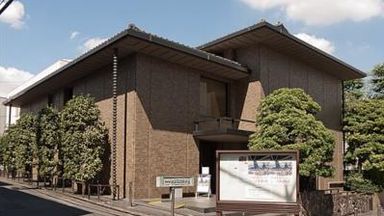 Katsushika Oi’s “Night Scene in the Yoshiwara” and the Lineage of Night ViewsOct 6 (Tue) – Dec 6 (Sun) · Ota Memorial Museum of Art · 1.0 km
 Mamegoma x MILK MILK MILK! Collab CafeOct 16 (Fri) – Nov 12 (Thu) · MILK MILK MILK! (Laforet Harajuku 2F) · 1.0 km
Visiting info
| Hours | Always open (the service center and facilities close over the New Year holidays) |
|---|---|
| Closed | Never (the service center and facilities close over the New Year holidays) |
| Admission | Free (some facilities charge a fee) |
| Cycling course | 9:00–16:30 (rentals until 16:00). Closed Mondays (Tuesday if Monday is a holiday) and December 29 – January 3. Adult bikes ¥300 per hour |
| Address | 2-1 Yoyogikamizono-cho, Shibuya-ku, Tokyo (Yoyogi Park Service Center) |
| Getting there | 3 min walk from Harajuku Station (JR Yamanote Line), Yoyogi-koen Station (Tokyo Metro Chiyoda Line) or Meiji-jingumae <Harajuku> Station (Fukutoshin Line). 6 min from Yoyogi-Hachiman Station (Odakyu Line). Use trains on weekends and holidays, when it gets busy |
| Parking | Open 24 hours, 65 spaces. Cars ¥800 for the first hour, then ¥400 per 30 min (max ¥3,200 for 12 hours). Transit IC cards and credit cards accepted |
Checked on 2026-10-27 against the official pages. Hours and fees can change; please check before you go.
Sources: 東京都公園協会「代々木公園」 (Japanese) / 東京都公園協会「代々木公園 施設について」 (Japanese)
What was Yoyogi Park originally?
In the Edo period the land held secondary residences of daimyo and hatamoto retainers. In 1909 the army built the Yoyogi Parade Ground (about 92 ha) and a garrison prison here. The first parade review was held on October 31, 1917, and until 1944 reviews were held about twice a year, with 30,000 to 40,000 troops on the field.
In 1946, after the war, the US military took over the land and built Washington Heights, a housing area for American families with 827 homes, plus schools, a church, a theater and shops. Japanese people were generally not allowed in. Its full return came in November 1963, and at the 1964 Tokyo Olympics it became the Olympic Village, housing about 5,900 athletes and officials from 94 countries and regions.
After the Games, the area around the women's athletes' lodging became the National Olympics Memorial Youth Center, and the rest opened as Yoyogi Park on October 20, 1967. At 544,711.27 m², it is the fifth largest metropolitan park in Tokyo's 23 wards.
Sources: 東京都公園協会「代々木公園」 (Japanese) / 三井住友トラスト不動産「このまちアーカイブス 渋谷区」 (Japanese) / ニッポン旅マガジン「閲兵式の松」 (Japanese) / FASHIONSNAP「OMOHARAREAL 代々木公園」 (Japanese)
Japan's first powered flight took off here
In December 1910 the army's Yoyogi Parade Ground saw the first engine-powered airplane flights in Japan. On December 19, engineer captain Tokugawa Yoshitoshi flew a French-built Henri Farman, and infantry captain Hino Kumazo flew a German-built Hans Grade.
Tokugawa's flight lasted 4 minutes and covered 3,000 m at a height of 70 m. Inside the park stand a monument marking the Birthplace of Japanese Aviation and statues of the two pilots. This lawn was the starting line for air travel in Japan.
Sources: ニッポン旅マガジン「12月19日 日本初飛行の日」 (Japanese) / ニッポン旅マガジン「代々木公園」(日本初の動力飛行) (Japanese) / 東京都公園協会「代々木公園」 (Japanese)
Is the name Yoyogi from a tree?
The Edo-period guide Edo Meisho Zue describes a huge fir at the Ii clan's secondary residence (now Meiji Jingu) as a tree “guarded and handed down for generations,” and one theory says the place name Yoyogi (“generations of trees”) comes from it. A legend even tells of a samurai who climbed it to watch for foreign ships.
Place-name researcher Kaneko Tsutomu, however, favors the theory that the name comes from the many honey locust trees in the area. Records show Yoyogi village already existed in 1591, while the Ii family received this estate only in 1640, so the fir-tree story is thought to be a later invention.
Sources: nippon.com「山手線駅名ものがたり 代々木」 (Japanese)
The rock 'n' rollers at Harajuku Gate
From 1977 to 1996, about 2.2 km of road from the police box in front of Yoyogi Park to Aoyama-dori was closed to cars on holidays, and young people danced in the street.
After the pedestrian street ended, the Strangers, a group in pompadours and 1950s clothes, kept dancing at the park entrance every weekend. A 2018 LIVE JAPAN article says the group had marked its 25th anniversary the year before.
Sources: LIVE JAPAN「原宿のロックンローラー」 (Japanese)
About 600,000 meals in the Olympic Village
About 600,000 meals are said to have been served in the Olympic Village during the 1964 Games. A FASHIONSNAP article also relays the story that the buffet-style dining used here later spread across Japan.
Sources: FASHIONSNAP「OMOHARAREAL 代々木公園」 (Japanese)
A third of the park is under trees
About a third of Yoyogi Park is covered by trees, and a third of the forest area is open lawn. According to GO TOKYO, together with the neighboring forest of Meiji Jingu it forms a dense block of green. You can walk both forest and lawn in central Tokyo here because the parade ground left a wide, flat piece of land.
Sources: 東京都建設局「代々木公園」資料 (Japanese) / ニッポン旅マガジン「代々木公園」 (Japanese) / GO TOKYO「代々木公園」 (Japanese)
Getting there by taxi and bus
Other ways to get around
- Hachiko Bus (ハチ公バス, Shibuya Ward community bus) 100 yen for adults and children. The routes and stops serving Yoyogi Park could not be confirmed in the sources, so check Shibuya Ward's route map
The confirmed nearest access is by rail: about 3 minutes on foot from JR Harajuku Station (Yamanote Line) or Tokyo Metro Yoyogi-Koen Station (Chiyoda Line). Bus stop and taxi stand locations could not be confirmed, so none are listed. You can also book a taxi by app: GO works in English with foreign phone numbers and cards, Uber books licensed taxis in Tokyo, and since early 2026 visitors can call S.RIDE taxis through DiDi in the 23 wards and nearby.
Sources: Yoyogi Park, GLT (Japanese) / GO TOKYO: Buses (Japanese) / Taxi app comparison, car-me (Japanese) / Japan Taxi Apps for Tourists (Oct 12, 2026)
Our suggested route
- Enter at Harajuku Gate 3 min from Harajuku Station. On weekends rock 'n' roll dancers are sometimes at the entrance.
- Central Plaza The lawn at the heart of the park. Spread out a mat and rest (10–15 min).
- Fountain pond The fountains and water corridor built in 1991, due to reopen in early November 2026 with colored lights and mist. About 30–45 min together with the Central Plaza.
- Bird sanctuary Watch birds from outside the fence (10 min).
- The Parade Review Pine and the aviation monument Find the pine near Panorama Plaza and the Birthplace of Japanese Aviation monument with the statues of Tokugawa and Hino (20 min).
- Olympic Memorial Lodge (Doutor Park Cafe YOYOGI) Coffee in the rebuilt 1964 Olympic Village building (7:00–19:00).
- On to Area B (zelkova avenue, outdoor stage) Heading for Shibuya, pass the event plaza and zelkova avenue toward NHK Hall.
JEEPE suggests 30–45 minutes around the Central Plaza and fountain pond, and 1–2 hours if you add the sports facilities in Area B. Other times and the order are our own estimate.
Sources: JEEPE「代々木公園 散策ガイド」 (Japanese) / 東京都公園協会「代々木公園」 (Japanese) / 東京都「代々木公園Aエリアのリニューアル」(2026年3月26日) (Japanese) / ニッポン旅マガジン「閲兵式の松」 (Japanese) / ニッポン旅マガジン「12月19日 日本初飛行の日」 (Japanese)
What to see by season
| Mid-February – early April | About 650 cherry trees (Somei-yoshino, Kawazu-zakura, Sato-zakura, mountain cherry, Kohigan-zakura, bird cherry and more). Early varieties start in mid-February |
|---|---|
| Spring | Kobushi magnolia, cherry, dogwood, tulip tree and roses |
| Summer | Hydrangeas, crape myrtle and sunflowers |
| Autumn (usually mid-November – early December) | Ginkgo, Japanese maple and zelkova color; fragrant olive |
| Early November 2026 (planned) | The fountain area reopens with seasonal colored lights and mist (exact date to be announced by Tokyo) |
| Winter | Plum, narcissus and camellia |
Sources: 東京都公園協会「代々木公園」 (Japanese) / ジョルダン お花見特集「代々木公園」 (Japanese) / JEEPE「代々木公園 散策ガイド」 (Japanese) / 東京都「代々木公園Aエリアのリニューアル」(2026年3月26日) (Japanese)
Yoyogi Park vs. Tokyo's formal gardens
At 544,711.27 m², Yoyogi Park is the fifth largest metropolitan park in the 23 wards. Entry is free and there are no set hours. Metropolitan gardens such as Hama-rikyu charge admission (adults ¥300) and keep opening hours (9:00–17:00).
Our take: for the composed scenery of an Edo daimyo garden, go to a garden; to spread a mat, lie on the grass and walk after dark, come to Yoyogi Park. Its woods join those of Meiji Jingu next door, so a shrine visit and a rest on the lawn fit easily into one day.
Sources: 東京都公園協会「代々木公園」 (Japanese) / 東京都公園協会「浜離宮恩賜庭園」 (Japanese) / GO TOKYO「代々木公園」 (Japanese)
Nearby: combine with
- Meiji Jingu Right next door; the forests connect, and both are a walk from Harajuku Station.
- Harajuku and Omotesando GO TOKYO also recommends the park as a place to relax before or after shopping here.
- Yoyogi National Gymnasium and NHK The gymnasium, built for the 1964 Olympics, is right by Area B.
- Shibuya Walk through Area B past NHK Hall to reach Shibuya.
Sources: GO TOKYO「代々木公園」 (Japanese) / タイムアウト東京「代々木公園」 (Japanese) / Travel Japan(JNTO)「Yoyogi Park」 / JEEPE「代々木公園 散策ガイド」 (Japanese)
Little-known spots
- The Parade Review Pine
- A black pine near Panorama Plaza. The emperor is said to have stood beside it during parade reviews; it became the symbol tree of the parade ground, and before the war soldiers posed here for souvenir photos.
- Japan's first bird sanctuary
- A fenced area planted with fruit-bearing trees that wild birds love, the first bird sanctuary made in Japan. You cannot go inside, but you can watch birds from outside.
- Dogwoods from America
- In 2012, marking 100 years since Tokyo sent cherry trees to Washington, the US government gave the park 100 dogwood trees. Their white and pink spring flowers come from that gift.
- The Dutch team's lodge
- Of the 1964 Olympic Village buildings, only the one used by the Dutch team was kept, as the Olympic Memorial Lodge. It was torn down in 2024 because of age, rebuilt with its original look, and reopened as a cafe on April 9, 2026. Mint-green wood from the old windows now frames photos inside.
- A Paralympic stadium
- The athletics stadium, known as Oda Field, hosted the opening ceremony and events of the 1964 Tokyo Paralympics (closed for construction until about November 30, 2026).
Sources: ニッポン旅マガジン「閲兵式の松」 (Japanese) / 東京都公園協会「代々木公園」 (Japanese) / 東京都建設局「代々木公園」資料 (Japanese) / 東京都「代々木公園Aエリアのリニューアル」(2026年3月26日) (Japanese) / バリュープレス「ドトール パークカフェ YOYOGI」 (Japanese) / BE-PAL「ドトール パークカフェ YOYOGI」 (Japanese) / FASHIONSNAP「OMOHARAREAL 代々木公園」 (Japanese) / 東京都公園協会「代々木公園 施設について」 (Japanese)
FAQ
What are the opening hours of Yoyogi Park?
Always open (the service center and facilities close over the New Year holidays)
How much does Yoyogi Park cost?
Free (some facilities charge a fee)
How do I get to Yoyogi Park?
3 min walk from Harajuku Station (JR Yamanote Line), Yoyogi-koen Station (Tokyo Metro Chiyoda Line) or Meiji-jingumae <Harajuku> Station (Fukutoshin Line). 6 min from Yoyogi-Hachiman Station (Odakyu Line). Use trains on weekends and holidays, when it gets busy
What was Yoyogi Park originally?
In the Edo period the land held secondary residences of daimyo and hatamoto retainers. In 1909 the army built the Yoyogi Parade Ground (about 92 ha) and a garrison prison here. The first parade review was held on October 31, 1917, and until 1944 reviews were held about twice a year, with 30,000 to 40,000 troops on the field.
What are some little-known spots in Yoyogi Park?
The Parade Review Pine, Japan's first bird sanctuary, Dogwoods from America, The Dutch team's lodge, A Paralympic stadium.