Tokyo National Museum guide: history, hidden spots and events nearby
Japan's oldest museum, which grew out of an exhibition held at Yushima Seido in 1872. It holds about 120,000 objects, including 89 National Treasures and 650 Important Cultural Properties, in six gallery buildings, among them the Honkan and Hyokeikan, both Important Cultural Properties themselves. Behind the Honkan is a garden with five teahouses that opens only in spring and autumn.
Kyochika's tips
- Our recommendation for a first visit: walk through Rooms 1 to 10 on the Honkan's second floor in order. You get the whole sweep of Japanese art from the Jomon period to the Edo period in one go (Walkerplus suggests about 30 minutes for one loop).
- The museum stays open until 20:00 on Fridays and Saturdays, so you can still make it after a day out in Ueno. Displays rotate every 4 to 8 weeks, so each visit likely brings different works.
- The garden behind the Honkan, open only in spring and autumn, is in our view the museum's best-kept secret. Time your visit for cherry blossoms or autumn leaves.
Events near Tokyo National Museum now and coming up
Within 1.5 km, nearest first. Checked against official pages.
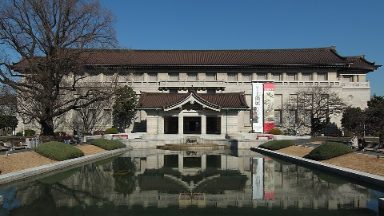 ZEN NIGHT TOKYO (Tokyo National Museum Garden)Oct 14 (Wed) – Dec 6 (Sun) · Tokyo National Museum Garden · on site
- Special Exhibition: “Utagawa Hiroshige – Best Angles of Edo” (Uchiyama Collection gift)Sep 29 (Tue) – Dec 20 (Sun) · Tokyo National Museum, Honkan Room A · on site
- Special Exhibition: “Daitokuji – The Peerless Zen Temple” (700th anniversary)Oct 14 (Wed) – Dec 6 (Sun) · Tokyo National Museum, Heiseikan · 0.2 km
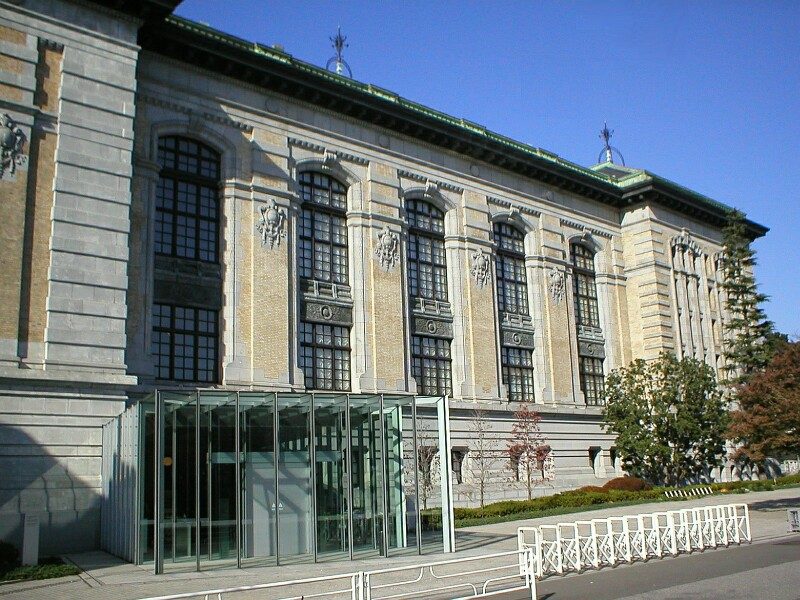 Exhibition: Picture Books with Limited Coloration – White, Black and MoreOct 6 (Tue) – Dec 20 (Sun) · International Library of Children's Literature, Brick Building 3F Museum · 0.3 km · free
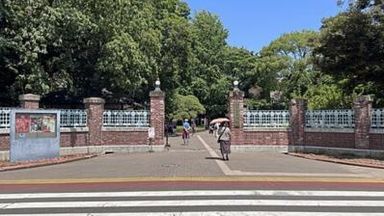 Kiyoshi Furukawa Retirement Exhibition: Resonating Sound and Media — Media Art Music TodayOct 31 (Sat) – Nov 8 (Sun) · The University Art Museum, Tokyo University of the Arts — Chinretsukan Gallery 1F & 2F · 0.3 km · free
- Bunponichi Exhibition 2026Nov 11 (Wed) – Nov 15 (Sun) · The University Art Museum, Tokyo University of the Arts — Chinretsukan Gallery 2F · 0.3 km · free
- Tokyo University of the Arts and Chinese Students: From Hu Gentian to TodayNov 21 (Sat) – Dec 5 (Sat) · The University Art Museum, Tokyo University of the Arts — Chinretsukan Gallery 1F & 2F · 0.3 km · free
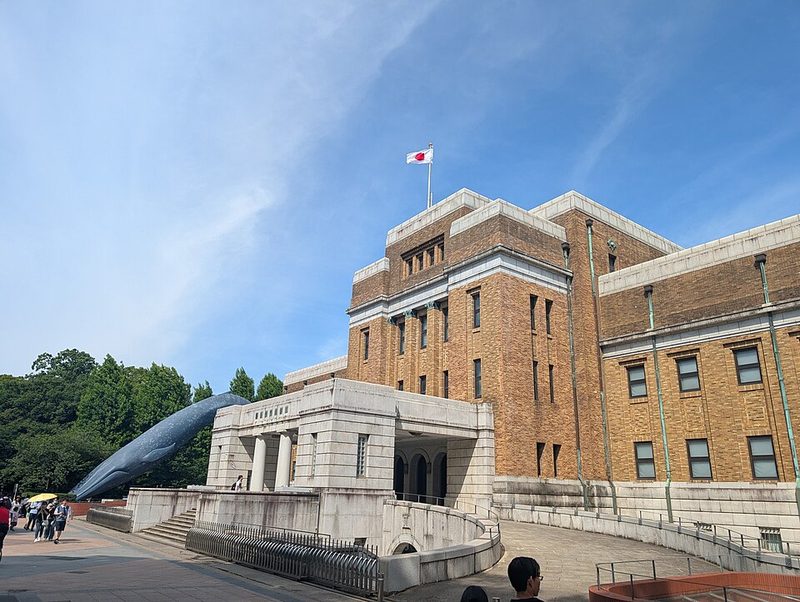 Special Exhibition: Sex in Nature (National Museum of Nature and Science)Oct 31 (Sat) – Feb 21 (Sun) · National Museum of Nature and Science · 0.3 km
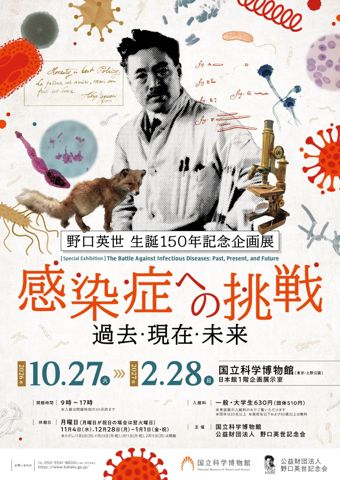 Hideyo Noguchi 150th Anniversary Exhibition: The Fight Against Infectious Diseases (National Museum of Nature and Science)Oct 27 (Tue) – Feb 28 (Sun) · National Museum of Nature and Science · 0.3 km
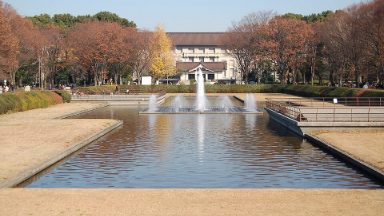 The Japan Art Academy Collection Exhibition 2026Oct 28 (Wed) – Nov 3 (Tue, holiday) · The Japan Art Academy (Ueno Park) · 0.3 km · free
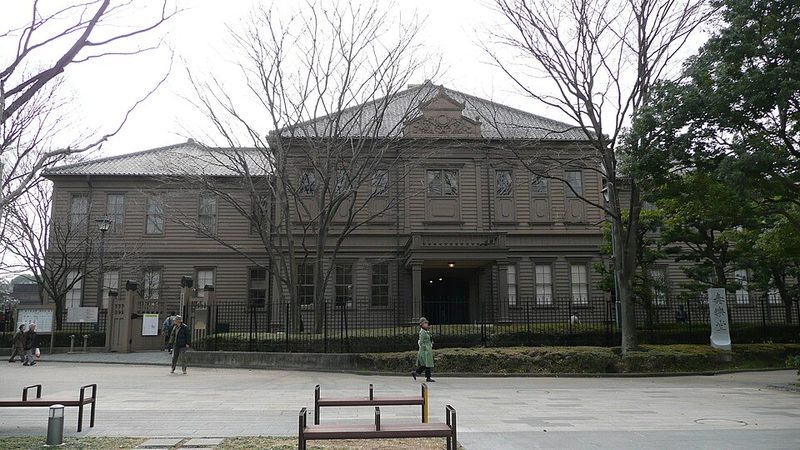 30th Shitamachi Music Fair (Ueno Asakusa Chamber Orchestra)Nov 21 (Sat) · Former Tokyo Music School Sogakudo · 0.3 km
 Masanori Koike Exhibition "KAIKAI"Oct 24 (Sat) – Nov 8 (Sun) · Atelier Uchino (Ueno-Sakuragi) · 0.3 km · free
Visiting info
| Hours | 9:30–17:00 (until 20:00 on Fridays, Saturdays and Sundays before public holidays; last entry 30 minutes before closing; Kuroda Memorial Hall closes at 17:00 all year; special exhibitions may differ). January 1, 2027: 12:00–20:00 |
|---|---|
| Closed | Mondays (if Monday is a holiday, open that day and closed the next). Year-end closure December 26–31, 2026. Temporarily closed December 15, 2026; December 22–25 only the Horyuji Treasures gallery and Kuroda Memorial Hall are open |
| Admission (collection galleries) | Adults ¥1,000, university students ¥500. Free for high school students and younger, anyone under 18 or 70 and over (with proof of age), and people with disabilities plus one companion. Special exhibitions cost extra (a special exhibition ticket also covers the collection galleries that day). Kuroda Memorial Hall is free. Collection galleries are free on November 3, 2026 |
| Payment | At the main gate ticket counter: credit cards (Visa, Mastercard, JCB, AMEX, Diners, DISCOVER), e-money (iD, Suica and other transit IC cards, WAON) and UnionPay. Advance tickets are sold online |
| Address | 13-9 Uenokoen, Taito-ku, Tokyo |
| Getting there | 10 min walk from JR Ueno Station (Park Exit) or Uguisudani Station (South Exit). 15 min from Ueno Station (Tokyo Metro Ginza and Hibiya lines), Nezu Station (Chiyoda Line) or Keisei Ueno Station. No parking |
Checked on 2026-10-27 against the official pages. Hours and fees can change; please check before you go.
Sources: 東京国立博物館「利用案内」 (Japanese)
How did the museum begin?
In March 1872, the Ministry of Education's museum bureau held Japan's first "exhibition" in the Taiseiden hall of Yushima Seido. This marks the founding of the Tokyo National Museum, which celebrated its 150th anniversary in 2022.
On the site of Kan'eiji Temple's head quarters in Ueno, a two-story brick building designed by British architect Josiah Conder was built and used as an exhibition hall for the 2nd National Industrial Exhibition in 1881. On March 20, 1882, the museum opened in Ueno with this building as its main hall. Emperor Meiji visited that day, which is still the museum's opening anniversary.
Conder's building was badly damaged in the 1923 Great Kanto Earthquake. The current Honkan, based on Watanabe Jin's first-prize entry in a 1930 design competition and built by the Imperial Household Ministry's construction bureau, was completed on November 6, 1937 and opened in 1938. A large concrete building topped with a tiled roof, it is a leading example of the "Imperial Crown style" and became an Important Cultural Property in 2001.
Sources: ニッポン旅マガジン「3月20日は東京国立博物館開館記念日」 (Japanese) / るるぶ&more.「東京国立博物館」 (Japanese) / 文化遺産オンライン「旧東京帝室博物館本館」 (Japanese) / 大林組「旧東京帝室博物館本館」 (Japanese) / ウォーカープラス「東京国立博物館の楽しみ方」 (Japanese)
Ueno Zoo started as part of the museum
On March 20, 1882, the same day the museum opened in Ueno, Japan's first zoo opened too. Today's Ueno Zoo began as an annex of the museum (then under the Ministry of Agriculture and Commerce).
So the museum and the zoo share a birthday. Visit both in one day and you are touring two institutions born on the same date.
Sources: ニッポン旅マガジン「3月20日は東京国立博物館開館記念日」 (Japanese)
The Honkan had a world first in air conditioning
Obayashi began construction in 1932 and finished in November 1937 after about five years and a total of some 900,000 workers. A full-size mock-up of a gallery was even built to study the lighting.
A push-button system that could lock the whole building and the air-conditioning system were described as a first among the world's museums at the time. The Agency for Cultural Affairs' database also cites its then cutting-edge lighting and climate control as part of its value as an Important Cultural Property.
Sources: 大林組「旧東京帝室博物館本館」 (Japanese) / 文化遺産オンライン「旧東京帝室博物館本館」 (Japanese)
Why Horyuji's treasures are in Tokyo
After the Meiji Restoration, Horyuji Temple in Nara lost its lands and struggled to look after its treasures. In November 1876 it asked to present them to the imperial household; the donation was approved in February 1878, and the Imperial Household Ministry gave the temple 10,000 yen.
These "Treasures Donated by Horyuji" moved to the Tokyo National Museum in 1947. The 48 small gilt-bronze Buddhas are among them. Today they are shown in the Gallery of Horyuji Treasures, designed by Taniguchi Yoshio and opened in 1999 (Architectural Institute of Japan Prize, 2001).
Sources: コトバンク「四十八体仏」 (Japanese) / ウォーカープラス「東京国立博物館の楽しみ方」 (Japanese)
The garden's teahouses all moved here
Shunsoro was built as a rest house by Kawamura Zuiken (1618–1699) during works on the Yodo River; it moved several times before arriving here in 1959. Tengoan was built in Kyoto by the tea master Kobori Enshu, moved to Ohara, and was donated in 1963. Rokusoan was built around 1648–1652 at Kofukuji Temple in Nara, bought by the museum in 1875 and moved here in 1877; it was taken apart during the war and rebuilt in 1947.
Okyokan was built in 1742 as a study hall at Myogen-in Temple in Owari, with ink paintings said to be by Maruyama Okyo from 1784 (replaced by replicas in 2007); it was donated in 1933. Kujokan came from the Kujo family residence in Akasaka and was donated and moved here in 1934.
Sources: 東京国立博物館「庭園散策マップ2024」(PDF) (Japanese) / ことりっぷ「東京国立博物館」 (Japanese)
A free memorial hall born of a painter's will
The Kuroda Memorial Hall was built following the will of Kuroda Seiki, known as the father of modern Western-style painting in Japan. It was completed in 1928 and registered as a Tangible Cultural Property in 2002.
Admission is free and no ticket is needed, so it is an easy first stop before buying your museum ticket.
Sources: ウォーカープラス「東京国立博物館の楽しみ方」 (Japanese) / るるぶ&more.「東京国立博物館」 (Japanese) / Japan Guide: Tokyo National Museum
The mascot is a dancing haniwa
The museum's mascot, Tohaku-kun, is modeled on the "Dancing Haniwa" excavated from the Nohara burial mounds in Kumagaya, Saitama.
In 2024 the Heiseikan hosted the special exhibition "Haniwa," centered on the Haniwa Warrior in Armor, marking 50 years since it was named a National Treasure. Haniwa have become one of the museum's faces.
Sources: ニッポン旅マガジン「東京国立博物館」 (Japanese)
Getting there by taxi and bus
🚕 Taxi
- JR Ueno Station taxi stand (JR上野駅) On the right after exiting the central ticket gate. Say "Tokyo Kokuritsu Hakubutsukan made" (東京国立博物館まで); taxis can reach the museum's front gate. About 5 minutes, up to 10 in busy hours, roughly ¥1,000. Late-night rates (22:00–5:00) are 20% higher (per a NEWT article; very short rides can be refused).
🚌 Bus
- Ueno Park (上野公園) Toei Bus 上26 (terminus), 上58 and 上60 (toward Kameido Station and Waseda).
- Ueno Park Exit, stops 2 and 22 (上野公園口) Taito Ward loop bus Tozai Megurin. ¥100 per ride, IC cards accepted, every 15–20 minutes. About 10 min from the Park Exit
- In front of Ueno Park Exit (上野公園口前) Skytree Shuttle (Tobu Bus). Stop a little north and uphill from the park entrance. About 10 min from the Park Exit
- Ueno-Koen-Yamashita, Chuo-dori (上野公園山下) Toei S-1 Shitamachi Bus (Tokyo Station – Ueno Park – Asakusa – Skytree).
The museum has no parking lot (official). Visitors to exhibitions enter by the main gate. The nearest station is JR Ueno Station Park Exit (about 10 minutes on foot per the museum), and walking from there is often simpler than the bus. Wheelchair users should contact the museum's General Affairs Division beforehand (official). You can also book a taxi by app: GO works in English with foreign phone numbers and cards, Uber books licensed taxis in Tokyo, and since early 2026 visitors can call S.RIDE taxis through DiDi in the 23 wards and nearby.
Sources: Tokyo National Museum: Access, Admission & Hours (Japanese, official) / Ueno bus guide (Ueno Station) / BESTCARweb Bus Magazine: Ueno Park area (Japanese) / NEWT: Ueno to Tokyo National Museum (Japanese) / Japan Taxi Apps for Tourists (Oct 12, 2026)
Our suggested route
- Enter at the main gate The tulip tree, the museum's symbol tree, is just inside on the left; the Honkan is straight ahead.
- Honkan 2nd floor, Rooms 1–10 Climb the grand staircase and go through Japanese art in chronological order, Jomon to Edo. About 30 minutes for one loop. The National Treasure room (Room 2) is here.
- Honkan 1st floor Themed rooms such as Room 11 (sculpture) and Room 12 (lacquer), as you like.
- The Hyokeikan exterior Even without a special exhibition, you can see the domed exterior and the a-un lions at the entrance.
- Black Gate to the Horyuji Treasures gallery See the Black Gate on the way. You can rest at the Garden Terrace cafe on the ground floor.
- Toyokan or Heiseikan If you have time, Asian art in the Toyokan or archaeology in the Heiseikan.
The 30-minute loop of the Honkan's 2nd floor is Walkerplus's estimate. We found no source for the whole visit. Our estimate: allow 2–3 hours just for the Honkan and the Horyuji Treasures gallery (Rurubu recommends taking a full day).
Sources: ウォーカープラス「東京国立博物館の楽しみ方」 (Japanese) / ことりっぷ「東京国立博物館」 (Japanese) / るるぶ&more.「東京国立博物館」 (Japanese)
What to see by season
| January (New Year at the Museum) | In 2026 it ran January 1–25, with Japanese drums and a lion dance in front of the Honkan on January 1–3, and Hasegawa Tohaku's National Treasure "Pine Trees" screens shown January 1–12. We will add 2027's program when it is announced |
|---|---|
| Mid-March to early April (Cherry Blossoms at the Museum) | The garden north of the Honkan opens. About 10 kinds of cherry, including Somei-yoshino, Oshima cherry and weeping Edo higan, bloom one after another (in 2025, March 11 – April 6) |
| Autumn | Leaves in the garden usually peak from late October to late November: yellow ginkgo and red maples reflected in the pond |
| November 3 | Free admission to the collection galleries (2026) |
| March 2027 | Planned completion of the TOHAKU OPEN PARK PROJECT, which turns the pond in front of the Honkan into a lawn (announced November 2025) |
Sources: Tokyo Art Beat「博物館に初もうで」2026 (Japanese) / ジョルダン「博物館でお花見を」2025 (Japanese) / ウォーカープラス「東京国立博物館の紅葉」 (Japanese) / 東京国立博物館「利用案内」 (Japanese) / 美術手帖「TOHAKU OPEN PARK PROJECT」 (Japanese)
Tokyo National Museum, the other national museums, or the National Museum of Western Art?
Of Japan's national museums in Tokyo, Kyoto, Nara and Kyushu, Tokyo is the oldest and the largest. It holds about 120,000 objects, with about 3,000 on display at any time.
Katayama Tokuma, who designed the Hyokeikan, also designed the main hall of the Nara National Museum, opened in 1895. The main building of the National Museum of Western Art, in the same Ueno Park, is by Le Corbusier.
Our take: to see Japanese and Asian art in one sweep, come here; for Western paintings, go next door to the Western Art museum. If you do both in a day, it seems wise to stick to the permanent collection at one of them.
Sources: Japan Guide: Tokyo National Museum / ウォーカープラス「東京国立博物館の楽しみ方」 (Japanese) / ニッポン旅マガジン「東京国立博物館」 (Japanese)
Nearby: combine with
- Ueno Park The park covers about 53 hectares and in the Edo period was the grounds of Kan'eiji Temple. The museum garden is a remnant of the temple's garden.
- National Museum of Western Art Its Le Corbusier-designed main building is an Important Cultural Property. Compare Japanese and Western art in a single day.
- Ueno Zoo Born on the same day as the museum, March 20, 1882. Note that Ueno Zoo's pandas returned to China on January 27, 2026, so there are no pandas there now.
Sources: ニッポン旅マガジン「東京国立博物館」 (Japanese) / ニッポン旅マガジン「3月20日は東京国立博物館開館記念日」 (Japanese)
Little-known spots
- The a-un lions of the Hyokeikan
- On either side of the entrance to the Hyokeikan, the oldest gallery building (opened 1909, designed by Katayama Tokuma), sit two lions: one with its mouth open (a) and one with it closed (un). Made by Okuma Ujihiro and Numata Kazumasa, they were finished in 1908. The building opens only for special exhibitions, but the lions can be seen any time.
- The Black Gate (former Inshu Ikeda residence gate)
- The main gate of the Edo residence of the Ikeda lords of Tottori. It later served a branch of the imperial family and came to the museum in 1954. An Important Cultural Property on the way to the Horyuji Treasures gallery, it shows what a late-Edo daimyo gate looked like.
- The tulip tree by the main gate
- The large tree just inside the main gate on the left is a tulip tree, the museum's symbol tree.
- The National Treasure room (Honkan Room 2)
- A room that shows a single National Treasure, changed about once a month. One work, all to yourself.
- Monument to the 2nd National Industrial Exhibition
- In the garden. Of the national industrial exhibitions held in Ueno, only the 2nd one in 1881 has a monument here. It used Conder's original museum building as its venue.
- Gravestones of the Arima family
- A remnant of Kan'eiji Temple in the garden. Graves on the grounds were moved in 1882–1886 to make way for the park, and no one knows why these stones were left.
Sources: ニッポン旅マガジン「阿吽のライオン像(東京国立博物館・表慶館)」 (Japanese) / ことりっぷ「東京国立博物館」 (Japanese) / ウォーカープラス「東京国立博物館の楽しみ方」 (Japanese) / 東京国立博物館「庭園散策マップ2024」(PDF) (Japanese)
FAQ
What are the opening hours of Tokyo National Museum?
9:30–17:00 (until 20:00 on Fridays, Saturdays and Sundays before public holidays; last entry 30 minutes before closing; Kuroda Memorial Hall closes at 17:00 all year; special exhibitions may differ). January 1, 2027: 12:00–20:00
How do I get to Tokyo National Museum?
10 min walk from JR Ueno Station (Park Exit) or Uguisudani Station (South Exit). 15 min from Ueno Station (Tokyo Metro Ginza and Hibiya lines), Nezu Station (Chiyoda Line) or Keisei Ueno Station. No parking
How did the museum begin?
In March 1872, the Ministry of Education's museum bureau held Japan's first "exhibition" in the Taiseiden hall of Yushima Seido. This marks the founding of the Tokyo National Museum, which celebrated its 150th anniversary in 2022.
What are some little-known spots in Tokyo National Museum?
The a-un lions of the Hyokeikan, The Black Gate (former Inshu Ikeda residence gate), The tulip tree by the main gate, The National Treasure room (Honkan Room 2), Monument to the 2nd National Industrial Exhibition, Gravestones of the Arima family.