Meiji Jingu Shrine guide: history, hidden spots and events nearby
A Shinto shrine founded in 1920 for Emperor Meiji and Empress Shoken. Its forest of about 700,000 m² is man-made, planted with about 100,000 trees donated from all over Japan. The entrance is right outside Harajuku Station, and a forest path of about 10 minutes leads to the main shrine.
Kyochika's tips
- Our recommendation: enter at the Harajuku gate, pass under the great torii and take your time on the 10-minute forest path to the main shrine. Closing follows sunset and changes monthly — 16:10 in November, 16:00 in December — so in winter, aim to arrive while it is still midday.
- If you come in June, visit the iris garden in the Inner Garden: about 1,500 plants of some 150 varieties peak in early to mid-June, and only in that month does the garden open at 8:00.
- If you want the history first, it seems a good idea to start at the Meiji Jingu Museum designed by Kengo Kuma (closed Thursdays), with portraits of the Emperor and Empress and the six-horse state carriage, and then walk to the shrine.
Events near Meiji Jingu Shrine now and coming up
Within 1.5 km, nearest first. Checked against official pages.
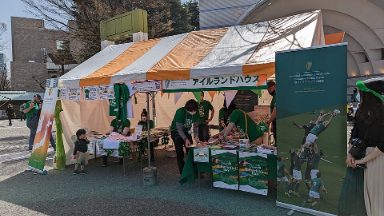 Yoyogi Park Festa: "Moist Potpourri with Herbs"Nov 3 (Tue, holiday) · Yoyogi Park, Herb Garden in Flower Land · 0.6 km
 Food & Handmade Teshigoto MarcheNov 15 (Sun) · Rental Space Sakura Kitasando · 0.6 km
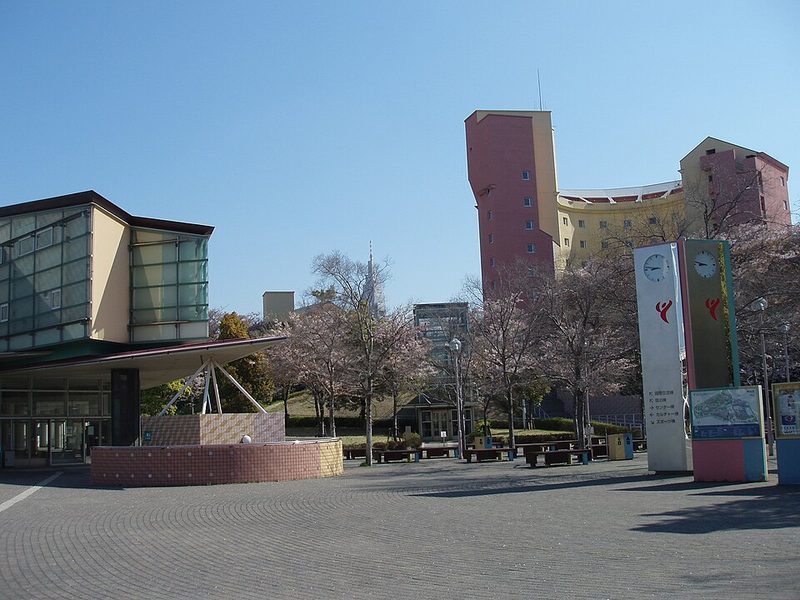 Wan-Fes.with 2026: A Festival to Enjoy with Your DogNov 28 (Sat) – Nov 29 (Sun) · National Olympics Memorial Youth Center · 0.6 km
- JAZZ FESTIVAL in Yoyogi park 2026Nov 3 (Tue, holiday) · Yoyogi Park, Central Lawn (Chuo Hiroba) · 0.7 km · free
 Yoyogi Forest of LightsNov 13 (Fri) – Jan 11 (Mon) · Yoyogi Park (Cycling Course Area) · 0.7 km
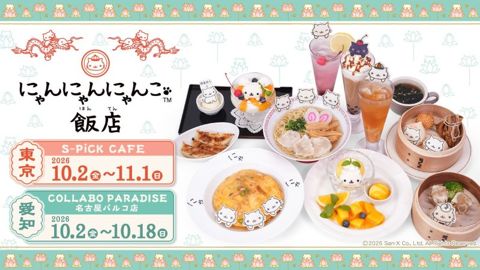 Nyan Nyan Nyanko Collab Cafe: Nyanko HantenOct 2 (Fri) – Nov 1 (Sun) · S-PiCK CAFE (Jingumae 115 Bldg 3F) · 0.7 km
- Santa Parade Tokyo 2026 (Yoyogi Park)Nov 15 (Sun) · Yoyogi Park Event Plaza · 0.8 km
 Mini Car Week (Kazoku no Atelier)Oct 27 (Tue) – Oct 30 (Fri) · Kazoku no Atelier (parent-child salon) · 0.9 km · free
 Ehon Rhythmic: picture books, music and movement (Kazoku no Atelier free program)Oct 28 (Wed) · Kazoku no Atelier · 0.9 km · free
- 49th Shibuya Kumin no Hiroba: Furusato Shibuya Festival 2026Nov 7 (Sat) – Nov 8 (Sun) · Yoyogi Park Event Plaza and other areas · 0.9 km · free
 English & Music Christmas for babies and preschoolers (Sendagaya Community Center)Nov 29 (Sun) · SCC Sendagaya Community Center · 0.9 km
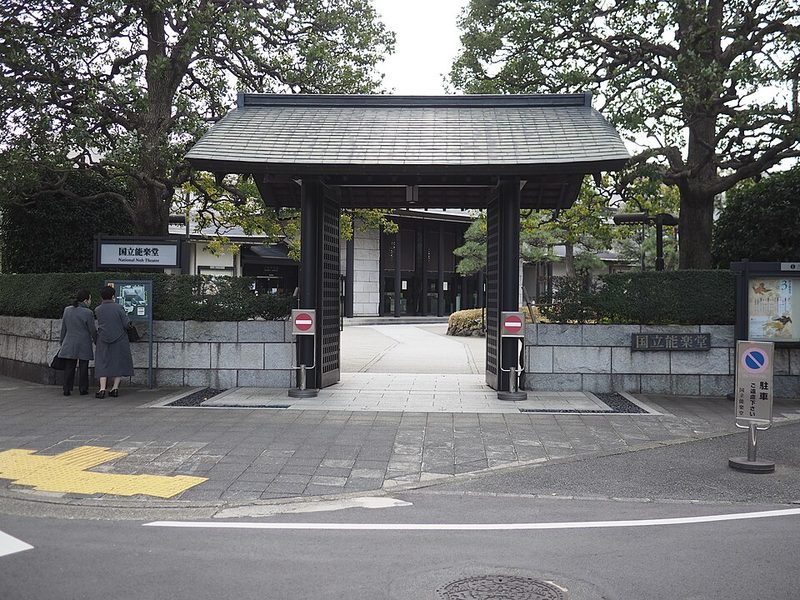 National Noh Theatre Special Exhibition “The Beauty of Drum Bodies: The Miyamoto Unosuke Collection”Sep 5 (Sat) – Nov 6 (Fri) · National Noh Theatre, Exhibition Room · 1.0 km · free
Visiting info
| Gate hours | The gates open at sunrise and close around sunset. October 5:40–16:40, November 6:10–16:10, December 6:40–16:00, January 6:40–16:20 (other months: see the official table) |
|---|---|
| Shrine grounds | Free to enter |
| Inner Garden (Gyoen) | 9:00–16:30 (until 16:00 from November to February; in June 8:00–17:00, until 18:00 on weekends). Open every day. ¥500 maintenance fee |
| Meiji Jingu Museum | 10:00–16:30 (last entry 16:00). Closed Thursdays (open if a holiday) and between exhibitions. Adults ¥1,000, high school students and younger ¥900, preschool children free |
| Address | 1-1 Yoyogi Kamizonocho, Shibuya-ku, Tokyo |
| Getting there | 1 min walk from Harajuku Station (JR Yamanote Line) or Meiji-jingumae <Harajuku> Station (Tokyo Metro Chiyoda and Fukutoshin lines); 3 min from Sangubashi Station (Odakyu Line). About 10 min on foot from any entrance to the main shrine. Cars can enter only via the Yoyogi gate |
Checked on 2026-10-27 against the official pages. Hours and fees can change; please check before you go.
Sources: 明治神宮「開閉門時間」 (Japanese) / 明治神宮「御苑」 (Japanese) / 明治神宮「明治神宮ミュージアム」 (Japanese) / 明治神宮「アクセス」 (Japanese) / Japan Tourism Agency multilingual database: Meiji Jingu opening hours / GO TOKYO: Hatsumode
Why is Meiji Jingu in Yoyogi?
After Emperor Meiji died in 1912 and Empress Shoken in 1914, people across Japan wished to enshrine them and honor their virtues forever, and a shrine was built in Yoyogi. It was dedicated on November 1, 1920. Newspapers of the time reported 500,000 visitors on that single day.
The main reason for choosing Yoyogi was today's Inner Garden. In the Edo period it was the garden of the Kato and Ii families' secondary residence; in the Meiji era it became the Imperial Household Ministry's Minami-Toshima estate. Around 1893 Emperor Meiji had it laid out as a strolling garden for the Empress, whose health was frail. Apart from the garden, the land was mostly farmland.
Air raids in April 1945 burned many of the shrine buildings, and the main sanctuary was rebuilt in 1958. The place name Yoyogi is said to come from a large fir tree that stood here for generations ("yoyo" means generations, "gi" tree).
Sources: 明治神宮「明治神宮とは」 (Japanese) / 明治神宮「御苑」 (Japanese) / 明治神宮「杜・みどころ」 (Japanese) / 明治神宮「境内地図」 (Japanese) / 明治神宮「Q&A」 (Japanese)
Japan's largest wooden torii is the second one
The great torii (the second torii) on the approach is 12 m high and 17.1 m wide, with pillars 1.2 m across, and weighs 13 tonnes. It is said to be Japan's largest wooden torii of the Myojin style. The first one was made of Taiwanese cypress donated by the Government-General of Taiwan and completed in 1920; the timber was stored by soaking it in the North Pond in front of the Treasure House.
In July 1966 lightning damaged the right pillar of the first torii. A Tokyo timber merchant, Kawashima Kosuke, searched the Alishan mountains in Taiwan for cypress and donated it, and the completion of the second torii was reported to the gods on December 23, 1975. The first torii was moved to Omiya Hikawa Shrine in Saitama, where it still stands.
Sources: 明治神宮「Q&A」 (Japanese)
Scholars talked Prime Minister Okuma out of a cedar forest
The forest was planned by the forestry scholars Honda Seiroku, Hongo Takanori and Uehara Keiji. Because smoke pollution was killing large old trees in Taisho-era Tokyo, they looked a century ahead and chose mainly evergreen broadleaf trees such as chinquapin, oak and camphor.
Prime Minister Okuma Shigenobu wanted avenues of cedar, but the scholars persuaded him that cedar did not suit Tokyo's climate. The forest, planted with 365 species and about 120,000 trees, had 234 species and about 36,000 trees by the centennial survey, as the trees thinned themselves out; about 3,000 kinds of living things have been recorded.
Sources: 明治神宮「杜・みどころ」 (Japanese)
Built by 110,000 young volunteers
About 100,000 trees were donated from across Japan, and a total of 110,000 young men volunteered their labor for planting and building the paths.
On the day of dedication, November 1, 1920, newspapers reported 500,000 visitors.
Sources: 明治神宮「杜・みどころ」 (Japanese) / 明治神宮「明治神宮とは」 (Japanese) / 明治神宮「Q&A」 (Japanese)
The night the forest protected people
The air raids of April 1945 burned many shrine buildings, but the forest suffered no major damage and sheltered people who fled there.
This is thought to be because broadleaf trees burn less easily than conifers. The trees the scholars chose ended up saving lives 25 years later.
Sources: 明治神宮「杜・みどころ」 (Japanese)
Why sake barrels face wine barrels
During Japan's modernization Emperor Meiji encouraged many domestic industries, including sake brewing. Every year the Meiji Jingu Nationwide Sake Brewers Association offers straw-wrapped decorative barrels; they are empty, offered together with bottled sake.
Alongside them stand the wine barrels from Burgundy. Japanese sake next to French wine reflects the Meiji era itself, when foreign culture met Japanese tradition.
Sources: Japan Tourism Agency multilingual database: Consecrated Sake Barrels / 観光庁 多言語解説文データベース「葡萄酒樽」(明治神宮地域協議会) (Japanese)
Kiyomasa's Well nearly ran dry
After the Great Kanto Earthquake, Kiyomasa's Well sometimes turned cloudy after heavy rain. In the great drought of 1933 the spring stopped for a while, and it was restored in 1938.
On August 30, 1996 it was repaired for the first time in 59 years. Its water still feeds the South Pond in the Inner Garden and flows on to the Shibuya River.
Sources: 明治神宮「Q&A」 (Japanese) / 明治神宮「御苑」 (Japanese)
Getting there by taxi and bus
🚕 Taxi
- Near Omotesando Station Exit 2 (表参道駅 出口2) Taxis are said to be available around Exit 2. Ask for "Meiji Jingu no Minami-sando-guchi" (明治神宮の南参道口, the south approach). From the great torii to the main hall is about a 10-minute walk (per a NEWT travel article; times and fares in the article vary, so treat them as rough).
- Shibuya Station taxi stands (渋谷駅) Say "Meiji Jingu made" (明治神宮まで). About 5 minutes and 1.3 km per the article. Get out near the torii and walk the approach (NEWT).
🚌 Bus
- Meiji-jingumae (明治神宮前) Shibuya Ward community bus, Hachiko Bus, Jingu-no-Mori route. Board at the Omotesando (表参道) stop on the Harajuku-bound side (left side of the road) and get off here. About every 15 minutes, adult ¥100, cash or IC card. About 3–5 min to the great torii
- Meiji Jingu (Harajuku Station) (明治神宮(原宿駅)) Shibuya Ward community bus, direct from the Shibuya Station East Exit bus terminal. About 12 minutes, adult ¥100 (per NEWT). About 5 min to the torii
- National Noh Theatre / Sendagaya Station (国立能楽堂・千駄ヶ谷駅) Hachiko Bus Jingu-no-Mori route (Jingumae/Sendagaya route) stop, on the Shinjuku Gyoen Sendagaya Gate side. Short walk from the stop
The Hachiko Bus costs ¥100 per ride, cash or IC card. Stop names and times differ between articles, so check the Hachiko Bus route map before boarding. You can also book a taxi by app: GO works in English with foreign phone numbers and cards, Uber books licensed taxis in Tokyo, and since early 2026 visitors can call S.RIDE taxis through DiDi in the 23 wards and nearby.
Sources: NEWT: access to Meiji Jingu from Omotesando (Japanese) / NEWT: access to Meiji Jingu from Shibuya (Japanese) / Shinjuku Gyoen access (Ministry of the Environment) / Japan Taxi Apps for Tourists (Oct 12, 2026)
Our suggested route from the Harajuku gate
- Harajuku gate The south entrance, 1 minute from Harajuku and Meiji-jingumae stations. The forest path starts here.
- Sake and wine barrels Donated sake barrels and Burgundy wine barrels line the path (5 min).
- The great torii A 12 m wooden Myojin-style torii. Before passing under, look at the thickness of the pillars (1.2 m across) (2 min).
- Inner Garden (detour) Enter from the gate along the path (¥500). See the fishing platform, Kakuuntei, the South Pond and Kiyomasa's Well; in June, the iris garden too (40 min).
- The main shrine Purify your hands at the water basin, then bow twice, clap twice and bow once. The main sanctuary was rebuilt in 1958 (15 min).
- Meiji Jingu Museum Stop by on the way back for the portraits, the six-horse carriage and the forest gallery (40 min; closed Thursdays).
The only time given officially is "about 10 minutes on foot from each entrance to the main shrine." The other times are our estimates; with the Inner Garden and the museum, allow about 2 hours. Closing follows sunset and changes monthly (16:10 in November).
Sources: 明治神宮「アクセス」 (Japanese) / 観光庁 多言語解説文データベース「葡萄酒樽」(明治神宮地域協議会) (Japanese) / 明治神宮「Q&A」 (Japanese) / 明治神宮「御苑」 (Japanese) / 明治神宮「境内地図」 (Japanese) / 明治神宮「明治神宮ミュージアム」 (Japanese) / LIVE JAPAN「明治神宮」 (Japanese)
What to see by season
| December 31 – January 3 | Hatsumode, the first shrine visit of the year. The shrine stays open all night on New Year's Eve, and several million people come during this period. Saitansai ceremony early on January 1 |
|---|---|
| February 11 | Kigensai (National Foundation festival) |
| May 3 | Spring Grand Festival for worshippers |
| Early to mid June | About 1,500 iris plants of some 150 varieties in the Inner Garden; the garden opens from 8:00 |
| Summer | Water lilies and spatterdock in the South Pond |
| November 1 and 3 | November 1: anniversary of the shrine's dedication (Autumn Grand Festival); November 3: Annual Festival on Emperor Meiji's birthday |
| Late autumn – early winter | Migratory birds visit the South Pond |
Sources: 明治神宮「祭典・行事」 (Japanese) / 明治神宮「御苑」 (Japanese) / 明治神宮「境内地図」 (Japanese) / GO TOKYO: Hatsumode
Meiji Jingu or Senso-ji?
Meiji Jingu is a Shinto shrine founded in 1920 for Emperor Meiji and Empress Shoken. Senso-ji is a Buddhist temple said to date from 628, devoted to Kannon — nearly 1,300 years apart.
Senso-ji is woven into the town, with Nakamise leading from Kaminarimon to the Main Hall, while Meiji Jingu's buildings stand inside a forest of about 700,000 m².
Our take: for the bustle of old Edo and lucky charms, Senso-ji; to step out of the station straight into a forest, Meiji Jingu. We think Meiji Jingu is a place to see the forest itself, grown over a hundred years.
Sources: 明治神宮「明治神宮とは」 (Japanese) / 浅草寺「浅草寺を知る」 (Japanese) / 明治神宮「杜・みどころ」 (Japanese)
Nearby combinations
- Takeshita Street A pedestrian street packed with small shops, just steps from Harajuku Station, which is 1 minute from the shrine entrance.
- Omotesando and Aoyama About 10 minutes' walk from Harajuku Station: after your visit, head to the tree-lined avenue of brand stores.
- Yoyogi Park GO TOKYO's Harajuku guide lists it alongside Meiji Jingu as a green place to rest after shopping.
- Shibuya About 20 minutes' walk from Harajuku Station. Shibuya Station also appears on the shrine's precinct map.
Sources: GO TOKYO: All about visiting Harajuku / 明治神宮「境内地図」 (Japanese)
Little-known spots
- Kiyomasa's Well
- A spring inside the Inner Garden. Legend says the warlord Kato Kiyomasa dug it, though no one knows for sure. The water stays around 15°C all year, about 60 liters a minute. It stopped for a time in the great drought of 1933 and was restored in 1938.
- The Empress's fishing platform
- A platform over the garden pond where Empress Shoken fished, always releasing her catch. When she once caught a salamander, Emperor Meiji is said to have ordered attendants to stock the pond with carp and crucian carp.
- Kakuuntei
- A building with tea rooms that Emperor Meiji had built for the Empress in 1900. It burned in the war and was rebuilt in 1958.
- The Treasure House
- Completed in 1921 in reinforced concrete, modeled on the log-style storehouse of the Shosoin in Nara. A landmark of early reinforced-concrete architecture, it became an Important Cultural Property in 2011. It opens only for limited periods, so check the official site before you go.
- The wine barrels
- The wine barrels displayed with the sake barrels on the approach were donated in 2006 by leading wineries of Burgundy, France, one barrel each, in memory of Emperor Meiji, who enjoyed Western food and wine, especially French wine. Burgundy wine is offered every year.
Sources: 明治神宮「御苑」 (Japanese) / 明治神宮「Q&A」 (Japanese) / 明治神宮「境内地図」 (Japanese) / 明治神宮「宝物殿」 (Japanese) / 観光庁 多言語解説文データベース「葡萄酒樽」(明治神宮地域協議会) (Japanese) / LIVE JAPAN「明治神宮」 (Japanese)
FAQ
What are the opening hours of Meiji Jingu Shrine?
The gates open at sunrise and close around sunset. October 5:40–16:40, November 6:10–16:10, December 6:40–16:00, January 6:40–16:20 (other months: see the official table)
How do I get to Meiji Jingu Shrine?
1 min walk from Harajuku Station (JR Yamanote Line) or Meiji-jingumae <Harajuku> Station (Tokyo Metro Chiyoda and Fukutoshin lines); 3 min from Sangubashi Station (Odakyu Line). About 10 min on foot from any entrance to the main shrine. Cars can enter only via the Yoyogi gate
Why is Meiji Jingu in Yoyogi?
After Emperor Meiji died in 1912 and Empress Shoken in 1914, people across Japan wished to enshrine them and honor their virtues forever, and a shrine was built in Yoyogi. It was dedicated on November 1, 1920. Newspapers of the time reported 500,000 visitors on that single day.
What are some little-known spots in Meiji Jingu Shrine?
Kiyomasa's Well, The Empress's fishing platform, Kakuuntei, The Treasure House, The wine barrels.