Meigetsu-in Temple guide: history, hidden spots and events nearby
Staying nearby? Where to stay in Shinagawa for getting around →
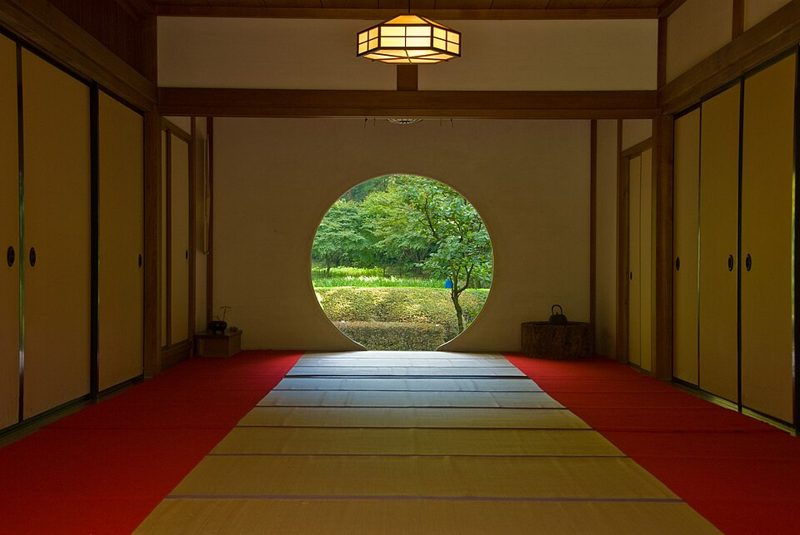
Tucked into a wooded valley in Kita-Kamakura, Meigetsu-in is best known as the Hydrangea Temple, where blue flowers transform the approach in early summer. Beyond its celebrated blossoms, visitors can discover a circular window framing a garden, a medieval rock-cut tomb, and traces of the powerful families who shaped Kamakura. Its appeal changes with the seasons, making it a rewarding stop on a day trip from Tokyo.
🎧 English audio guide · first track free (10 tracks) →
Kyochika's tips
- Kyochika recommends approaching Meigetsu-in as more than a place to photograph flowers. Begin with the seasonal landscape, then spend time at the circular window and the historic monuments to discover how natural beauty and medieval history come together in this small valley temple.
- June is the obvious choice for hydrangeas, but it is also a popular period when queues and crowded paths are possible. Arriving relatively early, allowing extra time, and checking the current flowering conditions may make the visit more comfortable, although an early start does not guarantee a quiet experience.
- For a fuller introduction to Kamakura's Zen heritage, combine Meigetsu-in with nearby Engaku-ji and Jochi-ji. Visitors with sufficient time and energy can continue to Kencho-ji before travelling into central Kamakura.
Visiting info
| Opening hours | Normally 9:00 a.m.–4:00 p.m., according to the Kamakura City Tourism Association. Hours may change during the June hydrangea season. Confirm the latest arrangements before visiting. |
|---|---|
| Closed days | No regular closed day is listed by the railway operators' official tourism guide. Temporary closures or seasonal changes remain possible. |
| Admission | High school students and adults: ¥500. Elementary and junior high school students: ¥300. Visitors presenting a disability certificate and one accompanying person are admitted free. |
| Inner garden | The garden behind the main hall is normally closed. It is specially opened during the Japanese iris flowering season and the autumn foliage season, with an additional admission fee of ¥500. Exact opening dates should be confirmed locally. |
| Payment | The official information reviewed does not establish whether cards, electronic payments, or cashless services are accepted. Bringing cash is a sensible precaution, but this is not a confirmed cash-only policy. |
| Address | 189 Yamanouchi, Kamakura, Kanagawa Prefecture, Japan. |
| Telephone | 0467-24-3437. |
| From Kita-Kamakura Station | Approximately 10 minutes on foot from JR Kita-Kamakura Station, as stated by the Kamakura City Tourism Association. |
| From Kamakura Station | Take the JR Yokosuka Line to Kita-Kamakura Station, then walk approximately 10 minutes. The precise train journey and connection time depend on the service. |
| From Hase Station | Take the Enoden railway to Kamakura Station, transfer to the JR Yokosuka Line for Kita-Kamakura, and walk approximately 10 minutes. The complete journey time has not been verified against an official timetable. |
| From Enoshima Station | Take the Enoden railway towards Kamakura, transfer at Kamakura Station to the JR Yokosuka Line, and get off at Kita-Kamakura. The final walk is approximately 10 minutes. Allow additional time for the railway connection. |
| From Tokyo | JNTO describes Kita-Kamakura as approximately 50 minutes from Tokyo on the JR Yokosuka Line. Travel time depends on the departure station and selected service. |
| Historic status | The Meigetsu-in precinct is a nationally designated Historic Site. Japan's Agency for Cultural Affairs records its designation date as February 9, 1984. |
| English information and photography | The official material reviewed does not confirm the availability of English-language signs or brochures, nor specific photography rules. Follow the notices at the temple and instructions from its staff. |
Checked on 2026-11-05 against the official pages. Hours and fees can change; please check before you go.
Sources: Kamakura City Tourism Association (Japanese) / Visit Kamakura Official Guide / Japan National Tourism Organization / Agency for Cultural Affairs (Japanese) / Enoden and Odakyu Official Tourism Guide (Japanese)
From a Memorial Hermitage to a Surviving Zen Temple
Meigetsu-in's story begins not with hydrangeas but with a family's remembrance of a fallen warrior. According to the Kamakura City Tourism Association, Yamanouchi Toshimichi, also identified in its Japanese account as Shuto Toshimichi, died during the Heiji Rebellion of 1159. His son Tsunetoshi subsequently established a religious retreat called Meigetsu-an to honour his father. The story places the origins of the site in a period of political conflict, before Kamakura became the seat of Japan's first warrior government. Some official tourism publications give 1160 as the foundation year, while the city's detailed account relates the foundation to the death in 1159. Rather than treating these different dates as proof of a single precisely documented construction event, it is more accurate to see the memorial hermitage as the beginning of a longer religious history. The idea of a place established to remember a parent also provides an interesting contrast with the colourful gardens that attract visitors today.
The next major chapter belongs to the Hojo family, whose members exercised enormous political influence during the Kamakura shogunate. In 1256, Hojo Tokiyori, the fifth shogunal regent, established Saimyo-ji as a place connected with his decision to enter Buddhist religious life. Saimyo-ji did not survive indefinitely after Tokiyori's death. His son Hojo Tokimune, who later became the eighth regent, established Zenko-ji on the site associated with the earlier temple. Zenko-ji subsequently developed into an important Zen establishment, and Meigetsu-in became one of its sub-temples. A sub-temple, known in Japanese as a tacchu, is a smaller religious institution associated with a larger Zen monastic complex. Understanding this distinction is essential: the Meigetsu-in that survives today was not simply the original central monastery under another name. It developed within a wider network of temples supported by the political and religious leadership of medieval Kamakura.
Another decisive transformation came in 1380. Ashikaga Ujimitsu, the regional ruler based in Kamakura, ordered the restoration of Zenko-ji, and Uesugi Norikata, a senior regional political figure, oversaw an expansion of the establishment. During this period, the older Meigetsu-an was renamed Meigetsu-in. Official Kamakura tourism material identifies Uesugi Norikata as the temple's founder in its later institutional form and Misshitsu Shugen as its founding priest. Zenko-ji eventually achieved such standing that it was ranked first among the Kanto Jissetsu, a group of prominent Zen temples. Yet the institution later disappeared, with the main monastery abolished in the early Meiji period. Its leading sub-temple, Meigetsu-in, remained. This reversal is one of the most memorable facts about the site: the famous temple encountered by modern visitors is the surviving part of a once much larger religious institution. Its historic precinct was designated a National Historic Site in 1984, reflecting its significance beyond the seasonal flowers.
Sources: Kamakura City Tourism Association (Japanese) / Japan Heritage Portal, Agency for Cultural Affairs (Japanese) / Agency for Cultural Affairs, National Cultural Properties Database (Japanese)
The Great Temple That Vanished, and the Small Temple That Remained
One of the most remarkable episodes in Meigetsu-in's history concerns the institution to which it once belonged. Zenko-ji was an important medieval monastery, eventually attaining the highest position in the Kanto Jissetsu ranking. Meigetsu-in was one of its associated sub-temples. If a visitor had known the religious landscape of medieval Kamakura, the relative importance of these institutions might have seemed quite different from the situation today. The larger monastery held the prominent position, while Meigetsu-in formed part of its network of supporting religious establishments. Yet the main monastery did not survive the transformations of the early modern and modern periods. Zenko-ji was abolished in the early Meiji era, whereas Meigetsu-in endured.
This makes a visit to Meigetsu-in an encounter with an unusual form of historical survival. The temple is not merely a monument to a great institution that once existed; it is a functioning continuation of one part of that vanished institution. The gardens, paths, religious buildings, and medieval monuments sit within a landscape that still carries traces of Kamakura's earlier religious structure. Remembering this story while moving through the precinct adds another dimension to the experience. The place famous for blue flowers also preserves the history of a monastery that no longer stands.
Sources: Kamakura City Tourism Association (Japanese) / Japan Heritage Portal, Agency for Cultural Affairs (Japanese)
Meigetsu-in Blue: A Valley of Hydrangeas
The nickname Hydrangea Temple is closely associated with Meigetsu-in's blue flowers. Kanagawa's official tourism information describes approximately 2,500 hydrangea plants growing within the precinct, and the distinctive floral landscape has become known as Meigetsu-in Blue. The expression refers to the impression created by the blossoms, particularly when they fill the approach and contrast with the surrounding greenery. This is not simply a botanical attraction in an isolated flowerbed. The flowers are experienced along a path through a narrow valley, where the changing perspective becomes part of the visit.
The combination of hydrangeas, stone steps, religious architecture, and wooded slopes helps explain why the temple is such a popular destination during early summer. It is worth looking beyond any single photograph. A visitor standing at the lower part of the approach may see a different relationship between flowers and architecture from someone standing farther up the path. Even when the same plants are in bloom, weather and light change the appearance of the blue flowers. Overcast conditions can produce softer contrasts, while brighter conditions may bring out individual petals and leaves. These are suggestions for enjoying the scenery rather than promises of particular photographic results.
Because the hydrangea season attracts many visitors, photographs should never take priority over safe movement through the temple. Avoid blocking the steps, walking against directions, or entering planted areas. JNTO specifically notes that the temple becomes crowded when the flowers are at their peak. Visitors hoping to enjoy the blossoms should check current flowering reports instead of relying on an assumed peak date. A relatively early arrival can be practical, but the most popular dates may be busy from the beginning of the day.
Sources: Kanagawa Prefecture Official Tourism Information (Japanese) / Kamakura City Tourism Association (Japanese) / Japan National Tourism Organization
Advertisement
The Circular Window: A Garden Within a Frame
Another celebrated feature is the circular window in the main hall, commonly called the Window of Enlightenment. The window offers a framed view of the garden beyond, turning part of the landscape into a composition that changes throughout the year. Instead of presenting the entire garden at once, the circular opening concentrates attention on a limited view. This is a rewarding detail for anyone interested in Japanese gardens, architecture, or the way buildings can shape our experience of nature.
The view is especially associated with the contrast between the dark interior framing and the seasonal colours outside. Fresh greenery and autumn foliage create different impressions without changing the basic composition. The circle itself provides a fixed boundary, while the living landscape beyond it changes. Visitors may enjoy spending a little time noticing this relationship before taking a photograph, rather than treating the window merely as a background for a souvenir image.
An important practical distinction is that looking towards the rear garden does not mean that the garden is always open for entry. Official Kamakura tourism information states that the garden behind the main hall is normally closed and is specially opened during the Japanese iris flowering period and the autumn foliage season. Admission to the garden requires an additional fee. The precise extent of access around the window and any photography restrictions should be determined from signs and staff instructions at the temple.
Sources: Kanagawa Prefecture Feel SHONAN (Japanese) / Kamakura City Tourism Association (Japanese) / Visit Kamakura Official Guide
A Historic Monument Behind the Flower Photographs
The Meigetsu-in precinct is a designated National Historic Site, a status recorded by Japan's Agency for Cultural Affairs. The designation date is February 9, 1984. This recognition is a useful reminder that Meigetsu-in should not be understood only as a seasonal garden. Its significance is connected to the history of Zen institutions, medieval political families, Buddhist monuments, and the development of Kamakura's religious landscape.
The Kamakura City Tourism Association also lists a wooden seated statue of Uesugi Shigefusa as a nationally designated Important Cultural Property. The association's historical account identifies Uesugi Norikata as an important figure in the temple's development, and the surviving cultural objects help connect the place to the wider history of the Uesugi family. Visitors should not assume that every cultural object listed in official records is displayed to the public every day. Historic objects may be kept in protected spaces or shown only under particular conditions.
The rock-cut chamber is another particularly revealing feature. Its Buddhist reliefs demonstrate that the site's significance extends beyond standing wooden buildings. In medieval Kamakura, rock-cut funerary structures formed part of the religious landscape, and Meigetsu-in preserves a prominent example. Viewing the chamber together with the garden helps bring together two very different aspects of the temple: the changing beauty of living plants and the much longer survival of carved stone.
Sources: Agency for Cultural Affairs (Japanese) / Kamakura City Tourism Association (Japanese) / Japan Heritage Portal, Agency for Cultural Affairs (Japanese)
Getting there by taxi or bus
🚕 Taxi
- Taxi A precise, officially verified taxi-stand location near Kita-Kamakura Station was not established from the public sources reviewed. If using a taxi, confirm a suitable boarding point locally and give the destination as Meigetsu-in, 189 Yamanouchi, Kamakura.
🚌 Bus
- Bus Enoden Bus operates a stop named Meigetsuin. Its published timetable for services towards Kamakura Station lists routes A21, K4, and N2. Visitors travelling from Kamakura Station should check the current route search and boarding stop before departure, since services and timetables may change.
Other ways to get around
- Other Walking approximately 10 minutes from JR Kita-Kamakura Station is the simplest documented approach. Visitors from Tokyo can use the JR Yokosuka Line. From Hase or Enoshima, an Enoden journey followed by a JR connection at Kamakura Station is another option.
The exact officially verified walking duration from the Meigetsuin bus stop to the temple gate, the nearest taxi boarding point, and a complete current timetable for November 2026 were not established. Road traffic can delay buses, especially during popular visiting periods. Check the operator's latest timetable and the temple's visitor guidance before travelling.
Sources: Kamakura City Tourism Association (Japanese) / Enoden Bus Official Route Search (Japanese) / Enoden Bus Official Services (Japanese) / Japan National Tourism Organization
A Suggested Walk from the Main Entrance
- Main Gate and Admission Area Begin at the entrance, check the current opening arrangements, and take a moment to notice the valley setting. The temple sits within a landscape enclosed by wooded slopes, which helps explain the intimate feel of its approach. Allow approximately 3 minutes.
- Hydrangea Approach Continue along the approach towards the main buildings. During the flowering season, enjoy the relationship between the blue blossoms, stone steps, and surrounding greenery. Allow approximately 5–10 minutes, longer if the route is busy.
- Main Hall and Circular Window Find the circular window and look at the garden framed beyond it. Try observing the whole composition before focusing on individual details. Allow approximately 5–10 minutes, excluding any queue.
- Inner Garden If the rear garden is officially open, consider paying the additional admission fee to visit it. Japanese irises or autumn foliage are the seasonal highlights. Allow approximately 10–15 minutes. Skip this stage when the garden is closed.
- Meigetsu-in Yagura Continue to the historic rock-cut tomb where visitor access is permitted. Look for the carved Buddhist imagery and consider the chamber's traditional association with Uesugi Norikata. Allow approximately 5 minutes.
- Historic Well and Traditional Grave Follow the site's signs to locate Tsurube-no-I and the monument traditionally associated with Hojo Tokiyori, where accessible. These features reveal aspects of the precinct that are easy to miss if the visit is focused entirely on flowers. Allow approximately 5–10 minutes.
- Return Towards the Entrance Make your way back by the permitted route and continue towards Kita-Kamakura. The surrounding area offers several other historic Zen temples. Allow approximately 5 minutes for the final section within the precinct.
This is a suggested Kyochika walking sequence, not an officially prescribed route. All walking and viewing times within the grounds are Kyochika estimates rather than published temple timings. The actual path, access restrictions, and direction of visitor movement must follow on-site instructions. A general visit might take roughly 45–70 minutes, but seasonal queues and optional garden access can make it longer.
Sources: Kamakura City Tourism Association (Japanese) / Visit Kamakura Official Guide / Japan Heritage Portal, Agency for Cultural Affairs (Japanese)
What to See Throughout the Year
| Spring, approximately March–May | Weeping cherry blossoms, magnolias, peach blossoms, forsythia, and other spring flowers are listed by the official tourism association. The Enoden and Odakyu official tourism guide particularly highlights the weeping cherry trees. Actual flowering dates vary. |
|---|---|
| Early summer, approximately June | Hydrangeas are the signature attraction, and Japanese irises add another seasonal highlight. The rear garden may be specially opened during its designated flowering period. This is a popular season, so allow for crowds and check current opening arrangements. |
| Summer, approximately July–August | The official seasonal flower lists include summer camellias, rock-dwelling flowering plants, mountain lilies, and crape myrtle. These species do not necessarily flower simultaneously. |
| Autumn, approximately September–November | Bush clover, red spider lilies, Japanese anemones, and changing autumn foliage contribute to the seasonal scenery. Leaf colour depends on weather and should be checked close to the travel date. |
| Late autumn and early winter | The rear garden is specially opened during the autumn foliage period. Exact dates can change from year to year, and an expected seasonal window should not be confused with a confirmed announcement for 2026. |
| Winter, approximately December–February | Daffodils, plum blossoms, witch hazel, and wintersweet are among the plants mentioned in official seasonal listings. The historic rock-cut chamber and other monuments remain valuable subjects of interest outside the main flowering periods. |
Sources: Kamakura City Tourism Association (Japanese) / Enoden and Odakyu Official Tourism Guide (Japanese) / Japan National Tourism Organization
How it compares
Compared with Hase-dera, which is known for its hillside setting, Buddhist statues, and views towards the coast, Meigetsu-in offers a more enclosed valley landscape centred on hydrangeas, a circular garden window, and medieval monuments. Unlike the larger Zen complexes of Engaku-ji and Kencho-ji, Meigetsu-in is especially interesting as a surviving sub-temple of the former Zenko-ji monastery.
Sources:
Nearby: combine with
- Combine with Meigetsu-in combines naturally with Engaku-ji and Jochi-ji in the Kita-Kamakura area. An official Kamakura tourism walking itinerary places Jochi-ji approximately 7 minutes from Meigetsu-in and Kencho-ji approximately 15 minutes farther along the route, while Engaku-ji is approximately 2 minutes from Kita-Kamakura Station. This provides a convenient way to explore several aspects of Kamakura's Zen history on the same day, with extra time reserved for admission procedures and seasonal crowds.
Sources:
Five Details Many Visitors Overlook
- Meigetsu-in Yagura
- This substantial rock-cut funerary chamber is described by official heritage sources as the largest yagura in Kamakura. Its walls contain reliefs believed to represent Buddhist figures, including Shaka Nyorai and Taho Nyorai. The chamber is traditionally associated with Uesugi Norikata. Unlike the colourful flowers on the approach, this monument reveals the medieval religious and funerary landscape of Kamakura.
- The Rakan-do Reliefs
- The same rock-cut chamber is also known as Rakan-do because reliefs on its upper structure are thought to represent sixteen Buddhist arhats, or enlightened disciples. Look for the carved religious imagery rather than treating the chamber as an ordinary cave. The identification of particular figures is based on historical interpretation, so it should not be presented as beyond question.
- Tsurube-no-I
- This historic well belongs to the group traditionally known as Kamakura's Ten Wells. It introduces a different aspect of the city's heritage: water sources and the physical environment of an old settlement. Its importance lies not in a spectacular view but in the survival of an everyday feature within a historic religious precinct. Respect any restrictions around the well.
- The Traditional Tomb of Hojo Tokiyori
- The temple precinct includes a place traditionally identified as the grave of Hojo Tokiyori, the fifth regent of the Kamakura shogunate. The wording matters: official tourism material describes this as a traditional attribution, not an independently established identification of his burial site. It is a useful point from which to recall Tokiyori's relationship with Saimyo-ji and the subsequent development of Zenko-ji.
- The Garden Behind the Main Hall
- Many visitors know the circular window, but the garden beyond it has its own special status. It is normally closed and is opened to visitors during designated flowering and autumn foliage periods. During those openings, visitors can experience the garden from a different perspective. An additional admission fee applies, and access depends on the actual opening arrangements.
Sources: Kamakura City Tourism Association (Japanese) / Japan Heritage Portal, Agency for Cultural Affairs (Japanese) / Kamakura City Tourism Association, Historic Wells (Japanese)
Events near Meigetsu-in Temple now and coming up
Within 1.5 km, nearest first. Checked against official pages.
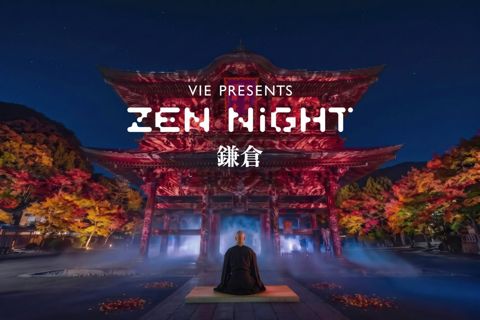 VIE presents ZEN NIGHT Kamakura (Night Viewing at Kenchoji in Autumn Colors)Oct 29 (Thu) – Dec 6 (Sun) · Kenchoji Temple (Kamakura) · 0.2 km
 Photo Memorial Thanksgiving (Jochiji Temple, Kita-Kamakura)Nov 14 (Sat) · Jochiji Temple grounds · 0.7 km
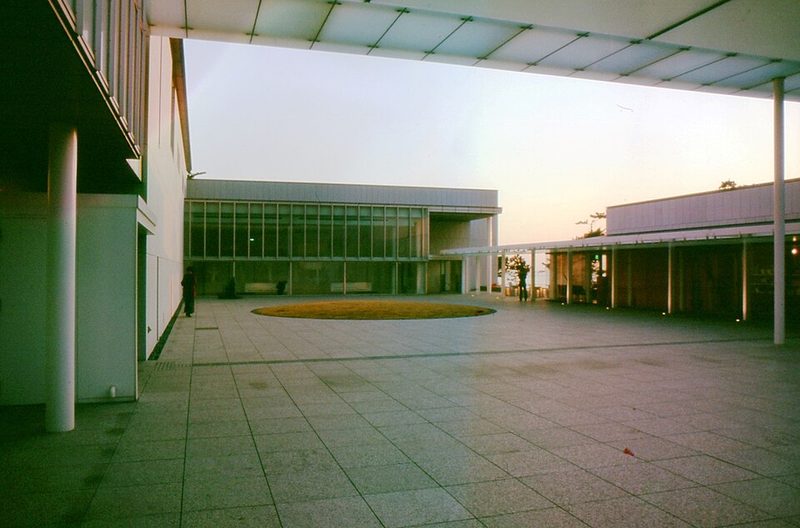 Polish Poster Exhibition 2: From the Former Collection of Copperplate Engraver Watanabe Chihiro (MOMAK Kamakura Annex)Oct 17 (Sat) – Jan 31 (Sun) · Museum of Modern Art, Kamakura Annex (Kanagawa) · 0.9 km
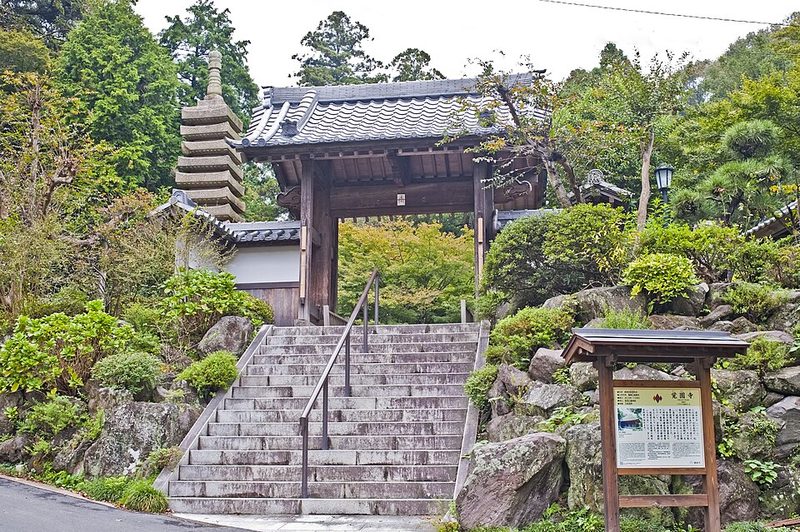
 Chojuji Temple Autumn Special Opening (Kamakura)Oct 2 (Fri) – Dec 7 (Mon) · Chojuji Temple (Kita-Kamakura) · 0.9 km
 Tsurugaoka Hachimangu New Year's Eve Rites: Oharae, Old Talisman Burning and Joya-sai (Dec 31)Dec 31 (Thu) · Tsurugaoka Hachimangu Shrine (Kamakura) · 1.3 km
 Daniel Ost in Kamakura: Arranging Autumn at Kakuonji (Kakuonji Temple)Nov 12 (Thu) – Nov 17 (Tue) · Kakuonji Temple (former Utsumi residence, Yakushido hall and grounds) · 1.3 km
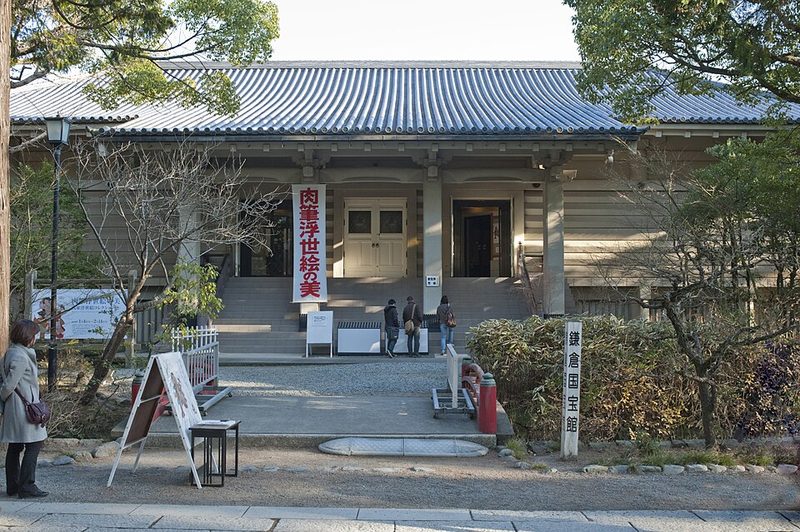 Kamakura Museum of National Treasures: Zuisenji 700 YearsOct 24 (Sat) – Dec 6 (Sun) · Kamakura Museum of National Treasures · 1.3 km
Next stop: book for later today PR
Tickets people often book around here, on Klook.
Year-end deal: extra 5% off selected Tokyo attractions on Klook with code TOKYOATT5% (until Dec 31).
Kamakura & Enoshima day trip from Tokyo→Enoshima-Kamakura Freepass (Enoden)→Tips from visitors
Been here? Leave a short tip for the next traveler — in any language. No name, no sign-up.
Thank you! We check every tip by hand and post it within a day or two.
How we post tips: we read every one before it goes up. We remove swear words, insults, ads, links and anything that could identify a person. Tips are shown in the language they were written in, with a translate link. Kyochika never writes or pays for tips, and there are no star ratings.
FAQ
What are the opening hours of Meigetsu-in Temple?
Normally 9:00 a.m.–4:00 p.m., according to the Kamakura City Tourism Association. Hours may change during the June hydrangea season. Confirm the latest arrangements before visiting.
How much does Meigetsu-in Temple cost?
High school students and adults: ¥500. Elementary and junior high school students: ¥300. Visitors presenting a disability certificate and one accompanying person are admitted free.
From a Memorial Hermitage to a Surviving Zen Temple
Meigetsu-in's story begins not with hydrangeas but with a family's remembrance of a fallen warrior. According to the Kamakura City Tourism Association, Yamanouchi Toshimichi, also identified in its Japanese account as Shuto Toshimichi, died during the Heiji Rebellion of 1159. His son Tsunetoshi subsequently established a religious retreat called Meigetsu-an to honour his father. The story places the origins of the site in a period of political conflict, before Kamakura became the seat of Japan's first warrior government. Some official tourism publications give 1160 as the foundation year, while the city's detailed account relates the foundation to the death in 1159. Rather than treating these different dates as proof of a single precisely documented construction event, it is more accurate to see the memorial hermitage as the beginning of a longer religious history. The idea of a place established to remember a parent also provides an interesting contrast with the colourful gardens that attract visitors today.
What are some little-known spots in Meigetsu-in Temple?
Meigetsu-in Yagura, The Rakan-do Reliefs, Tsurube-no-I, The Traditional Tomb of Hojo Tokiyori, The Garden Behind the Main Hall.