Kotoku-in — Great Buddha of Kamakura guide: history, hidden spots and events nearby
Staying nearby? Where to stay in Shinagawa for getting around →
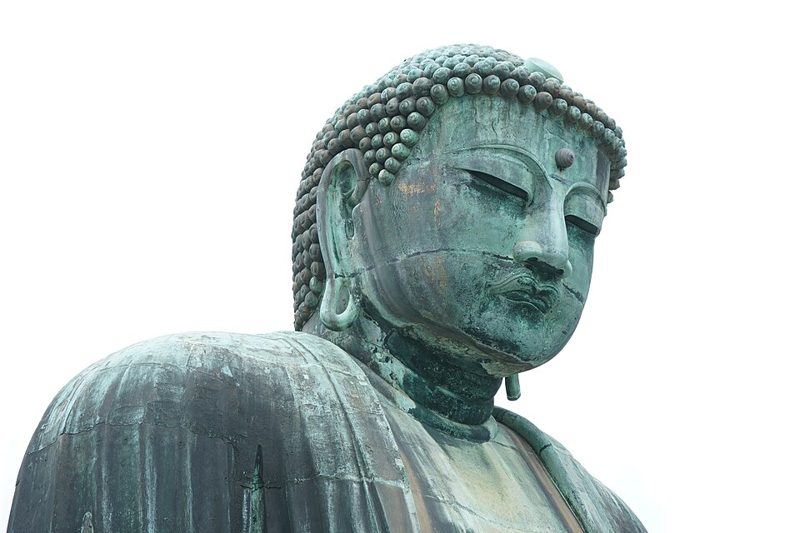
The Great Buddha of Kamakura is one of the most recognizable Buddhist statues in Japan: a monumental bronze image of Amida Buddha sitting outdoors beneath the sky. Work on the present statue began around 1252, and the figure stands approximately 11.3 metres tall and weighs about 121 tonnes. Unlike many monumental Buddha images, visitors can also enter its hollow interior, offering a remarkable glimpse of medieval Japanese metalworking.
🎧 English audio guide · first track free (10 tracks) →
Kyochika's tips
- The Great Buddha deserves more than a quick photograph from the front. Begin by studying its face and the way the hands rest together, then move to the side and examine the enormous bronze body. If interior access is operating, the small additional admission fee is worthwhile for anyone curious about how medieval craftsmen made something so large. The surfaces inside the statue tell a very different story from its calm appearance outdoors.
- For photography, arriving near opening time in the morning may be a practical choice, although this is a famous destination and an early visit cannot guarantee fewer people. The atmosphere changes with the light, weather, and seasons. Spring blossoms and autumn foliage can add colour to the setting, while a cloudy sky can bring out the texture of the bronze.
- For a first visit to Kamakura, combine Kotoku-in with Hase-dera, which the temple lists as approximately five minutes away on foot. If the weather is suitable and you have more time, continue toward the Hase neighbourhood and the coast. This makes a rewarding day trip that connects Buddhist history, everyday streets, and Kamakura's seaside setting without trying to cover every famous temple in one afternoon.
Visiting info
| Opening hours | April–September: 8:00 am–5:30 pm. October–March: 8:00 am–5:00 pm. Last admission is 15 minutes before closing. No advance reservation is required for ordinary admission. |
|---|---|
| Inside the Buddha | Open year-round, 8:00 am–4:30 pm, with final admission at 4:20 pm. A separate admission fee applies. Photography inside the statue is prohibited. |
| Closing days | No regular weekly closing day is specified on the official pages checked. Check official announcements for temporary changes. |
| Admission | General admission: ¥300. Elementary, junior-high and high-school students: ¥150. Preschool children: free. Entry into the Great Buddha: an additional ¥50. |
| Payment | The official pages checked do not confirm whether admission tickets can be purchased by card or electronic payment. Payment options should be confirmed at the entrance; carrying yen cash is a sensible precaution. |
| Address | 4-2-28 Hase, Kamakura, Kanagawa 248-0016, Japan. |
| From Kamakura Station | Take the Enoden railway toward Fujisawa to Hase Station, approximately 7 minutes by train, followed by a 7-minute walk. Alternatively, take an Enoden Bus from East Exit stop 1 or a Keikyu Bus from East Exit stop 6 to Daibutsu-mae, approximately 10 minutes by bus, then walk about 1 minute. Walking directly from Kamakura Station's West Exit takes approximately 30 minutes according to the Kamakura City Tourism Association. |
| From Hase Station | Approximately 7 minutes on foot. Follow the local signs for the Great Buddha and Kotoku-in. |
| From Kita-Kamakura Station | Take the JR Yokosuka Line to Kamakura Station, transfer to the Enoden railway toward Fujisawa, and get off at Hase. Walk approximately 7 minutes. The complete journey time from Kita-Kamakura has not been confirmed on the official temple pages, so allow for train connections. |
| From Enoshima Station | Take an Enoden train toward Kamakura and get off at Hase Station. Walk approximately 7 minutes to the temple. A verified point-to-point train duration from Enoshima is not specified on the official pages checked. |
| Parking | Kotoku-in does not have its own public car park. Visitors driving must use independently operated parking facilities nearby. |
| Photography | Personal commemorative photographs in the permitted outdoor areas are allowed. Photography inside the Buddha is prohibited. Commercial photography and publication require advance permission. Drone use is prohibited. |
| Food and drinks | Eating and bringing food or drinks into the temple precincts is prohibited, except for water or other hydration drinks in sealed containers such as bottles. The grounds are smoke-free. |
| Accessibility | Ramps are provided in parts of the grounds, but there are also steps. The temple recommends that wheelchair users visit with a companion. Wheelchair loans are available in limited numbers under the temple's stated conditions. |
| Pamphlets | The temple states that it does not provide free pamphlets, but paid pamphlets are sold at its official shop. Its website offers information in English. Availability of particular printed languages or English-language signs on site has not been independently confirmed. |
| Re-entry | Re-entry is generally not permitted, according to the official FAQ. |
Checked on 2026-11-05 against the official pages. Hours and fees can change; please check before you go.
Sources: Kotoku-in Official Website (Japanese) / Kotoku-in Official Website (English) / Kotoku-in Official FAQ (Japanese) / Kamakura City Tourism Association (Japanese) / Kamakura City Transport Information (Japanese)
The History of the Great Buddha: Who Built It, and Why?
The origins of the Great Buddha reach back to the era when Kamakura was the centre of Japan's warrior government. A historical chronicle known as the Azuma Kagami records the beginning of a large Buddha hall project in 1238. Another thirteenth-century travel account describes a wooden Buddha being constructed in Kamakura. The bronze statue visible today is generally dated to a project that began around 1252. According to the temple's historical explanation, the monk Joko is believed to have gathered donations toward its construction, but important details remain unresolved. The precise identity of the sculptor is unknown, as is the complete organization of the building project. Kamakura City historical research suggests support from the shogunate, but it would be misleading to credit one named ruler with commissioning and completing the entire statue. The Great Buddha is therefore both an extraordinary surviving work of art and a monument with unanswered historical questions. These uncertainties are part of its significance rather than gaps to be filled with a convenient legend.
The statue depicts Amida Buddha, also known as Amitabha, the Buddha associated with the Western Pure Land in Buddhist belief. Kotoku-in today belongs to the Jodo, or Pure Land, school of Buddhism. Its teachings are associated with Honen, who emphasized devotion to Amida and the recitation of the Buddha's name. For worshippers, the statue is not simply an illustration of an ancient religion or a historical object. It is the principal image of an active Buddhist temple. Its enormous dimensions, approximately 11.3 metres in statue height and 121 tonnes in weight, express the ambition of medieval Buddhist craftsmanship. When newly completed, the image is believed to have been finished with gold, creating a very different appearance from the weathered bronze that visitors recognize today. The statue also originally stood within a great hall. Stylistically, its features combine influences from the Japanese Kei school of Buddhist sculpture and the art of China's Song dynasty. This combination reflects Kamakura's position within wider cultural networks at a time when religious ideas, artistic techniques, and material goods moved between Japan and the Asian mainland.
The building that once sheltered the statue suffered a complicated history of natural disasters, destruction, and rebuilding. The temple's historical records refer to violent storms, earthquakes, and damage associated with a major event in 1498. However, the exact date at which the Great Buddha finally became an outdoor statue remains a subject of historical interpretation. Some documents suggest that it was already exposed before the event commonly associated with the loss of its hall. Visitors should therefore avoid the oversimplified claim that one securely identified tsunami destroyed the building and left the statue outdoors forever. During the Edo period, the Pure Land Buddhist priest Yuten and others helped restore the statue and revive the temple with financial assistance from a merchant associated with Asakusa. Much later, archaeological investigations conducted in 2000 and 2001 uncovered evidence related to the original Buddha hall foundations and the process of casting the statue. Those findings helped historians reconstruct aspects of a building that no longer stands. Today, the bronze Amida image is designated a National Treasure, and the former hall site is recognized as a historic site. Its importance lies not only in its scale but in its survival as a major example of Kamakura-period Buddhist art.
Sources: Kotoku-in History (Japanese) / Kotoku-in: The Great Buddha and Its Teachings (English) / Kamakura City Historical Exhibition (Japanese) / Kotoku-in: An Overview of the Great Buddha (English)
The Giant Sandals Made by Children Who Wanted the Buddha to Walk
One of Kotoku-in's most memorable objects is easy to overlook if you focus entirely on the statue. On the corridor wall to the right when facing the Buddha hangs an enormous pair of woven straw sandals. According to the temple, each sandal measures approximately 1.8 metres long and 0.9 metres wide, and the sandals are described as weighing 45 kilograms. Their story begins in 1951, when children from a community in what is now Hitachiota, Ibaraki Prefecture, made sandals for the Great Buddha. Their wish was that the Buddha might walk around Japan and bring happiness to everyone.
The tradition was not merely a one-time childhood project. The community has continued making and offering giant sandals, generally on a three-year cycle established in 1956. The contrast between the two histories is striking: a bronze religious monument dating back to medieval Japan and a heartfelt offering that began in the years following the Second World War. The sandals also provide an unusually accessible way to think about faith. Rather than asking visitors to remember a complicated theological idea, they turn a simple human wish into something visible. Look at their size, imagine the work involved in weaving them, and remember that their purpose was symbolic, not practical. The Buddha is not expected to stand up and walk away; the sandals express the hope that compassion might reach far beyond the temple walls.
Sources: Kotoku-in Temple Grounds and Giant Straw Sandals (Japanese)
A Building with Korean Royal Connections: The Former Kangetsudo
Kotoku-in once had a small structure called Kangetsudo, whose history was quite different from that of the medieval bronze statue. According to the temple, the building was believed to have originated in a royal palace in Hanyang, the city now known as Seoul, around the middle of the fifteenth century. It later came to Japan and was moved to Kotoku-in in 1924 from a private residence in the Meguro area of Tokyo. Its architectural history therefore connected Korea, Tokyo, and Kamakura across several centuries. For many years it stood as one of the lesser-known sights within the temple precincts.
The most important practical detail for visitors in 2026 is that Kangetsudo is no longer standing in its former position. The temple reports that it was dismantled in 2024 for conservation, restoration research, and related work. Its components had been transported to South Korea by May 2025, and the formal transfer to the Overseas Korean Cultural Heritage Foundation was completed on June 23, 2025. The Buddhist image formerly housed inside is not currently available for viewing while reconstruction arrangements continue. A visit today is therefore to the former site, not to an intact historic hall. This unusual development makes Kotoku-in a place where contemporary heritage conservation and questions of cultural provenance are visible alongside medieval Buddhist history.
Sources: Kotoku-in: Temple Grounds and Former Kangetsudo (Japanese)
Advertisement
Why European Visitors Were Writing About the Great Buddha Centuries Ago
It is tempting to imagine the Great Buddha becoming internationally famous only in the age of guidebooks and tourism. The temple's historical material shows a much longer story. European merchants, envoys, and other travellers began reaching Japan during the sixteenth century, and surviving Western accounts include descriptions of the Great Buddha at Kamakura. Writers were impressed by the statue's remarkable size and artistic form. Their reports reveal that the statue was already an object of curiosity beyond Japan before modern international tourism developed.
An important change came after the opening of Yokohama to foreign trade in 1859. Foreign residents lived in and around the treaty port, and the authorities limited their permitted travel range. Kamakura, within reach of Yokohama, became a popular excursion destination. Travellers recorded visits in their writing and photographs, contributing to an early international image of Kamakura as a place of distinctive historical and religious monuments.
For a visitor arriving from Tokyo today, there is an interesting historical parallel. The journey may be made by train rather than under the restrictions of a treaty-port era, but the underlying attraction is similar: the unusual opportunity to stand near a monumental bronze Buddha in a historic Japanese town. The Great Buddha has occupied a place in the international imagination for generations. Recognizing that history adds depth to the familiar sightseeing photograph.
Sources: Kotoku-in: Historical Documents and Foreign Travel Accounts (Japanese)
A Sri Lankan Memorial and a Message About Peace
Among the monuments in the temple grounds is a memorial to J. R. Jayewardene of Sri Lanka. Its inscription refers to his speech at the 1951 San Francisco Peace Conference, where representatives discussed the postwar peace settlement with Japan. The monument honours his expression of understanding and compassion toward Japan and recalls words from the Buddhist Dhammapada about the impossibility of ending hatred through further hatred.
This is a different historical layer from the thirteenth-century origins of the Great Buddha. It belongs to the aftermath of the Second World War and the international effort to rebuild relationships. The memorial demonstrates how Buddhist teaching could be invoked in a diplomatic setting as well as in religious worship. It also shows that the significance of Kotoku-in extends beyond Japanese national history.
If you have time after viewing the Buddha, look for the memorial in the area indicated by the temple's official grounds information. Read the English wording on the stone and consider why this message was placed in a Buddhist temple in Kamakura. The connection between religion, international reconciliation, and historical memory is one of the quieter but more substantial reasons to explore the grounds rather than leaving immediately after seeing the statue.
Sources: Kotoku-in: Memorials and Commemorative Trees (Japanese)
Getting there by taxi or bus
🚕 Taxi
- Taxi Taxi stands are indicated around Kamakura Station in city transport information. The closest officially designated taxi rank to the temple gate could not be confirmed from the temple and city pages checked. If you need a taxi after visiting, arrange a pickup at a permitted location or confirm where local taxis can safely stop.
🚌 Bus
- Bus The nearest stop is Daibutsu-mae, approximately one minute on foot from the entrance. From Kamakura Station East Exit, use Enoden Bus boarding point 1 or Keikyu Bus boarding point 6, as specified by the temple. The journey is approximately 10 minutes under normal conditions, but road congestion can increase travel time.
Other ways to get around
- Other The Enoden railway is a convenient alternative to road travel. Take a train to Hase Station and walk approximately seven minutes. There is no dedicated public parking at the temple, so public transport is generally a practical choice for visitors travelling from Tokyo or other parts of Kamakura.
Bus travel times are approximate, and traffic in Kamakura can affect journey planning. Check current bus destinations, service schedules, and boarding positions with the operators. For journeys from Enoshima and Kita-Kamakura, include waiting and connection time rather than relying on a fixed total duration.
Sources: Kotoku-in Official Access Information (English) / Kotoku-in Official Access Information (Japanese) / Kamakura City Transport Information (Japanese)
A Self-Guided Walk from the Main Gate
- Nio-mon Gate Allow about 2 minutes. Begin at the main entrance and look at the gate's plaque bearing the temple's mountain name, Daiizan. Look for the paired guardian figures. According to the temple, the gate and its guardians were transferred from another location in the early eighteenth century.
- Ticket Office and Purification Area Allow about 3 minutes. Purchase your admission ticket and locate the purification area. Before approaching the statue, take a moment to remember that this is an active temple rather than simply an outdoor sculpture park.
- Front of the Great Buddha Allow 5–10 minutes. Approach the principal viewing area and take in the statue's full proportions. Study the lowered eyes, composed expression, hands, shoulders, and massive seated posture. Imagine how different the scene would have appeared when a great hall stood around the figure.
- Side Views and Interior Entrance Allow 5–10 minutes, potentially longer if there is a queue. Walk to the permitted side viewing areas to understand the statue's three-dimensional form. If the interior is open, pay the separate admission fee and look at the casting marks. Do not photograph inside.
- Foundation Stones Allow 3–5 minutes. Find the surviving stones associated with the former Buddha hall. Look for the markings described in the temple's official guide and imagine pillars rising above them. The stones help turn an otherwise invisible building into something you can begin to picture.
- Giant Straw Sandals Allow about 3 minutes. Look on the corridor wall to the right when facing the Buddha. The enormous sandals are linked to a continuing community tradition in Ibaraki Prefecture and a wish for the happiness of people throughout Japan.
- Former Kangetsudo Site, Trees and Memorial Allow 5–10 minutes. Continue through the accessible sections of the grounds to explore the location of the former Kangetsudo structure, commemorative trees associated with Thailand, and the memorial connected with Sri Lanka. Observe any current access restrictions.
- Return to the Gate Allow about 3 minutes. Return toward the entrance, optionally visiting the official temple shop or temple office if open. Be aware that general re-entry is not permitted once you have exited.
The walking sequence is based on the temple's published grounds information, but the minutes are Kyochika's own sightseeing estimates, not official temple walking times. Allow approximately 30–50 minutes for the full experience, plus any queue for interior admission. The former Kangetsudo is no longer standing on the site. Follow the posted signs and current access rules rather than assuming every corner of the grounds is open.
Sources: Kotoku-in Official Grounds Guide (Japanese) / Kotoku-in Foundation Stones and Memorials (Japanese) / Kotoku-in Visiting Information (English)
When to Visit: The Great Buddha Through the Seasons
| Spring: approximately March–May | Cherry blossoms and azaleas are among the seasonal plants recorded for the temple grounds. The contrast between delicate flowers and weathered bronze can be particularly attractive. Flowering dates vary from year to year, and the famous setting may attract substantial visitor numbers. |
|---|---|
| Early Summer and Summer: approximately June–August | The temple lists plants including hydrangeas and chinaberry among the seasonal features of its grounds. Summer viewing is largely outdoors, so prepare for heat, humidity, and the possibility of rain. Water in a sealed bottle is permitted for hydration, but the temple prohibits ordinary food and drink consumption within the grounds. |
| Autumn: approximately September–November | Grasses, changing leaves, ginkgo, and fragrant osmanthus are part of the seasonal planting described by the temple. Autumn colour can make an appealing background for the statue. Exact colour-change dates cannot be guaranteed and depend on weather conditions. |
| Winter: approximately December–February | Winter flowers such as sasanqua camellias and narcissus may provide points of interest. Leafless trees can sometimes produce a clearer visual outline of the statue and surrounding architecture. Remember that the October–March closing time is earlier than in the warmer months, and check the day's weather before travelling. |
Sources: Kotoku-in Official FAQ: Plants in the Grounds (Japanese) / Kamakura City Tourism Association: Seasonal Flowers (Japanese)
How it compares
Unlike the Great Buddha at Todai-ji in Nara, which is housed inside a monumental temple building, the Great Buddha of Kamakura stands outdoors, allowing visitors to appreciate its full form against the sky. Compared with nearby Hase-dera, where the appeal includes its Kannon worship and varied temple setting, Kotoku-in concentrates attention on one extraordinary bronze image and the architectural, artistic, and religious history surrounding it.
Sources:
Nearby: combine with
- Combine with Hase-dera is the easiest companion visit: Kotoku-in's official website gives a walking time of approximately five minutes between the two temples. From the Hase area, visitors can extend their walk toward Yuigahama Beach to combine temple sightseeing with Kamakura's coastal scenery. For those comfortable with a longer walk, Zeniarai Benzaiten Shrine is approximately 30 minutes from Kotoku-in according to the temple, while the nearby Daibutsu hiking route is another possibility when trail conditions are suitable.
Sources:
Five Details That Are Easy to Miss
- Traces of the Original Golden Finish
- The bronze surface looks greenish today, but the statue originally had a golden appearance. The temple identifies surviving traces of gilding on the cheeks. Look closely from an appropriate public viewing position, although lighting and distance may make the traces difficult to distinguish. Remember that the present colour is the result of a long history rather than necessarily the appearance intended by its original makers.
- The Forehead Mark and 656 Hair Curls
- The small circular mark between the eyebrows is known as the byakugo. In Buddhist iconography it is one of the special physical signs associated with a Buddha. The head also carries 656 stylized curls, according to the temple's measurements. These details are not simply ornamental patterns. They belong to a visual language that helps identify the figure as an enlightened being.
- Metalworking Evidence Inside the Statue
- The Great Buddha is hollow. Visitors entering the interior can examine the bronze walls and the patterned traces of how the figure was cast in multiple operations. The official explanation describes approximately 40 separate casting operations and different techniques for joining large bronze sections. Photographing the interior is not allowed, so this is a place to observe carefully rather than collect pictures.
- Stones from the Lost Buddha Hall
- The surviving foundation stones help visitors imagine a building around a statue that now stands beneath the sky. Some stones show marks connected with positioning pillars, while others preserve traces of stoneworking. Instead of seeing them as ordinary rocks, think of them as physical clues to the scale and construction of a vanished medieval structure.
- Commemorative Trees Connected with Thailand
- The temple grounds contain trees associated with members of Thailand's royal family. The official records describe a pine planted by King Prajadhipok during a visit in 1931, along with later commemorative plantings. They provide evidence that the Great Buddha's international connections extend beyond modern tourism and include diplomatic and cultural encounters.
Sources: Kotoku-in: Statue Characteristics (English) / Kotoku-in: Casting Method (Japanese) / Kotoku-in: Foundation Stones and Commemorative Trees (Japanese)
Events near Kotoku-in — Great Buddha of Kamakura now and coming up
Within 1.5 km, nearest first. Checked against official pages.
 Yoshiya Nobuko Memorial Hall Autumn Public Opening (Hase, Kamakura)Oct 31 (Sat) – Nov 29 (Sun) · Yoshiya Nobuko Memorial Hall · 0.4 km · free
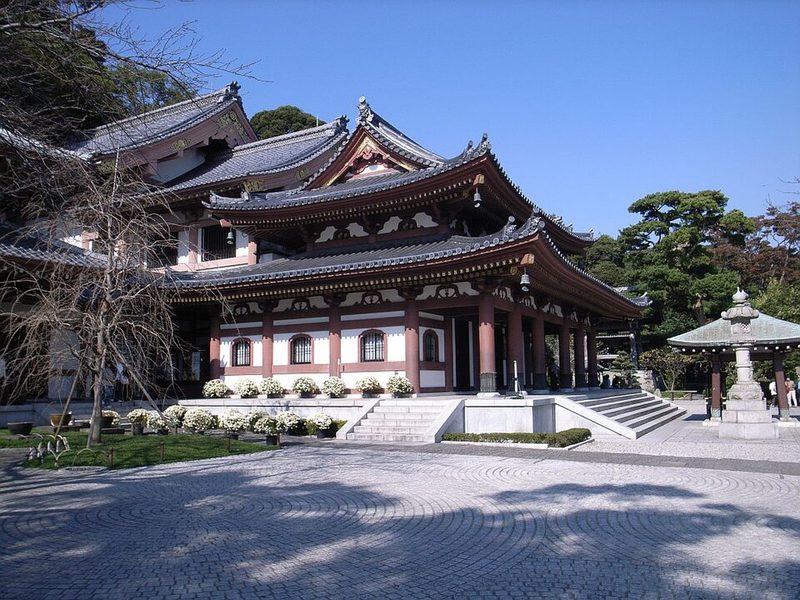 Hasedera Temple Autumn Night Viewing & Foliage Light-upNov 21 (Sat) – Dec 6 (Sun) · Hasedera Temple (Kamakura) · 0.5 km
 Hasedera Year-End Market (Kamakura)Dec 18 (Fri) · Hasedera Temple and its approach (Kamakura) · 0.5 km · free
 Kamakura's Nunneries: A History of Prayer Woven by Nuns (Kamakura Museum of History and Culture)Sep 19 (Sat) – Nov 28 (Sat) · Kamakura Museum of History and Culture, Annex Archaeology Gallery · 1.1 km
 Mindful City Kamakura Week 2026 (including the Zen2.0 finale at Kenchoji)Nov 14 (Sat) – Nov 21 (Sat) · Various locations in Kamakura (finale at Kenchoji Temple) · 1.3 km
Next stop: book for later today PR
Tickets people often book around here, on Klook.
Year-end deal: extra 5% off selected Tokyo attractions on Klook with code TOKYOATT5% (until Dec 31).
Enoshima-Kamakura Freepass (Enoden)→Kamakura & Enoshima day trip from Tokyo→Tips from visitors
Been here? Leave a short tip for the next traveler — in any language. No name, no sign-up.
Thank you! We check every tip by hand and post it within a day or two.
How we post tips: we read every one before it goes up. We remove swear words, insults, ads, links and anything that could identify a person. Tips are shown in the language they were written in, with a translate link. Kyochika never writes or pays for tips, and there are no star ratings.
FAQ
What are the opening hours of Kotoku-in — Great Buddha of Kamakura?
April–September: 8:00 am–5:30 pm. October–March: 8:00 am–5:00 pm. Last admission is 15 minutes before closing. No advance reservation is required for ordinary admission.
How much does Kotoku-in — Great Buddha of Kamakura cost?
General admission: ¥300. Elementary, junior-high and high-school students: ¥150. Preschool children: free. Entry into the Great Buddha: an additional ¥50.
The History of the Great Buddha: Who Built It, and Why?
The origins of the Great Buddha reach back to the era when Kamakura was the centre of Japan's warrior government. A historical chronicle known as the Azuma Kagami records the beginning of a large Buddha hall project in 1238. Another thirteenth-century travel account describes a wooden Buddha being constructed in Kamakura. The bronze statue visible today is generally dated to a project that began around 1252. According to the temple's historical explanation, the monk Joko is believed to have gathered donations toward its construction, but important details remain unresolved. The precise identity of the sculptor is unknown, as is the complete organization of the building project. Kamakura City historical research suggests support from the shogunate, but it would be misleading to credit one named ruler with commissioning and completing the entire statue. The Great Buddha is therefore both an extraordinary surviving work of art and a monument with unanswered historical questions. These uncertainties are part of its significance rather than gaps to be filled with a convenient legend.
What are some little-known spots in Kotoku-in — Great Buddha of Kamakura?
Traces of the Original Golden Finish, The Forehead Mark and 656 Hair Curls, Metalworking Evidence Inside the Statue, Stones from the Lost Buddha Hall, Commemorative Trees Connected with Thailand.