Komachi-dori & Wakamiya-oji (Dankazura) guide: history, hidden spots and events nearby
Staying nearby? Where to stay in Shinagawa for getting around →
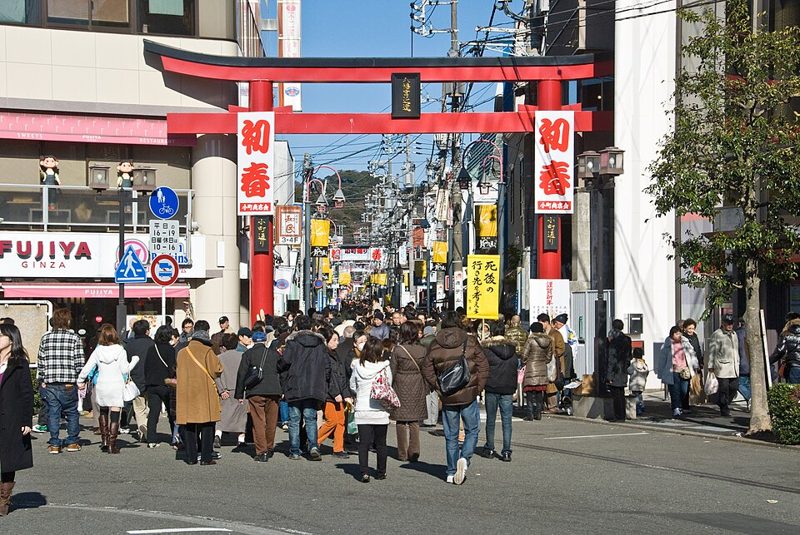
Two parallel streets offer two very different sides of Kamakura, just a short walk from the station. Komachi-dori is a lively shopping street filled with food, crafts and souvenirs, while the raised Dankazura promenade along Wakamiya-oji preserves the historic approach to Tsurugaoka Hachimangu Shrine. Together, they connect present-day Kamakura with the city planned by the warrior leader Minamoto no Yoritomo.
🎧 English audio guide · first track free (10 tracks) →
Kyochika's tips
- For a first visit, the most rewarding approach may be to treat Komachi-dori and Dankazura as one circular walk rather than separate destinations. Start with the shopping street near Kamakura Station, follow it north toward Tsurugaoka Hachimangu, and return south along the historic raised promenade. This creates a natural contrast between the contemporary city and its medieval layout. The walk can be enjoyable in any season, although the atmosphere changes substantially with visitor numbers, weather and shop opening hours.
- If shopping and food are the main priorities, choose a time when the businesses you want to visit are operating. If architecture, history or photography matter more, a morning walk along Wakamiya-oji may be appealing before spending the later part of your visit among the shops. Morning does not guarantee quiet conditions, particularly during holidays or popular sightseeing periods. It is better to plan around what you want to experience than to assume a particular hour will be free of crowds.
- Spring is particularly attractive for the cherry blossoms and azaleas associated with Dankazura. At other times, pay attention to the three torii gates along Wakamiya-oji, the raised structure of the promenade and the way the road points toward the shrine. On Komachi-dori, explore the side lanes as well as the main shopping strip. Consider choosing a seated meal or cafe stop instead of trying to eat while moving through busy pedestrian traffic.
Visiting info
| Opening hours | The public streets can be visited at any time. Individual shops, restaurants and other facilities set their own opening hours. |
|---|---|
| Closed | No regular closing day for the streets themselves. Individual businesses may close on different days. |
| Admission | Free to walk. Shopping, dining and entry to paid facilities cost extra. |
| Payment | Payment methods vary by business. Check each shop or restaurant; do not assume cards or cashless payments are universally accepted. |
| Location | Komachi and Yukinoshita areas, Kamakura, Kanagawa Prefecture, Japan. |
| From Kamakura Station | Use the East Exit. Komachi-dori is approximately a 4-minute walk away, marked by a red torii gate. Wakamiya-oji is approximately a 3-minute walk away. Dankazura begins farther along Wakamiya-oji at the second torii gate. |
| From Hase Station | Take the Enoden railway to Kamakura Station, then walk approximately 3–4 minutes from the East Exit. Check the railway timetable for the train journey. |
| From Kita-Kamakura Station | Take the JR Yokosuka Line to Kamakura Station, approximately 3 minutes by train, then walk approximately 3–4 minutes from the East Exit. |
| From Enoshima Station | Take the Enoden railway toward Kamakura Station and continue on foot from the East Exit. Check the timetable for the rail journey. |
| Suggested visit length | Visit Kanagawa gives approximately 40 minutes for Komachi Street and 15 minutes for Dankazura. Allow more time for shopping, food and shrine visits. |
| English information | JNTO provides an English-language introduction to Komachi-dori. English signs at individual businesses and attractions are not guaranteed. |
| Photography | The general street can be photographed, but ask permission before photographing inside shops, commercial interiors or other restricted spaces. Follow any displayed signs. |
| Street-food etiquette | Avoid eating while walking when it obstructs or inconveniences others. Eating inside shops or in designated areas is preferable, particularly when the street is busy. |
| Accessibility | Komachi-dori is an active shopping street and Dankazura is a raised pedestrian approach. Conditions at entrances and crossings should be checked individually rather than assuming the entire route is step-free. |
Checked on 2026-11-05 against the official pages. Hours and fees can change; please check before you go.
Sources: Visit Kanagawa — Komachi Street (Japanese) / Visit Kanagawa — Dankazura (Japanese) / JNTO — Kamakura Komachi-dori Street (Japanese) / Kamakura City — Dankazura (Japanese) / Kamakura City — Local Transport (Japanese)
How a warrior capital acquired its grand avenue and shopping street
The story begins with Minamoto no Yoritomo, the military leader who established Kamakura as the center of a new warrior government. In 1180, Yoritomo relocated the shrine now known as Tsurugaoka Hachimangu from a site closer to the coast to its present location. He also developed a straight ceremonial approach connecting the shrine with the direction of the sea. That avenue became Wakamiya-oji. According to Kamakura City, the construction of this road marked the beginning of Kamakura's planned urban development. It was not simply a convenient route for worshippers. By establishing a major axis through the settlement, Yoritomo helped define the relationship between the religious center and the expanding town. The avenue still gives visitors an unusually clear way to read the geographical organization of medieval Kamakura.
In 1182, Yoritomo ordered the construction of Dankazura, the raised approach running along part of Wakamiya-oji, as a prayer for the safe delivery of his wife, Hojo Masako. Dankazura is now approximately 500 meters long, extending from the second torii gate toward Tsurugaoka Hachimangu. Cherry trees and azaleas grow beside the path, making it especially attractive during flowering seasons. However, the promenade visible today should not be mistaken for a completely untouched medieval structure. Kamakura City's historical explanation states that its present general form developed through later modifications and was substantially established during the Taisho period. Maintenance and conservation projects have continued since then. What survives is therefore both a historic alignment and a living public space that has been adapted over time.
Komachi-dori tells a different but complementary story. Running approximately parallel to the grand avenue, it developed as a place of everyday exchange and commerce rather than as the principal ceremonial axis. JNTO describes its origins as a modest street market that gradually evolved into the modern shopping district. The development of railway connections in the modern period helped bring more visitors to Kamakura, encouraging businesses serving travelers. Today, the street combines cafes, restaurants, confectionery, craft shops, clothing boutiques and souvenir stores. It is possible to leave the railway station, buy a local sweet, browse traditional goods and reach one of Kamakura's most important shrines without leaving the historic center. The attraction is not that the two streets look alike, but that they reveal different functions of the same city: worship and public ceremony on one side, shopping, food and everyday life on the other.
Sources: Kamakura City — Dankazura (Japanese) / Visit Kanagawa — Dankazura (Japanese) / JNTO — Komachi-dori (Japanese)
A path built for a mother's safe delivery
One of the most memorable facts about Dankazura is the personal reason behind its construction. The elevated approach was commissioned by Minamoto no Yoritomo in 1182 as a prayer for the safe delivery of his wife, Hojo Masako. For modern visitors, the walkway is often associated with photographs of cherry blossoms and the approach to a famous shrine. Its founding purpose, however, connects a grand public avenue with a deeply personal concern: the safety of a mother and child. That combination makes it easier to imagine the human stories behind a city often described through military power and political history.
The path also demonstrates how history remains present in ordinary urban life. The alignment established during the medieval period continues to guide visitors toward the shrine, even though the structure itself has been repaired and reshaped over the centuries. Kamakura City identifies Dankazura as one of the city's characteristic historic landscapes. When standing on the approach, look along its length toward Tsurugaoka Hachimangu and consider how a single planned route could shape the appearance of an entire town. Its story is not only about what happened in the twelfth century. It is also about a place that people have continued to use and maintain long afterward.
Sources: Kamakura City — Dankazura (Japanese) / Visit Kanagawa — Dankazura (Japanese)
The historic promenade has been rebuilt and carefully maintained
It is tempting to imagine that every stone and tree along Dankazura has survived unchanged since the age of Yoritomo. The documented history is more complicated and more interesting. Kamakura City explains that the general appearance of the current walkway was established through modifications that continued into the Taisho period. Conservation has been an ongoing process rather than a single completed act. The route's importance lies in its historic location, purpose and continuous relationship with the city, not in a claim that all its visible materials date from the twelfth century.
A major conservation program planned between 2014 and 2016 included replacing cherry trees, repairing and reinforcing the stonework along the raised banks, improving the walking surface and installing drainage facilities. These are practical interventions, but they also demonstrate what is required to preserve a highly visible cultural landscape in the middle of a functioning town. Historic streets must remain safe and usable while retaining the characteristics that make them important. The present promenade therefore tells two stories at once: the medieval decision to create the route and the later work needed to keep it accessible.
As you walk, pay attention to the raised sides, the arrangement of the trees and the clear direction of the avenue. These details are easy to overlook when the main objective is a photograph of the blossoms. They are also reminders that historic preservation involves careful choices about surfaces, vegetation, drainage and public access. The promenade is not an archaeological exhibit isolated from everyday life. It is an important part of Kamakura's functioning streetscape.
Sources: Kamakura City — Dankazura (Japanese) / Kamakura City Board of Education — Conservation Project (Japanese)
Advertisement
Food culture, souvenirs and the etiquette of Komachi-dori
Komachi-dori is one of the easiest places in Kamakura to explore local food without committing to a formal restaurant reservation. JNTO highlights shirasu, or whitebait, as a regional specialty. Restaurants may serve it with rice or use it in other preparations, while confectionery shops offer sweets and baked goods. The street also has shops selling clothing, traditional crafts and souvenirs, so food is only one part of the experience. Visitors interested in local products might combine a meal with browsing ceramics, lacquerware or other decorative goods.
However, the popularity of takeaway food creates an important etiquette question. Some visitors assume that buying a snack from a street-facing shop means it is acceptable to continue walking while eating it. That assumption is best avoided. Kamakura City has discussed the issue in its tourism planning meetings, explaining that the relevant approach is to discourage eating while walking when it inconveniences other people, especially in crowded conditions. This should not be simplified into a claim that every form of outdoor eating is universally prohibited. The practical rule is to follow each business's instructions, use designated eating spaces where provided and keep pedestrian routes clear.
It is also useful to carry a small amount of cash as a precaution, although no single payment policy applies to the entire street. Card acceptance, mobile payments and other arrangements depend on the individual merchant and should be checked at the point of purchase. Similarly, do not assume that every shop has English-speaking staff or translated menus. JNTO provides English visitor information for the district, but the availability of English support varies between establishments. A translation app or a photograph of the menu can be useful when communicating about unfamiliar dishes.
Rather than trying to sample everything while moving through the crowd, choosing one or two places to sit can make the visit more comfortable. It also gives you an opportunity to observe daily life in Kamakura. The district is a working commercial area, not a permanently organized festival or food market. Shops are individual businesses with their own operating schedules, rules and personalities.
Sources: JNTO — Komachi-dori (Japanese) / Visit Kanagawa — Komachi Street (Japanese) / Kamakura City — Tourism Planning Meeting (Japanese)
A historic route that also serves local residents
Dankazura is frequently introduced as a sightseeing attraction, but official conservation documents describe a broader role. The route is part of everyday life for local residents and has also served as a route used by schoolchildren. This matters because it explains why decisions about restoration and access cannot be made solely for tourists. A walkway may be historically significant while also functioning as essential local infrastructure.
This practical role gives visitors a different way to understand Kamakura. Tsurugaoka Hachimangu and its approach are not separated from the modern community. They exist within a city where people work, study, shop and travel. A busy pedestrian route may have commuters and residents moving through the same space as people taking photographs. Respecting that shared use is an important part of visiting responsibly.
For photographs, avoid stopping in the middle of busy pedestrian movement or blocking access points. The shrine-facing view is attractive, but it is not necessary to occupy the entire path to appreciate it. Taking time to look at the promenade's design, the street on either side and the alignment of the torii gates can be just as rewarding as concentrating on one familiar image.
The same consideration applies to Komachi-dori. Although the shopping street is a major tourist destination, it remains an ordinary place of commerce. Business entrances, side streets and nearby residential spaces should be treated with care. Understanding that Kamakura's historical identity and contemporary community exist together makes the visit more meaningful than a simple sequence of shopping and sightseeing stops.
Sources: Kamakura City Board of Education — Dankazura Conservation (Japanese) / Kamakura City — Dankazura (Japanese)
Getting there by taxi or bus
🚕 Taxi
- Taxi There is a taxi rank in the station forecourt at Kamakura Station's East Exit. Because Komachi-dori and Wakamiya-oji are close to the station, walking is normally more practical than taking a taxi for this short journey. Taxis may be useful for onward journeys, depending on road conditions and luggage.
🚌 Bus
- Bus Kamakura Station's East Exit has a bus terminal serving several parts of the city. Kamakura City's route information lists services from stop 2 toward the Kita-Kamakura area, as well as services from stops 4 and 5 toward destinations in the direction of Tsurugaoka Hachimangu and beyond. Check the individual bus destination and stopping pattern before boarding. The shopping street itself is best reached on foot from the station.
Other ways to get around
- Other JR services connect Kamakura with Tokyo and Yokohama, including the Yokosuka Line. The Enoden railway serves Hase and Enoshima, while the JR Yokosuka Line links Kamakura and Kita-Kamakura. For the central shopping and historic avenue area, walking allows the two parallel streets to be combined in a simple route.
Road congestion can affect buses and taxis. Platform numbers, bus stops, route patterns and timetables may change, so consult the current transport operator's information on the day of travel. There is generally little advantage in using a road vehicle solely to travel between Kamakura Station and the nearby entrances to Komachi-dori or Wakamiya-oji.
Sources: Kamakura City — Local Transport (Japanese) / Visit Kanagawa — Kamakura Day Trip (Japanese) / JNTO — Komachi-dori (Japanese)
A walking loop from the red gate to the shrine and back
- Red torii gate at Komachi-dori Begin at Kamakura Station's East Exit and walk approximately 4 minutes to the red torii marking the entrance to the shopping street. This is a useful meeting point and a natural starting place. Continue north toward Tsurugaoka Hachimangu.
- Komachi-dori shopping street Allow approximately 15–25 minutes for a basic stroll through the shops. Look for local food, confectionery, ceramics, clothing and souvenirs. The route can take much longer if you stop for a meal or explore the smaller lanes.
- Northern part of Komachi-dori Continue for approximately 5–10 minutes toward the shrine area. The atmosphere gradually changes as the shopping route approaches the religious and historical center. Follow public signs and pedestrian routes rather than attempting shortcuts through private property.
- Tsurugaoka Hachimangu approach Reach the main shrine approach and take time to understand the direction of Wakamiya-oji. If you wish to enter the shrine grounds and explore the buildings, allow a separate period for that visit. Shrine worship and photography should follow on-site rules.
- Dankazura promenade Walk south along the raised promenade for approximately 10–15 minutes. Look at the trees, raised stone-lined sides and direction of the avenue. During the flowering season, allow extra time to appreciate the planted scenery without blocking other pedestrians.
- Second torii gate on Wakamiya-oji Finish at the southern end of Dankazura. From here, return toward Kamakura Station or continue exploring businesses along Wakamiya-oji. This return leg gives you a different perspective from the shopping street used on the outward journey.
The segment-by-segment walking times are Kyochika estimates, not official measured times. Visit Kanagawa separately provides general sightseeing durations of approximately 40 minutes for Komachi Street and 15 minutes for Dankazura. Actual duration depends on pedestrian conditions, traffic signals, shopping, dining and shrine visits. The route is designed as a convenient sightseeing loop rather than a guarantee of a particular journey time.
Sources: Visit Kanagawa — Komachi Street (Japanese) / Visit Kanagawa — Dankazura (Japanese) / JNTO — Komachi-dori (Japanese)
When to visit throughout the year
| Spring | Cherry blossoms and azaleas are the signature seasonal attractions along Dankazura. Flowering dates vary with the weather, and popular blooming periods may draw large numbers of visitors. Check current bloom information rather than assuming flowers will be at their best on a particular date. The historic approach is worth seeing even if the blossoms are not at their peak. |
|---|---|
| Summer | Combine short outdoor walks with indoor meals, cafes or shopping breaks. Heat, humidity and strong sunshine can make an extended walking itinerary tiring. The commercial street offers opportunities to organize a slower visit, although individual shops may have their own opening hours and seasonal schedules. |
| Autumn | Milder weather can make walking between the station and shrine more comfortable. This is a suitable season for paying attention to the streetscape, exploring shops and combining the area with other Kamakura attractions. Visitor numbers still depend on weekends, holidays and local events. |
| Winter | Without the spring blossoms, the form of the raised promenade, the gate alignment and the shrine approach become particularly interesting subjects for observation. Around New Year and other important visiting periods, consult current shrine and transport notices before travelling. Seasonal business hours and pedestrian arrangements may differ from ordinary days. |
Sources: Visit Kanagawa — Dankazura (Japanese) / JNTO — Kamakura and Around (Japanese)
How it compares
Enoshima Benzaiten Nakamise Street also combines souvenir shops, food and an approach to a shrine, but Komachi-dori stands beside the principal ceremonial avenue of Kamakura's former warrior capital. Compared with shopping streets around Kyoto's historic temples, the distinctive appeal here is the opportunity to see a commercial district and a road associated with Minamoto no Yoritomo's urban planning side by side.
Sources:
Nearby: combine with
- Combine with Tsurugaoka Hachimangu is the most natural attraction to combine with Komachi-dori and Dankazura, with the shrine approach approximately 5–10 minutes from the northern part of the shopping street on Kyochika's walking estimate. Visitors with more time can return to Kamakura Station and take the Enoden railway toward Hase-dera and the Great Buddha at Kotoku-in. If you are visiting from Tokyo for only one day, the shopping street, historic avenue and shrine form a convenient central Kamakura itinerary before exploring farther away.
Sources:
Five details worth looking for
- Where Dankazura actually begins
- Not every part of Wakamiya-oji is the raised historic walkway. Dankazura begins at the second torii gate and continues toward Tsurugaoka Hachimangu. Look at the difference in height between the pedestrian route and the surrounding street. This physical distinction is part of what makes the promenade recognizable. The walkway is not simply an ordinary sidewalk lined with trees.
- The three torii gates
- Wakamiya-oji is traditionally marked by three torii gates. Seeing the avenue as a longer ceremonial route, rather than considering only the final approach near the shrine, helps explain why its straight alignment matters. The gates provide visual reference points as you move toward or away from Tsurugaoka Hachimangu.
- Side lanes off Komachi-dori
- The main street attracts attention with restaurants, sweets and souvenirs, but JNTO also recommends exploring the smaller lanes. They can reveal different shopfronts, interesting buildings and a less obvious side of the commercial district. Remain on public routes and respect private properties. A side street is not automatically a quiet street, especially during popular visiting periods.
- Kamakura-bori craftsmanship
- Kamakura-bori, a local style of carved and lacquered woodwork, offers a cultural reason to look beyond the usual food and souvenir stops. JNTO introduces the Kamakurabori Museum on the Wakamiya-oji side of the area. Its craft tradition helps connect the modern shopping district with the artistic heritage of Kamakura. Check exhibition information and admission requirements separately before planning a visit.
- Azaleas as well as cherry blossoms
- Cherry blossoms are the best-known seasonal feature of Dankazura, but the planting also includes azaleas. Visit Kanagawa specifically highlights both flowers. If your trip falls outside the cherry blossom season, it is still worth observing the landscaping and the relationship between the trees, the pathway and the shrine approach.
Sources: Visit Kanagawa — Dankazura (Japanese) / Kamakura City — Dankazura (Japanese) / JNTO — Komachi-dori (Japanese)
Events near Komachi-dori & Wakamiya-oji (Dankazura) now and coming up
Within 1.5 km, nearest first. Checked against official pages.
 LIVING IN CINEMA: Actor Koji Yakusho (Kamakura Kawakita Film Museum)Sep 5 (Sat) – Dec 13 (Sun) · Kamakura City Kawakita Film Museum · on site
 Incense Wood Scent Experience and Scent Bag Making (Kito Tenkundo, Kamakura, Nov 21)Nov 21 (Sat) · Kito Tenkundo, 2F (Yukinoshita, Kamakura) · 0.1 km
 Showa 100: The Japanese Spirit in Kiyokata's Works (Kamakura Kaburaki Kiyokata Museum)Oct 23 (Fri) – Nov 29 (Sun) · Kamakura Kaburaki Kiyokata Museum · 0.1 km
 Mindful City Kamakura Week 2026 (including the Zen2.0 finale at Kenchoji)Nov 14 (Sat) – Nov 21 (Sat) · Various locations in Kamakura (finale at Kenchoji Temple) · 0.4 km
 Tsurugaoka Hachimangu New Year's Eve Rites: Oharae, Old Talisman Burning and Joya-sai (Dec 31)Dec 31 (Thu) · Tsurugaoka Hachimangu Shrine (Kamakura) · 0.5 km
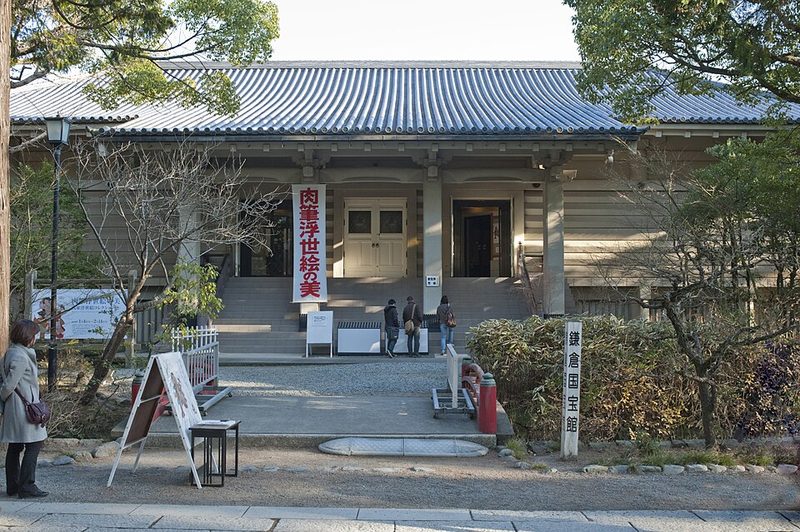 Kamakura Museum of National Treasures: Zuisenji 700 YearsOct 24 (Sat) – Dec 6 (Sun) · Kamakura Museum of National Treasures · 0.5 km
 Kamakura's Nunneries: A History of Prayer Woven by Nuns (Kamakura Museum of History and Culture)Sep 19 (Sat) – Nov 28 (Sat) · Kamakura Museum of History and Culture, Annex Archaeology Gallery · 0.6 km
 Chojuji Temple Autumn Special Opening (Kamakura)Oct 2 (Fri) – Dec 7 (Mon) · Chojuji Temple (Kita-Kamakura) · 0.8 km
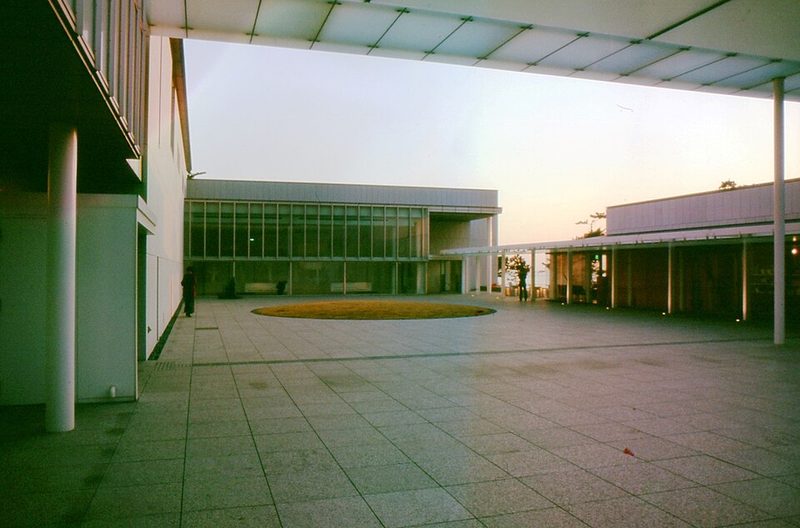 Polish Poster Exhibition 2: From the Former Collection of Copperplate Engraver Watanabe Chihiro (MOMAK Kamakura Annex)Oct 17 (Sat) – Jan 31 (Sun) · Museum of Modern Art, Kamakura Annex (Kanagawa) · 0.9 km
 Photo Memorial Thanksgiving (Jochiji Temple, Kita-Kamakura)Nov 14 (Sat) · Jochiji Temple grounds · 1.3 km
Next stop: book for later today PR
Tickets people often book around here, on Klook.
Year-end deal: extra 5% off selected Tokyo attractions on Klook with code TOKYOATT5% (until Dec 31).
Kamakura & Enoshima day trip from Tokyo→Enoshima-Kamakura Freepass (Enoden)→Tips from visitors
Been here? Leave a short tip for the next traveler — in any language. No name, no sign-up.
Thank you! We check every tip by hand and post it within a day or two.
How we post tips: we read every one before it goes up. We remove swear words, insults, ads, links and anything that could identify a person. Tips are shown in the language they were written in, with a translate link. Kyochika never writes or pays for tips, and there are no star ratings.
FAQ
What are the opening hours of Komachi-dori & Wakamiya-oji (Dankazura)?
The public streets can be visited at any time. Individual shops, restaurants and other facilities set their own opening hours.
How much does Komachi-dori & Wakamiya-oji (Dankazura) cost?
Free to walk. Shopping, dining and entry to paid facilities cost extra.
How a warrior capital acquired its grand avenue and shopping street
The story begins with Minamoto no Yoritomo, the military leader who established Kamakura as the center of a new warrior government. In 1180, Yoritomo relocated the shrine now known as Tsurugaoka Hachimangu from a site closer to the coast to its present location. He also developed a straight ceremonial approach connecting the shrine with the direction of the sea. That avenue became Wakamiya-oji. According to Kamakura City, the construction of this road marked the beginning of Kamakura's planned urban development. It was not simply a convenient route for worshippers. By establishing a major axis through the settlement, Yoritomo helped define the relationship between the religious center and the expanding town. The avenue still gives visitors an unusually clear way to read the geographical organization of medieval Kamakura.
What are some little-known spots in Komachi-dori & Wakamiya-oji (Dankazura)?
Where Dankazura actually begins, The three torii gates, Side lanes off Komachi-dori, Kamakura-bori craftsmanship, Azaleas as well as cherry blossoms.