Kencho-ji Temple guide: history, hidden spots and events nearby
Staying nearby? Where to stay in Shinagawa for getting around →
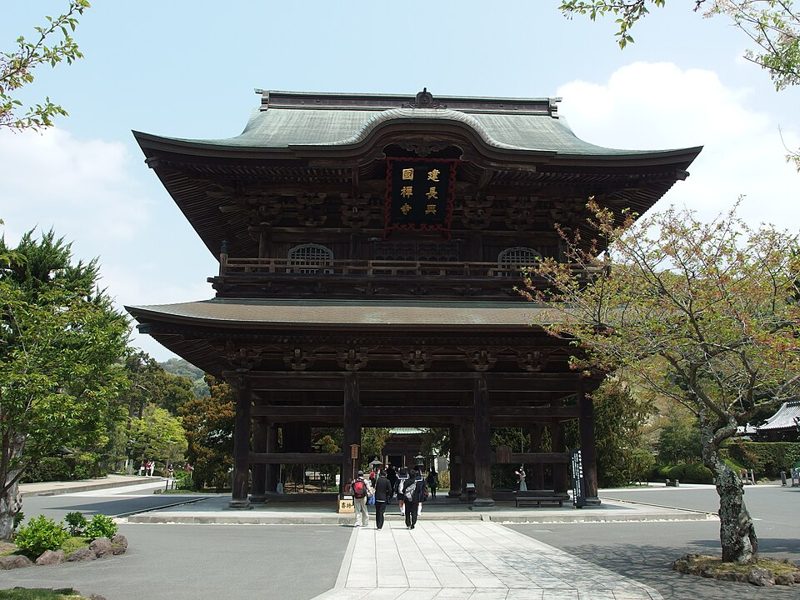
Founded in 1253 under the patronage of Hojo Tokiyori, Kencho-ji ranks first among Kamakura's Five Great Zen Temples and remains the head temple of the Kencho-ji branch of Rinzai Zen Buddhism. Its monumental Sanmon gate, National Treasure bronze bell, Buddha Hall, Dharma Hall, and landscaped gardens form one of Kamakura's most impressive historic temple complexes. Continue toward the hillside sanctuary of Hansobo to discover how the temple's architecture and surrounding mountains form a single remarkable landscape.
🎧 English audio guide · first track free (10 tracks) →
Kyochika's tips
- For a rewarding introduction to Kencho-ji, we suggest arriving via Kita-Kamakura Station and following the temple's central architectural axis from the entrance gate to the gardens.
- A morning visit may leave enough time to explore nearby Engaku-ji or continue toward Tsurugaoka Hachimangu, while spring blossoms and autumn foliage provide additional seasonal interest.
- If you enjoy walking and have sufficient time, the route toward Hansobo adds a very different hillside experience to the monumental buildings below.
Visiting info
| Opening hours | 8:30 AM–4:30 PM |
|---|---|
| Closed | No regular closing day is specified in the temple's official visitor information. Check official announcements for temporary changes or special events. |
| Admission | Adults and high school students: ¥500. Elementary and junior high school students: ¥200. Visitors with an eligible disability certificate and one accompanying person are admitted free on presentation of the certificate. Admission is also required when entering the grounds to access hiking trails. |
| Payment | Cash only, according to the temple's official admission information. |
| Address | 8 Yamanouchi, Kamakura, Kanagawa Prefecture, Japan |
| From Kita-Kamakura Station | Approximately 15 minutes on foot from JR Kita-Kamakura Station, or approximately 5 minutes by Enoden Bus bound for Kamakura Station to the Kenchoji bus stop. |
| From Kamakura Station | Approximately 30 minutes on foot from JR Kamakura Station, or approximately 10 minutes by Enoden Bus toward Ofuna to the Kenchoji bus stop. |
| From Hase Station | Take the Enoden railway to Kamakura Station, approximately 5 minutes, then walk approximately 30 minutes or take a bus for approximately 10 minutes. Allow extra time for transfers and waiting. |
| From Enoshima Station | Take the Enoden railway to Kamakura Station, approximately 23 minutes, then walk approximately 30 minutes or take a bus for approximately 10 minutes. Allow additional time for transfers and waiting. |
| Photography | Tripods and monopods are prohibited. Commercial photography and video recording require advance permission. Follow any restrictions displayed inside individual buildings. |
| Temple etiquette | The temple asks visitors to pay their respects to the principal Jizo Bodhisattva image in the Buddha Hall, bow respectfully, protect plants, and remain within designated visitor areas. Smoking is prohibited throughout the grounds. |
| Accessibility | Wheelchair access is available as far as the front of the Karamon gate. An accessible toilet is provided, and a limited number of wheelchairs can be borrowed. The hillside route is not equivalent to the accessible main precinct. |
| English-language information | The official website provides a separate link for English-language zazen information. The availability of English signs, leaflets, and English-speaking staff on a particular visit is not confirmed by the visitor information consulted. |
| Telephone | +81-467-22-0981 |
Checked on 2026-11-05 against the official pages. Hours and fees can change; please check before you go.
Sources: Kencho-ji Official Visitor Information (Japanese) / Enoshima Electric Railway Official Transport Guide (Japanese-language provider) / Kamakura City Tourism Association, Kencho-ji (Japanese) / Kencho-ji Official Zazen Information (Japanese)
The History of Kencho-ji: How the Kamakura Shogunate Helped Establish Japanese Zen
To understand Kencho-ji, it helps to imagine Kamakura in the middle of the thirteenth century. Japan was ruled by a military government based in this coastal city, and the Hojo family held considerable political authority through the office of shogunal regent. Hojo Tokiyori, the fifth regent, sponsored the establishment of Kencho-ji, which was formally dedicated in 1253. He invited Lanxi Daolong, known in Japan as Rankei Doryu, a Buddhist monk who had come from China's Southern Song dynasty, to become its founding abbot. The result was more than the construction of another religious building. Kencho-ji became an important center for the rigorous practice of Rinzai Zen, an approach to Buddhism that gained influence among Japan's medieval warrior class. The Kamakura City Tourism Association describes it as Japan's first specialized Zen training monastery. The temple's founding therefore reflects a significant development in Japanese religious history: the establishment of a major institution devoted specifically to Zen practice. Today, Kencho-ji remains the head temple of its branch of Rinzai Buddhism and holds first place in the traditional ranking of Kamakura's Five Great Zen Temples, known as the Kamakura Gozan.
Rankei Doryu arrived in Japan in 1246 and eventually gained the support of Hojo Tokiyori in Kamakura. At Kencho-ji, he introduced monastic practices modeled on those of Chinese Song-dynasty Zen communities. His handwritten monastic instructions, known as Hogo Kisoku, survive as a National Treasure. They provide historical evidence of the discipline that shaped life at the monastery. The temple's architecture was also influenced by continental models. Its original plan drew inspiration from Jingshan Wanshou Temple in China, with major structures arranged along a central axis. Rather than forming a loose collection of independent buildings, the temple was conceived as an ordered religious complex. The entrance gate, monumental Sanmon gate, Buddha Hall, Dharma Hall, and residential or ceremonial spaces were positioned to express a coherent layout. Construction continued over many years after the dedication in 1253. The temple's bronze bell was cast in 1255, and further buildings were completed later in the thirteenth century. The surviving historical plans also reveal how the monks' living quarters, training spaces, and service buildings were integrated into the arrangement.
The complex visitors see today is not an untouched survival from the Kamakura period. Fires, earthquakes, political change, and periods of declining support altered its buildings over the centuries. The collapse of the Kamakura shogunate in 1333 was especially significant because the temple lost an important source of patronage. Restoration and rebuilding continued under later authorities, particularly during the Edo period. The present Sanmon was constructed in 1775, while the current Dharma Hall was completed in 1825, according to Japan's Agency for Cultural Affairs. Both are designated Important Cultural Properties. Archaeological investigations also indicate that some buildings changed position or scale from the original medieval arrangement. This is important for visitors: Kencho-ji should not be interpreted as a perfectly preserved thirteenth-century monastery. Instead, it presents a layered history in which the original Chinese-influenced religious plan remained influential while generations of builders repaired and reshaped the site. The temple's continued religious activities demonstrate that this is a living Buddhist institution, not simply an architectural museum.
Sources: Kencho-ji Official History (Japanese) / Kamakura City Tourism Association (Japanese) / Agency for Cultural Affairs, Dharma Hall (Japanese) / Agency for Cultural Affairs, Sanmon Gate (Japanese)
Before the Zen Temple: The Valley Remembered as an Execution Ground
One of the most memorable stories associated with Kencho-ji concerns the land before the monastery existed. According to the temple's official history, the valley was traditionally known as Jigokudani, or Hell Valley, and was said to have been used as an execution ground. A Buddhist hall called Shinpei-ji stood in the area, dedicated to Jizo Bodhisattva. During the establishment of Kencho-ji, Hojo Tokiyori relocated that earlier hall. The temple's principal image remains Jizo Bodhisattva, surrounded by numerous smaller Jizo figures in the Buddha Hall. This background provides a fascinating contrast to the grand architectural setting encountered by visitors today.
The distinction between tradition and verified history matters here. The temple itself presents the execution-ground account as something handed down, not as an independently established archaeological fact. Nevertheless, the association with Jizo gives visitors a meaningful way to understand the unusual dedication of the Buddha Hall. Jizo is widely associated in Japanese Buddhism with compassion and the protection of beings in suffering. Rather than viewing the hall only as an imposing historic structure, consider how its religious imagery relates to the older traditions attached to the valley.
Sources: Kencho-ji Official History (Japanese)
Did Kenchin Soup Really Originate Here?
Visitors exploring Kamakura may encounter a vegetable-and-tofu soup called kenchin-jiru. The dish is traditionally associated with Kencho-ji, and the Kamakura City Tourism Association mentions the temple as its reputed place of origin. This makes for a memorable connection between Japanese food culture and a major Zen monastery. However, the exact origin of the recipe and the development of its name should not be treated as conclusively established historical facts.
The association is especially interesting because Zen training extends beyond formal meditation. In the temple's own explanation of Zen, daily tasks such as cleaning and other forms of work can become opportunities for disciplined attention. Food preparation and communal meals belong to the wider world of monastic life, even though a specific recipe cannot necessarily be traced to a single moment of invention. If you encounter kenchin-jiru during your Kamakura visit, it is worth remembering the traditional connection while distinguishing culinary folklore from documented history.
Sources: Kamakura City Tourism Association (Japanese) / Kencho-ji Official Explanation of Zen (Japanese)
Advertisement
The Monk Who Brought More Than Buddhist Teachings
Rankei Doryu's importance at Kencho-ji was not limited to religious instruction. He helped introduce an organized monastic culture modeled on the practices of Song-dynasty China. The written rules he left behind, known as Hogo Kisoku, survive as a National Treasure. According to Kencho-ji's official history, he instructed more than a hundred monks and placed great emphasis on discipline and appropriate conduct. The monastery was therefore an institution in which communal life, religious study, and daily practice were closely connected.
This changes how the site can be appreciated. A visitor may initially see a series of beautiful buildings, but the spaces were originally designed for people following demanding routines. The central passage through the gates and halls was only part of a much broader religious environment that also included monastic accommodation and facilities for daily life. As you move along the main axis, imagine the site as a functioning training institution rather than a collection of independent monuments. This historical perspective is one of the most valuable things to take away from a visit.
Sources: Kencho-ji Official History (Japanese)
Zen Practice Is Still Part of Temple Life
Kencho-ji continues to offer opportunities for members of the public to experience zazen, or seated Zen meditation. According to the official schedule, regular sessions are generally held on Fridays and Saturdays from 3:30 PM to 4:30 PM. Beginners are welcome, advance reservations are not required, and there is no separate participation fee beyond the normal temple admission charge. The usual venue is the Hojo, although the venue can change.
Participants must arrive at the meditation location at least fifteen minutes before the session begins. The temple recommends comfortable, loose-fitting clothing and asks participants to follow the instructor's directions. Sessions may be cancelled or relocated for temple events, so checking the official website or contacting the temple before travelling is important. For visitors interested in Buddhism as a continuing practice rather than only a historical subject, a properly planned zazen session may be a valuable addition to the itinerary. The official website also links to separate English-language zazen information.
Sources: Kencho-ji Official Zazen Information (Japanese) / Kencho-ji Official Notices (Japanese)
Getting there by taxi or bus
🚕 Taxi
- Taxi A taxi from Kamakura Station is an alternative to walking or using the bus. An exact designated taxi stand nearest to Kencho-ji was not confirmed in the official sources consulted. Check station signs or local taxi information before departure.
🚌 Bus
- Bus The nearest named stop is Kenchoji on Enoden Bus routes. From Kita-Kamakura Station, use a bus toward Kamakura Station, approximately 5 minutes. From Kamakura Station, use an appropriate bus toward Ofuna, approximately 10 minutes. Check current route numbers, boarding positions, and schedules before travelling.
Other ways to get around
- Other Walking is straightforward to plan: approximately 15 minutes from JR Kita-Kamakura Station or 30 minutes from JR Kamakura Station, according to the official temple guide. The temple also has a car park in front of the main gate with spaces for 20 passenger cars and 5 buses; advance reservations are not accepted. Official parking hours are 8:30 AM–4:30 PM.
Road traffic, bus waiting times, and transfer times are not included in the published journey estimates. For visitors making a walking tour of northern and central Kamakura, Kita-Kamakura Station is a practical starting point. Some roads and paths can be narrow or uneven, so follow designated pedestrian routes.
Sources: Kencho-ji Official Access Information (Japanese) / Kamakura City Tourism Association Walking Route (Japanese)
A Self-Guided Walk from the Main Gate to Hansobo
- Main Gate and Admission Entrance Begin at the entrance, pay the admission fee, and check the official precinct information. Look ahead to understand how the principal buildings are arranged along the central route. Allow approximately 3 minutes.
- Sanmon Gate Approach the monumental two-story gate, completed in 1775. View it both from a distance and from beneath its enormous roof. The Agency for Cultural Affairs identifies its architectural importance and its substantial scale. Allow approximately 5 minutes.
- Bell Tower Visit the National Treasure bronze bell, cast in 1255. This is one of the clearest material connections to the temple's earliest years. Look for the inscription associated with the name Kencho Zenji. Allow approximately 5 minutes.
- Juniper Garden and Buddha Hall Pause near the old juniper trees before approaching the Buddha Hall, or Butsuden. Pay your respects to the principal Jizo Bodhisattva image and notice how the religious setting differs from temples centered on a Buddha image. Allow approximately 10 minutes.
- Dharma Hall Continue to the Hatto, completed in 1825. The large wooden structure is an Important Cultural Property. Look at the roofline, eaves, and architectural proportions. Allow approximately 5 minutes.
- Karamon Gate, Hojo and Garden Continue toward the Karamon gate and the abbot's quarters. Where public access is permitted, enjoy the relationship between the garden, pond, and surrounding architecture. Allow approximately 10–15 minutes.
- Hansobo Hillside Route If you have enough time and energy, follow the designated route farther into the temple grounds toward Hansobo. The climb introduces the mountain landscape beyond the main halls. Allow approximately 15–25 minutes in one direction as a planning estimate.
All stop-by-stop walking and viewing times are Kyochika estimates, not official temple timings. As a planning guide, allow around 40–60 minutes for the principal buildings or approximately 90–120 minutes if including a return walk toward Hansobo. Actual duration depends on walking speed, access restrictions, stops, and weather. Do not enter closed monastic buildings or prohibited areas, and be especially careful on hillside steps.
Sources: Kencho-ji Official Visitor Map (Japanese) / Kencho-ji Official History (Japanese) / Kamakura City Tourism Association (Japanese) / Agency for Cultural Affairs, Sanmon (Japanese)
When to Visit Kencho-ji
| Spring | White magnolia and cherry blossoms add seasonal color to the temple grounds. The Kamakura City Tourism Association lists these among the temple's spring flowers. Blossom timing varies from year to year, so avoid planning around an assumed exact peak date. |
|---|---|
| Summer | Seasonal plants, including flowering rock plants described in the local tourism information, add interest to the grounds. Summer visitors should prepare for warmth and humidity, particularly if planning to climb toward Hansobo. |
| Autumn | Japanese bush clover and autumn foliage are among the seasonal highlights. The temple's trees and the route toward Hansobo may provide attractive contrasts with the historic architecture. Foliage timing changes each year, and the local tourism association publishes seasonal reports. |
| Winter | The evergreen juniper trees and substantial wooden architecture remain worthwhile subjects when deciduous trees have lost their leaves. Winter is a good season to concentrate on the forms of the gates, roof structures, and buildings, provided you dress appropriately for the temperature. |
Sources: Kamakura City Tourism Association, Kencho-ji (Japanese) / Kamakura City Tourism Association, Autumn Reports (Japanese) / Kamakura City Tourism Association, Cherry Blossom Reports (Japanese)
How it compares
Kencho-ji ranks first among Kamakura's Five Great Zen Temples, while nearby Engaku-ji ranks second; Kencho-ji is particularly notable for its monumental Sanmon gate and strongly defined architectural axis. Visiting both offers an excellent introduction to the development of Zen Buddhism under the Kamakura shogunate and allows you to compare two major historic monasteries within the same part of the city.
Sources:
Nearby: combine with
- Combine with An excellent day-trip combination is Engaku-ji, near Kita-Kamakura Station, followed by Kencho-ji and then Tsurugaoka Hachimangu on the way toward central Kamakura. Allow roughly 15–20 minutes on foot between Kencho-ji and the Tsurugaoka Hachimangu area as a Kyochika planning estimate, not an officially published walking time. Starting at Kita-Kamakura and finishing near Kamakura Station avoids unnecessary backtracking and gives the day a natural progression from Zen temple architecture to one of the city's major Shinto shrines.
Sources:
Five Details Worth Looking For
- The National Treasure Bronze Bell
- Cast in 1255 under the patronage of Hojo Tokiyori, the temple bell is one of the most important surviving objects associated with Kencho-ji's early history. Its inscription includes the name Kencho Zenji, reflecting the monastery's identification as a Zen temple. Visitors naturally focus on the enormous entrance gate, but the bell gives a more direct connection to the thirteenth-century institution. Look at the bell itself and its setting rather than treating the bell tower as a minor stop between the larger buildings.
- The Ancient Juniper Trees
- Near the Buddha Hall stand Japanese juniper trees, called byakushin. The Kamakura City Tourism Association records a tradition that Rankei Doryu planted their seeds. This is a temple tradition rather than a scientifically verified statement about the age of each tree. Their twisting trunks and mature branches nevertheless make them striking companions to the surrounding architecture. They also remind visitors that the temple landscape includes living natural features as well as stone, timber, and bronze.
- The Dharma Hall's Edo-Period Craftsmanship
- The present Dharma Hall, or Hatto, was completed in 1825. According to the Agency for Cultural Affairs, the master carpenter was Kawachi Kyuemon, associated with the temple's building tradition. The large structure uses Zen-style architectural principles, with substantial roof framing and decorative details reflecting the craftsmanship of the late Edo period. Before entering any accessible interior, take time to examine the exterior roof and the intricate wooden elements beneath the eaves.
- The Garden Beyond the Formal Buildings
- Kencho-ji's architectural sequence leads toward the abbot's quarters, known as the Hojo, and a pond garden. The garden is recognized as a nationally designated Place of Scenic Beauty. Its atmosphere contrasts with the monumental gates and halls earlier in the visit. Where access is permitted, try to appreciate the relationship between water, garden space, and the buildings facing it. The experience is different from looking at an individual statue or architectural detail.
- The Route Toward Hansobo
- The hillside path beyond the principal buildings leads toward Hansobo, a sanctuary in the upper part of the temple grounds, and connects onward with the Tenen hiking area. It offers a different perspective on the temple's setting, away from the formal central architectural axis. Some sections include slopes and steps, so this is an optional extension rather than an essential part of every visit. It is particularly suited to visitors who enjoy walking and have sufficient time before the grounds close.
Sources: Kencho-ji Official Precinct Guide (Japanese) / Kencho-ji Official History (Japanese) / Kamakura City Tourism Association (Japanese) / Agency for Cultural Affairs, Dharma Hall (Japanese)
Events near Kencho-ji Temple now and coming up
Within 1.5 km, nearest first. Checked against official pages.
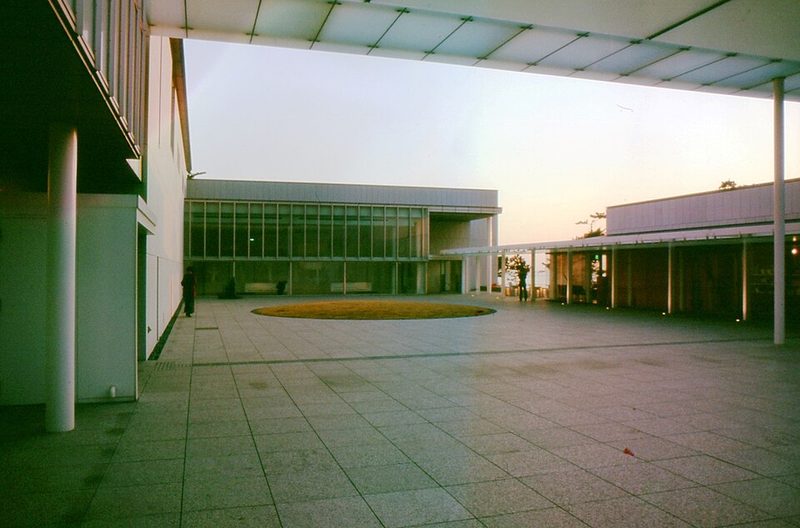 Polish Poster Exhibition 2: From the Former Collection of Copperplate Engraver Watanabe Chihiro (MOMAK Kamakura Annex)Oct 17 (Sat) – Jan 31 (Sun) · Museum of Modern Art, Kamakura Annex (Kanagawa) · 0.3 km
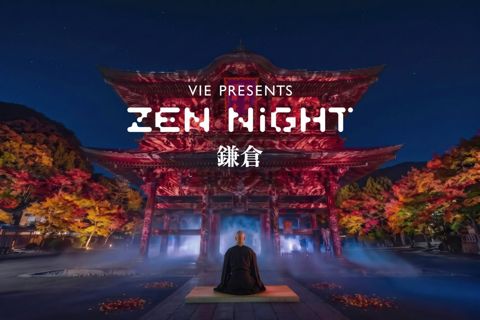 VIE presents ZEN NIGHT Kamakura (Night Viewing at Kenchoji in Autumn Colors)Oct 29 (Thu) – Dec 6 (Sun) · Kenchoji Temple (Kamakura) · 0.6 km
 Tsurugaoka Hachimangu New Year's Eve Rites: Oharae, Old Talisman Burning and Joya-sai (Dec 31)Dec 31 (Thu) · Tsurugaoka Hachimangu Shrine (Kamakura) · 0.7 km
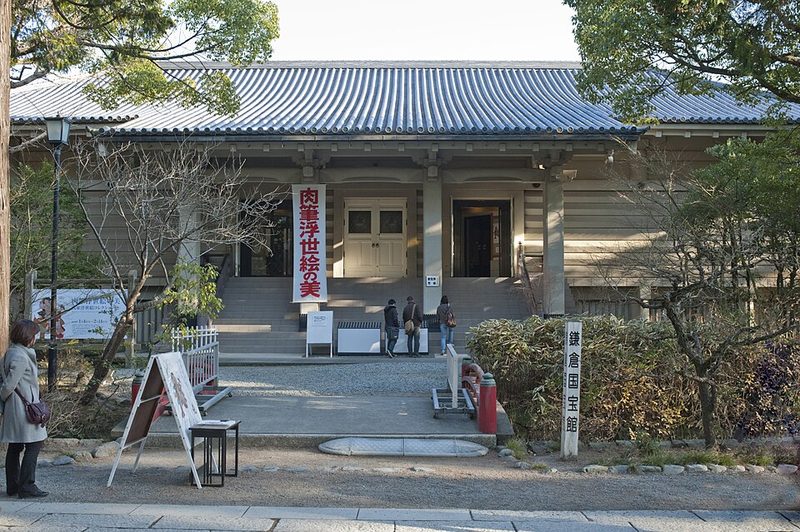 Kamakura Museum of National Treasures: Zuisenji 700 YearsOct 24 (Sat) – Dec 6 (Sun) · Kamakura Museum of National Treasures · 0.8 km
 Chojuji Temple Autumn Special Opening (Kamakura)Oct 2 (Fri) – Dec 7 (Mon) · Chojuji Temple (Kita-Kamakura) · 0.8 km
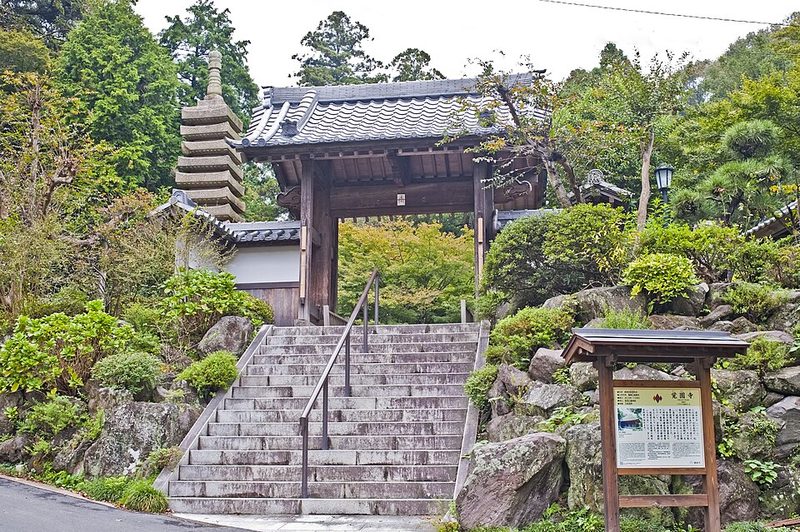 Daniel Ost in Kamakura: Arranging Autumn at Kakuonji (Kakuonji Temple)Nov 12 (Thu) – Nov 17 (Tue) · Kakuonji Temple (former Utsumi residence, Yakushido hall and grounds) · 0.9 km
 Photo Memorial Thanksgiving (Jochiji Temple, Kita-Kamakura)Nov 14 (Sat) · Jochiji Temple grounds · 0.9 km
 LIVING IN CINEMA: Actor Koji Yakusho (Kamakura Kawakita Film Museum)Sep 5 (Sat) – Dec 13 (Sun) · Kamakura City Kawakita Film Museum · 1.1 km
 Incense Wood Scent Experience and Scent Bag Making (Kito Tenkundo, Kamakura, Nov 21)Nov 21 (Sat) · Kito Tenkundo, 2F (Yukinoshita, Kamakura) · 1.2 km
 Showa 100: The Japanese Spirit in Kiyokata's Works (Kamakura Kaburaki Kiyokata Museum)Oct 23 (Fri) – Nov 29 (Sun) · Kamakura Kaburaki Kiyokata Museum · 1.2 km
 Kamakura's Nunneries: A History of Prayer Woven by Nuns (Kamakura Museum of History and Culture)Sep 19 (Sat) – Nov 28 (Sat) · Kamakura Museum of History and Culture, Annex Archaeology Gallery · 1.4 km
Next stop: book for later today PR
Tickets people often book around here, on Klook.
Year-end deal: extra 5% off selected Tokyo attractions on Klook with code TOKYOATT5% (until Dec 31).
Kamakura & Enoshima day trip from Tokyo→Enoshima-Kamakura Freepass (Enoden)→Tips from visitors
Been here? Leave a short tip for the next traveler — in any language. No name, no sign-up.
Thank you! We check every tip by hand and post it within a day or two.
How we post tips: we read every one before it goes up. We remove swear words, insults, ads, links and anything that could identify a person. Tips are shown in the language they were written in, with a translate link. Kyochika never writes or pays for tips, and there are no star ratings.
FAQ
What are the opening hours of Kencho-ji Temple?
8:30 AM–4:30 PM
How much does Kencho-ji Temple cost?
Adults and high school students: ¥500. Elementary and junior high school students: ¥200. Visitors with an eligible disability certificate and one accompanying person are admitted free on presentation of the certificate. Admission is also required when entering the grounds to access hiking trails.
The History of Kencho-ji: How the Kamakura Shogunate Helped Establish Japanese Zen
To understand Kencho-ji, it helps to imagine Kamakura in the middle of the thirteenth century. Japan was ruled by a military government based in this coastal city, and the Hojo family held considerable political authority through the office of shogunal regent. Hojo Tokiyori, the fifth regent, sponsored the establishment of Kencho-ji, which was formally dedicated in 1253. He invited Lanxi Daolong, known in Japan as Rankei Doryu, a Buddhist monk who had come from China's Southern Song dynasty, to become its founding abbot. The result was more than the construction of another religious building. Kencho-ji became an important center for the rigorous practice of Rinzai Zen, an approach to Buddhism that gained influence among Japan's medieval warrior class. The Kamakura City Tourism Association describes it as Japan's first specialized Zen training monastery. The temple's founding therefore reflects a significant development in Japanese religious history: the establishment of a major institution devoted specifically to Zen practice. Today, Kencho-ji remains the head temple of its branch of Rinzai Buddhism and holds first place in the traditional ranking of Kamakura's Five Great Zen Temples, known as the Kamakura Gozan.
What are some little-known spots in Kencho-ji Temple?
The National Treasure Bronze Bell, The Ancient Juniper Trees, The Dharma Hall's Edo-Period Craftsmanship, The Garden Beyond the Formal Buildings, The Route Toward Hansobo.