Hase-dera Temple, Kamakura guide: history, hidden spots and events nearby
Staying nearby? Where to stay in Shinagawa for getting around →
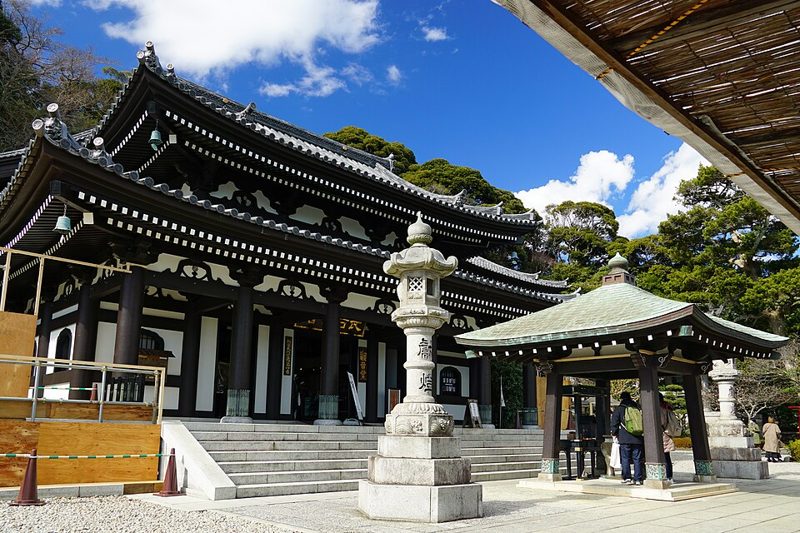
Hase-dera is one of Kamakura's most rewarding temples, combining an extraordinary 9.18-meter wooden statue of the Eleven-headed Kannon with hillside gardens and sweeping views toward Yuigahama Beach. Its grounds contain a cave carved with Buddhist figures, small guardian statues, a scripture repository, and a hydrangea path planted with approximately 2,500 bushes. Just a short walk from Hase Station and close to the Great Buddha, it makes an excellent stop on a day trip from Tokyo.
🎧 English audio guide · first track free (10 tracks) →
Kyochika's tips
- For a first visit, begin with the great Kannon statue, then give yourself time to enjoy the sea views from Kaiko Terrace and explore the smaller buildings on the way back.
- Morning is a sensible option during the popular hydrangea season, although it does not guarantee short queues or unrestricted access to the flower path.
- Pair Hase-dera with Kotoku-in's Great Buddha to experience two very different expressions of Buddhist art within the same neighborhood.
Visiting info
| Opening hours | July–March: admission from 8:00 a.m. to 4:30 p.m.; grounds close at 5:00 p.m. April–June: admission from 8:00 a.m. to 5:00 p.m.; grounds close at 5:30 p.m. |
|---|---|
| Closed | Normally open throughout the year. Check official announcements for changes caused by special events or severe weather. |
| Admission | Adults, including junior high school students: ¥400. Elementary school children: ¥200. A special ¥200 rate applies to eligible holders of Kamakura City's Fukujyu certificate. |
| Payment | The temple's official English guide confirms that ticket machines accept Suica and PASMO transportation IC cards. Credit-card acceptance has not been confirmed. Carrying some cash is sensible for smaller purchases. |
| Address | 3-11-2 Hase, Kamakura, Kanagawa 248-0016, Japan. |
| From Kamakura Station | Take the Enoden railway to Hase Station, then walk approximately 5 minutes. Alternatively, take a bus from Kamakura Station East Exit to Hase Kannon bus stop and walk approximately 5 minutes. |
| From Hase Station | Approximately 5 minutes on foot, according to the temple and Enoden railway. |
| From Kita-Kamakura Station | Take the JR Yokosuka Line to Kamakura Station, change to the Enoden railway, get off at Hase Station, and walk approximately 5 minutes. Total travel time depends on connections. |
| From Enoshima Station | Board an Enoden train toward Kamakura, get off at Hase Station, and walk approximately 5 minutes. Confirm the train journey time using the current timetable. |
| Kannon Museum | Admission from 9:00 a.m. to 4:00 p.m.; closes at 4:30 p.m. Adults ¥500 and elementary school children ¥200, in addition to general temple admission. Temporary closures may occur. |
| Sutra copying | Available daily in the Shoin building, with reception from 9:00 a.m. to 1:00 p.m. Each copying or Buddhist drawing sheet costs ¥1,200, and materials are provided. |
| Languages | The temple provides an official English-language website with visitor information, descriptions of its buildings, and a grounds map. Availability of printed English leaflets and English signs at every individual location has not been independently confirmed. |
| Photography | Photography and mobile-phone use are prohibited in the sutra-copying room under the temple's posted rules. During the announced 2026 autumn evening viewing, tripods and monopods are prohibited. Other photography restrictions should be checked at the individual halls and museum. |
| Autumn evening opening in 2026 | November 21–December 6, 2026. Illumination begins around sunset; the entrance closes at 7:00 p.m. and the grounds close at 7:30 p.m. Admission is ¥400 for adults and ¥200 for elementary school children. Severe weather may cause cancellation, and dates may be extended depending on foliage conditions. |
Checked on 2026-11-05 against the official pages. Hours and fees can change; please check before you go.
Sources: Hase-dera Official Admission and Access (English) / Hase-dera Official Introduction (English) / Hase-dera Official Visitor Information (Japanese) / Kamakura City Tourism Association, Hase-dera (Japanese) / Enoden Railway, Hase Station (Japanese) / Hase-dera, Autumn Evening Viewing 2026 (Japanese)
From a sacred-tree legend to a living Kannon temple
Hase-dera's full Japanese temple name is Kaikozan Jishoin Hasedera. Its traditional founding story begins in the Nara period, long before the rise of Kamakura as the political center of medieval Japan. According to the temple's own account, two images of the Eleven-headed Kannon were carved from a single sacred tree in Hatsuse, in present-day Nara Prefecture, in 721. One image was installed at the Hase-dera temple in Nara. The second was entrusted to the sea with a prayer that it would eventually reach a place where it could help people. The story says the image reached the coast of what is now Kanagawa Prefecture fifteen years later, leading to the establishment of the Kamakura temple in 736. The Kamakura City Tourism Association identifies Fujiwara no Fusasaki as the traditional patron and the monk Tokudo as its founding priest. These details belong to the temple's inherited religious tradition, not to a fully documented contemporary account of its construction.
The distinction between tradition and historical evidence matters here. Kamakura's official tourism association explains that the exact historical date of the temple's establishment remains unknown. What can be established from surviving material is that the temple existed by the thirteenth century: it preserves a bell bearing an inscription dated 1264. The institution was formerly known as Shin-Hasedera, or New Hase-dera, reflecting its association with the older temple in Nara. Over subsequent centuries it became an important center of devotion to Kannon, the bodhisattva associated with compassion. It is the fourth station on the Bando Thirty-three Kannon pilgrimage, a route linking temples dedicated to Kannon in eastern Japan. By the Edo period, visits by pilgrims had become an established part of the temple's religious life. The eighteenth day of each month remains especially associated with Kannon worship, connecting visitors to a rhythm of observance much older than modern sightseeing.
The temple that visitors see today is not a completely preserved Nara-period complex. Its buildings have changed repeatedly, and the great Kannon Hall has been rebuilt over the centuries. The Great Kanto Earthquake of 1923 caused serious damage to the temple, and the present Kannon Hall was completed in 1986. Inside stands the 9.18-meter wooden Eleven-headed Kannon, among the largest wooden Buddhist images in Japan. The figure has eleven additional faces above its principal face and holds a staff in its right hand and a vase in its left, standing upon a rocky base. This distinctive arrangement is associated with the Hase-dera style of Kannon imagery. Today, the ancient devotional focus remains central while visitors can also explore the temple's museum, cultivated gardens, sutra-copying space, cave sanctuary, and hillside viewpoints. Hase-dera is therefore best understood as both an active religious place and a landscape shaped by many generations.
Sources: Hase-dera Official History (English) / Hase-dera Official History and Buildings (Japanese) / Kamakura City Tourism Association, Historical Commentary (Japanese)
The Kannon that crossed the sea
The most memorable story associated with Hase-dera begins with a decision to send a sacred image out onto the ocean. According to the temple's traditional account, two Kannon figures were carved from the same tree in 721. The first remained in Nara, while the second was released into the sea with the hope that it would reach another place in need of Kannon's protection. Fifteen years later, the story continues, the image washed ashore in the region now known as Kanagawa, and a temple was established for its worship in 736. The account connects Hase-dera in Kamakura with the older Hase-dera in Nara. It is a religious foundation legend rather than a voyage that historians can independently verify.
Look toward the sea after seeing the great statue. The view offers a geographical setting for the temple's story: mountains behind you, a coastal town below, and the waters of Sagami Bay beyond. Another small sanctuary on the grounds, Kakigara Inari, preserves a related legend. Oyster shells are said to have attached themselves to the drifting Kannon image, protecting and guiding it. The shrine honors those shells, and the story is also reflected in unusual oyster-shell-themed prayer plaques. Whether a visitor approaches these accounts as expressions of faith, cultural memory, or storytelling, they reveal how the temple understands its relationship with the coast. The sea is not merely a scenic background here; it has a role in the religious identity that Hase-dera has preserved.
Sources: Hase-dera Official Introduction (English) / Hase-dera Official Grounds and Kakigara Inari (Japanese)
An Amida statue associated with Japan's first Kamakura shogun
Not far from the main Kannon Hall stands Amida-do, dedicated to Amida Buddha. The seated image housed here is traditionally associated with Minamoto no Yoritomo, the first shogun of the Kamakura shogunate. According to the account preserved by the temple, Yoritomo commissioned the image as part of a prayer to avert misfortune when he reached the age of forty-two. That traditional association explains why the figure became known as Yakuyoke Amida, or Amida of protection against misfortune. For visitors interested in the history of the samurai government, it offers an intriguing connection between the religious environment of Kamakura and the personal concerns attributed to its founding military ruler.
There is, however, a crucial historical qualification. Hase-dera's official Japanese explanation says that an inscription inside the statue indicates that it originally belonged to Seiganji, a nearby temple that no longer exists. In other words, it was not originally made for Hase-dera. This is a particularly useful example of how religious objects move and acquire new meanings over time. A famous association may become part of the object's devotional history, while physical evidence reveals another aspect of its origin. The statue is now counted among the Six Amida images of Kamakura. When visiting, appreciate both the story that generations have told about the figure and the more specific history revealed by its inscription. Neither needs to be erased, but they should not be confused.
Sources: Hase-dera Official Amida-do Commentary (Japanese)
The ancient bell is not the one hanging outside
A temple bell can sound timeless, but the distinction between an original object and a later replacement is important at Hase-dera. The temple preserves a bronze bell bearing the date 1264. This is among the older surviving bells associated with Kamakura and provides valuable material evidence for the temple's medieval history. The bell was designated an Important Cultural Property of Japan in 1953. Its inscription is particularly significant because the exact date of Hase-dera's original establishment is uncertain. While the foundation tradition points to 736, the medieval bell demonstrates that the temple was already established by the thirteenth century.
The bell currently hanging in the outdoor bell tower is a different one. It was cast in 1984 and continues to serve an active religious purpose. According to Hase-dera's official description, it is sounded in the morning and is also used for the New Year's Eve bell-ringing ceremony. The older bell is preserved and exhibited in the Kannon Museum. This division between preservation and daily use illustrates an important principle in the care of historical religious objects. A culturally significant original can be protected while a newer object maintains the living ritual. Visitors who only examine the bell tower may therefore miss the older artifact that helps historians understand the site. Anyone especially interested in the medieval period should consider visiting the museum as well as the outdoor buildings. Museum access requires an additional admission ticket, and individual exhibits may change.
Sources: Hase-dera Official Bell Tower Commentary (Japanese) / Kamakura City Tourism Association, Cultural Properties (Japanese)
The famous hydrangea hillside is a relatively recent landscape
It is easy to imagine that every celebrated temple garden has looked much the same for centuries. Hase-dera's hydrangea hillside is a reminder that historic places continue to evolve. According to the temple's official description, hydrangea cultivation along the hillside began in the early Heisei period, which started in 1989. From that relatively recent beginning, the planting developed into the extensive display for which the site is now widely known. The temple reports more than forty varieties and approximately 2,500 hydrangea bushes, including Japanese native varieties. This does not mean that the temple itself is modern: the religious institution and its Kannon traditions are far older. Rather, the landscape combines old religious spaces with a more recently developed horticultural attraction.
The arrangement of the path is as important as the flowers. Visitors move along a slope instead of standing in front of a single flower bed. Different sections reveal close views of blossoms, the hillsides around Kamakura, and finally the coastline of Yuigahama below. The shifting perspective makes the experience distinct from visiting a level urban garden. Hydrangeas are associated with the rainy season, but their appearance changes with the weather and with the particular varieties in bloom. Popularity also means that access procedures or waiting arrangements may change during the flowering period. A good plan is to check the temple's current flower information and visitor notices before setting out, then allow more time than the short distance on a map might suggest. The reward is not simply a photograph of flowers; it is the unusual combination of a flowering hillside, a historic temple, and a coastal view.
Sources: Hase-dera Official Hydrangea Path Description (Japanese) / Hase-dera Official Introduction (English)
Advertisement
Getting there by taxi or bus
🚕 Taxi
- Taxi A specific nearest official taxi stand for Hase-dera could not be established from the temple and municipal sources reviewed. If traveling by taxi, give the driver the destination 'Hase-dera, 3-11-2 Hase, Kamakura' and ask where stopping is permitted. Do not assume a taxi can stop directly at the main gate during busy periods.
🚌 Bus
- Bus Hase Kannon is the stop identified in the temple's official access instructions. From Kamakura Station East Exit, buses toward the Hase and Great Buddha area are available. Kamakura City's transport information identifies East Exit bus stops 1 and 6 as serving the relevant area, with Enoden Bus and Keikyu Bus services. The temple gives approximately 5 minutes on foot from Hase Kannon bus stop to its entrance. Check the latest operator timetable and destination display before boarding.
Other ways to get around
- Other The most straightforward railway approach is to use the Enoden line and get off at Hase Station, followed by an approximately 5-minute walk. From central Kamakura, board an Enoden service toward Fujisawa; from Enoshima, take a service toward Kamakura. From Kita-Kamakura, use the JR Yokosuka Line to Kamakura Station and change there. The temple also provides a visitor car park, but Kamakura's transport authorities encourage visitors to consider public transport.
Road congestion can affect journey times in central Kamakura and around the Hase area. Rail travel followed by walking is usually easier to plan because it avoids relying on road traffic conditions, although trains may also be busy during peak tourism periods. Bus routes, departures, and stopping arrangements should always be checked against current operator information. The exact location of a designated taxi stand remains unconfirmed in the reviewed official sources.
Sources: Hase-dera Official Access Information (English) / Enoden Railway, Hase Station (Japanese) / Kamakura City, Tourist Transport Information (Japanese) / Kamakura City, Public Transport Pass and Routes (Japanese)
A self-guided walk from the main gate to the sea view
- Main Gate — approximately 5 minutes Begin at the temple's distinctive entrance, where a large red lantern and an overhanging pine tree frame the gate. This is a good point to orient yourself before entering the grounds. Take a photograph from a position that does not obstruct other visitors, then proceed to the ticket office. The official English website confirms that the ticket machines accept Suica and PASMO transportation IC cards. Look at the temple's grounds map before deciding how much time to devote to the upper hillside and museum.
- Lower garden and Hojo Pond — approximately 5–10 minutes Start with the lower grounds rather than immediately rushing uphill. The landscaped garden and its pond provide an introduction to the temple's seasonal character. Notice the relationship between the water, planted areas, and the surrounding paths. During the autumn season, the pond can reflect the colors of the foliage. The temple's evening illumination also makes use of these lower garden spaces. If visiting in the morning, the gardens provide a useful place to settle into the slower pace of a religious site before moving toward the major halls.
- Benten-do and Benten-kutsu Cave — approximately 10 minutes Visit the hall associated with Benzaiten, then continue toward the nearby cave beyond the pond. Inside Benten-kutsu, look for figures carved into the rock walls, including Benzaiten and her Sixteen Children. The temple tradition associates this cave with Kobo Daishi. The low, enclosed setting is very different from the open hillside, so take care when moving through it. Treat the cave as a sanctuary and follow any instructions on photography or restricted areas. This stop offers a valuable contrast with the monumental wooden figure awaiting visitors above.
- Jizo-do Hall — approximately 5 minutes Follow the steps upward toward the middle level of the temple grounds. Jizo-do contains Fukutoku Jizo, associated in temple belief with blessings for descendants. Smaller Jizo figures around the hall have been installed as memorial offerings for children and ancestors. This is a place where the personal and intimate side of Buddhist devotion becomes especially apparent. Look at the arrangement of the smaller figures rather than treating them as decorative ornaments. Their purpose is connected with remembrance and prayer.
- Kannon-do Hall — approximately 10–15 minutes Make the great Eleven-headed Kannon the central stop of the walk. First notice the sheer scale of the 9.18-meter wooden figure inside the hall. Then look more closely at its distinctive arrangement: eleven additional faces above the main face, a staff held in the right hand, a vase in the left, and a rocky base beneath the feet. These details are part of the particular iconographic style associated with Hase-dera. Remember that this is an active place of worship, not simply an exhibition gallery. Observe the atmosphere respectfully, and check the hall's own rules before taking photographs.
- Amida-do and Kannon Museum — approximately 10–30 minutes Continue to Amida-do, where the Yakuyoke Amida image is associated by tradition with the first Kamakura shogun, Minamoto no Yoritomo. Its documented history is more complex, since an inscription connects it to another temple. If you have time and are interested in Buddhist art, add the Kannon Museum. The museum introduces Kannon devotion and preserves historic treasures associated with the temple, including its medieval bell. Admission to the museum is separate from the main temple ticket, so make this stop optional according to your interests and schedule.
- Kaiko Terrace — approximately 10 minutes After the enclosed spaces of the halls, pause at the elevated terrace. From here, visitors can look across the rooftops of Kamakura toward Yuigahama Beach and the coastline. The temple also describes views toward the Miura Peninsula and, in favorable weather, farther across the sea. Rather than looking for a specific distant landmark on a hazy day, enjoy the more immediate geography: the temple occupies a slope above a coastal town. The panorama is one of the clearest ways to understand why the natural setting is such an important part of Hase-dera's appeal.
- Hydrangea and View Path — approximately 15–25 minutes If the hillside route is open, follow the designated path upward for additional views over the flowers and the bay. The hydrangea display is particularly associated with the rainy season, but the hillside setting remains an important part of the grounds beyond the peak flowering period. Be prepared for steps and changes in elevation. During popular flowering periods, check whether extra admission arrangements or access controls apply. Do not assume that an early arrival eliminates waiting. Take your time on the path and allow other visitors to move past when stopping to admire a view.
- Kyozo and Daikoku-do — approximately 10 minutes On the return section, look for the scripture repository and its rotating bookshelf. The large rinzo may only be turned on specified dates, but the smaller mani wheels are normally available for daily use. The difference illustrates two types of Buddhist devotional practice. Continue to Daikoku-do, associated with good fortune and the Kamakura–Enoshima Seven Lucky Gods pilgrimage. The building also connects to a historic Daikokuten image preserved by the temple, although that original is not normally displayed. These small-scale spaces help balance the experience of the much larger Kannon Hall.
- Return through the lower grounds — approximately 10 minutes Make your way back toward the entrance, looking for the small Ryoen Jizo groups positioned in different parts of the grounds. If you have already visited the main buildings, this is a good opportunity to notice details that were easy to miss on the way in. Depending on the route and the time available, you may also choose to visit the small shop or pause at the cafe. From the main gate, continue on foot toward Hase Station or head toward the nearby Great Buddha at Kotoku-in.
This is a suggested circuit based on the official temple grounds descriptions, not a compulsory one-way route. All individual walking and viewing times are Kyochika estimates, not times published by the temple. Allow roughly 90 minutes to 2 hours for a relaxed visit, possibly longer if you enter the museum, undertake sutra copying, or visit during a busy flowering period. The precise route and access to individual areas may change. Follow on-site signs and staff instructions, especially when crowd management measures are in place.
Sources: Hase-dera Official Grounds Map and Buildings (English) / Hase-dera Official Detailed Grounds Guide (Japanese) / Hase-dera Official Visitor Information (English)
What to see in each season
| Spring — approximately March to May | The temple's garden changes with the flowering of plants such as white magnolia and cherry blossoms. This is a pleasant season to combine the main Kannon Hall with the garden paths and coastal viewpoints. Flowering dates vary with the weather, so use the temple's current flower updates rather than assuming that a particular calendar week will provide the best display. |
|---|---|
| Early summer — approximately late May to June | Hydrangeas become the main attraction on the hillside path. The temple describes a planting of approximately 2,500 bushes representing more than forty varieties. Flowers, greenery, and the view toward Yuigahama create one of Kamakura's most distinctive seasonal combinations. This is a popular period, and access arrangements may be different from those on an ordinary day. Consult the official visitor information before arriving. |
| Summer — approximately July and August | Seasonal flowers, including bellflowers, add interest to the garden. The permanent attractions remain the Kannon statue, the cave, smaller devotional buildings, and views from the upper grounds. Kamakura can be hot and humid in summer, so allow time for rest and drinking water. The hillside path and stairs may require more effort than the short walking distance from Hase Station suggests. |
| Autumn — approximately September to November | Autumn plants include bush clover and fragrant osmanthus, followed by changing foliage. The lower garden's pond and the trees around the temple buildings are especially attractive when seasonal colors develop. The timing and intensity of the foliage are weather-dependent. It is better to consult current reports than to rely on a fixed peak date. |
| Late autumn and early winter, 2026 | The temple has officially announced its autumn evening viewing for November 21 through December 6, 2026. Illumination begins around sunset, with the entrance closing at 7:00 p.m. and the grounds closing at 7:30 p.m. The published admission prices are ¥400 for adults and ¥200 for elementary school children. The event may be canceled during severe weather or extended according to foliage conditions. Tripods and monopods are not permitted. |
| Winter — approximately December to February | Camellias and plum blossoms are among the seasonal highlights listed by the local tourism association. Even when flower displays are limited, the temple's principal statue, hillside outlook, cave sanctuary, and religious buildings make a visit worthwhile. Clear days may offer particularly satisfying sea views, although visibility cannot be guaranteed. Dress for wind and cool temperatures on the exposed upper terraces. |
Sources: Kamakura City Tourism Association, Flowers and Seasons (Japanese) / Hase-dera Official Gardens and Hydrangea Path (Japanese) / Hase-dera Official Autumn Evening Viewing 2026 (Japanese)
How it compares
Kotoku-in, home of Kamakura's Great Buddha, is centered on a monumental outdoor bronze image of Amida Buddha, whereas Hase-dera features a towering wooden Kannon inside a hall and a more extensive landscape of gardens, caves, and sea-facing viewpoints. Visit Kotoku-in for the iconic open-air statue and Hase-dera for the combination of Buddhist art, seasonal flowers, devotional spaces, and a walk through a hillside temple.
Sources:
Nearby: combine with
- Combine with Kotoku-in's Great Buddha is the easiest major sight to combine with Hase-dera, and both are served by the Enoden railway's Hase Station. Enoden lists Hase-dera as approximately a 5-minute walk from the station and Kotoku-in as approximately 10 minutes away; allow around 10–15 minutes to walk directly between the two temples as a Kyochika planning estimate, not an officially published inter-temple time. If your day allows, add nearby Goryo Shrine or continue toward Yuigahama Beach to experience Kamakura's coastal atmosphere as well as its Buddhist heritage.
Sources:
Five details visitors often overlook
- Benten-kutsu Cave
- Beyond the lower garden's pond is a cave sanctuary associated by temple tradition with the Buddhist teacher Kobo Daishi. Figures of Benzaiten and her Sixteen Children are carved into the rock walls, together with other devotional imagery. The cave's enclosed stone setting feels remarkably different from the open gardens above. Instead of treating it as a quick photo stop, take time to notice how the figures are integrated into the rock itself. Their presence turns the cave into a place of worship rather than merely a geological curiosity. The association with Kobo Daishi is a religious tradition and should not be treated as independently verified evidence of a historical stay.
- The rotating scripture repository
- The Kyozo building contains a rotating bookshelf known as a rinzo, holding Buddhist scriptures. According to Buddhist tradition, turning the entire structure once carries merit equivalent to reciting the scriptures inside. Visitors cannot turn it whenever they wish. The temple specifies the eighteenth of each month, January 1–3, April 8, and August 10 as permitted dates. Nearby are eighteen smaller mani prayer wheels associated with Tibetan Buddhist practice. These may be turned daily. The contrast is interesting: one large repository with carefully designated ritual days, and a series of smaller prayer wheels that visitors can encounter during an ordinary visit.
- Kakigara Inari and the oyster shells
- A small shrine on the grounds commemorates one of Hase-dera's most distinctive traditions. The story says that oyster shells attached themselves to the Kannon statue during its journey across the sea, helping protect and guide it to shore. The shrine honors those shells, and the motif appears in unusual devotional plaques. It is a small detail with an unusually large connection to the temple's foundation narrative. After hearing the story, the view of the nearby coastline takes on an additional layer of meaning. As with the sea voyage itself, this should be understood as a traditional religious account, not as a documented episode from the eighth century.
- The three groups of Ryoen Jizo
- The temple's official Japanese guide notes that three groups of small, closely gathered Jizo figures are positioned in different places around the grounds. Searching for all three adds a gentle sense of discovery to a walk that otherwise focuses on monumental architecture and major statues. They are especially easy to overlook when visitors concentrate on the main hall, the sea views, or the hydrangea path. The figures reward careful attention to the quieter corners of the garden. Rather than rushing from one named attraction to another, slow down and look near the paths and planted areas as you move between the temple's buildings.
- Daikoku-do and a historic image
- Hase-dera preserves a Daikokuten image dated 1412, described by the temple as the oldest of its kind in eastern Japan. The historical figure is held by the Kannon Museum and is not normally displayed. In Daikoku-do itself, visitors can pay respects to the currently enshrined Daikokuten figures, associated with prosperity and good fortune. The hall is also a stop on the Kamakura–Enoshima Seven Lucky Gods pilgrimage. This gives the site a connection to another devotional circuit beyond the Bando Kannon pilgrimage. It is worth remembering that the historic 1412 statue and the figures ordinarily encountered in the hall are not the same object.
Sources: Hase-dera Official Grounds Guide (English) / Hase-dera Official Detailed Grounds Guide (Japanese)
Events near Hase-dera Temple, Kamakura now and coming up
Within 1.5 km, nearest first. Checked against official pages.
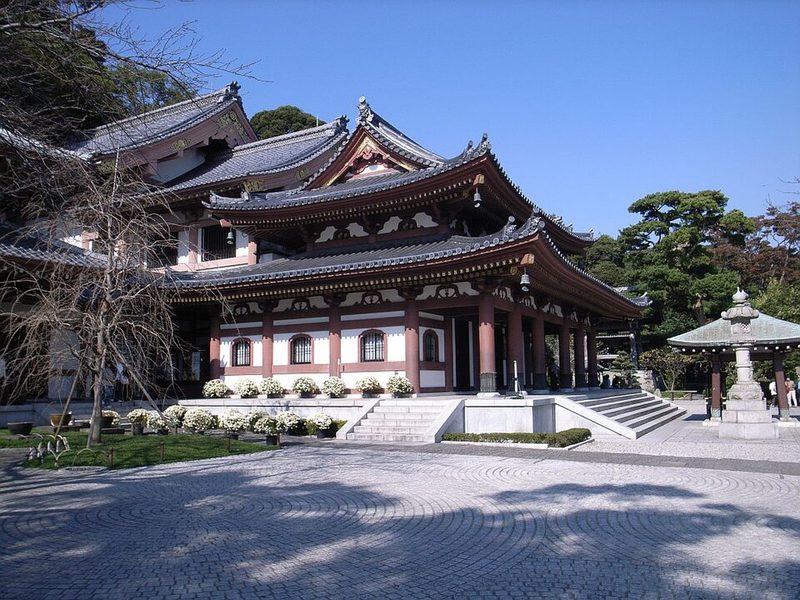 Hasedera Temple Autumn Night Viewing & Foliage Light-upNov 21 (Sat) – Dec 6 (Sun) · Hasedera Temple (Kamakura) · on site
 Hasedera Year-End Market (Kamakura)Dec 18 (Fri) · Hasedera Temple and its approach (Kamakura) · on site · free
 Yoshiya Nobuko Memorial Hall Autumn Public Opening (Hase, Kamakura)Oct 31 (Sat) – Nov 29 (Sun) · Yoshiya Nobuko Memorial Hall · 0.5 km · free
 Christmas Afternoon Tea 2026 (Kamakura Prince Hotel, Le Trianon)Nov 17 (Tue) – Dec 25 (Fri) · Kamakura Prince Hotel, Restaurant Le Trianon · 1.4 km
Next stop: book for later today PR
Tickets people often book around here, on Klook.
Year-end deal: extra 5% off selected Tokyo attractions on Klook with code TOKYOATT5% (until Dec 31).
Enoshima-Kamakura Freepass (Enoden)→Kamakura & Enoshima day trip from Tokyo→Tips from visitors
Been here? Leave a short tip for the next traveler — in any language. No name, no sign-up.
Thank you! We check every tip by hand and post it within a day or two.
How we post tips: we read every one before it goes up. We remove swear words, insults, ads, links and anything that could identify a person. Tips are shown in the language they were written in, with a translate link. Kyochika never writes or pays for tips, and there are no star ratings.
FAQ
What are the opening hours of Hase-dera Temple, Kamakura?
July–March: admission from 8:00 a.m. to 4:30 p.m.; grounds close at 5:00 p.m. April–June: admission from 8:00 a.m. to 5:00 p.m.; grounds close at 5:30 p.m.
How much does Hase-dera Temple, Kamakura cost?
Adults, including junior high school students: ¥400. Elementary school children: ¥200. A special ¥200 rate applies to eligible holders of Kamakura City's Fukujyu certificate.
From a sacred-tree legend to a living Kannon temple
Hase-dera's full Japanese temple name is Kaikozan Jishoin Hasedera. Its traditional founding story begins in the Nara period, long before the rise of Kamakura as the political center of medieval Japan. According to the temple's own account, two images of the Eleven-headed Kannon were carved from a single sacred tree in Hatsuse, in present-day Nara Prefecture, in 721. One image was installed at the Hase-dera temple in Nara. The second was entrusted to the sea with a prayer that it would eventually reach a place where it could help people. The story says the image reached the coast of what is now Kanagawa Prefecture fifteen years later, leading to the establishment of the Kamakura temple in 736. The Kamakura City Tourism Association identifies Fujiwara no Fusasaki as the traditional patron and the monk Tokudo as its founding priest. These details belong to the temple's inherited religious tradition, not to a fully documented contemporary account of its construction.
What are some little-known spots in Hase-dera Temple, Kamakura?
Benten-kutsu Cave, The rotating scripture repository, Kakigara Inari and the oyster shells, The three groups of Ryoen Jizo, Daikoku-do and a historic image.