Enoshima Island: Enoshima Shrine, Samuel Cocking Garden and Iwaya Caves guide: history, hidden spots and events nearby
Staying nearby? Where to stay in Shinagawa for getting around →
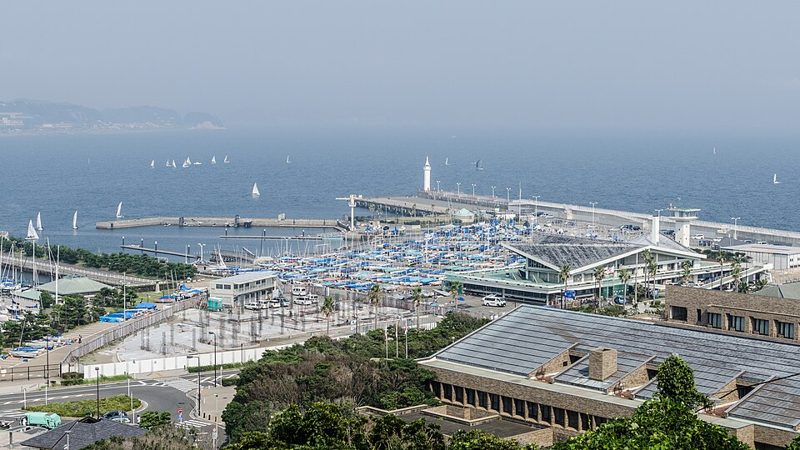
Enoshima is a small island off the Shonan coast where centuries of religious tradition meet dramatic sea cliffs, a historic garden, an observation tower and caves shaped by the waves. Follow the shrines uphill, explore Samuel Cocking Garden and continue across the island to the Iwaya Caves for a journey through several very different sides of Japanese history. It makes a rewarding day trip from Tokyo or an addition to Kamakura, although the slopes, stairs and walking distances deserve more time than the island might appear to require.
🎧 English audio guide · first track free (10 tracks) →
Kyochika's tips
- For a first visit, start with the shrines in the morning, explore the garden and tower, and reach the caves before they close.
- On a clear day, consider allowing time for views across the sea later in the afternoon, but remember that the caves normally close earlier than the observation tower.
- If you are combining Enoshima with Kamakura, choosing just one or two Kamakura attractions is usually a more comfortable plan than trying to see everything in a single day.
Visiting info
| Location | Enoshima, Fujisawa City, Kanagawa Prefecture. Enoshima Shrine: 2-3-8 Enoshima; Samuel Cocking Garden: 2-3-28 Enoshima; Iwaya Caves: Enoshima 2-chome. |
|---|---|
| Enoshima Shrine | The shrine complex consists of Hetsumiya, Nakatsumiya and Okutsumiya. General shrine visits are free. The Hetsumiya visitor information lists 8:30 AM–5:00 PM. |
| Hoanden Treasure Hall | 8:30 AM–4:30 PM. Admission: adults ¥200, junior and senior high school students ¥100, elementary school children ¥50, younger children free. |
| Samuel Cocking Garden | 9:00 AM–8:00 PM, last entry 7:30 PM. Entry is free from 9:00 AM to 5:00 PM. During nighttime events, visitors leaving after 5:00 PM need a night ticket: adults ¥500, elementary school children ¥250. On days without a nighttime event, garden entry is free throughout opening hours. |
| Enoshima Sea Candle | Normally 9:00 AM–8:00 PM. Admission: adults ¥800, elementary school children ¥400. Special events may change the schedule. |
| Enoshima Escar | Normally 8:50 AM–7:05 PM. The three-section uphill escalator costs ¥500 for adults and ¥250 for elementary school children. It does not run downhill. |
| Enoshima Iwaya Caves | Normally 9:00 AM–5:00 PM, with seasonal changes. Adults aged junior high school and above ¥500; elementary school children ¥200. Check the day's operating information before visiting. |
| Closures | Check individual facilities for temporary closures or changes. Cave access and sightseeing boat operations can be affected by conditions around the coast. |
| Payment | The garden, Sea Candle and Escar ticket facilities accept cash, credit cards, transport IC cards and PayPay. Payment methods at the shrine treasure hall and Iwaya Caves were not confirmed in the official pages checked, so carrying some cash is sensible. |
| From Katase-Enoshima Station | About 15 minutes on foot to the main shrine area and about 20 minutes to Samuel Cocking Garden, according to official visitor information. Follow the bridge and shopping street toward the island's main entrance. |
| From Enoshima Station | About 20–23 minutes on foot to the main shrine area or approximately 25 minutes to Samuel Cocking Garden. This is the Enoden railway station, not the Odakyu station. |
| From Shonan-Enoshima Station | About 26 minutes on foot to Samuel Cocking Garden, according to the garden's official access information. |
| From Kamakura Station | Take the Enoden train to Enoshima Station, approximately 23 minutes according to the railway operator's published guide, then walk approximately 25 minutes to Samuel Cocking Garden. Allow extra time for waiting and busy trains. |
| From Hase Station | Take the Enoden toward Enoshima Station, then follow the approximately 25-minute walking route to the garden. Confirm the actual train journey time using the current timetable. |
| From Kita-Kamakura Station | Travel by JR Yokosuka Line to Kamakura, change to the Enoden and ride to Enoshima Station. The Kamakura–Enoshima Enoden portion is listed at approximately 23 minutes. The total journey depends on connections. |
| Suggested visit duration | Fujisawa City's official Enoshima Iwaya heritage walking course takes approximately 3–3.5 hours. Add time for interiors, meals, photography and breaks. |
| English visitor information | The Sea Candle and Samuel Cocking Garden official website provides an English-language option. Fujisawa's official tourism website also links to English visitor information. Availability of English signs and printed pamphlets at every individual attraction has not been confirmed. |
| Photography | No blanket photography permission is assumed for the shrine treasure hall or cave interiors. Follow notices at each facility, particularly around religious objects and protected exhibits. |
| November 2026 temporary closure | The Sunset Terrace area inside Samuel Cocking Garden is under renovation. The operator's notice gives a provisional completion period around the end of November 2026. The garden and Sea Candle continue to operate, but the terrace and associated elevator stop are affected. |
| Winter illumination | The Shonan no Hoseki 2026–2027 illumination is scheduled for December 1, 2026, to February 28, 2027. Nighttime entry charges and lighting hours apply as announced by the operator. |
Checked on 2026-11-05 against the official pages. Hours and fees can change; please check before you go.
Sources: Fujisawa Official Tourism — Iwaya Caves (Japanese) / Fujisawa Official Tourism — Hetsumiya Shrine (Japanese) / Fujisawa Official Tourism — Hoanden (Japanese) / Sea Candle Official — Opening Hours (Japanese) / Sea Candle Official — Tickets (Japanese) / Sea Candle Official — Access (Japanese) / Fujisawa City — Heritage Walking Route (Japanese) / Sea Candle Official — Sunset Terrace Renovation (Japanese)
The History of Enoshima: From Sacred Caves to a Seaside Destination
Long before Enoshima became a popular sightseeing island, its caves were associated with religious practice. The Iwaya Caves on the western side of the island are regarded in local religious tradition as a starting point of Enoshima worship. Fujisawa's official tourism information preserves accounts that the Buddhist figures Kobo Daishi and Nichiren practiced in the caves, and a tradition that the military leader Minamoto no Yoritomo prayed there in 1182 in connection with the Oshu Fujiwara family. These accounts should be understood as traditions rather than as independently verified descriptions of everything that happened inside the caves. What they reveal is the importance of the island as a sacred coastal landscape. The surrounding sea, the darkness of the caves and the unusual rock formations helped give Enoshima a character very different from a shrine built on ordinary town streets.
During the medieval period, Enoshima's religious institutions became closely connected with the warriors who governed from Kamakura. Fujisawa's official visitor information records that Minamoto no Sanetomo established Hetsumiya in 1206 while praying for the prosperity of the Kamakura shogunate. The present Hetsumiya building is a later reconstruction, dating to 1675, and it underwent repairs in 1976. Nakatsumiya is traditionally attributed to the Buddhist monk Jikaku Daishi in 853, although its present vermilion building dates to a reconstruction in 1689. The island's worship also became closely associated with Benzaiten, a deity connected with water, music, artistic accomplishment and prosperity. Over time, Enoshima became a place visited not only for religious devotion but also by performers, merchants and other people seeking blessings. Stone lanterns donated during the Edo period are physical reminders of that history.
A remarkable change arrived in the Meiji period. Samuel Cocking, a British merchant, developed a garden and greenhouse complex on the island's heights. The greenhouses were equipped with brick foundations, steam heating using coal and a system for collecting and reusing rainwater. The operator describes the historical greenhouse as exceptionally large for its time in East Asia. Its remains were rediscovered during renovation work in 2002 and are now preserved as an important part of the garden's story. Enoshima also attracted scientific researchers, including the American zoologist Edward S. Morse, who established a marine research facility on the island in 1877. Today's visitor experiences bring these layers together: medieval and early modern shrine buildings, religious caves, a Meiji-era garden, scientific history and the modern Sea Candle observation tower. Enoshima is therefore not simply a beach excursion. It is a compact island where different periods of Japanese history remain unusually close to one another.
Sources: Fujisawa Official Tourism — Iwaya (Japanese) / Fujisawa Official Tourism — Hetsumiya (Japanese) / Fujisawa Official Tourism — Nakatsumiya (Japanese) / Sea Candle Official — History of the Garden (Japanese)
The Victorian Greenhouse Hidden Beneath a Modern Garden
Many visitors come to Samuel Cocking Garden for its flowers, sea views and the Sea Candle observation tower. Yet one of the most unusual things to see is the remains of a greenhouse built during Japan's Meiji period. Samuel Cocking was a British merchant who developed a garden on the island, bringing together plants and greenhouse technology that reflected an era of increasing international exchange. According to the official garden history, the original greenhouse complex was considered exceptionally large for its time in East Asia. Its design included brick construction, coal-powered steam heating and a rainwater collection system developed for a site without modern water infrastructure.
The surviving remains were discovered during renovation work in 2002. Today, the greenhouse remains provide a glimpse into the practical engineering behind what might otherwise seem like a picturesque seaside garden. Rather than thinking of the site only as a place for flowers, look for evidence of how plants were protected and supplied with heat and water. The story is memorable because it connects a familiar modern leisure attraction to an earlier age of technology and international horticulture.
Sources: Sea Candle Official — Samuel Cocking Garden History (Japanese)
The Caves, Mount Fuji and the Dragon Tradition
The Iwaya Caves are among Enoshima's most atmospheric attractions. According to Fujisawa's official tourism information, the first cave extends approximately 152 metres and the second approximately 56 metres. The first is associated with a traditional story that it connects with an ice cave near Mount Fuji, while the second is linked with a dragon tradition. These are stories preserved in local belief, not geological claims that visitors should take literally. Their significance lies in the way people connected prominent natural landmarks to religious ideas. A sacred mountain and a coastal island could become parts of the same imaginative and spiritual landscape.
The caves also provide a striking contrast to the rest of Enoshima. The garden is open to the sky, the tower offers distant views, and the shrine paths lead through trees and buildings. The caves turn attention inward toward stone, darkness, enclosed spaces and the sound of the nearby sea. Religious images and the cave walls help communicate how a natural formation could become a place of worship. For a rewarding visit, do not treat the caves merely as the final stop on a walking route. Consider how the island's spiritual history began with the landscape itself. Check the current opening information, since the caves normally close earlier than the garden and tower.
Sources: Fujisawa Official Tourism — Iwaya Caves (Japanese)
Advertisement
Why a Kamakura Shogun Built a Shrine on Enoshima
Hetsumiya connects Enoshima directly to the political history of medieval Kamakura. The official Fujisawa tourism guide states that Minamoto no Sanetomo founded the shrine in 1206 while praying for the prosperity of the Kamakura shogunate. That detail is worth remembering when planning a visit to both Kamakura and Enoshima. The two places may feel very different today, one associated with monumental temples and traditional streets, the other with open sea views and island paths, but their histories intersected through the religious concerns of the warrior government.
The current Hetsumiya building is not the original medieval structure. It was rebuilt in 1675 and renovated in 1976, illustrating how sacred sites can preserve continuity even when their physical buildings change. This distinction is useful when visiting Japanese shrines and temples generally: an institution's founding date does not necessarily describe the age of the structures visible today. As you approach Hetsumiya, think of it as a place whose importance continued across the Kamakura, Edo and modern periods. A visit to Tsurugaoka Hachimangu or other Kamakura religious sites can provide additional context for the world in which Enoshima's worship developed.
Sources: Fujisawa Official Tourism — Hetsumiya (Japanese)
An American Scientist and the Marine Life of Enoshima
Edward S. Morse is best known in Japan for his association with the Omori Shell Mounds, but his work also brought him to Enoshima. Fujisawa's official tourism information records that he established a marine research laboratory here in 1877 to study marine animals, including brachiopods. The city describes this as an early marine research facility in East Asia. At a time when modern scientific methods were developing rapidly in Japan, the island's coastline offered an environment in which marine organisms could be observed and investigated.
The Morse memorial near the island entrance tells a story quite different from the one encountered at Enoshima Shrine or in the Iwaya Caves. It represents the scientific curiosity of the late nineteenth century and the international exchange of knowledge during the Meiji period. Together with Samuel Cocking's garden, the memorial demonstrates that Enoshima attracted foreigners who were interested in more than sightseeing. Both men were connected to the island through practical projects: one studying marine life, the other developing a garden and greenhouse facilities. Their histories add an international dimension to a destination usually introduced through its religious traditions and coastal scenery.
Sources: Fujisawa Official Tourism — Morse Memorial (Japanese) / Sea Candle Official — Samuel Cocking Garden (Japanese)
Getting there by taxi or bus
🚕 Taxi
- Taxi A confirmed permanent taxi rank specifically serving the main island sightseeing route was not identified in the official pages reviewed. Taxis should not be assumed to provide access to the shrine stairways, garden entrance or caves. For a taxi connection, confirm an appropriate pickup point with the railway station or taxi operator before travelling.
🚌 Bus
- Bus The Sea Candle operator lists local bus connections from Fujisawa Station's south exit, including routes F31 and F3, and from Ofuna Station's east side on route N3. The Enoshima bus stop is listed as approximately eight minutes on foot from the island approach. Check the operator's current timetable and route information on the day of travel.
Other ways to get around
- Other The Bentenmaru sightseeing boat connects the Benten Bridge area with Chigogafuchi on the western side of the island. The crossing takes approximately six minutes. The official tourism association lists adult fares at ¥500, children aged six and above at ¥200, and children aged five and under as free. Payment is cash only. The boat can be useful as a return option after visiting Iwaya, but departures depend on weather, sea conditions and tide. The Escar is a separate uphill-only escalator system from the main shrine approach toward the garden, taking approximately four minutes over its three sections.
Rail and walking routes are generally the most straightforward ways to explore the island. Do not rely on the sightseeing boat as the only return option, and remember that Escar has no downhill service. Bus and boat operating information should be checked directly before departure. Earlier experimental shuttle-bus information has not been treated as evidence of regular service in 2026.
Sources: Sea Candle Official — Transport Access (Japanese) / Fujisawa Official Tourism — Bentenmaru (Japanese) / Sea Candle Official — Escar FAQ (Japanese)
A Walking Route from the Main Gate to the Iwaya Caves
- Bronze Torii Gate and Benzaiten Nakamise Street Begin at the island's main approach and walk along the shopping street toward the vermilion shrine gate. You will pass restaurants, snack shops and souvenir stores. Fujisawa City's heritage route gives approximately nine minutes from the Bronze Torii to the Hetsumiya area via intervening historic points, although actual walking times depend on stops and crowds.
- Hetsumiya Shrine and Hoanden Visit the first of Enoshima Shrine's three principal sanctuaries. If the treasure hall is open, consider seeing the Benzaiten images. The city heritage route gives approximately four minutes onward toward Nakatsumiya, excluding time spent inside the buildings.
- Nakatsumiya Shrine Continue uphill to the bright red shrine. Look at the historic lanterns and architectural decoration. From here, the city's published heritage walking course gives approximately three minutes to Samuel Cocking Garden.
- Samuel Cocking Garden and Sea Candle Explore the landscaped grounds, investigate the Meiji-era greenhouse remains and consider visiting the observation tower. The length of this stop is flexible. If the weather is clear, you may enjoy views toward the coastline and the surrounding sea. Check temporary closures, particularly the Sunset Terrace renovation announced for 2026.
- Okutsumiya Shrine Continue west along the island paths toward the third shrine. Look up inside the worship hall for the turtle painting. Allow additional time for slopes, steps and possible stops at historic monuments. The garden-to-Okutsumiya portion can take more than ten minutes when following the heritage route with its intermediate sights.
- Chigogafuchi Descend toward the rocky western coastline. This is one of the island's most scenic natural settings, with cliffs and breaking waves. The exposed rocks require caution, particularly when the surface is wet or the sea is rough. Do not assume that reaching the waterfront means all areas are safe to enter.
- Enoshima Iwaya Caves Continue to the caves. The city heritage route gives approximately three minutes from the coastal area to Iwaya. Explore the cave environments while remembering their long-standing association with religious practice. The official tourism information distinguishes the first and second caves, which are associated with different local traditions.
- Return to the Main Approach Retrace the walking route, or, if the sightseeing boat is operating, consider the Bentenmaru service between the Chigogafuchi area and the Benten Bridge side. Boat operations are not guaranteed and depend heavily on weather, waves and tide.
Fujisawa City's published heritage course is approximately 3–3.5 hours overall. Segment times supplied by the city are used where available; other walking durations and sightseeing allowances are Kyochika estimates, not guaranteed journey times. The route includes many steps and slopes. The Escar assists with the uphill portion only, so visitors must still plan for walking downhill. Visit the caves before their closing time and reserve enough time to return to the mainland.
Sources: Fujisawa City Heritage Walking Route (Japanese) / Fujisawa Official Tourism — Classic Route (Japanese) / Sea Candle Official — Access (Japanese) / Fujisawa Official Tourism — Bentenmaru (Japanese)
When to Visit Enoshima
| Spring | Spring can be a pleasant season for exploring the paths, shrine buildings and garden. The Sea Candle operator also lists a spring art event among its seasonal programmes. Exact dates and exhibitions change, so check the current year's schedule rather than assuming a particular installation will be present. |
|---|---|
| Summer | Summer brings a lively seaside atmosphere, but heat and strong sunlight can make the steps and uphill paths tiring. Carry water, allow breaks and consider beginning earlier in the day. The operator also lists Enoshima Toro, a seasonal lantern event, among its summer attractions. Check the event dates and evening opening arrangements before planning a visit. |
| Autumn | Autumn may offer more comfortable walking weather, depending on the day. The Shonan Candle event is a notable seasonal feature of the garden. For 2026, the officially announced dates were October 10 to November 3, so visitors arriving after that period should not expect the same display. |
| Winter | On clear winter days, visibility across the coast and the changing colours of the evening sky can be especially appealing. The Shonan no Hoseki illumination is scheduled for December 1, 2026, through February 28, 2027. Visitors interested in nighttime lights should account for separate evening admission rules, the later lighting schedule and colder conditions after sunset. |
Sources: Sea Candle Official — Seasonal Events and Tickets (Japanese) / Sea Candle Official — Shonan Candle 2026 (Japanese) / Sea Candle Official — Shonan no Hoseki 2026–2027 (Japanese)
How it compares
Kamakura's major temples and shrines are especially rewarding for visitors interested in medieval institutions, religious architecture and the history of the warrior government, whereas Enoshima combines religious heritage with sea caves, gardens and an observation tower. Choose Kamakura when you want to concentrate on historic buildings, or Enoshima when you want a walking experience that changes repeatedly between streets, shrines, gardens and the coast.
Sources:
Nearby: combine with
- Combine with The Enoshima area also offers the Enoshima Aquarium on the mainland near Katase Beach. Enoden's visitor guidance gives approximately ten minutes on foot from Enoshima Station to the aquarium, making it an accessible companion attraction before or after an island visit. For a wider Kamakura day trip, take the Enoden between Enoshima and Hase; Hase-dera is approximately five minutes on foot from Hase Station, while the Great Buddha is about ten minutes away according to the railway's station guide.
Sources:
Five Details That Are Easy to Miss
- The Two Benzaiten Images at Hoanden
- Near Hetsumiya stands an octagonal hall containing two important Benzaiten images: Happi Benzaiten and Myoon Benzaiten. The latter is particularly distinctive because it depicts a seated figure holding a biwa, a traditional Japanese lute. This is a place to explore the island's connection with religious art rather than simply taking a photograph outside the shrine. Allow time to look at the objects carefully, and follow any photography restrictions displayed at the entrance.
- The Donated Lanterns at Nakatsumiya
- Nakatsumiya is often remembered for its striking red shrine buildings, but the stone lanterns nearby deserve attention. Official tourism information identifies lanterns donated by entertainers and merchants active during the Edo period. These contributions reveal the social reach of Enoshima worship: people whose livelihoods depended on performance, business and public support came to the island with their own hopes and prayers. The lanterns make an interesting contrast with the shrine's bright architectural decoration.
- The All-Direction Turtle at Okutsumiya
- Inside the Okutsumiya worship hall, look upward for a turtle painting traditionally called the Happo-nirami no Kame, or the all-direction staring turtle. Its eyes are said to appear directed toward the viewer from different positions. This is one of the island's most engaging small artistic details. It encourages visitors to look beyond the sea view and appreciate a feature of the building itself. Observe quietly and avoid obstructing people who have come to worship.
- The Surviving Greenhouse Foundations
- Inside Samuel Cocking Garden, the remains of the original greenhouse offer an unexpected lesson in Meiji-period engineering. The operator explains that the heating system used steam generated with coal and that rainwater was collected for reuse. These details are particularly interesting because they show how a garden on a rocky island could support plants requiring controlled conditions. The remains also highlight the difference between today's landscaped visitor attraction and the experimental horticultural environment that preceded it.
- The Edward S. Morse Memorial
- Near the island entrance is a memorial connected with Edward S. Morse, the American zoologist also associated with the discovery of the Omori Shell Mounds. In 1877 he established a marine laboratory on Enoshima to study brachiopods, including animals known in Japanese as shamisen-gai. Fujisawa's tourism information describes the facility as an early landmark in marine science in East Asia. The memorial is a reminder that the island was not only a religious destination but also a place where modern scientific inquiry developed.
Sources: Fujisawa Official Tourism — Hoanden (Japanese) / Fujisawa Official Tourism — Nakatsumiya (Japanese) / Fujisawa City Heritage Route (Japanese) / Sea Candle Official — Garden History (Japanese) / Fujisawa Official Tourism — Morse Memorial (Japanese)
Events near Enoshima Island: Enoshima Shrine, Samuel Cocking Garden and Iwaya Caves now and coming up
Within 1.5 km, nearest first. Checked against official pages.
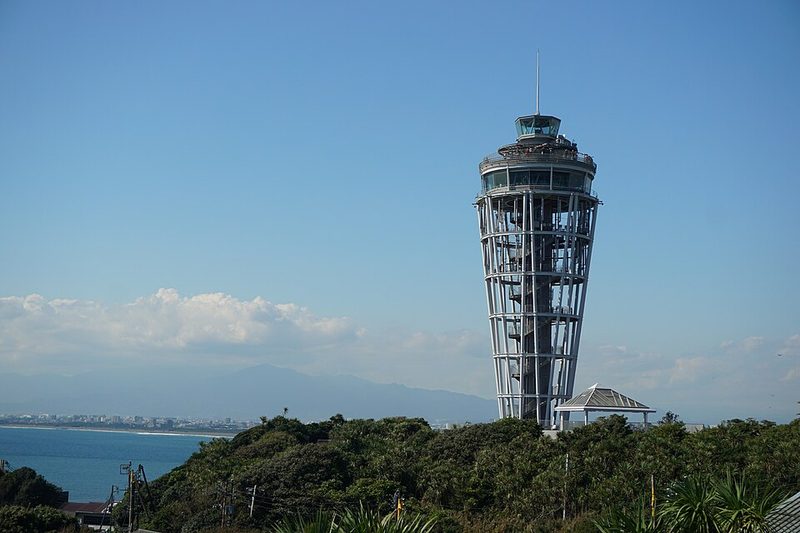 Shonan no Hoseki 2026-2027 (Enoshima Illumination)Dec 1 (Tue) – Jan 15 (Fri) · Enoshima Samuel Cocking Garden, Enoshima Sea Candle and more · 0.1 km
 ENOSUI CHRISTMAS 2026 (Enoshima Aquarium)Nov 1 (Sun) – Dec 25 (Fri) · Enoshima Aquarium · 0.9 km
Next stop: book for later today PR
Tickets people often book around here, on Klook.
Year-end deal: extra 5% off selected Tokyo attractions on Klook with code TOKYOATT5% (until Dec 31).
Enoshima Aquarium ticket→Enoshima-Kamakura Freepass (Enoden)→Tips from visitors
Been here? Leave a short tip for the next traveler — in any language. No name, no sign-up.
Thank you! We check every tip by hand and post it within a day or two.
How we post tips: we read every one before it goes up. We remove swear words, insults, ads, links and anything that could identify a person. Tips are shown in the language they were written in, with a translate link. Kyochika never writes or pays for tips, and there are no star ratings.
FAQ
What are the opening hours of Enoshima Island: Enoshima Shrine, Samuel Cocking Garden and Iwaya Caves?
Enoshima, Fujisawa City, Kanagawa Prefecture. Enoshima Shrine: 2-3-8 Enoshima; Samuel Cocking Garden: 2-3-28 Enoshima; Iwaya Caves: Enoshima 2-chome.
The History of Enoshima: From Sacred Caves to a Seaside Destination
Long before Enoshima became a popular sightseeing island, its caves were associated with religious practice. The Iwaya Caves on the western side of the island are regarded in local religious tradition as a starting point of Enoshima worship. Fujisawa's official tourism information preserves accounts that the Buddhist figures Kobo Daishi and Nichiren practiced in the caves, and a tradition that the military leader Minamoto no Yoritomo prayed there in 1182 in connection with the Oshu Fujiwara family. These accounts should be understood as traditions rather than as independently verified descriptions of everything that happened inside the caves. What they reveal is the importance of the island as a sacred coastal landscape. The surrounding sea, the darkness of the caves and the unusual rock formations helped give Enoshima a character very different from a shrine built on ordinary town streets.
What are some little-known spots in Enoshima Island: Enoshima Shrine, Samuel Cocking Garden and Iwaya Caves?
The Two Benzaiten Images at Hoanden, The Donated Lanterns at Nakatsumiya, The All-Direction Turtle at Okutsumiya, The Surviving Greenhouse Foundations, The Edward S. Morse Memorial.