Engaku-ji Temple guide: history, hidden spots and events nearby
Staying nearby? Where to stay in Shinagawa for getting around →
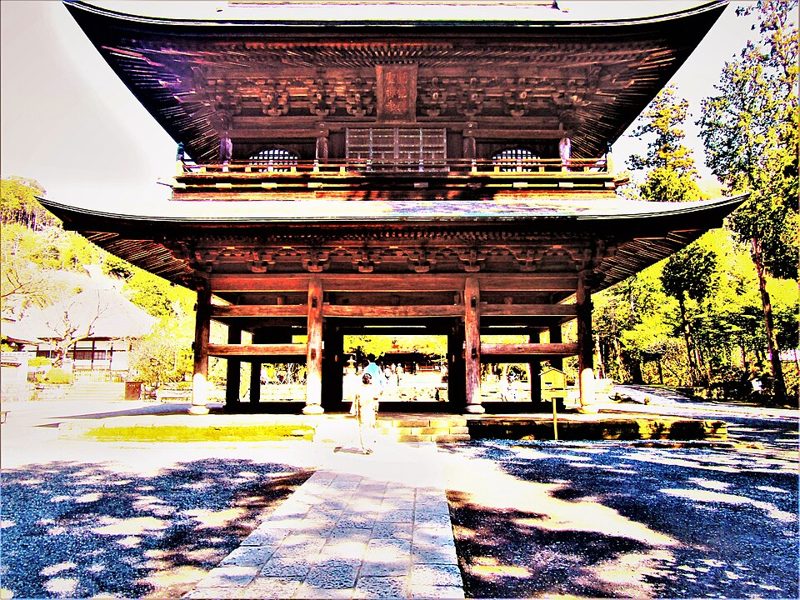
Just a one-minute walk from Kita-Kamakura Station, Engaku-ji is one of Kamakura's great Zen Buddhist temples, with monumental gates, halls, gardens and wooded hills arranged along a narrow valley. Founded in 1282 by the military ruler Hojo Tokimune, it was established partly to honor those who died during the Mongol invasions of Japan, regardless of which side they fought on. Its two National Treasures, the Shariden relic hall and the great temple bell, offer a remarkable connection to medieval Japan.
🎧 English audio guide · first track free (10 tracks) →
Kyochika's tips
- For a first visit, arrive near opening time and follow the central path gradually uphill from the outer gate toward the main hall, abbot's quarters and garden.
- The temple is especially appealing during spring blossoms, June hydrangeas and autumn foliage, although the actual flowering dates and visitor numbers vary from year to year.
- It is an excellent starting point for a Kita-Kamakura walking itinerary that continues to Meigetsu-in or Kencho-ji, rather than rushing through several distant Kamakura attractions.
Visiting info
| Opening hours | March–November: 8:30 a.m.–4:30 p.m., with visitors required to leave the grounds by 5:00 p.m. December–February: 8:30 a.m.–4:00 p.m., with departure by 4:30 p.m. |
|---|---|
| Closed | Normally open every day. The temple may close because of severe weather, including typhoons or snow. |
| Admission | Adults and high school students: ¥500. Elementary and junior high school students: ¥200. No group discounts. Disability certificate holders and one accompanying caregiver are admitted free. |
| Payment | The official website does not specify which payment methods are accepted for regular admission. Carrying sufficient Japanese yen in cash is advisable; do not assume credit cards or contactless payments are accepted. |
| Address | 409 Yamanouchi, Kamakura, Kanagawa 247-0062, Japan |
| From Kita-Kamakura Station | Take the JR Yokosuka Line to Kita-Kamakura Station. The temple is approximately one minute away on foot, according to the official website. |
| From Kamakura Station | Take the JR Yokosuka Line to Kita-Kamakura Station, then walk one minute. Alternatively, the temple lists Enoden buses from Kamakura Station toward Ofuna, Kamiooka or Hongodai, getting off at the Kita-Kamakura bus stop, one minute from the temple. The official temple website does not specify the train or bus journey duration. |
| From Hase Station | Take the Enoden railway to Kamakura Station, transfer to the JR Yokosuka Line toward Kita-Kamakura, and walk one minute from the station. The official temple website does not provide a total travel time for this route. |
| From Enoshima Station | Take the Enoden railway to Kamakura Station, transfer to the JR Yokosuka Line to Kita-Kamakura, and walk one minute. The official temple website does not give a complete journey time for this route. |
| From Tokyo | Use the JR Yokosuka Line to Kita-Kamakura. If traveling by the JR Tokaido Line or a Shonan-Shinjuku Line service that does not stop at Kita-Kamakura, transfer to the Yokosuka Line at Ofuna. |
| Photography | Tripods and monopods are prohibited. Do not lean against trees, posts or pillars to take photographs. Ask permission before photographing monks, stay out of fenced or private areas, and obtain authorization for commercial photography. Drawing and sketching are not permitted. |
| Shariden access | The National Treasure Shariden is not normally open for unrestricted entry. The temple announced special public access for January 1–3, May 3–5 and October 31–November 2, 2026. Access is limited to the areas designated by the temple. |
| Language | The temple maintains an official English-language website with visitor information, explanations of the grounds and practical guidance. The availability of printed English brochures or English-speaking staff on a particular day has not been confirmed. |
| Food and drink | Eating is prohibited throughout the temple grounds, including rest areas. Drinks may be consumed in designated rest areas only. |
| Parking | There is no temple-operated parking area for ordinary passenger cars. Use nearby paid parking or public transportation. |
| Visiting etiquette | Engaku-ji remains an active monastery. Some halls are used for religious ceremonies, meditation and training, and may not be available to sightseers. Observe signs and follow instructions from temple staff. |
Checked on 2026-11-05 against the official pages. Hours and fees can change; please check before you go.
Sources: Engaku-ji Official Visitor Information (Japanese) / Engaku-ji Official Visitor Information (English) / Engaku-ji Official FAQ (English) / Engaku-ji Official Events (Japanese)
A Zen Temple Born from the Mongol Invasions
Engaku-ji was founded in 1282, during the final decades of Japan's Kamakura period. Its founder was Hojo Tokimune, the eighth shikken, or regent, of the Kamakura shogunate. Although the emperor remained the formal sovereign, military government was exercised through the shogunate, and Tokimune was one of the most powerful figures in the country. He is particularly associated with Japan's response to the Mongol invasions. Engaku-ji's founding purpose reveals another side of his life: his commitment to Zen Buddhism. Tokimune invited the Chinese monk Mugaku Sogen from Song China and appointed him as the founding abbot. According to the temple's official account, the foundation served several purposes: praying for the protection of the country, spreading Zen teachings and commemorating those who lost their lives during the invasions. Importantly, the memorial intention extended to the dead on both sides of the conflict. The temple was therefore not simply an expression of military authority; it was also a place for religious practice and remembrance.
Under the patronage of the Hojo family and later political authorities, Engaku-ji developed into a major center of Zen learning and monastic training. Its founding master's lineage continued through influential monks including Koho Kennichi and Muso Soseki, helping to shape the religious and cultural life of medieval Japan. The temple's buildings were arranged along a yato, a narrow valley formed by erosion in Kamakura's hills. This physical setting is fundamental to understanding its design. Rather than standing around one broad, level courtyard, the major buildings rise gradually through the valley. Visitors pass through the outer gate and the great Sanmon gate before reaching the Butsuden, or Buddha Hall, and the Hojo, the abbot's quarters. The arrangement creates a progression from the outside world toward the inner religious spaces. It also illustrates how early Japanese Zen monasteries adapted architectural ideas associated with China to the distinctive terrain of Kamakura. The buildings and surrounding wooded slopes form a landscape that is as important as any individual monument.
Engaku-ji changed considerably in the centuries following its foundation. It benefited from the protection of powerful families, but also experienced fires, periods of decline and subsequent reconstruction. In the later Edo period, the monk Daiyu Kokushi helped revive the monastery by rebuilding parts of the complex and renewing its religious life. Some of today's most important buildings therefore date from different historical periods. The principal Buddha Hall, for example, collapsed in the Great Kanto Earthquake of 1923 and was rebuilt in 1964. Its appearance follows the principles of traditional Zen temple architecture, but it should not be mistaken for an untouched thirteenth-century building. By contrast, the Shariden preserves an exceptional example of historic Zen-style architecture, while the great bell dates from 1301. During the modern period, prominent Zen teachers including Imakita Kosen and Shaku Soen continued the temple's influence. Engaku-ji is not only a collection of heritage structures. Meditation sessions, memorial services and other religious activities are still held here, making it an active institution rather than a museum of the Kamakura period.
Sources: Engaku-ji Official History (Japanese) / Engaku-ji Official Grounds Guide (Japanese) / Kanagawa Prefecture Official Tourism Guide (Japanese)
A Memorial for Both Sides of a War
The most memorable fact about Engaku-ji is the intention behind its foundation. Hojo Tokimune was the military leader who faced the Mongol invasions, yet he established the temple partly to commemorate people who had died regardless of whether they were Japanese defenders or members of the invading forces. This intention is explicitly recorded in the temple's official history. It offers a more complex portrait of the medieval regent than the familiar image of a military leader defending Japan. Zen Buddhism provided a religious framework in which remembrance extended beyond the political distinction between victory and defeat. When standing before the great gate, it is worth remembering that the institution beyond it was created not just for power and prestige, but also for prayer, mourning and spiritual discipline.
There is also a traditional story associated with the name of the mountain on which the temple stands. Engaku-ji's mountain name, Zuirokusan, refers to an auspicious deer. According to the temple's own explanation of the tradition, white deer are said to have gathered to hear Mugaku Sogen's teaching during a ceremony marking the Buddha Hall's completion. This is a temple tradition, not a historically verified animal encounter. The name Hakurokudo, meaning White Deer Cave, also appears on the temple's map. For visitors, the story provides an interesting example of the way Buddhist sacred geography and traditional narratives became attached to a particular place. It should be appreciated as part of the temple's transmitted religious heritage rather than presented as an established historical event.
Sources: Engaku-ji Official History (Japanese) / Engaku-ji Official Grounds Guide (Japanese)
The Great Bell and a Festival Held Once Every Sixty Years
Engaku-ji's great bell, known as the Ogane or Grand Bell, is one of the temple's two National Treasures. It was commissioned in 1301 by Hojo Sadatoki, the son of the temple's founder, Hojo Tokimune. The official temple description gives its height as 259.5 centimeters and identifies the bell's maker as Mononobe Kunimitsu. The inscription was composed by the monk Seikan Sudon, who was serving at Engaku-ji at the time. Its message includes wishes for peace, favorable weather and the stability of the country. This gives the bell an importance beyond its exceptional size: it is a surviving expression of the hopes and religious values of the Kamakura ruling elite. To see it, visitors leave the principal valley route and climb stone steps toward the bell tower and Bentendo shrine hall.
The bell also has a remarkable ceremonial history. The Ogane Festival, formally known as the Ogane Benten Festival, is held once every sixty years. Kamakura City's historical records identify a documented celebration in 1480, demonstrating that this festival has roots extending back to medieval Japan. Another celebration took place in 2023, accompanied by a historical exhibition organized by Kamakura City's Museum of History and Culture. The exhibition introduced materials connected with the festival, including illustrated records and historical documents. Although a visitor today may encounter only the bell and its surrounding buildings, the place has been part of a ritual tradition carried across centuries. The sixty-year cycle also means that many people would encounter the major celebration only once in their lifetime. There is no reason to expect the full festival during an ordinary visit, but knowing its history gives the bell a stronger sense of meaning.
Sources: Engaku-ji Official Grounds Guide (Japanese) / Kamakura City, Ogane Festival Historical Exhibition (Japanese)
The Shariden: A National Treasure That Requires Careful Planning
The Shariden is the other National Treasure associated with Engaku-ji. It houses what the temple identifies as a tooth relic of the historical Buddha. According to the official account, the relic was brought from Song China by Minamoto no Sanetomo, the third shogun of the Kamakura shogunate. Whether approaching the building as a religious visitor or as someone interested in architecture, it is important to understand the significance of the relic: Buddhist relic halls were constructed as places of extraordinary reverence, not merely as decorative monuments. The Shariden is also celebrated for its architectural design, which preserves features associated with the Zen Buddhist style transmitted from China. Its roof has elegantly curved eaves, and the rafters under the upper roof spread outward in a fan-like arrangement. These fan-shaped rafters help make the building appear visually larger and more imposing than its dimensions alone might suggest. The distinctive window outlines are another detail identified in the temple's architectural explanation.
There is an important practical limitation. The Shariden is not an ordinary museum building that visitors can walk up to whenever the temple is open. It lies within the Shozoku-in area, where access is usually restricted. During designated special openings, visitors may enter the permitted area and see the building at closer range. The officially published dates for 2026 were January 1–3, May 3–5 and October 31–November 2. Those dates are specific to 2026 and should not be automatically applied to later years. If the Shariden is a primary reason for your trip, check the temple's latest announcements before traveling. On a regular day, enjoy the parts of Engaku-ji that are open and regard the Shariden as an important historic structure whose access reflects its continuing religious role. Photographs taken from restricted areas or unauthorized entry are not appropriate substitutes for an official opening.
Sources: Engaku-ji Official Grounds Guide (Japanese) / Engaku-ji Official Annual Events (Japanese)
Advertisement
From Medieval Zen to Modern Japanese Literature
Engaku-ji's cultural history did not end with the Kamakura shogunate. Its long association with Zen practice also drew the attention of people outside the Buddhist clergy. Kanagawa Prefecture's official tourism guide notes connections with several major modern Japanese writers, including Natsume Soseki, Shimazaki Toson and Arishima Takeo, who visited the temple in connection with their writing. Their presence places Engaku-ji within another important chapter of Japanese intellectual history: the relationship between Buddhist thought, personal reflection and modern literature. Instead of thinking of the temple exclusively as a medieval monument, consider the many generations of people who have come here seeking instruction, contemplation or creative inspiration.
This wider history makes the everyday buildings of the temple particularly interesting. The Buddha Hall continues to be used for religious observances. The Hojo serves not just as a historic residence but also as a venue for lectures and other activities. Kojirin remains associated with meditation practice for laypeople. Engaku-ji's official website describes opportunities for visitors and beginners to participate in certain Zen activities, although the sessions are conducted in Japanese and require attention to the published schedule and conditions. Together these details show why the monastery should be approached differently from a conventional sightseeing attraction. It is a place where ancient religious traditions, modern learning and contemporary practice occupy the same landscape.
Sources: Kanagawa Prefecture Official Tourism Guide (Japanese) / Engaku-ji Official History (Japanese) / Engaku-ji Official FAQ (English)
Getting there by taxi or bus
🚕 Taxi
- Taxi The temple's official website does not identify a dedicated nearby taxi rank, and a taxi should not be assumed to be waiting outside Kita-Kamakura Station. Kamakura City's visitor transport materials identify taxi facilities around Kamakura Station. For travelers needing a car, arranging a pickup in advance may be more reliable than depending on an unverified taxi stand.
🚌 Bus
- Bus The nearest confirmed bus stop is Kita-Kamakura, approximately one minute from the temple. The official Japanese access page lists Enoden buses from Kamakura Station heading toward Ofuna, Kamiooka or Hongodai. Service patterns and departure times should be checked with the operator before traveling.
Other ways to get around
- Other The simplest approach is the JR Yokosuka Line to Kita-Kamakura Station. From Hase or Enoshima, use the Enoden railway toward Kamakura and change to JR. The temple has no dedicated parking for standard passenger cars, and public transportation avoids the need to locate a paid parking space.
The temple confirms the final one-minute walk from Kita-Kamakura Station or bus stop but does not publish complete travel durations from all departure stations. Journey times depend on transfers, waiting periods and service conditions. Visitors with limited mobility should be aware that parts of the grounds involve stone stairs and sloping paths.
Sources: Engaku-ji Official Access (Japanese) / Engaku-ji Official Access (English)
A Suggested Walk from the Main Entrance
- Somon Outer Gate and Admission Area — about 5 minutes Begin at Kita-Kamakura Station, just one minute from the temple according to the official access guide. After paying admission, look along the central axis of the monastery. The buildings rise gradually into the wooded valley, creating a natural sequence for your visit. Take a moment to understand the overall layout before entering the main complex.
- Sanmon Main Gate — about 5 minutes Approach the large Sanmon gate and look upward at its roof and timber structure. In Zen Buddhism, the Sanmon is traditionally associated with three forms of liberation. Rather than treating it merely as an impressive entrance, consider the idea of passing symbolically from everyday concerns into a place of religious practice.
- Butsuden Buddha Hall — about 10 minutes Continue into the main hall area. The temple's principal image is a crowned Shakyamuni Buddha. If entry is permitted, look upward for the White Dragon ceiling painting, supervised by Maeda Seison and executed by Moriya Tadashi. Remember that the present hall was rebuilt in 1964 after the earlier structure collapsed in the Great Kanto Earthquake.
- Senbutsujo and Kojirin Area — about 10 minutes Explore the publicly accessible paths near these buildings associated with Zen practice. Senbutsujo combined scripture storage and monastic training, while Kojirin has the unusual history of having been relocated from a former swordsmanship training hall in Tokyo. Both demonstrate that Engaku-ji is more than a collection of decorative religious buildings. Do not enter areas being used for training or ceremonies.
- Hojo and Garden — about 10 minutes Continue toward the abbot's quarters. Look for the old juniper in front of the building and, if visitor access is permitted, the garden behind it. The Hojo is still used for ceremonies and other functions, so the accessible spaces may change. This is a good place to observe the relationship between buildings, trees and carefully arranged garden features.
- Myokochi Pond — about 5 minutes Walk toward the pond and look across the water for Goto-iwa, the rock traditionally likened to a tiger's head. The restored landscape draws on historical visual records, giving you a chance to see how garden features can preserve ideas from earlier periods. Take time to appreciate the surrounding wooded slopes as part of the composition.
- Shariden and Shozoku-in Area — about 5 minutes Locate the National Treasure Shariden within the inner temple area. On most days, access is restricted. Respect closed gates and signs, and do not assume that normal temple admission includes a close-up view. During an officially announced special opening, follow the designated route and any instructions from temple staff.
- Grand Bell and Bentendo — about 15–20 minutes Return toward the main complex and take the branch route uphill to the National Treasure bell. The stone steps require extra effort, so allow time for the ascent and descent. At the top, examine the bell's monumental shape and consider its connection with Hojo Sadatoki and the long-running Ogane Festival. Bentendo nearby reflects the temple's association with the Benten tradition. Enjoy any views available on the day without assuming that distant mountains will always be visible.
Allow roughly 65–70 minutes for the suggested stops, plus additional time for walking between them, rest, photographs or waiting at permitted visitor facilities. These durations are Kyochika planning estimates, not official temple times. The route includes uphill paths and steps. If you prefer an easier visit, concentrate on the main valley and omit the climb to the bell. Public access to buildings and religious areas can change according to the day's activities.
Sources: Engaku-ji Official Grounds Guide (Japanese) / Engaku-ji Official Visitor Information (English) / Engaku-ji Official Events (Japanese)
Engaku-ji Through the Seasons
| Spring — approximately late March to mid-April | Cherry blossoms add seasonal color to the temple grounds and surrounding hillside landscape. The official Japanese FAQ gives this as a general flowering period, not a guaranteed forecast. Blossoms can appear earlier or later depending on the year's weather. Spring is also a pleasant opportunity to study the temple architecture while the trees begin to produce new foliage. |
|---|---|
| Early Summer — approximately June | Hydrangeas are part of Engaku-ji's seasonal appeal. The temple's Japanese FAQ describes early to late June as a typical period, although the precise timing varies. The wider Kita-Kamakura area also attracts visitors interested in hydrangeas, especially around Meigetsu-in. Allow extra flexibility in your schedule rather than expecting every garden or path to be quiet. |
| Summer — green foliage season | The surrounding hills and garden vegetation are particularly green. This is a good time to focus on the structure of the monastery, the pond landscape and the contrast between timber architecture and living trees. Summer conditions can be hot and humid, so carry water, take breaks and plan around the temple's designated drinking areas. The grounds include steps and uphill sections. |
| Autumn — approximately mid-November to mid-December | The temple's Japanese FAQ identifies this as a general autumn foliage period. Red and yellow leaves can add dramatic color around the gates, ponds and wooded slopes, but the actual progression depends on the season. Autumn foliage is a popular reason to visit Kamakura, so do not assume that early hours or weekdays will be free of other visitors. Consult current information and allow a comfortable amount of time. |
| Winter — December to February | With fewer leaves on many trees, the shape of the temple buildings, gates and hillside terrain can become especially apparent. Winter is a useful season for concentrating on the architecture and history rather than flower displays. Remember that the regular visitor closing time is earlier: admission hours end at 4:00 p.m., and visitors must leave the grounds by 4:30 p.m. Check for weather-related closures. |
Sources: Engaku-ji Official FAQ (Japanese) / Engaku-ji Official Visitor Information (English) / Enoshima and Kamakura Official Railway Tourism Guide (Japanese)
How it compares
Compared with Kencho-ji, whose extensive Zen complex invites visitors to explore another major chapter of Kamakura's monastic history, Engaku-ji is particularly convenient for rail travelers and distinctive for its valley setting, National Treasure relic hall and monumental bell. Compared with Meigetsu-in, often chosen for its garden scenery and seasonal flowers, Engaku-ji offers a broader introduction to Zen architecture, meditation traditions and the political history of medieval Japan.
Sources:
Nearby: combine with
- Combine with For a relaxed half-day in Kita-Kamakura, consider combining Engaku-ji with Tokei-ji, Jochi-ji or the gardens of Meigetsu-in. Kyochika estimates roughly 10–15 minutes on foot from Engaku-ji to Meigetsu-in and around 20–25 minutes to Kencho-ji; these are approximate walking estimates, not officially published durations. Travelers with more time can continue toward Tsurugaoka Hachimangu and central Kamakura, making a full-day itinerary that connects Zen Buddhist history with the political and religious heart of the old warrior capital.
Sources:
Five Details Many Visitors Overlook
- The White Dragon on the Buddha Hall Ceiling
- If the Buddha Hall is accessible during your visit, look upward rather than concentrating only on the central statue. The ceiling contains a white dragon painting executed by the artist Moriya Tadashi under the supervision of Maeda Seison. Its powerful subject adds an unexpected artistic dimension to the otherwise restrained architectural setting. The current hall dates from 1964, following the destruction of the previous building in the 1923 earthquake. It is a good reminder that artistic heritage can continue through restoration and reconstruction, not only through the preservation of original structures. Access may be restricted during religious activities.
- The Tiger-Head Rock at Myokochi Pond
- Myokochi is a pond associated with the temple since its foundation. The present landscape was restored in 2000 using an early Edo-period illustration as a historical reference. Across the water, an exposed rock formation is traditionally compared to the head of a tiger and is known as Goto-iwa, or Tiger-Head Rock. Try locating the rock before looking for any explanatory signs. The pleasure is not in finding a perfectly realistic animal shape, but in seeing how Japanese gardens encourage the viewer to interpret natural forms. The pond also gives visitors a place to appreciate the close relationship between the temple buildings, surrounding slopes and water.
- Senbutsujo, the Hall for Training Monks
- Senbutsujo literally refers to a place for selecting Buddhas, a name associated with the training of monks. The building was constructed in 1699 through the patronage of Matsudaira Tadamitsu, who also donated a collection of Buddhist scriptures. It was intended to serve both as a place for storing those texts and as a meditation hall. The building contains a Yakushi Nyorai image from the Nanbokucho period. A Kannon image was also installed in connection with Engaku-ji's temple pilgrimage tradition in 2003. The building illustrates how learning, religious images and meditation were brought together within the monastery.
- Kojirin and Its Unexpected Swordsmanship Connection
- Kojirin is associated with Zen practice for lay followers rather than only fully ordained monks. Its history is surprisingly connected with Japanese swordsmanship. According to the temple, the building was formerly a Yagyu-school sword-training hall in the Ushigome district of Tokyo. It was donated and relocated to Engaku-ji in 1928. Today, Kojirin remains associated with meditation sessions, including opportunities suitable for beginners. Its story is a useful reminder that Zen practice in modern Japan has involved students and laypeople as well as monks. The building is a working religious space, so visitors should not enter unless access is expressly permitted.
- The Old Juniper and the Hojo Garden
- The Hojo was traditionally the residence of the chief priest, but at Engaku-ji it also serves for ceremonies, lectures and meditation-related activities. In front of the building stands an old Chinese juniper recognized as a natural monument by Kamakura City. Behind the Hojo is a garden containing a pond shaped according to the tradition of heart-character gardens. This is a different kind of attraction from the imposing main gate or the National Treasure bell. Instead of focusing on a single monumental object, observe the balance between mature trees, architecture, water and open space. The accessible parts of the garden may vary according to temple activities.
Sources: Engaku-ji Official Grounds Guide (Japanese)
Events near Engaku-ji Temple now and coming up
Within 1.5 km, nearest first. Checked against official pages.
 Photo Memorial Thanksgiving (Jochiji Temple, Kita-Kamakura)Nov 14 (Sat) · Jochiji Temple grounds · 0.6 km
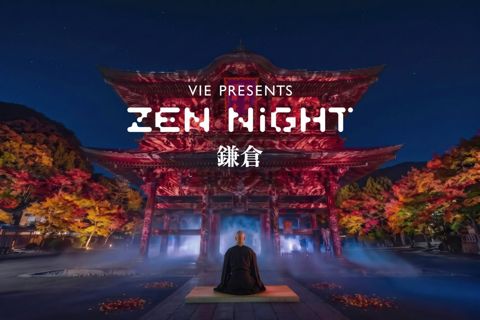 VIE presents ZEN NIGHT Kamakura (Night Viewing at Kenchoji in Autumn Colors)Oct 29 (Thu) – Dec 6 (Sun) · Kenchoji Temple (Kamakura) · 0.7 km
 Chojuji Temple Autumn Special Opening (Kamakura)Oct 2 (Fri) – Dec 7 (Mon) · Chojuji Temple (Kita-Kamakura) · 1.0 km
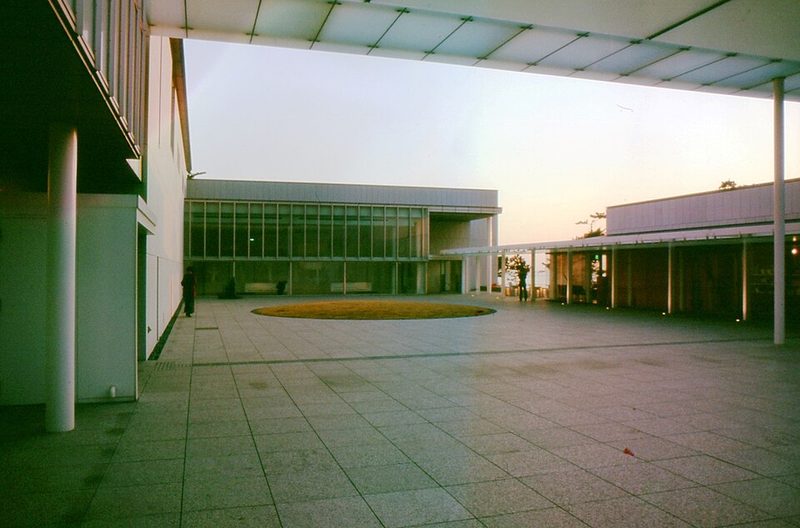 Polish Poster Exhibition 2: From the Former Collection of Copperplate Engraver Watanabe Chihiro (MOMAK Kamakura Annex)Oct 17 (Sat) – Jan 31 (Sun) · Museum of Modern Art, Kamakura Annex (Kanagawa) · 1.3 km
Next stop: book for later today PR
Tickets people often book around here, on Klook.
Year-end deal: extra 5% off selected Tokyo attractions on Klook with code TOKYOATT5% (until Dec 31).
Kamakura & Enoshima day trip from Tokyo→Enoshima-Kamakura Freepass (Enoden)→Tips from visitors
Been here? Leave a short tip for the next traveler — in any language. No name, no sign-up.
Thank you! We check every tip by hand and post it within a day or two.
How we post tips: we read every one before it goes up. We remove swear words, insults, ads, links and anything that could identify a person. Tips are shown in the language they were written in, with a translate link. Kyochika never writes or pays for tips, and there are no star ratings.
FAQ
What are the opening hours of Engaku-ji Temple?
March–November: 8:30 a.m.–4:30 p.m., with visitors required to leave the grounds by 5:00 p.m. December–February: 8:30 a.m.–4:00 p.m., with departure by 4:30 p.m.
How much does Engaku-ji Temple cost?
Adults and high school students: ¥500. Elementary and junior high school students: ¥200. No group discounts. Disability certificate holders and one accompanying caregiver are admitted free.
A Zen Temple Born from the Mongol Invasions
Engaku-ji was founded in 1282, during the final decades of Japan's Kamakura period. Its founder was Hojo Tokimune, the eighth shikken, or regent, of the Kamakura shogunate. Although the emperor remained the formal sovereign, military government was exercised through the shogunate, and Tokimune was one of the most powerful figures in the country. He is particularly associated with Japan's response to the Mongol invasions. Engaku-ji's founding purpose reveals another side of his life: his commitment to Zen Buddhism. Tokimune invited the Chinese monk Mugaku Sogen from Song China and appointed him as the founding abbot. According to the temple's official account, the foundation served several purposes: praying for the protection of the country, spreading Zen teachings and commemorating those who lost their lives during the invasions. Importantly, the memorial intention extended to the dead on both sides of the conflict. The temple was therefore not simply an expression of military authority; it was also a place for religious practice and remembrance.
What are some little-known spots in Engaku-ji Temple?
The White Dragon on the Buddha Hall Ceiling, The Tiger-Head Rock at Myokochi Pond, Senbutsujo, the Hall for Training Monks, Kojirin and Its Unexpected Swordsmanship Connection, The Old Juniper and the Hojo Garden.