Temples in Kyoto · Kyoto Station / To-ji
To-ji Temple (Kyo-o-gokoku-ji)
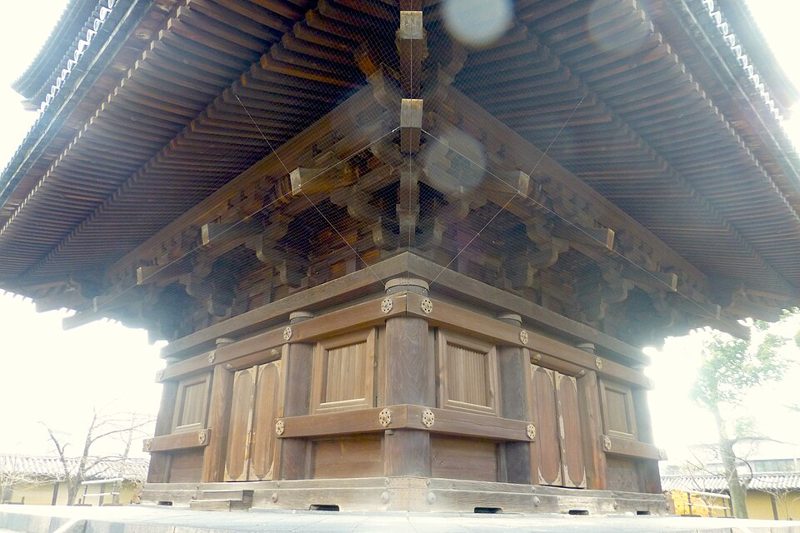
The five-story pagoda near Kyoto Station rises approximately 55 meters, making it Japan's tallest wooden five-story pagoda. But the real heart of To-ji lies inside the Lecture Hall, where the Buddhist master Kukai arranged statues to create a three-dimensional mandala, a symbolic map of the Buddhist universe. This is where a temple built to protect Japan's ancient capital became the headquarters of Shingon Esoteric Buddhism.
Kyochika's take
Allow approximately 30–60 minutes for the Main Hall, Lecture Hall and pagoda, or 1–2 hours if you also visit Kanchi-in and the Treasure Museum. Walking from Kyoto Station and approaching through the southern part of the grounds provides a particularly clear sense of the temple's two identities: an imperial state temple and a center of Esoteric Buddhism.
Hours, admission and access
- Hours
- Temple gates: 5:00–17:00. Kondo (Main Hall) and Kodo (Lecture Hall): 8:00–17:00 (last admission 16:30). Kanchi-in: 9:00–17:00 (last admission 16:30). Treasure Museum: 9:00–17:00 during its spring and autumn exhibition periods only.
- Closed
- Kondo and Kodo are open year-round. The Treasure Museum and the interior of the pagoda's first story are open only during special exhibition periods.
- Admission
- Kondo and Kodo: adults ¥800, high school students ¥400, junior high school students and younger ¥300. Kanchi-in: adults ¥600, high school students and younger ¥300. September 20–October 30, 2026: combined ticket for Kondo, Kodo, Kanchi-in and the Treasure Museum, adults ¥1,500, high school students and younger ¥500. October 31–November 25, 2026: combined ticket including the pagoda's first story, Kondo, Kodo, Kanchi-in and the Treasure Museum, adults ¥2,000, high school students and younger ¥800.
- Access
- About 10 minutes on foot from Toji Station on the Kintetsu Line, or 15 minutes from the Hachijo Exit of JR Kyoto Station.
- Nearest station
- Toji
Checked against official information on 2026-10-28. Details change, so check the official website before you go.
Sources: To-ji Official Website: Admission Information (Japanese), To-ji Official Website: Access (Japanese), To-ji Official Website: Frequently Asked Questions (Japanese)
 Pochikichi's story corner
Why was To-ji built at the southern entrance to Japan's ancient capital?
In 794, Emperor Kanmu moved Japan's capital to Heian-kyo, the city that would become Kyoto. His planners envisioned two great state-sponsored temples flanking Rashomon, the monumental southern gateway. To-ji, meaning Eastern Temple, stood on one side, while Sai-ji, or Western Temple, stood on the other. Sai-ji eventually disappeared, but To-ji survived. Placing enormous Buddhist temples at the city's entrance was more than an architectural statement. It proclaimed that the new imperial capital would enjoy the protection of Buddhist powers.
In 823, Emperor Saga entrusted To-ji to Kukai, the monk who had returned from China with the teachings of Esoteric Buddhism. Kukai transformed the Lecture Hall into a remarkable expression of his religious vision. Instead of simply painting a mandala, he arranged Buddhist statues in three dimensions, with Dainichi Nyorai, the Cosmic Buddha, at the center. Other Buddhas, bodhisattvas, fierce wisdom kings and guardian deities complete this sculptural universe. Construction of the Lecture Hall began in 823 and was completed in 839.
Fire repeatedly changed the temple's appearance. The Lecture Hall burned down in 1486 and was rebuilt in 1491. The five-story pagoda was destroyed four times by fires, including lightning strikes. Today's structure is the fifth version, completed in 1644 under Tokugawa Iemitsu. Although the pagoda dominates Kyoto's skyline, the Lecture Hall holds the temple's most extraordinary religious idea. So after photographing the pagoda, look closely at how the statues surround Dainichi Nyorai inside the Lecture Hall.
Sources: To-ji Official Website: History (Japanese), To-ji Official Website: Lecture Hall (Japanese), To-ji Official Website: Five-Story Pagoda (Japanese)
Long ago, around hereWhat stood here when Kyoto was first built?
To-ji stands near the southern edge of the ancient capital of Heian-kyo. From Rashomon Gate, the broad Suzaku Avenue once ran north toward the imperial palace complex. To-ji and Sai-ji stood on opposite sides of the gateway, forming a monumental entrance to the city. Visitors approaching the capital would have encountered these state-sponsored temples as symbols of imperial authority and Buddhist protection. It is difficult to imagine today, surrounded by the busy streets near Kyoto Station, but the ceremonial gateway to the capital once stood farther south.
When Kukai took charge of To-ji, the district acquired another identity as a center of Esoteric Buddhism. Building the pagoda required enormous quantities of timber and considerable labor. In 826, Kukai himself requested assistance from the imperial court to transport the necessary wood. Over the following centuries, powerful patrons supported rebuilding after fires and disasters. Today's grounds preserve two overlapping histories: a temple built to protect the imperial capital and a sacred center shaped by Kukai's teachings. So enter from the South Gate and follow the sequence of the Main Hall and Lecture Hall, watching how the architecture leads you from the city's gateway toward its spiritual center.
Sources: To-ji Official Website: History (Japanese), To-ji Official Website: Lecture Hall (Japanese), To-ji Official Website: Five-Story Pagoda (Japanese)
Details worth looking for
- The Three-Dimensional Mandala
- The statues in the Lecture Hall form a three-dimensional expression of the Esoteric Buddhist universe. Unlike a painted mandala, this sacred arrangement can be experienced by moving through the space.
- The Pagoda's Central Pillar
- The pillar running through the center of the pagoda represents Dainichi Nyorai, the Cosmic Buddha. Other Buddhist figures surround it. The first-story interior is accessible only during special openings.
- Burn Marks Beneath the Lecture Hall
- Restoration work in 2000 revealed traces of burned wooden material beneath the statue platform. They may be evidence of a sacred fire ritual performed by Kukai.
- Kanchi-in Temple
- This subtemple can be visited separately from the Main Hall and Lecture Hall. Open year-round, it offers another perspective on the religious and cultural life of To-ji.
Sources: To-ji Official Website: Lecture Hall (Japanese), To-ji Official Website: Five-Story Pagoda (Japanese), To-ji Official Website: Admission Information (Japanese)
Through the seasons
- Spring
- Evening cherry-blossom illuminations, the spring exhibition at the Treasure Museum and special openings of the pagoda's first story.
- Summer
- Regular visits to the Main Hall, Lecture Hall and Kanchi-in.
- Autumn
- Treasure Museum exhibitions, special access to the pagoda's first story, illuminated autumn foliage and evening visits to the Main Hall and Lecture Hall.
- Winter
- Regular temple visits, with occasional special access to the pagoda's first story around the New Year.
Good to know before you go
- The interior of the five-story pagoda is not open year-round. Check the official website for special opening dates.
- Visitors can pray at Miei-do and Jiki-do without paying an admission fee.
- The Kobo Market is held on the 21st of every month. The temple parking area is unavailable on market days.
- Admission prices change during special exhibitions and openings of the pagoda.
FAQ
- What is To-ji Temple (Kyo-o-gokoku-ji)?
- The five-story pagoda near Kyoto Station rises approximately 55 meters, making it Japan's tallest wooden five-story pagoda. But the real heart of To-ji lies inside the Lecture Hall, where the Buddhist master Kukai arranged statues to create a three-dimensional mandala, a symbolic map of the Buddhist universe. This is where a temple built to protect Japan's ancient capital became the headquarters of Shingon Esoteric Buddhism.
- Hours at To-ji Temple (Kyo-o-gokoku-ji)?
- Temple gates: 5:00–17:00. Kondo (Main Hall) and Kodo (Lecture Hall): 8:00–17:00 (last admission 16:30). Kanchi-in: 9:00–17:00 (last admission 16:30). Treasure Museum: 9:00–17:00 during its spring and autumn exhibition periods only.
- Closed at To-ji Temple (Kyo-o-gokoku-ji)?
- Kondo and Kodo are open year-round. The Treasure Museum and the interior of the pagoda's first story are open only during special exhibition periods.
- Admission at To-ji Temple (Kyo-o-gokoku-ji)?
- Kondo and Kodo: adults ¥800, high school students ¥400, junior high school students and younger ¥300. Kanchi-in: adults ¥600, high school students and younger ¥300. September 20–October 30, 2026: combined ticket for Kondo, Kodo, Kanchi-in and the Treasure Museum, adults ¥1,500, high school students and younger ¥500. October 31–November 25, 2026: combined ticket including the pagoda's first story, Kondo, Kodo, Kanchi-in and the Treasure Museum, adults ¥2,000, high school students and younger ¥800.
- Access at To-ji Temple (Kyo-o-gokoku-ji)?
- About 10 minutes on foot from Toji Station on the Kintetsu Line, or 15 minutes from the Hachijo Exit of JR Kyoto Station.