Gardens & villas in Kyoto · Shugakuin, Sakyo Ward, Kyoto
Shugakuin Imperial Villa
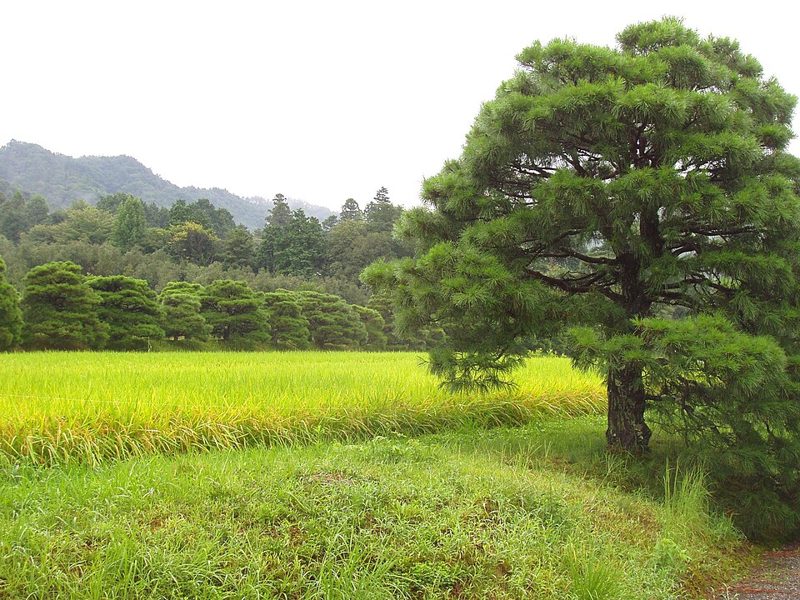
Construction of Shugakuin Imperial Villa began in 1655 under the retired Emperor Go-Mizunoo, with the original villa completed in 1659. Its approximately 540,000-square-meter estate combines separate Upper, Middle, and Lower Villas with pine-lined paths and cultivated fields. Visitors experience this landscape on an approximately 80-minute official guided tour covering a walking route of about 3 km.
Kyochika's take
Kyochika recommends Shugakuin to visitors who want to understand landscape architecture on a scale that extends beyond a single building or enclosed courtyard. The movement between separate villa areas, with agricultural land and pine-lined routes between them, is fundamental to the experience.
Autumn provides an appealing opportunity to observe seasonal foliage, while spring brings flowering trees and shrubs. Because the official route contains slopes, large steps, and uneven surfaces, suitable footwear and the ability to complete the guided walk are more important than planning additional stops immediately afterward.
Hours, admission and access
- Hours
- Official tour starts: 9:00, 10:00, 11:00, 13:30, and 15:00. During July and August, 9:00, 10:00, and 15:00 are the primary tour slots; other slots may open if necessary. Tours are subject to the official calendar and available capacity.
- Closed
- Mondays (if Monday is a national holiday, open on Monday and closed on Tuesday); December 28 – January 4; and days affected by official events or other operational reasons.
- Admission
- Free. Guided-tour participation is compulsory, and all visitors must be at least 18 years old.
- Access
- Eizan Electric Railway, Shugakuin Station: 20 minutes' walk. Kyoto City Bus, Shugakuin Rikyu-michi: 15 minutes' walk.
- Nearest station
- Shugakuin Station
Checked against official information on 2026-10-28. Details change, so check the official website before you go.
Sources: Imperial Household Agency: Shugakuin Imperial Villa, Imperial Household Agency: Shugakuin Official Site, Imperial Household Agency: Visit Guidelines, Imperial Household Agency: Application Guidelines, Imperial Household Agency: Official Visit Route, Imperial Household Agency: Visitor Information, Imperial Household Agency: Access, Imperial Household Agency: Information and Notices
 Pochikichi's story corner
Why did a retired emperor create a villa across an entire mountainside?
Shugakuin Imperial Villa stands near the southwestern foot of Mount Hiei on land historically known as Shugakuin. Emperor Go-Mizunoo abdicated in 1629 and subsequently devoted considerable attention to developing an ideal villa. After examining prospective sites and architectural possibilities, construction began at Shugakuin in 1655 and was completed in 1659. The mountain slope allowed the retreat to be organized across different elevations rather than around a single central courtyard.
The original estate consisted of the Upper and Lower Villas. The Lower Villa contains Jugetsukan, while the Upper Villa includes a large pond and several structures arranged around its shores and higher viewpoints. The paths linking the individual areas pass through a landscape that includes fields and rows of pines. These connections are not simply access corridors: they form part of the overall garden composition. The official visitor map identifies the pine trees and agricultural land as distinct elements between the villas.
The Middle Villa developed from a residence associated with Imperial Princess Teruko, the eighth daughter of Go-Mizunoo. After her father's death, she entered Buddhist religious life and established Rinkyuji Temple on the property. In 1682, the Kyakuden was transferred from the Nyoin Palace in connection with Tofukumonin. In 1885, the area containing Rakushiken and the Kyakuden was incorporated into the imperial estate under the Imperial Household Ministry. As a result, the present three-part layout combines the original retired emperor's project with a later chapter of his family's residential and religious history.
The estate continued to receive imperial visitors after Go-Mizunoo. The Imperial Household Agency identifies retired emperors Reigen and Kokaku among subsequent visitors and records the tradition that Go-Mizunoo personally shaped the garden's appearance. The landscape also supported courtly recreation, including boating on the pond. Its architecture and water features create a sequence of views that change with elevation and movement. So when you visit, look for the passage from the Lower Villa through the fields and pine-lined paths to the Upper Villa, then compare the broader landscape with the different architectural character of the Middle Villa.
Sources: Imperial Household Agency: Shugakuin Imperial Villa, Imperial Household Agency: Shugakuin Official Site, Imperial Household Agency: Official Visit Route
Long ago, around hereWhat did this mountainside look like before the imperial retreat?
The Imperial Household Agency identifies the villa's location as land formerly known as Shugakuin near the Kirarazaka slope at the southwestern foot of Mount Hiei. The reviewed official sources do not establish the exact buildings or land uses occupying the complete present estate approximately 1,200 years ago. Its documented development as an imperial retreat belongs to the seventeenth century, rather than the early Heian period. The site's relationship with the mountain and the surrounding terrain is documented, but more specific claims about an ancient settlement on the exact property would require additional archaeological or historical evidence.
Around 400 years ago, the land was undergoing the construction campaign initiated by Go-Mizunoo in 1655 and completed in 1659. The Upper and Lower Villas formed the original estate. The residence associated with his daughter Teruko subsequently became linked with Rinkyuji, while the Kyakuden was transferred to the site in 1682. In 1885, the Middle Villa area entered the administration of the Imperial Household Ministry. The estate's present composition therefore preserves distinct historical phases, with the cultivated fields and connecting paths linking the different villa areas.
Sources: Imperial Household Agency: Shugakuin Imperial Villa, Imperial Household Agency: Official Route Map
Hidden highlights
- Pine-lined paths
- The official map identifies rows of pines connecting the villa areas. Observe how their alignment organizes movement through the agricultural landscape.
- Jugetsukan
- This building appears in the Lower Villa on the official visitor map. Its location provides a point of comparison with the more extensive pond scenery encountered in the Upper Villa.
- Rakushiken
- This building belongs to the Middle Villa associated with Imperial Princess Teruko. Its location is an important reminder that the present estate developed through different phases.
- Kyakuden
- The Middle Villa's reception building was transferred from the Nyoin Palace in 1682. It connects Shugakuin with the residential history of Tofukumonin.
- Rinuntei
- The official visitor map locates Rinuntei beside the Upper Villa's pond landscape. From the permitted visitor route, observe the relationship between the building's elevated position and the wider garden.
- Chitosebashi
- The official route map identifies Chitosebashi within the Upper Villa pond landscape. Its position contributes to the sequence of architectural and water features along the guided route.
Sources: Imperial Household Agency: Shugakuin Imperial Villa, Imperial Household Agency: Official Visit Route
An emperor's landscape as a personal work of art
After abdicating in 1629, Go-Mizunoo pursued the creation of a retreat suited to his aesthetic ambitions. The Imperial Household Agency describes an extended process of considering locations and developing possible designs before construction began in 1655. Shugakuin was therefore not simply an existing residence adopted by the retired emperor, but a project whose location and landscape arrangement reflected his personal interests.
The estate's extensive scale made it possible to combine garden buildings, an artificial pond, wooded slopes, cultivated fields, and paths into a coordinated landscape. Later tradition attributed the villa's structures and even its plantings to Go-Mizunoo's personal direction. Such accounts communicate the strength of his association with the project, although they should not be read as a literal construction record proving that he individually designed every surviving element.
Sources: Imperial Household Agency: Shugakuin Imperial Villa, Imperial Household Agency: Shugakuin Official Site
How did an imperial princess shape the Middle Villa?
Imperial Princess Teruko, the eighth daughter of Go-Mizunoo, occupied a residence associated with the land that became the Middle Villa. Following her father's death, she entered Buddhist religious life and established Rinkyuji Temple at the property. This created a distinct institutional history within an area adjoining the original imperial retreat.
The Middle Villa also incorporated architecture connected with Tofukumonin. In 1682, the Kyakuden was transferred from the Nyoin Palace to the property. In 1885, the section containing Rakushiken and Kyakuden entered the administration of the Imperial Household Ministry. The Middle Villa thus records the relationships among imperial family members, religious institutions, and residential buildings that were transferred and repurposed across generations.
Sources: Imperial Household Agency: Shugakuin Imperial Villa, Imperial Household Agency: Shugakuin Official Site
How to walk it
- Omote-somon Gate and visitor reception — Begin at the designated reception area, present the required identification, and follow the staff-led tour.
- Lower Villa and Jugetsukan — Observe the building and its garden setting before continuing along the official path.
- Pine-lined connecting path — Look at the rows of pines and cultivated fields that form part of the landscape between the villa areas.
- Upper Villa and Rinuntei — Observe the pond and its relationship with the surrounding hillside from the designated visitor route.
- Upper Villa pond — Identify the locations of Kyusuistei, Kaedebashi, Chitosebashi, and the other mapped features where visible.
- Middle Villa — Observe Rakushiken and Kyakuden from the permitted route, considering their later history within the estate.
- Return to the entrance — Continue with the official tour group to the end of the designated circuit.
The Imperial Household Agency specifies an approximately 80-minute guided tour covering a visitor path of about 3 km. The stops above follow the principal order indicated by the official route map; individual stop durations are not published and have therefore been left null. The route is controlled by official staff, and visitors cannot explore independently or enter the building interiors.
Sources: Imperial Household Agency: Official Visit Route, Imperial Household Agency: Application Guidelines
Through the seasons
- Spring
- The Imperial Household Agency identifies seasonal flowering and greenery within the estate, including cherry blossoms.
- Summer
- The pine-lined routes, cultivated fields, and pond form part of the seasonal landscape. During July and August, the Imperial Household Agency primarily operates selected tour slots to reduce the risk of heat-related illness.
- Autumn
- The Imperial Household Agency publishes autumn foliage updates, and the wooded hillside provides changing seasonal colors.
- Winter
- The estate remains subject to its regular closure schedule and the New Year closure from December 28 to January 4. Visitors should check the official tour calendar.
Getting there by taxi or bus
- Taxi
- Taxi access may be arranged to the Shugakuin Imperial Villa entrance in Yabuzoe, Sakyo Ward. No verified official taxi journey time or fare was found in the opened sources.
- Bus
- Kyoto City Bus to Shugakuin Rikyu-michi (修学院離宮道), followed by approximately 15 minutes on foot. The official application guidelines do not specify a bus route number.
- Other
- Eizan Electric Railway to Shugakuin Station, followed by approximately 20 minutes on foot.
Sources: Imperial Household Agency: Application Guidelines, Imperial Household Agency: Visitor Information
Pair it with
- Manshuin Monzeki Temple — Compare the imperial landscape tradition of Shugakuin with the architecture of a temple rebuilt by Imperial Prince Ryosho in 1656. The Kyoto Prefectural Tourism Federation lists the two sites approximately 0.6 km apart in a straight line.
- Enkoji Temple — An additional temple in the Ichijoji area for visitors wishing to extend a garden-focused itinerary. The Kyoto Prefectural Tourism Federation identifies Enkoji as a nearby attraction.
- Shisendo — Another historic destination in the same district that can complement an exploration of Shugakuin and Ichijoji. Exact walking times have not been verified.
Good to know before you go
- Visitors must participate in an official guided tour; independent access is prohibited.
- Admission is free.
- Visitors must be at least 18 years old, including all accompanying participants.
- The official guided tours are conducted in Japanese.
- Free audio guides in English, Chinese, French, Spanish, and Korean are available for international visitors, subject to limited availability.
- The official tour lasts approximately 80 minutes.
- The visitor path is approximately 3 km long, with steep slopes, large steps, uneven ground, and stone bridges without handrails.
- Visitors cannot enter the interiors of the buildings.
- Visitors must present valid identification.
- Advance online applications are accepted according to the Imperial Household Agency's published application period and capacity rules.
- When applications exceed available capacity, the official online application process may use a lottery.
- Walk-in registration begins at 8:40 a.m. at the villa entrance, with numbered tickets issued on a first-come, first-served basis.
- The official walk-in allocation is 50 people per day, or 10 per tour, with remaining advance-application vacancies added where available.
- The total tour capacity is 250 people per day, with 50 people per tour.
- A main applicant may include up to three accompanying people, subject to availability.
- Applications submitted by proxy or travel agents are not accepted.
- Pets and large baggage are not permitted.
- Smoking, eating, drones, and objects that could harm visitors are prohibited.
- Photography is permitted under the published general rules, but camera stands and related equipment for commercial filming are restricted.
- Tours may be canceled or unavailable because of official events or operational requirements.
- The Kyoto Office of the Imperial Household Agency can be contacted at 075-211-1215.
Next stop: book for later today PR
Tickets and experiences in Kyoto you can book on Klook. Filter by “Today” to see what is still open.
Kimono rental in Kyoto→Tea ceremony experiences in Kyoto→Kyoto one-day sightseeing tours→All things to do in Kyoto on Klook →Compare on GetYourGuide: Kimono rental in Kyoto · Tea ceremony experiences in Kyoto · Kyoto one-day sightseeing tours
Ad: Klook and GetYourGuide affiliate links.
Tips from visitors
Been here? Leave a short tip for the next traveler — in any language. No name, no sign-up.
Thank you! We check every tip by hand and post it within a day or two.
How we post tips: we read every one before it goes up. We remove swear words, insults, ads, links and anything that could identify a person. Tips are shown in the language they were written in, with a translate link. Kyochika never writes or pays for tips, and there are no star ratings.
FAQ
- What is Shugakuin Imperial Villa?
- Construction of Shugakuin Imperial Villa began in 1655 under the retired Emperor Go-Mizunoo, with the original villa completed in 1659. Its approximately 540,000-square-meter estate combines separate Upper, Middle, and Lower Villas with pine-lined paths and cultivated fields. Visitors experience this landscape on an approximately 80-minute official guided tour covering a walking route of about 3 km.
- Hours at Shugakuin Imperial Villa?
- Official tour starts: 9:00, 10:00, 11:00, 13:30, and 15:00. During July and August, 9:00, 10:00, and 15:00 are the primary tour slots; other slots may open if necessary. Tours are subject to the official calendar and available capacity.
- Closed at Shugakuin Imperial Villa?
- Mondays (if Monday is a national holiday, open on Monday and closed on Tuesday); December 28 – January 4; and days affected by official events or other operational reasons.
- Admission at Shugakuin Imperial Villa?
- Free. Guided-tour participation is compulsory, and all visitors must be at least 18 years old.
- Access at Shugakuin Imperial Villa?
- Eizan Electric Railway, Shugakuin Station: 20 minutes' walk. Kyoto City Bus, Shugakuin Rikyu-michi: 15 minutes' walk.
- Can I visit without an advance reservation?
- Limited walk-in registration is available at the villa from 8:40 a.m. Official places are allocated on a first-come, first-served basis, and availability is not guaranteed. Advance application is recommended.
- Is an English-language guided tour available?
- The official guided tour is in Japanese. Free English audio guides are available for international visitors, subject to limited availability.
- Can children enter?
- No. The Imperial Household Agency requires every visitor to be at least 18 years old.
- How demanding is the guided walk?
- The official tour lasts approximately 80 minutes and follows a path of about 3 km. The Imperial Household Agency warns of steep slopes, large steps, unstable ground, and stone bridges without handrails.