Temples in Kyoto · Imadegawa, Kamigyo Ward, Kyoto
Shokoku-ji Temple
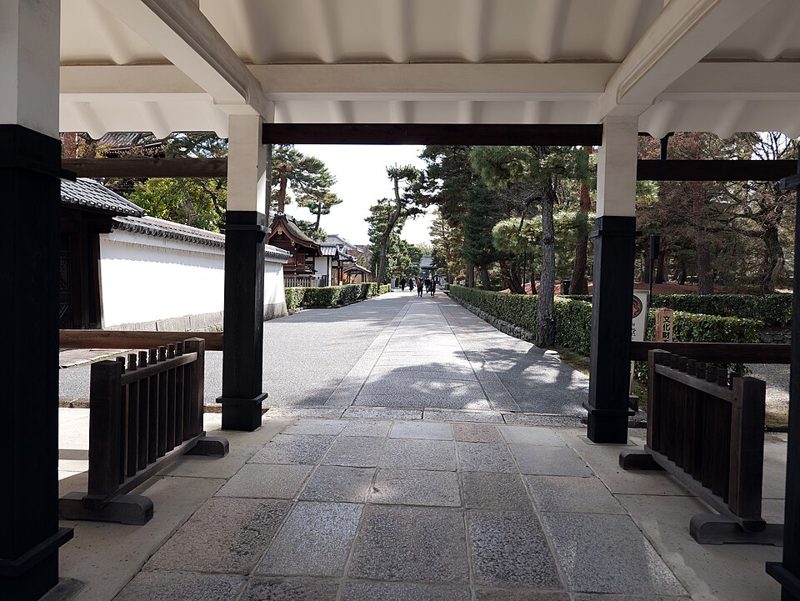
Shokoku-ji was established under the patronage of Ashikaga Yoshimitsu, the third shogun of the Muromachi government, with construction beginning in 1382 and completion ceremonies held in 1392. Its Dharma Hall, rebuilt in 1605 with support from Toyotomi Hideyori, is described by the temple as Japan's oldest surviving Zen Dharma Hall. The great ceiling dragon painted by Kano Mitsunobu measures approximately nine meters across, while the temple's institutional connections extend to both Kinkaku-ji and Ginkaku-ji.
Kyochika's take
Kyochika recommends Shokoku-ji to travelers interested in understanding the relationship between Zen Buddhism, the Ashikaga shogunate and Japanese art. The temple's history is especially rewarding when considered alongside the physical survival of the Dharma Hall and the objects preserved by Jotenkaku Museum.
For an art-centered visit in autumn 2026, Kyochika suggests combining special admission to the temple with the museum's exhibition of Maruyama Okyo and Ito Jakuchu. The exhibition provides an opportunity to explore paintings connected with the same religious institution.
Hours, admission and access
- Hours
- Temple special admission: 10:00 AM–4:30 PM, with reception ending at 4:00 PM. Jotenkaku Museum: 10:00 AM–5:00 PM, last entry at 4:30 PM.
- Closed
- Temple special admission is held in spring and autumn. In 2026, the announced periods are March 25–June 2 and September 26–December 15. Religious services may cause additional closures. Jotenkaku Museum closes during exhibition changes and New Year holidays and may close temporarily under special circumstances.
- Admission
- Temple special admission: adults ¥1,000; elementary, junior high and high school students ¥500; preschool children free. Jotenkaku Museum: adults ¥1,000; university and high school students ¥800; junior high school students ¥500; primary school students accompanied by a parent or guardian free. Museum admission may vary by exhibition. Tickets are separate.
- Access
- Kyoto Municipal Subway Karasuma Line to Imadegawa Station. City Bus 51, 59, 201, 203 or Express 102 to Karasuma Imadegawa. City Bus 59, 201 or 203 to Doshisha-mae.
- Nearest station
- Imadegawa Station, Kyoto Municipal Subway Karasuma Line
Checked against official information on 2026-10-28. Details change, so check the official website before you go.
Sources: Shokoku-ji Official History, Shokoku-ji English Overview, Shokoku-ji Official Grounds Guide, Shokoku-ji Current Visitor Information, Shokoku-ji Current FAQ, Jotenkaku Museum Official Information, Jotenkaku Museum Official FAQ
 Pochikichi's story corner
Why did Ashikaga Yoshimitsu establish a great Zen monastery beside his political headquarters?
Shokoku-ji emerged from the political and religious ambitions of Ashikaga Yoshimitsu, the third shogun of the Muromachi government. In 1382, Yoshimitsu discussed establishing a monastery with the Zen monks Shun'oku Myoha and Gido Shushin. The official history records his wish to create a place where dedicated monks could practice and where he might eventually join their religious life. He chose land close to the shogunal residence known as the Palace of Flowers. The project required the relocation of existing households, emphasizing the scale and authority behind the new monastery.
The name Shokoku-ji reflected Yoshimitsu's official position as a senior minister. Shun'oku Myoha proposed the name, while Gido Shushin also pointed to the precedent of Daxiangguo Temple in Kaifeng, China. Construction began in 1382, with work progressing on the principal halls. The full ceremonial completion took place in 1392. The temple became one of the major institutions of the Kyoto Gozan system and retains the second rank within that historical hierarchy.
The early monastery suffered repeated destruction. Fire devastated it in 1394, after which Yoshimitsu supported reconstruction. Another fire destroyed the complex in 1425, and later warfare brought further losses. The official history identifies major destruction during the Onin War and the Tenbun conflicts. Large-scale restoration began after Saisho Jotai became associated with the monastery's rebuilding in 1584. With financial assistance from Toyotomi Hideyori, the Dharma Hall was completed in 1605. The ceiling dragon painted by Kano Mitsunobu belongs to this reconstruction period.
The Dharma Hall survived the Tenmei Fire of 1788, which destroyed much of the surrounding complex. Reconstruction continued, including the rebuilding of the Founder's Hall and other buildings in 1807. During the Meiji era, Shokoku-ji faced the wider campaign against Buddhism, and the monk Dokuon Shoju took an active role in defending religious freedom and restoring the monastery's finances. The complex subsequently developed its modern institutional identity. Today Jotenkaku Museum preserves and displays cultural treasures associated with Shokoku-ji, Kinkaku-ji and Ginkaku-ji. So when you visit, look for the surviving 1605 Dharma Hall alongside the later reconstructed buildings and the former locations of structures lost to fire and warfare.
Sources: Shokoku-ji Official History, Shokoku-ji Official English Overview, Shokoku-ji Official Grounds Guide
Long ago, around hereWhat occupied this part of Kyoto before Shokoku-ji?
Shokoku-ji's official history identifies earlier Buddhist sites in the area, including Izumo-ji, Jingu-ji and Ansho-ji. The monastery was founded on land associated with these earlier religious institutions. Its development was also tied to the nearby political center of the Muromachi shogunate. Construction began in 1382 and transformed a large area close to the shogunal headquarters into a major Zen complex.
In the early Edo period, the monastery was rebuilding after centuries of fires and conflict. The Dharma Hall completed in 1605 became its most important surviving architectural monument. The Tenmei Fire of 1788 destroyed many other structures, and the rebuilding of 1807 changed the architectural composition again. In the Meiji period, the institution experienced religious and financial pressures as Buddhist temples were reorganized. The official history also connects some of the land now used by neighboring educational institutions with former Shokoku-ji precincts.
Sources: Shokoku-ji Official History
Hidden highlights
- Kano Mitsunobu's Coiled Dragon
- The Dharma Hall ceiling contains an approximately nine-meter-wide dragon painted by Kano Mitsunobu. The dragon is enclosed within an enso, a circle associated with enlightenment and the universe in Zen symbolism.
- The Surviving Dharma Hall
- Completed in 1605 with financial support from Toyotomi Hideyori, the hall survived the destructive fire of 1788. The temple identifies it as Japan's oldest surviving Dharma Hall building.
- Sanmon Foundation Stones
- The official grounds guide identifies surviving foundation stones from the former main gate. The structure has not been rebuilt since its destruction in the Tenmei Fire of 1788.
- Butsuden Site
- The temple's English grounds guide identifies the former Buddha Hall location and surviving foundation stones. They provide a physical reminder of the monastery's much larger historical architectural arrangement.
- Tenkaikyo Bridge
- The official grounds guide describes a bridge over the Hojo Pond that historically marked a boundary between Shokoku-ji and the Imperial Palace area. It also connects the location with the conflicts of the Tenbun era.
- Jotenkaku Museum's Jakuchu Paintings
- The museum preserves works associated with Ito Jakuchu, including paintings formerly connected with Kinkaku-ji. Its current exhibition offers a way to explore Japanese ink painting in the context of Zen patronage.
Sources: Shokoku-ji Official Grounds Guide, Jotenkaku Museum Official Information
The temple named for a shogun's political office
Shokoku-ji's name contains a direct reference to the political position held by Ashikaga Yoshimitsu. According to the temple's official history, the monk Shun'oku Myoha suggested a name associated with Yoshimitsu's ministerial rank. Gido Shushin supported the proposal by drawing a parallel with Daxiangguo Temple in Kaifeng, China.
The Chinese temple still exists, and Shokoku-ji's official history records a modern relationship of friendship between the institutions. Their shared name preserves the connection between medieval Buddhist culture, Japanese government and the influence of Chinese religious models.
Sources: Shokoku-ji Official History
A dragon painted inside a circle
The coiled dragon in Shokoku-ji's Dharma Hall was painted by Kano Mitsunobu during the reconstruction completed in 1605. The official grounds guide describes the image as approximately nine meters in diameter and explains that dragons in Zen lecture halls symbolize the protection of Buddhist teaching. The painting is contained within an enso, a circular form associated with enlightenment and the universe.
The guide also records that the painting originally included clouds outside the circle, although much of this surrounding paint has disappeared. Its survival inside the 1605 hall offers an unusually direct connection with the artistic and religious environment of early Edo-period Kyoto.
Sources: Shokoku-ji Official Grounds Guide
How to walk it
- Somon — Enter the precincts through the principal approach and observe the main gate in relation to the imperial envoy gate. (10 min)
- Sanmon Foundation Stones — Examine the remains of the former gate destroyed in the Tenmei Fire. (10 min)
- Butsuden Site — Look for the foundation stones of the former Buddha Hall and consider the scale of the monastery's lost buildings. (10 min)
- Hatto — During special admission, examine the 1605 Dharma Hall and Kano Mitsunobu's coiled dragon painting. (20 min)
- Hojo and Kaisando — Explore the abbot's quarters and Founder's Hall if they are included in the current special-admission arrangements. (20 min)
- Jotenkaku Museum — Visit the separately ticketed exhibition and examine artworks connected with Shokoku-ji and its affiliated temples. (40 min)
This is Kyochika's suggested route based on the buildings identified in the official grounds guide. The individual times are Kyochika estimates, not official walking durations. Interior access is dependent on the special-admission schedule. Jotenkaku Museum has its own ticket and exhibition timetable.
Sources: Shokoku-ji Official Grounds Guide, Shokoku-ji Official FAQ
Through the seasons
- Spring 2026
- The official special-admission period ran from March 25 to June 2, with the Dharma Hall, abbot's quarters and Founder's Hall included.
- Summer
- Check the Jotenkaku Museum exhibition timetable. The temple's special interior admission is scheduled for spring and autumn rather than throughout the year.
- Autumn 2026
- Special admission runs from September 26 to December 15, subject to interruptions for ceremonies.
- October 17, 2026–February 14, 2027
- Jotenkaku Museum presents the first session of Maruyama Okyo and Ito Jakuchu, including works such as Seven Misfortunes and Seven Fortunes, Peonies and Peacock, Great Waterfall and Jakuchu's Screen Paintings for the Daishoin.
Getting there by taxi or bus
- Taxi
- Ask for Shokoku-ji in the Imadegawa district near Doshisha University. The official temple access page recommends using public transportation or public paid parking.
- Bus
- City Bus 51, 59, 201, 203 or Express 102 to Karasuma Imadegawa (烏丸今出川). Alternatively, City Bus 59, 201 or 203 to Doshisha-mae (同志社前).
- Other
- Kyoto Municipal Subway Karasuma Line to Imadegawa Station.
Sources: Shokoku-ji Official Access, Jotenkaku Museum Official Access
Pair it with
- Jotenkaku Museum — An independently ticketed museum within the Shokoku-ji complex, preserving works associated with Shokoku-ji, Kinkaku-ji and Ginkaku-ji.
- Kinkaku-ji — An affiliated outlying subtemple of Shokoku-ji, connected with the patronage of Ashikaga Yoshimitsu.
- Ginkaku-ji — Another affiliated outlying subtemple, founded under Ashikaga Yoshimasa and connected with the same Zen institution.
Good to know before you go
- The temple's current Japanese FAQ confirms special admission in spring and autumn only.
- The 2026 autumn special admission runs from September 26 to December 15, subject to religious-service closures.
- Temple viewing is scheduled from 10:00 AM to 4:30 PM, with reception closing at 4:00 PM.
- General temple admission costs ¥1,000. Elementary, junior high and high school students pay ¥500; preschool children enter free.
- Temple admission accepts cash and supported cashless payment methods, including Omairi Pay.
- Groups visiting the temple must make an advance reservation.
- The temple offers admission concessions to eligible visitors presenting disability documentation.
- The temple precincts include slopes and steps. Wheelchairs may be borrowed, and the official FAQ recommends assistance for visitors who need it.
- Jotenkaku Museum requires a separate admission ticket. There is no combined ticket for temple special admission and the museum.
- Jotenkaku Museum is open from 10:00 AM to 5:00 PM during exhibitions, with final entry at 4:30 PM.
- The museum's current standard adult admission is ¥1,000. University and high school students pay ¥800, and junior high school students pay ¥500.
- The museum does not permit shoes indoors; visitors must remove footwear when entering.
- The museum states that its building is barrier-free.
- The museum closes during New Year holidays and exhibition changes and may close temporarily for exceptional reasons.
- The temple's current Japanese admission information should take precedence over older prices and dates on some English-language pages.
- Photography permission for particular temple interiors and museum exhibitions was not verified; follow current on-site instructions.
Next stop: book for later today PR
Tickets and experiences in Kyoto you can book on Klook. Filter by “Today” to see what is still open.
Kimono rental in Kyoto→Tea ceremony experiences in Kyoto→Kyoto one-day sightseeing tours→All things to do in Kyoto on Klook →Compare on GetYourGuide: Kimono rental in Kyoto · Tea ceremony experiences in Kyoto · Kyoto one-day sightseeing tours
Ad: Klook and GetYourGuide affiliate links.
🍜 Where to eat after
Restaurants near here on Google Maps→Many restaurants in Kyoto take reservations, and some are cash only. Check the restaurant page before you go.
Events nearby
Art exhibition
Kyoto State Guest House Autumn Evening Extended Opening
Kyoto State Guest House (Imadegawa Sta.)
Dec 4 (Fri) – Dec 7 (Mon) Open until 7:15 PM (last entry 6:15 PM); check the official site for the opening time
For four days only, the national guest house inside Kyoto Gyoen is open until 7:15 PM. Admission closes at 6:15 PM; children of elementary school age and under cannot enter.
Details →Festival & seasonal event
Myoken-ji Temple Illumination & Special Night Viewing
Myoken-ji Temple (Kuramaguchi Sta.)
Nov 21 (Sat) – Dec 13 (Sun) 18:00 – 20:30
Autumn illumination and special night viewing at Myoken-ji, a Nichiren Buddhist temple in Kamigyo Ward. Last entry at 8:00 PM.
Details →Art exhibition
Toraya Collection Exhibition: Animals That Soothe the Heart
Toraya Kyoto Gallery (Imadegawa Sta.)
Oct 24 (Sat) – Nov 23 (Mon) 10:00 – 17:00
Animal-themed works from the collection of the wagashi maker Toraya: folding screens, hanging scrolls, tea bowls and netsuke. The gallery is next to Toraya Karyo Kyoto Ichijo, about a 7-minute walk from Exit 6 of Imadegawa subway station.
Details →Festival & seasonal event
LOTUS WEEKEND 2026 at Shojokein Temple
Shojokein Temple, Head Temple of Jodo Buddhism (Demachiyanagi Sta.)
Nov 14 (Sat) – Nov 15 (Sun) 10:00 – 16:00
Held rain or shine. Check the fees and participation requirements for individual activities.
Details →Festival & seasonal event
Myokakuji Temple Hoshien Garden Special Opening and Autumn Light-up
Myokakuji Temple (Kuramaguchi Sta.)
Nov 10 (Tue) – Dec 6 (Sun) 10:00 – 15:30
A head temple of the Nichiren school founded in the Muromachi period, once used by Oda Nobunaga as his lodging in Kyoto. The mossy Hoshien garden is open by day, and from November 21 to December 6 it is also illuminated from 6:00 to 8:00 PM, when the Kahoto stupa hall is opened. Closed 3:30-6:00 PM for changeover; last entry 3:00 PM by day and 7:30 PM at night.
Details →Festival & seasonal event
62nd Kyoto Special Opening of Non-Public Cultural Properties at Shimogamo Shrine
Shimogamo Shrine (Kamo-mioya Jinja) (Demachiyanagi Sta.)
Oct 31 (Sat) – Dec 6 (Sun) 09:00 – 16:00 (details on the official site)
Part of the 62nd autumn special opening run by the Kyoto Association for the Preservation of Old Culture. At Shimogamo Shrine you can see the main sanctuary (National Treasure) plus the Mitsui Shrine, Oidono kitchen hall and Shinpukuden (all Important Cultural Properties), the ice house, the Ura-no-kairo corridor, the site of the shrine's former Buddhist temple and the Shuhosha archive. Reception 9:00 to 16:00 (until 14:30 on Nov 23). No reservation needed; groups of 15 or more should contact the office first.
Details →
Tips from visitors
Been here? Leave a short tip for the next traveler — in any language. No name, no sign-up.
Thank you! We check every tip by hand and post it within a day or two.
How we post tips: we read every one before it goes up. We remove swear words, insults, ads, links and anything that could identify a person. Tips are shown in the language they were written in, with a translate link. Kyochika never writes or pays for tips, and there are no star ratings.
FAQ
- What is Shokoku-ji Temple?
- Shokoku-ji was established under the patronage of Ashikaga Yoshimitsu, the third shogun of the Muromachi government, with construction beginning in 1382 and completion ceremonies held in 1392. Its Dharma Hall, rebuilt in 1605 with support from Toyotomi Hideyori, is described by the temple as Japan's oldest surviving Zen Dharma Hall. The great ceiling dragon painted by Kano Mitsunobu measures approximately nine meters across, while the temple's institutional connections extend to both Kinkaku-ji and Ginkaku-ji.
- Hours at Shokoku-ji Temple?
- Temple special admission: 10:00 AM–4:30 PM, with reception ending at 4:00 PM. Jotenkaku Museum: 10:00 AM–5:00 PM, last entry at 4:30 PM.
- Closed at Shokoku-ji Temple?
- Temple special admission is held in spring and autumn. In 2026, the announced periods are March 25–June 2 and September 26–December 15. Religious services may cause additional closures. Jotenkaku Museum closes during exhibition changes and New Year holidays and may close temporarily under special circumstances.
- Admission at Shokoku-ji Temple?
- Temple special admission: adults ¥1,000; elementary, junior high and high school students ¥500; preschool children free. Jotenkaku Museum: adults ¥1,000; university and high school students ¥800; junior high school students ¥500; primary school students accompanied by a parent or guardian free. Museum admission may vary by exhibition. Tickets are separate.
- Access at Shokoku-ji Temple?
- Kyoto Municipal Subway Karasuma Line to Imadegawa Station. City Bus 51, 59, 201, 203 or Express 102 to Karasuma Imadegawa. City Bus 59, 201 or 203 to Doshisha-mae.
- When can I enter Shokoku-ji's main buildings?
- The temple holds special admission periods in spring and autumn. In 2026, the announced dates are March 25–June 2 and September 26–December 15. Religious services may affect individual days.
- How much is temple admission?
- General admission is ¥1,000. Elementary, junior high and high school students pay ¥500. Preschool children enter free.
- Are Kinkaku-ji and Ginkaku-ji connected to Shokoku-ji?
- Yes. Both are outlying subtemples affiliated with Shokoku-ji. The temple's official history identifies their continuing religious relationship.
- Can I visit Jotenkaku Museum with the temple ticket?
- No. The official FAQ confirms that the museum and temple special admission require separate tickets. Museum hours, prices and exhibitions should be checked independently.