Temples in Kyoto · Ichijoji, Sakyo Ward, Kyoto
Shisen-do Jozan-ji Temple
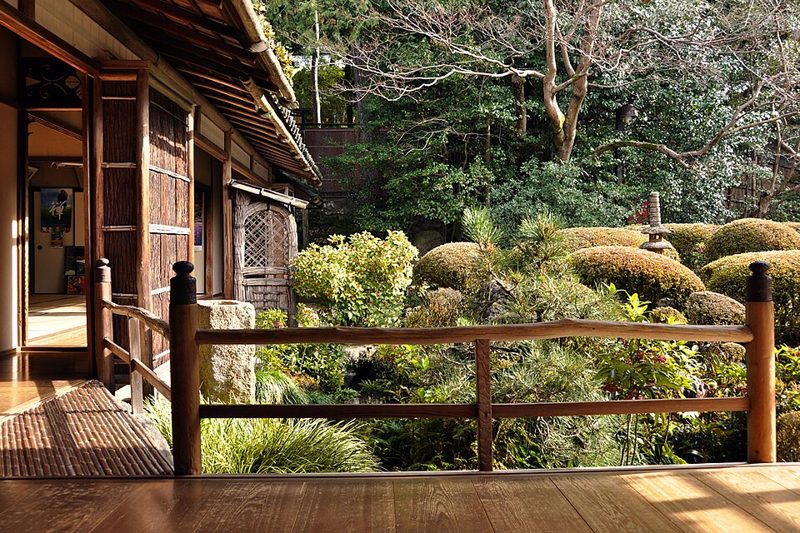
In 1641, Ishikawa Jozan completed the hillside residence that became known as Shisen-do. Once a retainer of Tokugawa Ieyasu, he devoted his later years to Chinese poetry, calligraphy, and gardening. The residence takes its familiar name from a room displaying portraits of 36 Chinese poets painted by Kano Tanyu, with their poems written in Jozan's own calligraphy.
Kyochika's take
Kyochika recommends Shisen-do for travelers interested in the intersection of samurai history, classical Chinese literature, and Japanese garden design. Begin with the poetry room and its portraits before considering the surrounding garden as part of Jozan's broader intellectual project.
Spring offers flowering azaleas and fresh foliage, while autumn brings maple colors. The temple's official website identifies the sound of its bamboo deer scarer as another distinctive feature to appreciate during a visit.
Hours, admission and access
- Hours
- 9:00 AM–5:00 PM. Last admission: 4:45 PM.
- Closed
- May 23, the anniversary of Ishikawa Jozan's death.
- Admission
- Adults: ¥700; high-school students: ¥500; elementary and junior high-school students: ¥300.
- Access
- Approximately 15 minutes on foot from Ichijoji Station on the Eizan Railway. Alternatively, Kyoto City Bus Route 5 or Kita 8 to Ichijoji Sagarimatsucho, followed by approximately 7 minutes on foot.
- Nearest station
- Ichijoji Station
Checked against official information on 2026-10-28. Details change, so check the official website before you go.
Sources: Shisen-do Official Homepage, Shisen-do Official About Page, Shisen-do Official Access Page, Shisen-do Official Biography — Ishikawa Jozan, Shisen-do Official History — The 36 Poets, Shisen-do Official Historical Chronology, Shisen-do Official Seasonal Guide, Shisen-do Official Visitor Notice — October 30, 2026, Shisen-do Official Reservation Notice — October 30, 2026, Kyoto City Official Tourism Guide — Shisen-do, Kyoto Prefecture Tourism Federation — Shisen-do
 Pochikichi's story corner
Why did a former samurai build a residence dedicated to Chinese poets?
Ishikawa Jozan was born in Mikawa in 1583. According to the temple's official biography, his family had longstanding connections to the Tokugawa household. He entered the service of Tokugawa Ieyasu in 1598 and participated in the Battle of Sekigahara in 1600. These experiences placed him within the military world of Japan's transition to Tokugawa rule. His later reputation, however, would be shaped primarily by literary and scholarly pursuits.
The temple's official chronology identifies the summer campaign of the Siege of Osaka in 1615 as a turning point. Jozan advanced in violation of military orders and was punished. After withdrawing from his military career, he devoted attention to Neo-Confucian scholarship. The temple records that he studied with Fujiwara Seika and others after returning to Kyoto. He subsequently served the Asano family in Kishu and Hiroshima. His movement between military service, scholarship, and political employment helps explain the range of cultural interests he eventually brought to his retirement residence.
Construction of Shisen-do began in 1640 and was completed in 1641. The original name was Otsuka, referring to a residence built on uneven ground. At its center, Jozan created the room now known as Shisen no Ma. It contained portraits of 36 Chinese poets painted by Kano Tanyu, with poetry written above them in Jozan's clerical-script calligraphy. The temple's official historical explanation states that the portraits and inscriptions were completed in 1641. The room gave the residence the name by which it is commonly known today.
Jozan remained associated with the residence until his death on May 23, 1672. Shisen-do subsequently became a Soto Zen temple affiliated with Eihei-ji. Its present identity therefore combines the history of a scholar's private residence with the continuing role of a Buddhist institution. Visitors can see that relationship in the arrangement of the poetry room, the traditional Chinese-style garden, and the water-operated bamboo device known as a shishi-odoshi. So when you visit, look for the connections between Jozan's literary interests, the portrait displays, and the garden landscape.
Sources: Shisen-do Official Website — About the Temple, Shisen-do Official Biography — Ishikawa Jozan, Shisen-do Official Historical Chronology, Shisen-do Official History — The 36 Poets
Long ago, around hereWhat was here before Shisen-do became a temple?
The consulted official history does not identify a specific building occupying Shisen-do's exact plot approximately 1,200 years ago. The earliest documented construction event in the temple's chronology is Jozan's decision to begin building his residence in 1640. The original name, Otsuka, described a dwelling constructed on uneven terrain. This detail helps explain why the hillside setting is important to understanding the residence's design, but it does not establish the appearance or ownership of the property in earlier centuries.
By 1641, Jozan had completed the residence and installed the portraits and poetry associated with the Hall of Immortal Poets. The property became his home for the remainder of his life. In later history the former private residence developed into a Soto Zen temple. The present institution preserves the connection to Jozan while also serving Buddhist religious functions, including religious instruction and memorial services.
Sources: Shisen-do Official Historical Chronology, Shisen-do Official Website — About
Hidden highlights
- Shoyudo entrance gate
- The official temple description identifies Shoyudo as the small entrance gate. Stone steps lead from here toward the inner gate.
- Robaikan inner gate
- After climbing the stone steps, visitors pass through Robaikan on their way to the main building. The sequence of gates forms an important part of the approach.
- Shisen no Ma
- The central room contains portraits of Chinese poets painted by Kano Tanyu, with poems written above them in Jozan's calligraphy. It is the room from which the residence takes its familiar name.
- The 36 Chinese poets
- Jozan and the scholar Hayashi Razan debated the selection of the poets. The official history explains that figures were arranged in opposing pairs according to similarities in their lives and characters.
- The shishi-odoshi
- The bamboo water device produces a distinctive knocking sound. The temple's official website attributes its invention to Ishikawa Jozan.
- The Chinese-style garden
- The official description identifies a traditional Chinese-style garden beyond the building. Visitors can walk through the garden and observe its seasonal plantings.
Sources: Shisen-do Official Website — About, Shisen-do Official History — The 36 Poets, Shisen-do Official Homepage
The disagreement over Wang Anshi
The selection of the 36 Chinese poets involved discussion between Ishikawa Jozan and Hayashi Razan. According to Shisen-do's official history, the selection was inspired by the Japanese tradition of the 36 immortal poets. The portraits were arranged so that poets with related backgrounds or characteristics faced one another.
One disagreement concerned the Chinese poet Wang Anshi. Razan proposed including him in a particular pairing, while Jozan opposed the suggestion. The temple records that the scholars debated the question repeatedly before Wang Anshi was omitted. The story demonstrates that the room's arrangement was the outcome of deliberate literary judgment, not simply an arbitrary collection of famous names.
From the battlefield to a life of poetry
Ishikawa Jozan's early career was tied to the military establishment of Tokugawa rule. The temple's chronology records his service at Sekigahara in 1600 and his participation in the Osaka campaign in 1615. After his punishment for disobeying military orders, he increasingly pursued scholarship and eventually left formal service.
When his residence was completed in 1641, it became a setting for the literary activities that defined his later reputation. The temple's biography records his interests in Chinese poetry, calligraphy, and garden design. He died in 1672, and the temple continues to observe May 23, the anniversary of his death, as a day when ordinary admission is suspended.
Sources: Shisen-do Official Biography — Ishikawa Jozan, Shisen-do Official Historical Chronology
How to walk it
- Shoyudo entrance gate — Pass through the small outer gate and follow the stone steps. (Self-paced min)
- Robaikan inner gate — Continue through the intermediate gate toward the main building. (Self-paced min)
- Shisen no Ma — Examine the portraits of the Chinese poets and the inscriptions written by Jozan. (Self-paced min)
- Garden view — Observe the relationship between the main building and the Chinese-style garden. (Self-paced min)
- Shishi-odoshi — Listen for the distinctive sound of the bamboo deer scarer. (Self-paced min)
- Garden path — Follow the permitted walking route through the garden. (Self-paced min)
The official website describes the entrance gates and confirms that visitors may walk through the garden, but it does not provide timed stages for this route. No unsupported minute estimates have been retained.
Sources: Shisen-do Official Website — About
Through the seasons
- Spring
- Kirishima azaleas, irises, and fresh green foliage are identified in the temple's seasonal descriptions.
- Summer
- The temple's official seasonal page identifies hotarubukuro bellflowers and kyoganoko among the plants associated with the summer garden.
- Autumn
- The official website highlights autumn maple foliage and Japanese anemones.
- Winter
- The official seasonal page identifies senryo and manryo among the winter plants. The website also presents snow-covered views of the garden.
Getting there by taxi or bus
- Taxi
- The official October 30, 2026 visitor notice asks taxi passengers to get out at Shirakawa-dori Manshuin-dori and continue on foot during the autumn visiting period.
- Bus
- Kyoto City Bus Route 5 or Kita 8 to Ichijoji Sagarimatsucho (一乗寺下り松町), then approximately 7 minutes on foot. The temple's official access page identifies these routes.
- Other
- Eizan Railway to Ichijoji Station, followed by approximately 15 minutes on foot.
Sources: Shisen-do Official Access Information, Shisen-do Official Visitor Notice — October 30, 2026
Pair it with
- Enko-ji Temple — A suggested companion visit for travelers exploring historic temples and gardens in Ichijoji. (Walking time not verified min walk)
- Manshu-in Temple — A suggested addition to an itinerary focused on the northeastern Kyoto temple district. (Walking time not verified min walk)
- Konpuku-ji Temple — A suggested companion destination for travelers interested in temple and literary history. (Walking time not verified min walk)
Good to know before you go
- Official hours are 9:00 AM–5:00 PM, with last admission at 4:45 PM.
- Official admission is ¥700 for adults, ¥500 for high-school students, and ¥300 for elementary and junior high-school students.
- Ordinary admission is suspended on May 23.
- An official notice dated October 30, 2026 confirms that reservations are not required, including during autumn foliage season.
- The official notice asks visitors to use public transportation where possible.
- Nearby paid parking is limited.
- During the autumn season, taxi passengers are requested to get out at Shirakawa-dori Manshuin-dori and proceed on foot.
- Visitors are requested not to park on surrounding roads, litter, or disturb local residents.
- Kyoto City's official tourism guide requests that groups contact the temple about their intended visiting dates, numbers, and times.
- The Kyoto City guide lists an admission category of ¥300 for visitors presenting a disability certificate.
- The temple's October 30, 2026 reservation notice includes information in English.
- The consulted sources do not confirm a general interior photography policy, card-payment acceptance, luggage storage, or an English audio-guide service.
- Kyoto Prefecture tourism information identifies the site as unsuitable for wheelchair access.
Next stop: book for later today PR
Tickets and experiences in Kyoto you can book on Klook. Filter by “Today” to see what is still open.
Kimono rental in Kyoto→Tea ceremony experiences in Kyoto→Kyoto one-day sightseeing tours→All things to do in Kyoto on Klook →Compare on GetYourGuide: Kimono rental in Kyoto · Tea ceremony experiences in Kyoto · Kyoto one-day sightseeing tours
Ad: Klook and GetYourGuide affiliate links.
Tips from visitors
Been here? Leave a short tip for the next traveler — in any language. No name, no sign-up.
Thank you! We check every tip by hand and post it within a day or two.
How we post tips: we read every one before it goes up. We remove swear words, insults, ads, links and anything that could identify a person. Tips are shown in the language they were written in, with a translate link. Kyochika never writes or pays for tips, and there are no star ratings.
FAQ
- What is Shisen-do Jozan-ji Temple?
- In 1641, Ishikawa Jozan completed the hillside residence that became known as Shisen-do. Once a retainer of Tokugawa Ieyasu, he devoted his later years to Chinese poetry, calligraphy, and gardening. The residence takes its familiar name from a room displaying portraits of 36 Chinese poets painted by Kano Tanyu, with their poems written in Jozan's own calligraphy.
- Hours at Shisen-do Jozan-ji Temple?
- 9:00 AM–5:00 PM. Last admission: 4:45 PM.
- Closed at Shisen-do Jozan-ji Temple?
- May 23, the anniversary of Ishikawa Jozan's death.
- Admission at Shisen-do Jozan-ji Temple?
- Adults: ¥700; high-school students: ¥500; elementary and junior high-school students: ¥300.
- Access at Shisen-do Jozan-ji Temple?
- Approximately 15 minutes on foot from Ichijoji Station on the Eizan Railway. Alternatively, Kyoto City Bus Route 5 or Kita 8 to Ichijoji Sagarimatsucho, followed by approximately 7 minutes on foot.
- Do I need a reservation to visit Shisen-do?
- No. The temple's official announcement dated October 30, 2026 confirms that reservations are not required, including during autumn foliage season.
- How much is admission in 2026?
- Adults: ¥700; high-school students: ¥500; elementary and junior high-school students: ¥300.
- What is the sound heard in the garden?
- It comes from a shishi-odoshi, a bamboo water-operated device associated with Ishikawa Jozan. The temple identifies the sound as one of the garden's characteristic features.
- Was Shisen-do originally a Buddhist temple?
- No. Ishikawa Jozan built it as his residence in 1641. It later became a Soto Zen temple affiliated with Eihei-ji.