Temples in Kyoto · Higashiyama, Rokuhara
Rokuharamitsuji Temple
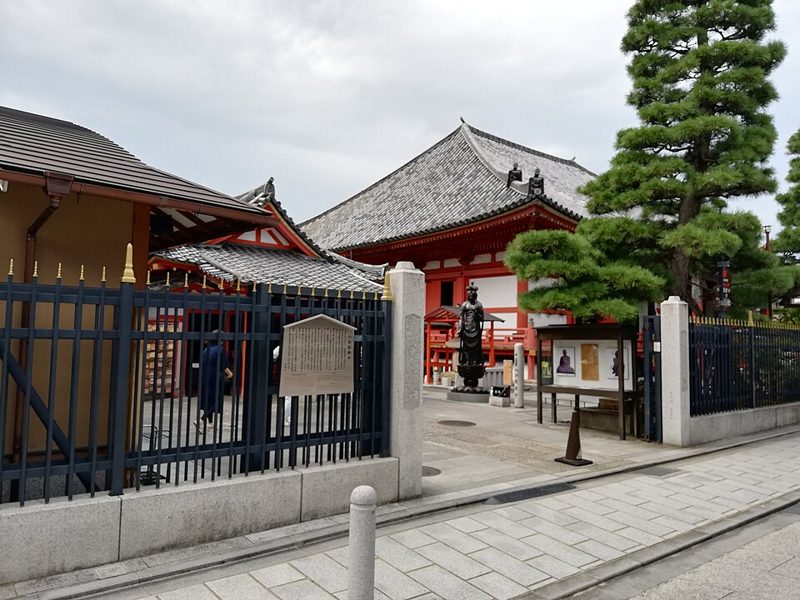
Six small figures of Amida Buddha emerge from the mouth of the monk Kuya in one of the most distinctive Buddhist sculptures preserved in Kyoto. Rokuharamitsuji was founded in 951, and its history links a devastating epidemic, the religious practices of ordinary townspeople, the rise of the Taira clan and the destruction of 1183. Its collection also preserves portraits of Taira no Kiyomori and the sculptors Unkei and Tankei.
Kyochika's take
K
y
o
c
h
i
k
a
r
e
c
o
m
m
e
n
d
s
m
a
k
i
n
g
t
h
e
R
e
i
w
a
k
a
n
c
o
l
l
e
c
t
i
o
n
t
h
e
c
e
n
t
e
r
o
f
y
o
u
r
v
i
s
i
t
,
p
a
r
t
i
c
u
l
a
r
l
y
i
f
y
o
u
a
r
e
i
n
t
e
r
e
s
t
e
d
i
n
t
h
e
r
e
l
a
t
i
o
n
s
h
i
p
b
e
t
w
e
e
n
J
a
p
a
n
e
s
e
r
e
l
i
g
i
o
u
s
b
e
l
i
e
f
s
a
n
d
m
e
d
i
e
v
a
l
p
o
r
t
r
a
i
t
s
c
u
l
p
t
u
r
e
.
C
o
m
p
a
r
e
K
u
y
a
'
s
d
e
p
i
c
t
i
o
n
a
s
a
t
r
a
v
e
l
i
n
g
p
r
e
a
c
h
e
r
w
i
t
h
t
h
e
s
e
a
t
e
d
i
m
a
g
e
o
f
T
a
i
r
a
n
o
K
i
y
o
m
o
r
i
h
o
l
d
i
n
g
a
B
u
d
d
h
i
s
t
s
c
r
i
p
t
u
r
e
.
T
h
e
c
o
n
t
r
a
s
t
o
f
f
e
r
s
a
w
a
y
t
o
e
x
p
l
o
r
e
t
h
e
d
i
f
f
e
r
e
n
t
r
e
l
i
g
i
o
u
s
a
n
d
p
o
l
i
t
i
c
a
l
i
d
e
n
t
i
t
i
e
s
c
o
n
n
e
c
t
e
d
w
i
t
h
t
h
e
t
e
m
p
l
e
.
Hours, admission and access
- Hours
- Temple: 8:30 AM–4:30 PM. Reiwakan collection: 9:00 AM–4:15 PM, last admission 4:00 PM. Hours may change during religious events.
- Closed
- The Kyoto City School Excursion Guide lists no regular closing days. Check the temple's announcements for changes during events.
- Admission
- Reiwakan: adults ¥700; university, high school and junior high school students ¥500; elementary school students ¥400. Groups of 30 or more receive a ¥50 reduction per person. Visitors presenting a disability certificate receive a half-price individual admission.
- Access
- Kyoto City Bus route 206 from Kyoto Station to Kiyomizu-michi, then 7 minutes on foot. Keihan Railway to Kiyomizu-Gojo Station, then 7 minutes on foot. Hankyu Railway to Kawaramachi Station, then 15 minutes on foot.
- Nearest station
- Kiyomizu-Gojo Station
Checked against official information on 2026-10-28. Details change, so check the official website before you go.
Sources: Rokuharamitsuji Temple — Official Website, Rokuharamitsuji Temple — Access and Visitor Information, Rokuharamitsuji Temple — History, Rokuharamitsuji Temple — Temple Treasures, Rokuharamitsuji Temple — Precinct Guide, Rokuharamitsuji Temple — Annual Events, Kyoto City School Excursion Guide — Rokuharamitsuji, Kyoto Prefectural Tourism Federation — Rokuharamitsuji
 Pochikichi's story corner
How did a monk's response to an epidemic become part of Japan's medieval political history?
Rokuharamitsuji traces its foundation to 951, when the monk Kuya established the temple. Its official history identifies Kuya as a son of Emperor Daigo and describes his religious activities among ordinary people. Rather than remaining within a single religious institution, Kuya traveled widely, studied Buddhist teachings and recited the name of Amida Buddha. He became known as the Saint of the Marketplace because of his work among the population. The temple's account places his foundation in the context of an epidemic affecting Kyoto. According to that tradition, Kuya carved an image of the Eleven-faced Kannon, carried it around the city and prepared a special tea containing a small pickled plum and knotted kelp. He offered the tea to people suffering from illness while chanting Buddhist prayers. The temple preserves this as a religious account, and the tea continues to be associated with its New Year observances.
The official history describes another major event in August 963. According to a surviving prayer document attributed to Kuya, the monk invited 600 distinguished Buddhist priests, arranged ceremonies involving the Great Perfection of Wisdom Sutra and conducted an elaborate lantern observance. These ceremonies accompanied the dedication of temple buildings. After Kuya's death, his disciple Chushin expanded the institution, which flourished as a Tendai religious establishment. This development illustrates the transition from the activities of a charismatic traveling preacher to a more substantial Buddhist institution with buildings, ceremonies and an organized religious community. The temple's history therefore reflects both personal forms of religious devotion and the formal practices of established Buddhism.
In the later Heian period, the surrounding area became closely associated with the Taira family. The temple records that Taira no Tadamori stationed soldiers at a subordinate establishment within its grounds. Under Taira no Kiyomori and Taira no Shigemori, the district developed into a major center of the family's power. The temple's own history describes extensive Taira residences in the surrounding area. In 1183, during the downfall of Taira power, military conflict brought fire to the temple. According to the official account, the other temple buildings burned while the main hall escaped destruction. The district remained politically significant in the Kamakura period, when the Rokuhara Tandai served as an administrative institution for the government's authority in western Japan.
The temple's history records restoration associated with Minamoto no Yoritomo, Ashikaga Yoshiakira and Toyotomi Hideyoshi. Its present main hall is associated with rebuilding in 1363. The official account states that Hideyoshi repaired the hall, added its present entrance porch and confirmed a landholding of 70 koku for the temple. After deterioration during the modern period, the main hall underwent dismantling and restoration in 1969. This work uncovered approximately 8,000 clay stupas and historic roof tiles. The discoveries helped demonstrate the depth of the site's religious and archaeological history. So when you visit, look for the architectural evidence of restoration, the memorials connecting Rokuhara with the Taira clan and the sculptures that preserve the religious personalities of medieval Japan.
Sources: Rokuharamitsuji Temple — History, Rokuharamitsuji Temple — Temple Treasures, Rokuharamitsuji Temple — Precinct Guide
Long ago, around hereWhat did this part of Kyoto look like before the present temple?
The temple's history begins in 951, so its own records do not establish precisely what occupied this particular plot approximately 1,200 years ago. By the late Heian period, however, the area had acquired a very different character from an ordinary religious neighborhood. The Taira family established an extensive presence here, and the temple describes its grounds and surrounding district as containing numerous residences belonging to members of the clan. The Taira presence connected Rokuhara with the highest levels of political and military power. After the family's downfall, the Kamakura government established the Rokuhara Tandai in the district. The temple's precinct guide places the administrative establishments to the north and south of Rokuharamitsuji.
Approximately 400 years ago, the temple had already passed through centuries of military conflict and reconstruction. Its official history records rebuilding associated with the Ashikaga period and repairs supported by Toyotomi Hideyoshi. Approximately 150 years ago, the institution was passing through the period of deterioration that the temple describes as beginning in the Meiji era. The comprehensive dismantling and restoration of the main hall took place later, in 1969. The present temple thus stands on a site that has been repeatedly altered rather than preserving every building from the time of Kuya. Visitors can read this changing history through the main hall, the religious sculptures, the Taira memorials and the archaeological discoveries made during restoration.
Sources: Rokuharamitsuji Temple — History, Rokuharamitsuji Temple — Precinct Guide
Hidden highlights
- Kuya's six Amida figures
- The sculpture represents six small figures of Amida Buddha emerging from Kuya's mouth as he chants. It is attributed by the temple to Kosho, the fourth son of Unkei.
- Kuya's deer-antler staff
- The monk holds a staff associated with the temple's story of a deer killed by a hunter named Sadamori. The detail connects the sculpture with a narrative of compassion and repentance.
- Taira no Kiyomori holding scripture
- The seated portrait shows Kiyomori holding a Buddhist scroll rather than military equipment. The temple connects the image with his religious devotion.
- Unkei and Tankei portraits
- The collection preserves portraits of the sculptor Unkei and his eldest son Tankei, figures associated with the development of medieval Japanese Buddhist sculpture.
- Kiyomori Memorial
- The precinct guide identifies a memorial associated with Taira no Kiyomori. It recalls the surrounding district's role as a center of Taira family power.
- Zeniarai Benzaiten
- The temple describes a practice of washing money in water associated with prayers for financial good fortune. It offers an example of a living devotional custom within the precinct.
Sources: Rokuharamitsuji Temple — Temple Treasures, Rokuharamitsuji Temple — History, Rokuharamitsuji Temple — Precinct Guide
The deer that changed the life of a hunter
Rokuharamitsuji preserves a story about Kuya's attachment to a deer while he was staying in the mountains of Kurama. According to the temple's traditional account, the monk loved hearing the animal's voice. A hunter named Sadamori killed the deer, and Kuya was deeply distressed when he learned what had happened. He requested the animal's hide and antlers, wore the hide and incorporated an antler into his walking staff. The story gives an emotional dimension to the equipment represented in the famous sculpture of Kuya.
The tradition continues with Sadamori regretting his action and becoming Kuya's disciple. He is said to have traveled through Kyoto while performing Buddhist chanting, using a gourd as a percussion instrument. The temple connects this activity with traditions that developed into Rokusa Nenbutsu, while identifying Kuya's own devotional chanting and dancing as an earlier source. The account is a religious narrative preserved by the temple, but it provides a way to understand how the institution connects compassion, repentance, music and devotional movement.
Sources: Rokuharamitsuji Temple — History, Rokuharamitsuji Temple — Temple Treasures
Why is Taira no Kiyomori shown holding a Buddhist scroll?
The portrait of Taira no Kiyomori preserved at Rokuharamitsuji offers a religious image of a man closely associated with military and political power. The sculpture depicts him seated and holding a scripture scroll. The temple's description explicitly contrasts the dignity of the portrait with the arrogant personality associated with Kiyomori in The Tale of the Heike. This contrast is important because it shows how religious sculpture could express an aspect of a historical figure very different from the personality emphasized in literary accounts.
The temple also connects the portrait with the tradition that Kiyomori copied Buddhist scriptures using red pigment mixed with blood while praying for the fortunes of his family. This account belongs to the temple's religious interpretation of the sculpture. It presents Kiyomori as a Buddhist devotee rather than simply as a powerful warrior leader. The visitor can therefore encounter two connected histories: the military rise and fall of the Taira family in the surrounding district, and the religious identity through which one of its most prominent members was remembered.
How to walk it
- Temple entrance — Begin by relating the present precinct to the historical Rokuhara district associated with the Taira family. (5 min)
- Main hall — Consider the rebuilding of 1363 and the later restoration of 1969. The principal Eleven-faced Kannon is normally concealed. (8 min)
- Reiwakan collection — Concentrate on the sculptures of Kuya, Taira no Kiyomori, Unkei and Tankei, as well as the temple's Buddhist images. (25 min)
- Kiyomori and Ako-ya memorials — Find the memorials identified in the official precinct guide and consider how the site preserves both political history and later storytelling traditions. (7 min)
- Zeniarai Benzaiten — Observe the religious practice of washing money in water associated with financial good fortune. (5 min)
All durations are Kyochika estimates in minutes, not official visitor times. The proposed circuit totals approximately 50 minutes. The official sources confirm the named features but do not specify a mandatory route or guaranteed access to each space.
Sources: Rokuharamitsuji Temple — Precinct Guide, Rokuharamitsuji Temple — Temple Treasures, Rokuharamitsuji Temple — History
Through the seasons
- January
- New Year worship and the offering of ofukucha tea, associated with the temple's tradition of Kuya's epidemic-relief activities.
- February
- Setsubun ceremonies, prayers for protection against misfortune and the Hoshi Festival.
- March
- Equinoctial services, religious talks and sutra-copying activities.
- August 8–10
- The Manto-e lantern observance, associated with religious traditions attributed to Kuya.
- September
- Equinoctial services, religious talks and sutra copying.
- November
- A special Benzaiten prayer observance listed in the temple's annual calendar.
- December 13 through New Year's Eve
- The annual schedule includes Kuya Yuyaku Nenbutsu, a traditional form of devotional chanting and movement. Specific public observance dates may vary.
- Every month on the 7th
- A regular religious observance associated with Benzaiten.
- Every month on the 17th
- A regular observance associated with Kannon and prayers for protection against misfortune and illness.
Getting there by taxi or bus
- Taxi
- Destination: Rokuharamitsuji Temple, 81-1 Rokurocho, Higashiyama-ku, Kyoto. The official website identifies parking for four vehicles, but does not guarantee availability.
- Bus
- Kyoto City Bus route 206 from Kyoto Station to Kiyomizu-michi (清水道), followed by a 7-minute walk.
- Other
- Keihan Railway to Kiyomizu-Gojo Station, then 7 minutes on foot. Alternatively, Hankyu Railway to Kawaramachi Station, then 15 minutes on foot.
Sources: Rokuharamitsuji Temple — Official Access
Pair it with
- Yasui Konpiragu Shrine — Compare the religious history of Rokuharamitsuji with the shrine's practices for severing harmful connections and establishing beneficial ones.
- Kennin-ji Temple — A suggested extension for travelers interested in comparing Kyoto's different Buddhist institutions.
- Kiyomizu-dera Temple — A suggested thematic pairing for travelers interested in Kannon devotion and Buddhist religious sites.
Good to know before you go
- The current official Reiwakan adult admission is ¥700.
- Reiwakan closes at 4:15 PM, and its last admission is at 4:00 PM.
- The temple closes at 4:30 PM during normal operations.
- The official website states that hours may change during religious events.
- The principal Eleven-faced Kannon is normally concealed. The temple states that it is unveiled once every 12 years, in a Year of the Dragon.
- The temple's official access guide lists parking for four vehicles.
- The 2024 Kyoto City School Excursion Guide reports that the Reiwakan has a lift to its upper floor and that no wheelchair-accessible toilet is available. These accessibility details should be reconfirmed before travel.
- The Kyoto City School Excursion Guide lists advance reservations for organized explanations of temple history and Buddhist sculptures, as well as religious talks.
- Photography rules, payment-card acceptance, general English-language interpretation and luggage storage are not confirmed by the opened official sources.
- Follow posted instructions and avoid interrupting worship or ceremonies.
Next stop: book for later today PR
Tickets and experiences in Kyoto you can book on Klook. Filter by “Today” to see what is still open.
Kimono rental in Kyoto→Tea ceremony experiences in Kyoto→Kyoto one-day sightseeing tours→All things to do in Kyoto on Klook →Compare on GetYourGuide: Kimono rental in Kyoto · Tea ceremony experiences in Kyoto · Kyoto one-day sightseeing tours
Ad: Klook and GetYourGuide affiliate links.
🍜 Where to eat after
Restaurants near here on Google Maps→Many restaurants in Kyoto take reservations, and some are cash only. Check the restaurant page before you go.
Events nearby
Festival & seasonal event
Kennin-ji, Kyoto's Oldest Zen Temple: Autumn Evening Special Visit
Kennin-ji Temple (Gion-Shijo Sta.)
Nov 8 (Sun) 17:30 – 19:00
A one-night visit after closing time, with a monk guiding you for about an hour. See a high-resolution replica of Tawaraya Sotatsu's Wind God and Thunder God screens, the Dharma Hall with its ceiling painting, and the illuminated Choon-tei garden. Free viewing until 7:00 PM.
Details →Art exhibition
Entokuin Temple: Teikan-zu Folding Screens and Autumn Night Light-Up
Entokuin Temple (Kodaiji sub-temple) (Gion-Shijo Sta.)
Oct 23 (Fri) – Dec 13 (Sun) 10:00 – 22:00
The sub-temple of Kodaiji where Nene, the wife of Toyotomi Hideyoshi, spent her final years. It shows the Teikan-zu folding screens handed down in the Toyotomi family, and in autumn lights up its pond-stroll and dry landscape gardens at night. Lights come on at 17:00, last entry is 21:30 and the gate closes at 22:00, with no day/night changeover. Closed December 11 and 12 for temple services.
Details →Art exhibition
Autumn 2026 Exhibition: Sakamoto Ryoma and the Satsuma-Choshu Alliance at Ryozen Museum of History
Ryozen Museum of History (Bakumatsu Ishin Museum) (Gion-Shijo Sta.)
Sep 16 (Wed) – Nov 23 (Mon) Last entry 17:00. Closed Mondays (open November 2 and 23)
An exhibition for the 190th anniversary of Sakamoto Ryoma's birth and the 160th anniversary of the Satsuma-Choshu Alliance. It introduces recent research that re-examines Ryoma's role using records from Satsuma, Choshu and the shogunate. The second period runs from October 27.
Details →Oct 23 (Fri) – Dec 13 (Sun) 17:00 – 22:00
See illuminated autumn gardens at Kodaiji, founded by Nene, the wife of Toyotomi Hideyoshi. Projection mapping also transforms the garden in front of the Hojo Hall. Last admission at 9:30 PM.
Details →Live music
Kichirei Kaomise Kogyo (December Grand Kabuki), Minamiza
Minamiza Theatre (Gion-Shijo Sta.)
Dec 1 (Tue) – Dec 24 (Thu) 10:30 – 21:10
Kyoto's year-end kabuki tradition. Matinee from 10:30 AM (ends around 3:15 PM), evening show from 4:00 PM (ends around 9:10 PM). The matinees on Dec 12, 19 and 20 and the evening show on Dec 18 are private bookings.
Details →Art exhibition
Special Exhibition: The Tale of Genji — Splendor of the Imperial Court at Kyoto National Museum
Kyoto National Museum, Heisei Chishinkan Wing (Shichijo Sta.)
Oct 6 (Tue) – Nov 29 (Sun) 09:00 – 17:30
Open until 8:00 PM on Fridays. A major rotation of exhibits takes place on November 3. The National Treasure Tale of Genji Scrolls will be displayed during different periods depending on the scenes.
Details →
Tips from visitors
Been here? Leave a short tip for the next traveler — in any language. No name, no sign-up.
Thank you! We check every tip by hand and post it within a day or two.
How we post tips: we read every one before it goes up. We remove swear words, insults, ads, links and anything that could identify a person. Tips are shown in the language they were written in, with a translate link. Kyochika never writes or pays for tips, and there are no star ratings.
FAQ
- What is Rokuharamitsuji Temple?
- Six small figures of Amida Buddha emerge from the mouth of the monk Kuya in one of the most distinctive Buddhist sculptures preserved in Kyoto. Rokuharamitsuji was founded in 951, and its history links a devastating epidemic, the religious practices of ordinary townspeople, the rise of the Taira clan and the destruction of 1183. Its collection also preserves portraits of Taira no Kiyomori and the sculptors Unkei and Tankei.
- Hours at Rokuharamitsuji Temple?
- Temple: 8:30 AM–4:30 PM. Reiwakan collection: 9:00 AM–4:15 PM, last admission 4:00 PM. Hours may change during religious events.
- Closed at Rokuharamitsuji Temple?
- The Kyoto City School Excursion Guide lists no regular closing days. Check the temple's announcements for changes during events.
- Admission at Rokuharamitsuji Temple?
- Reiwakan: adults ¥700; university, high school and junior high school students ¥500; elementary school students ¥400. Groups of 30 or more receive a ¥50 reduction per person. Visitors presenting a disability certificate receive a half-price individual admission.
- Access at Rokuharamitsuji Temple?
- Kyoto City Bus route 206 from Kyoto Station to Kiyomizu-michi, then 7 minutes on foot. Keihan Railway to Kiyomizu-Gojo Station, then 7 minutes on foot. Hankyu Railway to Kawaramachi Station, then 15 minutes on foot.
- What are the current opening hours?
- The temple is normally open from 8:30 AM to 4:30 PM. Reiwakan is open from 9:00 AM to 4:15 PM, with last admission at 4:00 PM. Hours may change during religious events.
- How much does Reiwakan admission cost?
- Adults pay ¥700; university, high school and junior high school students pay ¥500; elementary school students pay ¥400. Additional reductions apply to eligible groups and visitors presenting a disability certificate.
- Can visitors see the famous Kuya sculpture?
- The Kyoto City School Excursion Guide identifies the Kuya sculpture among the important cultural properties housed in Reiwakan. Confirm current display arrangements with the temple before traveling specifically to see it.
- Is the principal Eleven-faced Kannon normally visible?
- No. The official temple website describes it as a hidden image unveiled once every 12 years in a Year of the Dragon.