Kimono & textiles in Kyoto · Nishijin, Kamigyo Ward, Kyoto
Nishijin Textile Center
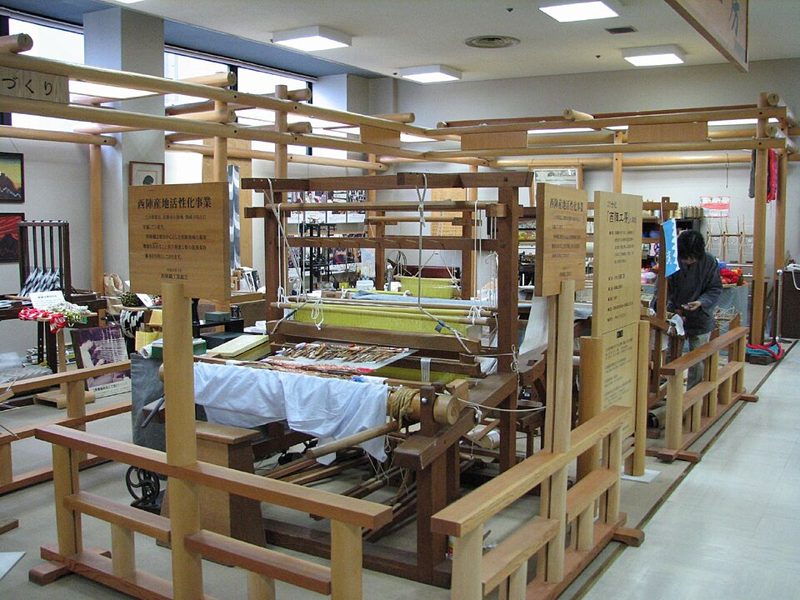
The Nishijin district takes its name from the headquarters of the Western Army during the Onin War of 1467–1477. After the fighting, displaced weavers returned to Kyoto and revived their craft in the area. Today, the Nishijin Textile Center preserves this history through textile exhibitions, weaving demonstrations and a remarkable wooden Jacquard machine recognized as a cultural asset by Kyoto City.
Kyochika's take
K
y
o
c
h
i
k
a
r
e
c
o
m
m
e
n
d
s
b
e
g
i
n
n
i
n
g
w
i
t
h
t
h
e
h
i
s
t
o
r
i
c
a
l
r
o
o
m
b
e
f
o
r
e
c
o
n
s
i
d
e
r
i
n
g
a
h
a
n
d
s
-
o
n
w
e
a
v
i
n
g
s
e
s
s
i
o
n
.
S
e
e
i
n
g
t
h
e
m
a
c
h
i
n
e
r
y
a
n
d
f
i
n
i
s
h
e
d
t
e
x
t
i
l
e
s
t
o
g
e
t
h
e
r
m
a
k
e
s
i
t
e
a
s
i
e
r
t
o
u
n
d
e
r
s
t
a
n
d
h
o
w
N
i
s
h
i
j
i
n
'
s
e
l
a
b
o
r
a
t
e
p
a
t
t
e
r
n
s
a
r
e
p
r
o
d
u
c
e
d
.
F
o
r
t
r
a
v
e
l
e
r
s
i
n
t
e
r
e
s
t
e
d
i
n
f
a
s
h
i
o
n
,
d
e
s
i
g
n
a
n
d
t
r
a
d
i
t
i
o
n
a
l
c
r
a
f
t
s
m
a
n
s
h
i
p
,
t
h
e
e
x
p
e
r
i
e
n
c
e
c
a
n
a
l
s
o
b
e
c
o
m
b
i
n
e
d
w
i
t
h
a
v
i
s
i
t
t
o
t
h
e
c
e
n
t
e
r
'
s
t
e
x
t
i
l
e
s
h
o
p
s
.
Hours, admission and access
- Hours
- 10:00 AM–4:00 PM (October–March); 10:00 AM–5:00 PM (April–September)
- Closed
- Every Monday and December 29–January 3. If Monday is a national holiday, closed the following Tuesday.
- Admission
- Free admission. Handweaving: general 2,750 yen, students 2,530 yen; group discounts available. Kaleidoscope-making: 1,980 yen. Kimono experiences are charged separately.
- Access
- Approximately 10 minutes on foot from Imadegawa Station on the Karasuma Subway Line. Approximately 1–2 minutes on foot from Horikawa Imadegawa bus stop.
- Nearest station
- Imadegawa Station
Checked against official information on 2026-10-28. Details change, so check the official website before you go.
Sources: Nishijin Textile Industry Association — Official Facility Information, Nishijin Textile Industry Association — History, Nishijin Textile Industry Association — Watch, Nishijin Textile Industry Association — Experience, Nishijin Textile Industry Association — Wear, Nishijin Textile Industry Association — Shopping, Nishijin Textile Industry Association — English Website, Kyoto City Museum Search — Nishijin Textile Center
 Pochikichi's story corner
How did a battlefield become the heart of Kyoto's textile industry?
The origins of Nishijin weaving reach back to the fifth and sixth centuries, when members of the Hata clan settled around Uzumasa and introduced sericulture and silk-weaving techniques. After the establishment of the imperial capital at Heian-kyo, the court organized textile craftsmen under a government office called Oribe no Tsukasa. These specialists produced high-quality silk fabrics, including patterned textiles and brocades, for imperial use. Textile production was therefore closely connected with the political and ceremonial life of the capital long before the name Nishijin existed.
As government-operated workshops declined during the middle Heian period, weavers increasingly organized production independently. Skilled artisans gathered around Otoneri and established a community known for expensive silks. During the Kamakura period, fabrics associated with Otoneri and Omiya acquired reputations for quality. By the Muromachi period, the artisans had developed a guild-like organization called Otoneri-za, serving both court-related demand and orders from aristocratic and warrior households. They also adopted weaving techniques from the Asian continent, contributing to the development of increasingly complex patterned fabrics.
The Onin War devastated this textile community. Fighting between the Eastern and Western armies continued for eleven years, driving numerous artisans away from Kyoto to places including Sakai. When the conflict ended, some returned to resume production around Hakunson and Omiya Imadegawa, close to the former Western Army headquarters. The district's name, Nishijin, derives from that western military encampment. Over the following generations, improved weaving methods, patronage from influential rulers and demand for expensive fabrics supported the industry's development. During the Edo period, large thread merchants and weaving houses formed a substantial textile-producing neighborhood.
Nishijin later faced declining demand, repeated fires and competition from other textile regions. The relocation of Japan's capital to Tokyo during the Meiji period brought additional difficulties. The industry's response included sending specialists to Europe and introducing Jacquard weaving technology. At the Nishijin Textile Center, the historical room presents an early domestically manufactured wooden Jacquard machine, designated a cultural asset by Kyoto City, alongside materials documenting the industry's modernization. So when you visit, look for the connection between the old weaving equipment and the elaborate patterns found in finished Nishijin textiles.
Sources: Nishijin Textile Industry Association — History, Nishijin Textile Industry Association — Watch, Kyoto City Museum Search — Nishijin Textile Center
Long ago, around hereWhat was this district like before the modern textile center?
Approximately 1,200 years ago, Kyoto's developing imperial capital depended on highly skilled textile workers. The court maintained a government office responsible for organizing the production of sophisticated fabrics, while weaving communities developed around areas of present-day Kamigyo Ward. The historical record places these artisans in the wider district rather than identifying a particular workshop on the exact site of the present textile center. The surroundings belonged to a city in which fabric carried political, social and ceremonial importance.
Around 400 years ago, Nishijin was already a major silk-weaving district, producing elaborate fabrics for wealthy patrons and a growing urban market. Large weaving houses and thread merchants became prominent during the Edo period. Approximately 150 years ago, the industry entered a period of modernization, incorporating European weaving technology while continuing established methods. These changes provide the historical setting for the exhibits at the textile center today.
Hidden highlights
- The wooden Jacquard machine
- The third-floor historical room displays Japan's first domestically manufactured wooden Jacquard machine, recognized as a cultural asset by Kyoto City. It illustrates the technological changes that transformed Nishijin weaving during the Meiji period.
- The historical textile collection
- The permanent display introduces the development of Nishijin weaving through historic fabrics and related materials. Look closely at how woven patterns differ from designs applied to the fabric's surface.
- Changing themed exhibitions
- The historical room organizes special exhibitions three or four times annually. These explore particular aspects of Nishijin textiles, traditional clothing and related crafts.
- Handweaving experience
- The center has 50 miniature handlooms for its reserved workshop program. Participants can weave a small table centerpiece measuring approximately 20 by 30 centimeters and take it home.
- Nishijin textile accessories
- The shops sell traditional obi alongside neckties, handbags, wallets, purses and interior textiles. These demonstrate how established weaving techniques are applied beyond formal kimono.
- Japan Traditional Crafts Aoyama Square Kyoto Nishijin
- This second-floor gallery and shop presents officially designated traditional crafts from across Japan, introducing visitors to a wider range of artisanal techniques and objects.
Sources: Nishijin Textile Industry Association — Watch, Nishijin Textile Industry Association — Experience, Nishijin Textile Industry Association — Shopping, Nishijin Textile Industry Association — English Website
Why does the name Nishijin remember a civil war?
The Onin War of 1467–1477 forced many Kyoto artisans to abandon their workshops. Textile producers left for other commercial centers, including Sakai. After the war, returning craftspeople resumed production near the former headquarters of the Western Army, commanded by Yamana Sozen.
This association with the Western Army gave the district its enduring name. The story connects a familiar Kyoto craft tradition with a period of destruction and reconstruction, demonstrating how a neighborhood's commercial identity can emerge from political upheaval.
Sources: Kyoto City Museum Search — Nishijin Textile Center, Nishijin Textile Industry Association — History
How did foreign technology help preserve a traditional craft?
During the Meiji period, Nishijin manufacturers faced substantial changes in the economy and in the demand for expensive textiles. Rather than relying exclusively on inherited techniques, the industry sent people to Europe and adopted new weaving technology, including Jacquard methods.
The wooden Jacquard machine displayed in the historical room makes this period of adaptation tangible. It shows how technological innovation became part of Nishijin's continuing history rather than replacing its identity as a traditional weaving center.
Sources: Nishijin Textile Industry Association — History, Nishijin Textile Industry Association — Watch
How to walk it
- Entrance and visitor information — Check the day's available demonstrations, exhibitions and reserved activities. (5 min)
- Third-floor historical room — Examine the wooden Jacquard machine and the materials documenting Nishijin's development. (20 min)
- Special exhibition area — Explore the current themed display, which may feature traditional clothing, textile art or historical materials. (15 min)
- Textile and craft shops — Compare obi fabrics with contemporary accessories and other traditional craft products. (15 min)
- Reserved handweaving experience — Use a miniature loom to create a woven table centerpiece. (40 min)
Walking and exhibition-viewing times are Kyochika estimates. The 40-minute handweaving duration is published by the official operator. Workshop reservations are required. The current official website states that kimono fashion shows are not being held.
Sources: Nishijin Textile Industry Association — Watch, Nishijin Textile Industry Association — Experience
Through the seasons
- January–March
- The center operates from 10:00 AM to 4:00 PM. Indoor exhibitions and reserved workshops offer opportunities to explore traditional textile production.
- April–September
- Opening hours extend to 5:00 PM. The center also offers a seasonal yukata dressing experience by reservation.
- October–December
- The center returns to its 4:00 PM closing time. Check for changing exhibitions and special cultural events.
- Throughout the year
- The historical room organizes themed exhibitions several times annually, while permanent displays introduce Nishijin's weaving heritage.
Getting there by taxi or bus
- Taxi
- Approximately 20 minutes from Kyoto Station, according to the official access page.
- Bus
- Kyoto City Bus 9 from Kyoto Station to Horikawa Imadegawa (堀川今出川), approximately 30 minutes on the bus, followed by a 1–2-minute walk. Other listed routes include 12, 59, 201 and 203 from their respective departure areas.
- Other
- Take the Karasuma Subway Line to Imadegawa Station, then walk approximately 10 minutes.
Sources: Nishijin Textile Industry Association — Official Access
Pair it with
- Nishijin weaving district — Explore the wider neighborhood associated with Kyoto's traditional textile industry.
- Japan Traditional Crafts Aoyama Square Kyoto Nishijin — Visit the traditional craft gallery and shop on the second floor of the same building. (0 min walk)
Good to know before you go
- General admission is free.
- Handweaving requires advance reservations.
- The handweaving workshop costs 2,750 yen for general participants and 2,530 yen for students, with separate group prices.
- Handweaving is available to participants in fifth grade and above.
- The handweaving activity takes approximately 40 minutes.
- Kaleidoscope-making costs 1,980 yen and takes approximately 30 minutes.
- The kaleidoscope workshop offers published starting times of 10:30 AM, 1:30 PM and 2:30 PM.
- The kaleidoscope workshop accommodates a maximum of four people at a time.
- Outdoor komon kimono dressing costs 8,800 yen, while indoor-only dressing costs 5,500 yen.
- Outdoor kimono participants must return their clothing 30 minutes before closing.
- The center provides footwear and undergarments for its kimono experience; hair and makeup are not included.
- Photography is explicitly permitted during the kimono dressing experience inside the center. Ask staff about photography in exhibition and demonstration areas.
- The current official website states that kimono fashion shows are not taking place.
- The center's official English-language website provides information on experiences, exhibitions, shopping and reservations.
- The official website does not confirm a universal cashless-payment policy.
- Parking is paid. On November 14–15, 2026, the parking area is unavailable because of Nishijin-ori Expo 2026.
Next stop: book for later today PR
Tickets and experiences in Kyoto you can book on Klook. Filter by “Today” to see what is still open.
Kimono rental in Kyoto→Tea ceremony experiences in Kyoto→Kyoto one-day sightseeing tours→All things to do in Kyoto on Klook →Compare on GetYourGuide: Kimono rental in Kyoto · Tea ceremony experiences in Kyoto · Kyoto one-day sightseeing tours
Ad: Klook and GetYourGuide affiliate links.
🍜 Where to eat after
Restaurants near here on Google Maps→Many restaurants in Kyoto take reservations, and some are cash only. Check the restaurant page before you go.
Events nearby
Festival & seasonal event
Koseiji Temple Autumn Special Opening with Night Viewing
Koseiji Temple (Nijo Sta.)
Nov 21 (Sat) – Nov 23 (Mon) 18:00 – 20:00
The evening session of Koseiji Temple's three-day autumn special opening in Kamigyo Ward. A tea service is offered for ¥800; last entry at 7:30 PM.
Details →Festival & seasonal event
Myoken-ji Temple Illumination & Special Night Viewing
Myoken-ji Temple (Kuramaguchi Sta.)
Nov 21 (Sat) – Dec 13 (Sun) 18:00 – 20:30
Autumn illumination and special night viewing at Myoken-ji, a Nichiren Buddhist temple in Kamigyo Ward. Last entry at 8:00 PM.
Details →Art exhibition
Toraya Collection Exhibition: Animals That Soothe the Heart
Toraya Kyoto Gallery (Imadegawa Sta.)
Oct 24 (Sat) – Nov 23 (Mon) 10:00 – 17:00
Animal-themed works from the collection of the wagashi maker Toraya: folding screens, hanging scrolls, tea bowls and netsuke. The gallery is next to Toraya Karyo Kyoto Ichijo, about a 7-minute walk from Exit 6 of Imadegawa subway station.
Details →Festival & seasonal event
Myokakuji Temple Hoshien Garden Special Opening and Autumn Light-up
Myokakuji Temple (Kuramaguchi Sta.)
Nov 10 (Tue) – Dec 6 (Sun) 10:00 – 15:30
A head temple of the Nichiren school founded in the Muromachi period, once used by Oda Nobunaga as his lodging in Kyoto. The mossy Hoshien garden is open by day, and from November 21 to December 6 it is also illuminated from 6:00 to 8:00 PM, when the Kahoto stupa hall is opened. Closed 3:30-6:00 PM for changeover; last entry 3:00 PM by day and 7:30 PM at night.
Details →Art exhibition
Kyoto State Guest House Autumn Evening Extended Opening
Kyoto State Guest House (Imadegawa Sta.)
Dec 4 (Fri) – Dec 7 (Mon) Open until 7:15 PM (last entry 6:15 PM); check the official site for the opening time
For four days only, the national guest house inside Kyoto Gyoen is open until 7:15 PM. Admission closes at 6:15 PM; children of elementary school age and under cannot enter.
Details →Festival & seasonal event
Maple Garden at the Historic Odoi Earthworks: Autumn Illumination at Kitano Tenmangu Shrine
Kitano Tenmangu Shrine, Odoi Maple Garden (Kitano-Hakubaicho Sta.)
Nov 13 (Fri) – Dec 6 (Sun) Sunset–8:00 PM (last admission 7:40 PM)
Around 350 maple trees color the historic Odoi earthworks built by Toyotomi Hideyoshi. Illumination runs from sunset until 8:00 PM, with last admission at 7:40 PM. Admission includes a sweet inspired by the historic Kitano Grand Tea Gathering.
Details →
Tips from visitors
Been here? Leave a short tip for the next traveler — in any language. No name, no sign-up.
Thank you! We check every tip by hand and post it within a day or two.
How we post tips: we read every one before it goes up. We remove swear words, insults, ads, links and anything that could identify a person. Tips are shown in the language they were written in, with a translate link. Kyochika never writes or pays for tips, and there are no star ratings.
FAQ
- What is Nishijin Textile Center?
- The Nishijin district takes its name from the headquarters of the Western Army during the Onin War of 1467–1477. After the fighting, displaced weavers returned to Kyoto and revived their craft in the area. Today, the Nishijin Textile Center preserves this history through textile exhibitions, weaving demonstrations and a remarkable wooden Jacquard machine recognized as a cultural asset by Kyoto City.
- Hours at Nishijin Textile Center?
- 10:00 AM–4:00 PM (October–March); 10:00 AM–5:00 PM (April–September)
- Closed at Nishijin Textile Center?
- Every Monday and December 29–January 3. If Monday is a national holiday, closed the following Tuesday.
- Admission at Nishijin Textile Center?
- Free admission. Handweaving: general 2,750 yen, students 2,530 yen; group discounts available. Kaleidoscope-making: 1,980 yen. Kimono experiences are charged separately.
- Access at Nishijin Textile Center?
- Approximately 10 minutes on foot from Imadegawa Station on the Karasuma Subway Line. Approximately 1–2 minutes on foot from Horikawa Imadegawa bus stop.
- Is admission to Nishijin Textile Center free?
- Yes. General admission is free, but hands-on workshops and kimono dressing experiences have separate fees.
- Are kimono fashion shows currently available?
- No. The operator's current official website explicitly states that kimono shows are not being held.
- Can I try weaving myself?
- Yes. The reservation-based handweaving workshop takes approximately 40 minutes and costs 2,750 yen for general participants.
- Can I wear a kimono at the center?
- Yes. Reservation-based kimono dressing experiences are offered, including indoor and outdoor options.