Museums in Kyoto · Shimogyo Ward, Umekoji
Kyoto Railway Museum
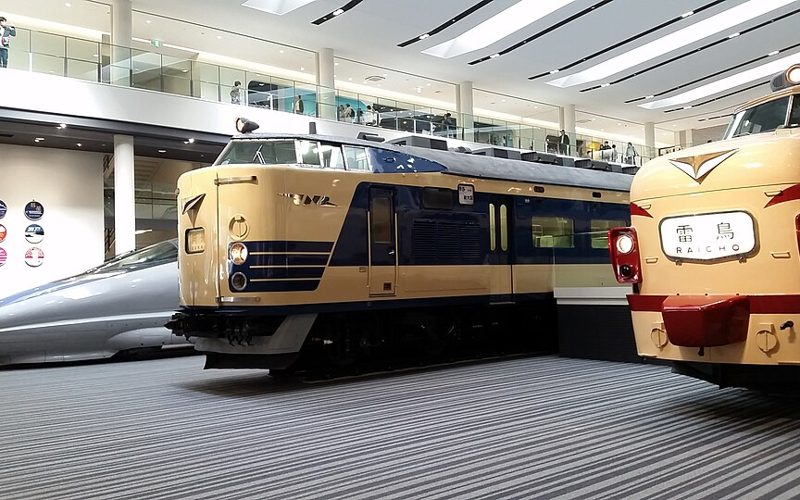
Fifty-four railway vehicles, including the pioneering 0 Series Shinkansen, the 500 Series Shinkansen that operated commercially at 300 km/h, and the enormous Class C62 steam locomotive, illustrate the technological changes that transformed rail travel in Japan. Opened on April 29, 2016, Kyoto Railway Museum combines the heritage of the former Umekoji Steam Locomotive Museum and Modern Transportation Museum. Visitors can examine historic vehicles, watch a large-scale railway diorama and purchase a separate ticket to ride a train pulled by a real steam locomotive.
Kyochika's take
Kyochika recommends this museum to families, railway enthusiasts, engineering students and travelers interested in how transport helped shape modern Japan. Begin with the original Shinkansen and steam locomotives, then compare them with later vehicles to understand the changing demands of speed, propulsion and passenger travel.
For a fuller visit, Kyochika suggests arriving near opening time, checking the day's railway diorama schedule and purchasing SL Steam tickets before exploring the exhibits. Allow several hours if you want to examine the vehicles closely, watch the model railway and enjoy the steam train experience.
Hours, admission and access
- Hours
- 10:00 a.m. to 5:00 p.m. (No admission after 4:30 p.m.)
- Closed
- Every Wednesday, year-end through New Year (December 30 to January 1), etc. Open on holidays, spring break, summer break, etc. Check the official museum calendar.
- Admission
- General admission (18 years and older): 1,500 yen; university and high school students: 1,300 yen; junior high and elementary school students: 500 yen; children (3 years and older): 200 yen. Separate tickets are required for SL Steam and the driving simulator.
- Access
- Approximately 2 minutes on foot from JR Umekoji-Kyotonishi Station on the Sagano Line, or approximately 20 minutes on foot west from the central exit of JR Kyoto Station.
- Nearest station
- Umekoji-Kyotonishi Station
Checked against official information on 2026-10-28. Details change, so check the official website before you go.
Sources: Kyoto Railway Museum — Official Website, Kyoto Railway Museum — About Us, Kyoto Railway Museum — Discover, Kyoto Railway Museum — Experience, Kyoto Railway Museum — Tickets, Kyoto Railway Museum — Access, Kyoto Railway Museum — Floor Guide, Kyoto Railway Museum — Frequently Asked Questions
 Pochikichi's story corner
How did Kyoto's preserved steam locomotives become a museum of Japanese railway history?
Kyoto Railway Museum brings together two distinct strands of railway preservation. One is the legacy of the Umekoji Steam Locomotive Museum, an institution dedicated to maintaining the history of steam railways. The other is the Modern Transportation Museum, whose exhibits represented a broader history of Japanese transport. Bringing their legacies together created an institution capable of telling a story that extends from steam power to high-speed railway technology.
The Modern Transportation Museum closed on April 6, 2014. The Umekoji Steam Locomotive Museum closed on August 30, 2015, as preparations continued for the expanded and renovated facility. Kyoto Railway Museum officially opened on April 29, 2016. Its fundamental concept, described by the museum as a hub of railway culture working together with the community, connects preservation and education with regional activity.
The museum's collection of 54 exhibited railway vehicles makes the progression of technology visible. The 0 Series represents the beginning of Shinkansen travel, while the 500 Series demonstrates a later period in which commercial operation reached 300 km/h. Steam locomotives provide a contrasting mechanical world, with their large driving wheels, external components and heavy construction.
The museum also preserves the practical context in which railways operated. Its steam locomotive service shed, described by the institution as the only one of its kind in Japan, represents the maintenance facilities required to support working locomotives. The extensive railway diorama introduces railway yards and other infrastructure alongside moving trains. So when you visit, look for the relationship between vehicles and the systems supporting them: the evolution of rail transport involves not only faster trains but also the engineering, maintenance and operational systems that make them possible.
Sources: Kyoto Railway Museum — About Us, Kyoto Railway Museum — Discover
Long ago, around hereWhat can we establish about the museum site before its present form?
The available official museum history identifies the site's connection with the former Umekoji Steam Locomotive Museum but does not document what stood on the precise present-day museum grounds approximately 1,200 or 400 years ago. There is therefore insufficient evidence in the consulted sources to assign a specific ancient building, residence, temple or historic event to this exact location. The railway museum's documented significance belongs to the history of railway preservation and the development of modern transport.
In the recent past, the location was occupied by the Umekoji Steam Locomotive Museum. That institution closed in August 2015 to make way for the expanded Kyoto Railway Museum, which opened the following April. The transformation retained the site's association with steam locomotive heritage while extending its educational scope to later railway technology and the wider history of Japanese transportation.
Sources: Kyoto Railway Museum — About Us
Hidden highlights
- Steam Locomotive No. 2 Service Shed
- The museum identifies this facility as Japan's only steam locomotive service shed. It provides a link between the locomotives on display and the maintenance operations needed to keep steam-powered machinery functioning. Viewing can be restricted during maintenance.
- The 0 Series Shinkansen
- Study the distinctive shape of the original Shinkansen and compare its proportions with those of the 500 Series. The comparison reveals how the external design of Japanese high-speed trains developed.
- The 500 Series Shinkansen
- This train achieved commercial operation at 300 km/h. Examine the long streamlined nose and its contrast with the rounded form of the earlier 0 Series.
- The Class C62 Steam Locomotive
- The museum identifies the C62 as the largest type of train operated by Japanese National Railways. Its heavy construction and prominent mechanical components provide a counterpoint to the design of electric high-speed trains.
- The Railway Diorama
- Approximately 1/80-scale model trains operate across a display about 30 meters wide and 10 meters deep. The recreated railway yard and other infrastructure demonstrate how trains function within a wider rail network.
- The Former Nijo Station House
- The museum's official overseas visitor FAQ identifies the former Nijo Station House as the location of the museum shop near the exit. It provides another point of contact with the museum's preserved railway heritage.
Sources: Kyoto Railway Museum — Discover, Kyoto Railway Museum — Frequently Asked Questions
The steam locomotive that visitors can actually ride behind
The SL Steam attraction offers a direct experience of railway technology represented elsewhere in the museum. Instead of simply viewing a steam locomotive on display, visitors can board a passenger train pulled by a real operating locomotive. The experience gives the mechanical history of steam propulsion a tangible form.
The museum sells SL Steam tickets at machines on the steam locomotive platform from opening time. Boarding begins approximately 10 minutes before departure. The official fares are 300 yen for general passengers and 100 yen for children aged 3 through junior high school. Visitors should confirm the day's departures before planning their route.
Sources: Kyoto Railway Museum — Experience
What does it take to operate a train?
The driving simulator introduces the skills involved in controlling a railway vehicle. The museum uses the same type of simulator employed for train-driver training, allowing visitors to approach railway operations from the perspective of the driver rather than that of the passenger.
The official experience lasts approximately 10 minutes and costs 100 yen in addition to museum admission. Tickets must be purchased in advance; they are not sold inside the museum. The museum states that electronic simulator tickets require credit card payment. Visitors should check their designated meeting time carefully, since late arrival can result in losing the experience without a refund.
Sources: Kyoto Railway Museum — Tickets, Kyoto Railway Museum — Experience
How to walk it
- Entrance and visitor information — Check the museum map, confirm the railway diorama schedule and identify where SL Steam tickets are sold. (10 min)
- Historic railway vehicles — Examine the steam locomotives and other preserved railway vehicles, focusing on their mechanical construction and historical roles. (25 min)
- Shinkansen comparison — Study the 0 Series and 500 Series, comparing the body shapes and technology represented by different generations of high-speed trains. (20 min)
- Railway diorama — Watch the staff-operated model railway presentation and identify the railway yard and other network infrastructure. (20 min)
- Driving simulator — Visit the simulator area, or participate if you have purchased the required advance ticket. (20 min)
- Steam locomotive facilities — View the steam locomotive displays and service shed where access is permitted. (25 min)
- SL Steam — Board the steam-powered passenger train if you have purchased a ticket and its operating schedule permits. (25 min)
- Museum shop — Finish by exploring the souvenir shop in the former Nijo Station House. (15 min)
All route durations are Kyochika estimates, not official walking or activity times. The suggested itinerary totals approximately 160 minutes, excluding additional waiting. The museum confirms that railway diorama presentations last approximately 15 minutes, while simulator experiences last approximately 10 minutes. The route should be adjusted to the day's operating schedules.
Sources: Kyoto Railway Museum — Discover, Kyoto Railway Museum — Experience, Kyoto Railway Museum — Tickets, Kyoto Railway Museum — Frequently Asked Questions
Through the seasons
- Spring
- The official calendar includes exceptions to regular Wednesday closures during spring break. Kyochika suggests combining the museum with an outdoor walk when weather conditions are suitable.
- Summer
- The museum lists summer vacation among periods with special opening arrangements. Its indoor exhibitions provide an alternative to spending an entire day outdoors.
- Autumn
- Kyochika suggests combining the indoor collections with time outside if the weather permits. The museum's major railway exhibits remain the central attraction.
- Winter
- The indoor collection and diorama are useful options for a winter museum visit. The official annual closure includes December 30 through January 1.
Getting there by taxi or bus
- Taxi
- Ask for Kyoto Railway Museum, Kankiji-cho, Shimogyo-ku, Kyoto.
- Bus
- From Kyoto Station, take Kyoto City Bus route 205 or 208 to Umekoji Koen/JR Umekoji-Kyotonishi-eki-mae (梅小路公園・JR梅小路京都西駅前), then walk approximately 3 minutes. The museum lists a bus journey of approximately 10 minutes.
- Other
- Take the JR Sagano Line to Umekoji-Kyotonishi Station and walk approximately 2 minutes. Alternatively, walk approximately 20 minutes west from the central exit of JR Kyoto Station.
Sources: Kyoto Railway Museum — Access
Pair it with
- Umekoji-Kyotonishi Station — Use the nearby JR station for a convenient rail arrival or departure. (2 min walk)
- Kyoto Station — Combine the museum with a visit to Kyoto's main railway transport hub. (20 min walk)
Good to know before you go
- The museum provides an English-language website and online floor guide.
- The official overseas visitor FAQ describes QR codes inside the museum that provide map information and exhibit information with a read-aloud feature.
- Free Wi-Fi is available, although the museum warns that the signal is very weak.
- The museum does not offer a staffed luggage storage service, but coin-operated lockers are available in two locations.
- Wheelchairs and baby strollers are available to borrow. Ask staff at the entrance or the first-floor information desk.
- The official museum guide identifies elevators, escalators, multi-purpose toilets and a nursing room.
- SL Steam requires a separate ticket purchased at the steam locomotive platform.
- The driving simulator requires advance purchase and credit card payment; simulator tickets cannot be purchased with cash inside the museum.
- The museum accepts several payment methods, but its official FAQ states that PiTaPa is not accepted.
- Re-entry is permitted until 4:30 p.m. by presenting the admission ticket.
- The museum has a restaurant on the second floor of the main building and light meals in the dining car.
- The museum shop is located in the former Nijo Station House near the exit.
- The steam locomotive service shed may be closed to visitors during maintenance.
- Railway diorama presentation times can change. Check the schedule on the day of your visit.
- Visitors who need a prayer room should consult museum staff.
Next stop: book for later today PR
Tickets and experiences in Kyoto you can book on Klook. Filter by “Today” to see what is still open.
Kimono rental in Kyoto→Tea ceremony experiences in Kyoto→Kyoto one-day sightseeing tours→All things to do in Kyoto on Klook →Compare on GetYourGuide: Kimono rental in Kyoto · Tea ceremony experiences in Kyoto · Kyoto one-day sightseeing tours
Ad: Klook and GetYourGuide affiliate links.
🍜 Where to eat after
Restaurants near here on Google Maps→Many restaurants in Kyoto take reservations, and some are cash only. Check the restaurant page before you go.
Events nearby
Festival & seasonal event
Kyoto Railway Museum Special Tour: Experience Everything About the Series 500 Shinkansen!
Kyoto Railway Museum (Umekoji-Kyotonishi Sta.)
Dec 12 (Sat) – Jan 23 (Sat) 09:30 – 10:00
This special tour is held on only two dates: December 12 and January 23. Before the museum opens, join a curator to explore the driver's cab and learn about the pantograph of the Series 500 Shinkansen.
Details →Festival & seasonal event
Umekoji Park Autumn Leaves Festival (Suzaku Garden Light-Up)
Umekoji Park, Suzaku Garden (Umekoji-Kyotonishi Sta.)
Nov 13 (Fri) – Nov 29 (Sun) 17:00 – 21:00
The maples and pines of Suzaku Garden, the Japanese garden in Umekoji Park, are lit up at night. The dark pond turns into a mirror for the trees, and a path runs under maples close enough to touch. Last entry is 20:30. Show a same-day ticket stub from Kyoto Aquarium, Kyoto Railway Museum or VIVA SQUARE KYOTO for 100 yen off.
Details →Market
Umekoji Park Handmade Market — November 7
Umekoji Park, Shichijo Entrance Event Plaza (Umekoji-Kyotonishi Sta.)
Nov 7 (Sat) 09:00 – 16:00
The market takes place on November 7 and December 5 during the featured period, not daily. Held rain or shine, this outdoor market features handmade goods sold directly by their creators.
Details →Market
Umekoji Park Handmade Market — December 5
Umekoji Park, Shichijo Entrance Event Plaza (Umekoji-Kyotonishi Sta.)
Dec 5 (Sat) 09:00 – 16:00
The market takes place on November 7 and December 5 during the featured period, not daily. Held rain or shine, this outdoor market features handmade goods sold directly by their creators.
Details →Art exhibition
Autumn Special Exhibition: Nanban - Memories of Kyoto Where Foreign Cultures Met
Kyoto Sangyo University Gallery (Musubiwaza-kan, 2F) (Tambaguchi Sta.)
Nov 2 (Mon) – Dec 12 (Sat) 10:00 – 16:30 (details on the official site)
Traces the Portuguese and Spanish 'Nanban' visitors to Japan in the 16th and 17th centuries, East-West exchange, and the ban and persecution of Christianity through historical materials. 2026 marks 450 years since the 'Nanbanji of the capital' (Church of the Assumption) was dedicated in Kyoto in 1576; it was later destroyed under the ban. Part 1 runs Nov 2-22 and Part 2 Nov 25-Dec 12, with some items changed. No parking or bicycle parking at the venue.
Details →Festival & seasonal event
Toji Autumn Illumination and Special Night Viewing of Kondo and Kodo Halls
Toji Temple (Kyo-o-gokoku-ji) (Kyoto Sta.)
Oct 31 (Sat) – Dec 13 (Sun) 18:00 – 21:30
The five-story pagoda and around 200 maple trees at World Heritage-listed Toji are illuminated at night. Special evening access is also available to the National Treasure Kondo Hall and Important Cultural Property Kodo Hall, home to the three-dimensional mandala. Last admission at 9:00 PM; open daily throughout the event.
Details →
Tips from visitors
Been here? Leave a short tip for the next traveler — in any language. No name, no sign-up.
Thank you! We check every tip by hand and post it within a day or two.
How we post tips: we read every one before it goes up. We remove swear words, insults, ads, links and anything that could identify a person. Tips are shown in the language they were written in, with a translate link. Kyochika never writes or pays for tips, and there are no star ratings.
FAQ
- What is Kyoto Railway Museum?
- Fifty-four railway vehicles, including the pioneering 0 Series Shinkansen, the 500 Series Shinkansen that operated commercially at 300 km/h, and the enormous Class C62 steam locomotive, illustrate the technological changes that transformed rail travel in Japan. Opened on April 29, 2016, Kyoto Railway Museum combines the heritage of the former Umekoji Steam Locomotive Museum and Modern Transportation Museum. Visitors can examine historic vehicles, watch a large-scale railway diorama and purchase a separate ticket to ride a train pulled by a real steam locomotive.
- Hours at Kyoto Railway Museum?
- 10:00 a.m. to 5:00 p.m. (No admission after 4:30 p.m.)
- Closed at Kyoto Railway Museum?
- Every Wednesday, year-end through New Year (December 30 to January 1), etc. Open on holidays, spring break, summer break, etc. Check the official museum calendar.
- Admission at Kyoto Railway Museum?
- General admission (18 years and older): 1,500 yen; university and high school students: 1,300 yen; junior high and elementary school students: 500 yen; children (3 years and older): 200 yen. Separate tickets are required for SL Steam and the driving simulator.
- Access at Kyoto Railway Museum?
- Approximately 2 minutes on foot from JR Umekoji-Kyotonishi Station on the Sagano Line, or approximately 20 minutes on foot west from the central exit of JR Kyoto Station.
- How much is admission to Kyoto Railway Museum?
- General admission for visitors aged 18 and older is 1,500 yen. University and high school students pay 1,300 yen, junior high and elementary school students pay 500 yen, and children aged 3 and older pay 200 yen.
- Can I ride a real steam train?
- Yes. The SL Steam attraction offers passenger rides behind a real steam locomotive. A separate ticket is required and can be purchased at the platform when the museum opens.
- Do I need to reserve the driving simulator?
- Yes. Simulator tickets must be purchased in advance. Each experience lasts approximately 10 minutes and costs 100 yen, in addition to museum admission.
- Does the museum have English information?
- Yes. Its official website and floor guide are available in English. The overseas visitor FAQ also describes QR-code-based exhibit information with a read-aloud function.