Museums in Kyoto · Nakagyo Ward, Karasuma Oike
Kyoto International Manga Museum
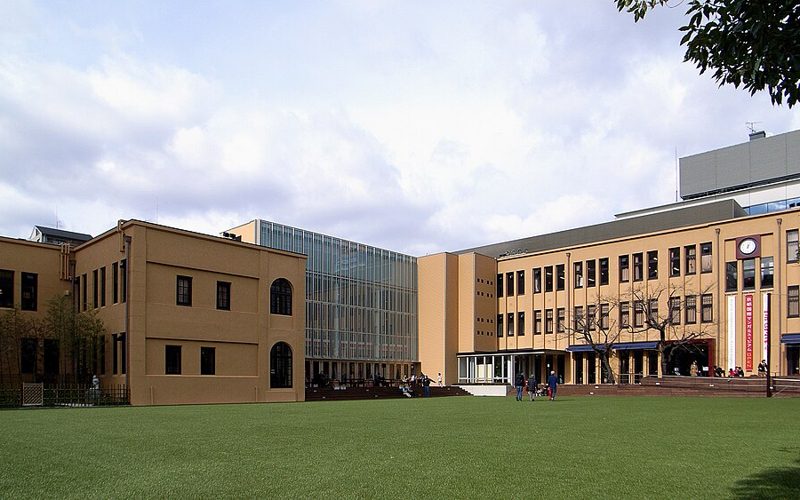
A primary school established on November 1, 1869, has become a museum holding approximately 300,000 manga-related items, including 50,000 volumes available for visitors to read. The Kyoto International Manga Museum opened in November 2006 as a joint project between Kyoto City and Kyoto Seika University. Its historic school buildings, vast Wall of Manga and permanent exhibitions connect modern comics with the history of education, publishing and visual storytelling in Japan.
Kyochika's take
Kyochika recommends this museum to manga fans, illustrators, designers, families and travelers interested in contemporary Japanese culture. Begin with the permanent What is Manga? exhibition to understand the medium's history and social significance, then explore the open-access manga shelves.
Visitors who do not read Japanese should look for the Manga Expo area, which contains translated manga and publications from around the world. On a suitable-weather day, Kyochika suggests choosing a volume and reading on the museum lawn, while also taking time to observe the former school's tiled staircases and historic corridors.
Hours, admission and access
- Hours
- 10:00–17:00 (Last admission at 16:30)
- Closed
- Wednesday (closed the following day if Wednesday is a national holiday). Museum opening and closing arrangements may change; consult the official opening calendar.
- Admission
- Ages 19 and older: 1,200 yen; ages 13–18: 400 yen; ages 6–12: 200 yen. Group rates for 20 or more: 960 yen, 320 yen and 160 yen respectively. Annual passports are available.
- Access
- Approximately 2 minutes on foot from Exit 2 of Karasuma Oike Station on the Kyoto Municipal Subway Karasuma and Tozai lines.
- Nearest station
- Karasuma Oike Station
Checked against official information on 2026-10-28. Details change, so check the official website before you go.
Sources: Kyoto International Manga Museum — Official Website, Kyoto International Manga Museum — Hours and Fees, Kyoto International Manga Museum — Access, Kyoto International Manga Museum — Frequently Asked Questions, Kyoto International Manga Museum — About Tatsuike Primary School, Kyoto International Manga Museum — History, Kyoto International Manga Museum — Wall of Manga, Kyoto International Manga Museum — What is Manga?, Kyoto International Manga Museum — Floor Map, Kyoto International Manga Museum — Outline
 Pochikichi's story corner
Why did Kyoto turn a historic elementary school into an international manga museum?
The history of the building begins with the establishment of Tatsuike Primary School on November 1, 1869. It was the 25th district elementary school of Kamigyo and belonged to a network of 64 administrative district-based elementary schools established in Kyoto. The institution opened before the Japanese government's modern Education System Order of 1872, showing the importance the city's communities placed on education during the early years of modernization.
The school was financed by local residents, who donated 2,000 ryo for its construction without receiving grants from Kyoto Prefectural Government. Its buildings later changed, with the present auditorium and gymnasium dating from 1928, the main building from 1929 and the north building from 1937. Surviving features include tiled staircases and older corridors. Population changes in the downtown area eventually reduced the number of children attending the school, and in April 1995 it merged with four other schools to establish Gosho Minami Primary School.
Kyoto Seika University proposed creating a manga museum to Kyoto City in April 2003. A basic cooperation agreement followed in December 2003, and the proposed use of the former Tatsuike Primary School site received approval in October 2005. Kyoto International Manga Museum opened in November 2006. Its creation gave the historic school buildings a new educational purpose rather than replacing them with an entirely new complex.
The museum's approximately 300,000 items include Edo-period caricature woodblock prints, historical magazines, postwar rental books, modern manga and international publications. It operates as a museum, library and research facility, using exhibitions, events and workshops to share knowledge about manga culture. Around 50,000 volumes are available through the Wall of Manga. So when you visit, look for the way the institution's two histories overlap: the surviving architecture represents Kyoto's community-based approach to education, while the collections explore the development of one of Japan's most influential forms of visual storytelling.
Sources: Kyoto International Manga Museum — About Tatsuike Primary School, Kyoto International Manga Museum — History, Kyoto International Manga Museum — Outline, Kyoto International Manga Museum — Wall of Manga
Long ago, around hereWhat occupied this site before the manga museum?
The museum's official history does not establish the precise use of this plot approximately 1,200 or 400 years ago. It would therefore be speculative to identify a particular ancient structure, aristocratic residence or historic event at the exact site. The verified history of the property centers on its role as Tatsuike Primary School, founded in 1869 as part of Kyoto's district-based elementary education system.
Approximately 150 years ago, the school was already serving its surrounding community. Its establishment had been financed by residents of the Tatsuike School District, whose donations supported local education. The buildings subsequently reconstructed during the twentieth century became the physical foundation of the manga museum, preserving the connection between the property's educational origins and its present cultural role.
Sources: Kyoto International Manga Museum — About Tatsuike Primary School
Hidden highlights
- The Principal's Office Clock
- The former principal's office contains a historic clock that stopped before the school was converted into a museum. At the request of local community members, clockmaker Eihima Osamu from Hyogo Prefecture repaired it and restored its pendulum movement.
- The Wall of Manga
- Approximately 50,000 manga volumes are arranged along bookshelves stretching roughly 200 meters throughout the museum. Books are grouped by readership categories and shelved by authors' names in Japanese syllabary order.
- Manga Expo
- This area offers translated manga and works from around the world. It is particularly useful for visitors who want to read manga in languages other than Japanese.
- The What is Manga? Exhibition
- Located in the Main Gallery on the second floor, this permanent exhibition considers manga's development and social significance. It also introduces aspects of manga production, publishing and popular culture.
- The Historic School Architecture
- The museum preserves the main building from 1929, north building from 1937 and auditorium/gymnasium from 1928. Look for the creaking corridors and tiled staircases that retain the atmosphere of the original educational institution.
- The Children's Library
- Located on the first floor, this area contains educational manga and picture books illustrated by manga artists. The museum advises that access may be limited to children and guardians at certain times, and that some books may be unavailable during bookshelf replacement.
Sources: Kyoto International Manga Museum — About Tatsuike Primary School, Kyoto International Manga Museum — Wall of Manga, Kyoto International Manga Museum — What is Manga?, Kyoto International Manga Museum — Frequently Asked Questions
The clock that survived the end of a school
When Tatsuike Primary School ceased operating as an independent school, its principal's office remained as part of the historic building. The room contains a large clock that had once marked the passage of time for the school community. Before the conversion into the manga museum, the mechanism had stopped.
Local community members wanted the clock repaired. Eihima Osamu, a clock repair craftsman from Hyogo Prefecture recognized with a national skilled craftsmanship award, was commissioned to restore it. Its pendulum began moving again, preserving a small piece of the building's educational past. The museum specifically encourages visitors to look into the former principal's office and notice the historic clock.
Sources: Kyoto International Manga Museum — About Tatsuike Primary School
How a rental bookstore helped fill the Wall of Manga
A substantial portion of the museum's open-access manga collection originated with Okubo Negishi Books, a rental bookstore that operated for roughly 20 years until 2005. The donation helped establish the Wall of Manga, where visitors can read from a collection of approximately 50,000 publications.
This history is a reminder that manga circulated through different systems of distribution and readership before becoming objects of museum preservation. Books associated with an earlier commercial rental business now contribute to public access, cultural research and the preservation of Japanese popular publishing.
How to walk it
- Entrance and historic school architecture — Begin by examining the former elementary school building, paying attention to its historic corridors and staircases. (10 min)
- First-floor Wall of Manga — Explore the shonen manga shelves and use the museum's collection search terminals if looking for a particular title. (15 min)
- Manga Expo — Browse translated manga and international publications. (20 min)
- Children's Library and activity areas — Look at the family-oriented manga collection and check which scheduled activities are available. (15 min)
- Second-floor Main Gallery — Explore the permanent What is Manga? exhibition and its discussion of manga history, society and publishing. (25 min)
- Historic principal's office — Find the preserved room and look for its restored clock. (10 min)
- Third-floor Wall of Manga — Explore the seinen collection and compare its organization with the shelves on other floors. (15 min)
- Outdoor reading — Choose a book from the Wall of Manga and read on the lawn if weather and access conditions permit. (30 min)
- Museum shop and cafe — Browse manga-related merchandise and look at illustrations created by manga artists on the cafe walls. (20 min)
All individual route durations are Kyochika estimates, not official activity timings. The suggested itinerary totals approximately 160 minutes. The museum states that a basic tour can take roughly 30 minutes to 1 hour, but recommends allowing additional time for exhibitions, reading manga and participating in activities. Activity schedules and room availability may vary.
Sources: Kyoto International Manga Museum — Frequently Asked Questions, Kyoto International Manga Museum — Floor Map, Kyoto International Manga Museum — Wall of Manga, Kyoto International Manga Museum — About Tatsuike Primary School
Through the seasons
- Spring
- Kyochika suggests enjoying the museum's outdoor lawn as a reading space when weather conditions are suitable.
- Summer
- Explore the indoor galleries, historic building and manga collections, and check the official exhibition calendar for current temporary displays.
- Autumn
- Consider combining time in the permanent exhibition with reading on the lawn during suitable weather.
- Winter
- Focus on the indoor Wall of Manga, historical school architecture and permanent exhibitions. Check the official calendar for any changes to opening arrangements.
Getting there by taxi or bus
- Taxi
- Ask for Kyoto International Manga Museum at 452 Kinbuki-cho, Nakagyo-ku, Kyoto, near Karasuma Oike.
- Bus
- Kyoto City Bus routes 15, 51 and 65 stop at Karasuma Oike (烏丸御池), close to the museum.
- Other
- From Karasuma Oike Station, use Exit 2 and walk approximately 2 minutes. From Kyoto Station, the museum's official access guide recommends the Karasuma Subway Line toward Kokusai Kaikan for 3 stops, approximately 6 minutes, followed by a 2-minute walk.
Sources: Kyoto International Manga Museum — Access
Pair it with
- Karasuma Oike Station — Combine a visit to the museum with exploring the surrounding central Kyoto streets and their subway connections. (2 min walk)
- Kyoto Station — Use the direct subway connection for a convenient onward journey through Kyoto. (Subway recommended; walking time not verified min walk)
Good to know before you go
- The official museum website provides information in English.
- The first-floor Manga Expo area contains translated manga and international publications.
- Books from the Wall of Manga may be read in permitted areas throughout the museum grounds, including the lawn.
- Books must be returned to their original shelves and cannot be borrowed for use outside the museum grounds.
- Photography rules differ between exhibitions. Visitors should check the notices at gallery entrances.
- Re-entry is permitted throughout the day with a valid admission ticket.
- Coin-operated lockers are available at the entrance. A refundable 100-yen coin is required.
- Food and drinks should not be consumed inside the museum building. Eating and drinking are allowed on the lawn, but visitors must remove their rubbish.
- The museum offers a diaper-changing station in a first-floor multi-purpose toilet and a private baby-care room on the third floor.
- The first-floor Children's Library has educational manga and picture books. Access restrictions may apply during weekends or when the room is busy.
- The Research Reference Room requires registration and advance material reservations for closed-stack collections.
- Individual reservations are not accepted for the Portrait Corner, MM Workshop, Manga Studio and kamishibai activities.
- Groups are requested to book in advance to facilitate admission.
- Elementary school children should be accompanied by someone of at least junior high school age.
- The museum does not have a general visitor car park. It identifies three designated accessible parking spaces and requests advance contact.
- The museum's official FAQ advises allowing additional time if visitors intend to read manga or participate in activities.
- Online admission tickets are available, and tickets can also be purchased at the museum's ticket vending machine.
- The museum's cafe features wall illustrations drawn by manga artists who visited the museum.
Next stop: book for later today PR
Tickets and experiences in Kyoto you can book on Klook. Filter by “Today” to see what is still open.
Kimono rental in Kyoto→Tea ceremony experiences in Kyoto→Kyoto one-day sightseeing tours→All things to do in Kyoto on Klook →Compare on GetYourGuide: Kimono rental in Kyoto · Tea ceremony experiences in Kyoto · Kyoto one-day sightseeing tours
Ad: Klook and GetYourGuide affiliate links.
🍜 Where to eat after
Restaurants near here on Google Maps→Many restaurants in Kyoto take reservations, and some are cash only. Check the restaurant page before you go.
Events nearby
Art exhibition
Special Exhibition: Kan'ei — Beauty Nurtured by an Age of Peace at The Museum of Kyoto
The Museum of Kyoto (Karasuma Oike Sta.)
Sep 19 (Sat) – Nov 15 (Sun) 10:00 – 18:00
Commemorating 400 years since the imperial visit of 1626 during the Kan'ei era, this exhibition explores Kyoto's culture in the early Edo period. Open until 7:30 PM on Fridays.
Details →Art exhibition
63rd Buddhist Art Exhibition at The Museum of Kyoto
The Museum of Kyoto (Karasuma Oike Sta.)
Nov 6 (Fri) – Nov 8 (Sun) 10:00 – 17:00
Discover around 300 works of Buddhist art, including Buddhist sculptures, paintings, and intricate cut-gold decoration, created by artists from across Japan.
Details →Art exhibition
Tanomura Chokunyu and Modern Kyoto Nanga: Ambience of Nature at The Museum of Kyoto
The Museum of Kyoto, 2F Gallery (Karasuma Oike Sta.)
Oct 3 (Sat) – Nov 29 (Sun) 10:00 – 19:30
Marking 130 years since the Japan Nanga Association was founded and 120 years since the death of its leader Tanomura Chokunyu (1814-1907). Works and materials mainly from the Kyoto Prefecture collection introduce the literati painting of modern Kyoto. Last entry 7:00 PM; closed Mondays (open November 23, closed November 24).
Details →Art exhibition
Eternal Spirits: Go Nagai - Go Nagai Wonderland Revival (Kyoto) at The Museum of Kyoto
The Museum of Kyoto, 3rd-floor gallery (Karasuma Oike Sta.)
Nov 28 (Sat) – Jan 11 (Mon) 10:00 – 18:00 (details on the official site)
An exhibition on Go Nagai, creator of Mazinger Z, Devilman and Cutie Honey. Its core is the original art and figures recovered from the burned Go Nagai Wonderland museum in Wajima after the 2024 Noto Peninsula earthquake. Highlights include the quake-damaged large Great Mazinger figure, the restored Mazinger Z original art, the unrestored Demon Lord Dante art, a display on the Wajima Taisai (Kiriko) festival, and new manga Nagai drew for the show. Advance tickets on sale until Nov 27.
Details →Art exhibition
Kyoto ddd Gallery Exhibition No. 254: Superplay — Graphic Design from Rotterdam
Kyoto ddd Gallery (Shijo Sta.)
Nov 4 (Wed) – Jan 13 (Wed) Tuesday–Friday 11:00 AM–7:00 PM; Saturdays, Sundays, and public holidays 11:00 AM–6:00 PM
A graphic design exhibition featuring Rotterdam-based studios Studio Spass and Team Thursday.
Details →Art exhibition
NAKED meets Nijo Castle 2026 at Former Imperial Villa Nijo Castle
Former Imperial Villa Nijo Castle (Nijojo-mae Sta.)
Oct 23 (Fri) – Dec 5 (Sat) 18:00 – 22:00
A night art exhibition marking 400 years since the Kan'ei imperial visit, exploring the aesthetics of Kan'ei-era culture that shaped kimono and everyday design. Inspired by the sensibility of Tokugawa Kazuko, it reinterprets traditional beauty as artworks, with audio guides in Japanese and English. Last entry 9:00 PM; open daily, rain or shine. Students and Kyoto City residents get a 500 yen cashback on site.
Details →
Tips from visitors
Been here? Leave a short tip for the next traveler — in any language. No name, no sign-up.
Thank you! We check every tip by hand and post it within a day or two.
How we post tips: we read every one before it goes up. We remove swear words, insults, ads, links and anything that could identify a person. Tips are shown in the language they were written in, with a translate link. Kyochika never writes or pays for tips, and there are no star ratings.
FAQ
- What is Kyoto International Manga Museum?
- A primary school established on November 1, 1869, has become a museum holding approximately 300,000 manga-related items, including 50,000 volumes available for visitors to read. The Kyoto International Manga Museum opened in November 2006 as a joint project between Kyoto City and Kyoto Seika University. Its historic school buildings, vast Wall of Manga and permanent exhibitions connect modern comics with the history of education, publishing and visual storytelling in Japan.
- Hours at Kyoto International Manga Museum?
- 10:00–17:00 (Last admission at 16:30)
- Closed at Kyoto International Manga Museum?
- Wednesday (closed the following day if Wednesday is a national holiday). Museum opening and closing arrangements may change; consult the official opening calendar.
- Admission at Kyoto International Manga Museum?
- Ages 19 and older: 1,200 yen; ages 13–18: 400 yen; ages 6–12: 200 yen. Group rates for 20 or more: 960 yen, 320 yen and 160 yen respectively. Annual passports are available.
- Access at Kyoto International Manga Museum?
- Approximately 2 minutes on foot from Exit 2 of Karasuma Oike Station on the Kyoto Municipal Subway Karasuma and Tozai lines.
- How much does admission cost?
- Admission is 1,200 yen for visitors aged 19 and older, 400 yen for ages 13–18, and 200 yen for ages 6–12. Group discounts and annual passports are available.
- Can I enjoy the museum without reading Japanese?
- Yes. The Manga Expo area includes translated manga from different countries, and visitors can explore the permanent manga history exhibition and the historic former school building.
- Can I borrow manga books or read them outside?
- Books from the Wall of Manga can be read in permitted areas throughout the museum grounds, including the lawn. They cannot be taken off the property and must be returned to their original shelves.
- How much time should I allow?
- The museum states that a basic tour generally takes roughly 30 minutes to 1 hour. Kyochika suggests allowing longer if you want to explore the exhibitions, read manga, examine the historic school or participate in scheduled activities.