Sights & streets in Kyoto · Kamigyo, Kyoto
Kyoto Imperial Palace and Kyoto Gyoen National Garden
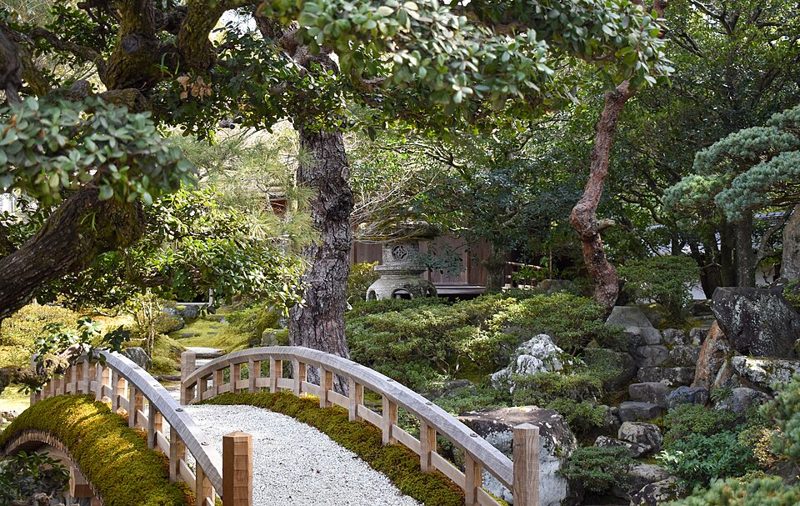
The present Kyoto Imperial Palace was rebuilt in 1855, but the imperial residence was established at this location in 1331. The palace stands within Kyoto Gyoen National Garden, an expansive landscape measuring approximately 1.3 kilometres from north to south and 0.7 kilometres from east to west. Once occupied by the residences of court nobles, the surrounding district was transformed after the imperial court moved to Tokyo in 1869.
Kyochika's take
Kyochika recommends visiting the Imperial Palace and the surrounding national garden as two connected but distinct historical experiences. The palace preserves the traditions of imperial architecture and court ceremony, while the garden reveals how the surrounding aristocratic residential district was transformed into public space.
For travellers especially interested in history, Kyochika suggests joining one of the free English guided tours, scheduled at 10:00 and 14:00, subject to the official visiting calendar. Afterwards, explore the former residence sites and historic features of Kyoto Gyoen.
Spring is particularly rewarding for the cherry and peach blossoms, while late autumn brings changing foliage across the garden. Visitors interested in architecture may prefer allowing additional time to observe how the reconstructed palace buildings preserve earlier ceremonial forms.
Hours, admission and access
- Hours
- Kyoto Gyoen National Garden: open 24 hours daily. Kyoto Imperial Palace: visiting hours vary according to the official visiting calendar; confirm the applicable entry and closing times on the Imperial Household Agency website before visiting. Free English guided tours are scheduled at 10:00 and 14:00.
- Closed
- Kyoto Gyoen National Garden: no regular closing days. Kyoto Imperial Palace: Mondays, or the following Tuesday when Monday is a national holiday; December 28-January 4. Additional closures may occur because of bad weather, court functions or other operational circumstances.
- Admission
- Kyoto Gyoen National Garden: free. Kyoto Imperial Palace: free, with no advance application required for ordinary visits. Shusui-tei Teahouse: 300 yen per person. Kan-in no Miya Residence Exhibition Facility: free.
- Access
- Kyoto Imperial Palace: approximately 5 minutes on foot from Imadegawa Station on the Karasuma Subway Line. Kyoto Gyoen National Garden: approximately 5 minutes on foot from Marutamachi Station, or approximately 15 minutes from Keihan Jingu-Marutamachi Station. Palace visitors enter through Seishomon Gate.
- Nearest station
- Imadegawa Station
Checked against official information on 2026-10-28. Details change, so check the official website before you go.
Sources: Imperial Household Agency - Kyoto Imperial Palace, Imperial Household Agency - Visit Guidelines, Imperial Household Agency - Historical Transformation, Imperial Household Agency - Access, Ministry of the Environment - Kyoto Gyoen, Ministry of the Environment - History, Ministry of the Environment - Garden Map, Ministry of the Environment - Seasonal Highlights
 Pochikichi's story corner
Why does Kyoto Imperial Palace stand away from the original imperial residence?
When Emperor Kanmu established Heian-kyo in 794, the imperial residence stood approximately 2 kilometres west of the present Kyoto Imperial Palace. The ancient capital was planned around the imperial court, and its original palace complex represented the political and ceremonial centre of the city. Over time, however, fire repeatedly damaged the imperial buildings. Temporary residences were established in the estates of influential court nobles, creating a system in which the emperor could occupy an aristocratic residence while the original palace was unavailable.
These temporary imperial residences were known as sato-dairi. Following a fire in 1227, the original imperial residence was not reconstructed at its former location. The site of today's palace developed from one of these substitute residences, the Tsuchimikado-Higashinotoin residence. Emperor Kogon's accession in 1331 established the location as an imperial residence. The reunification of the Northern and Southern Courts in 1392 consolidated its position as the imperial palace.
The palace remained the residence of successive emperors until 1869. Yet the buildings themselves did not survive unchanged. Repeated fires led to reconstruction, and the present palace dates from the rebuilding of 1855. Its significance lies in the preservation of older architectural traditions through newer structures. The Imperial Household Agency describes the palace as preserving the architectural traditions of the ancient Greater Imperial Palace of the Heian period.
Following the transfer of the imperial court to Tokyo, the surrounding residential district declined. In 1877, Emperor Meiji visited Kyoto and expressed concern about the condition of the former court neighbourhood. Preservation work began, including the removal of buildings, construction of roads and boundary structures, and planting of trees. The principal works were completed in 1883, with further improvements in later decades. In 1947, Kyoto Gyoen was designated a national garden, and in 1949 it was opened for wider public use under government management. So when you visit, look for the relationship between the enclosed imperial precinct, the broad garden paths and the remaining traces of the noble residences that once surrounded the palace.
Sources: Imperial Household Agency - History of Kyoto Imperial Palace, Ministry of the Environment - History of Kyoto Gyoen
Long ago, around hereWhat occupied this landscape before it became a national garden?
In 794, the original imperial residence of Heian-kyo was established approximately 2 kilometres west of the current palace. The present site became increasingly important as repeated fires forced emperors to reside in the estates of court nobles. The original residence was not rebuilt after the fire of 1227. By 1331, the current site had become an imperial residence, and its role was firmly established following the reunification of the Northern and Southern Courts in 1392.
During the Edo period, more than 140 aristocratic residences of different sizes stood around the Imperial Palace. After the court moved to Tokyo in 1869, many noble families relocated and the neighbourhood deteriorated. The preservation project initiated after Emperor Meiji's visit in 1877 replaced much of the former residential district with landscaped grounds, roads and planted trees. The garden seen today is therefore the result of historical preservation and urban transformation, rather than an unchanged landscape from the ancient capital.
Sources: Ministry of the Environment - Kyoto Gyoen History, Imperial Household Agency - Palace History
Hidden highlights
- Hamagu-rigomon Gate
- One of the historic entrances to Kyoto Gyoen. The Ministry of the Environment identifies the gate as a point of interest on its official garden map.
- Kan-in no Miya Residence Site
- Explore the remains of an imperial-family residential site within the former court district. The associated exhibition facility provides additional historical context and is free to enter.
- Shusui-tei Teahouse and Kujo Pond
- A teahouse and pond within the southern part of Kyoto Gyoen. Their smaller scale offers a contrast to the monumental palace complex, and the teahouse is open to visitors on specified days.
- Konoe Residence Site
- The former aristocratic residence site is among the garden's identified cherry-blossom viewing areas. Weeping cherry trees make it especially relevant during spring.
- Saru-ga-tsuji
- A named historic feature included in the Ministry of the Environment's garden highlights. Look for it while exploring the area around the palace.
- Plum and Peach Groves
- The garden contains areas specifically identified for plum and peach blossoms. The peach grove has approximately 40 trees that flower from March into early April.
Sources: Ministry of the Environment - Garden Highlights Map, Ministry of the Environment - Seasonal Highlights, Ministry of the Environment - Garden Visitor Information
The emperor who helped preserve the abandoned court district
When the imperial court relocated to Tokyo in 1869, the aristocratic neighbourhood around Kyoto Imperial Palace lost much of its former purpose. Many court families moved away, leaving the district increasingly neglected. This created a preservation problem: the palace remained important to imperial history, but the neighbourhood that had supported court life was deteriorating.
During a visit in 1877, Emperor Meiji expressed concern about the area's condition. Kyoto Prefecture subsequently undertook a preservation programme involving the removal of buildings, improvements to roads and boundaries, and tree planting. The works were completed in 1883. The resulting garden preserved the setting of the palace while fundamentally changing the former residential landscape.
A palace rebuilt after repeated destruction
The Imperial Palace's history is a story of architectural continuity despite repeated destruction. Fires forced the court to occupy temporary residences, and even after the permanent establishment of the present site in 1331, the palace continued to experience major losses.
The buildings reconstructed in 1855 preserve the forms of earlier imperial architecture. The Imperial Household Agency provides historical site plans that illustrate changes between the 1855 palace arrangement and the present. These comparisons help explain why the age of the surviving buildings differs from the much longer history of the imperial residence itself.
Sources: Imperial Household Agency - Historical Transformation
How to walk it
- Imadegawa Station — Walk toward Kyoto Gyoen and identify the palace's position within the wider national garden. (Kyochika estimate: 5-10 minutes min)
- Konoe Residence Site — Explore the former residential site and look for the weeping cherry trees in spring. (Kyochika estimate: 10 minutes min)
- Seishomon Gate — Enter the Imperial Palace through the designated visitor entrance and complete the security check. (Kyochika estimate: 10 minutes min)
- Kyoto Imperial Palace — Follow the designated visitor route and observe the historic architecture and ceremonial buildings. The official guided tour lasts approximately 50 minutes. (Official guided tour: approximately 50 minutes min)
- Hamagu-rigomon Gate — Continue through the wider garden to see one of its historic gates. (Kyochika estimate: 10 minutes min)
- Kan-in no Miya Residence Site — Explore the former imperial-family residence site and its exhibition facility when open. (Kyochika estimate: 20 minutes min)
- Kujo Pond and Shusui-tei — Visit the pond and check whether the teahouse is open for public entry. (Kyochika estimate: 15 minutes min)
- Marutamachi Station — Finish at the southern side of Kyoto Gyoen and return to the subway. (Kyochika estimate: 10 minutes min)
Only the approximately 50-minute Imperial Palace guided-tour duration is an official published time. All other durations are Kyochika's estimates. This is a suggested walking itinerary, not an official route. Follow the current palace visitor route, security instructions and opening calendar.
Sources: Imperial Household Agency - Visit Guidelines, Ministry of the Environment - Garden Map
Through the seasons
- March-April
- The peach grove flowers from around mid-March into early April. Weeping cherries near the Konoe Residence Site and Izumi-no-Ogawa are among the first cherry blossoms to appear.
- April-early May
- Later-flowering cherry varieties continue the season, including mountain cherries, weeping cherries and cultivated ornamental varieties.
- Late June-July
- White blossoms of Japanese ginger appear in shaded woodland areas. Hibiscus begins flowering near the Kan-in no Miya Residence Site in early July.
- Mid-July-August
- Crape myrtle blossoms appear across the garden, including near Kujo Pond and Shusui-tei.
- Mid-November-mid-December
- Autumn foliage begins changing colour around mid-November, with the usual peak from late November to mid-December. Ginkgo, maple, zelkova and other trees contribute yellow, red and orange foliage.
Getting there by taxi or bus
- Taxi
- For a visit to Kyoto Imperial Palace, specify Seishomon Gate as the destination. Kyoto Gyoen covers a much wider area, so the intended entrance matters.
- Bus
- Kyoto City Bus to Karasuma Imadegawa (烏丸今出川), followed by approximately 7 minutes on foot to the Imperial Palace.
- Other
- Karasuma Subway Line to Imadegawa Station for Kyoto Imperial Palace, approximately 5 minutes on foot. For the southern part of Kyoto Gyoen, use Marutamachi Station, approximately 5 minutes on foot. Keihan Jingu-Marutamachi Station is another option for the garden, approximately 15 minutes on foot.
Sources: Imperial Household Agency - Access, Ministry of the Environment - Garden Access
Pair it with
- Kan-in no Miya Residence Site — Combine the Imperial Palace with the remains of an imperial-family residence in the surrounding historic district. (Kyochika estimate: 20 minutes min walk)
- Shusui-tei Teahouse — Extend a palace visit into the garden's traditional pond and teahouse landscape. (Kyochika estimate: 20 minutes min walk)
- Kyoto Sento Imperial Palace — Explore another imperial property within Kyoto Gyoen. Visiting arrangements differ from those of Kyoto Imperial Palace. (Kyochika estimate: 15 minutes min walk)
Good to know before you go
- Kyoto Gyoen National Garden is open at all hours and admission is free.
- The Imperial Palace has separate visiting arrangements and closes on specified days.
- Ordinary Imperial Palace visits are free and do not require advance application.
- Enter the Imperial Palace through Seishomon Gate and complete the security inspection.
- Free English guided tours are scheduled at 10:00 and 14:00. Assemble at the designated visitor room before the starting time.
- The official guided tour lasts approximately 50 minutes.
- Visitors may not enter the interiors of palace buildings.
- The palace provides a free multilingual audio-guide app, including English, Chinese, Korean, French, Spanish and Japanese.
- Photography is permitted at the palace, but camera stands and equipment used for commercial filming are restricted.
- Pets and large baggage are prohibited inside the palace.
- The palace visitor route is one-way and contains gravel surfaces. Comfortable shoes are recommended.
- Wheelchairs are available at the palace entrance on request.
- Smoking, eating and drinking alcohol are prohibited within the palace visitor area.
- Dogs in Kyoto Gyoen must remain on leads. Feeding animals, damaging plants, flying drones and riding bicycles over lawns are prohibited.
- Shusui-tei is normally open on Thursdays, Fridays and Saturdays, and on specified festival dates. Public visiting hours are 9:30-15:15, with closure at 15:30. Admission is 300 yen.
- The Kan-in no Miya Residence Exhibition Facility is normally open 9:00-16:00, closing at 16:30. Admission is free. It has Monday and New Year holiday closures, with adjustments for national holidays.
- The Imperial Household Agency may change or suspend visits because of official functions or other circumstances.
Next stop: book for later today PR
Tickets and experiences in Kyoto you can book on Klook. Filter by “Today” to see what is still open.
Kimono rental in Kyoto→Tea ceremony experiences in Kyoto→Kyoto one-day sightseeing tours→All things to do in Kyoto on Klook →Compare on GetYourGuide: Kimono rental in Kyoto · Tea ceremony experiences in Kyoto · Kyoto one-day sightseeing tours
Ad: Klook and GetYourGuide affiliate links.
🍜 Where to eat after
Restaurants near here on Google Maps→Many restaurants in Kyoto take reservations, and some are cash only. Check the restaurant page before you go.
Events nearby
Art exhibition
Kyoto State Guest House Autumn Evening Extended Opening
Kyoto State Guest House (Imadegawa Sta.)
Dec 4 (Fri) – Dec 7 (Mon) Open until 7:15 PM (last entry 6:15 PM); check the official site for the opening time
For four days only, the national guest house inside Kyoto Gyoen is open until 7:15 PM. Admission closes at 6:15 PM; children of elementary school age and under cannot enter.
Details →Art exhibition
Toraya Collection Exhibition: Animals That Soothe the Heart
Toraya Kyoto Gallery (Imadegawa Sta.)
Oct 24 (Sat) – Nov 23 (Mon) 10:00 – 17:00
Animal-themed works from the collection of the wagashi maker Toraya: folding screens, hanging scrolls, tea bowls and netsuke. The gallery is next to Toraya Karyo Kyoto Ichijo, about a 7-minute walk from Exit 6 of Imadegawa subway station.
Details →Festival & seasonal event
LOTUS WEEKEND 2026 at Shojokein Temple
Shojokein Temple, Head Temple of Jodo Buddhism (Demachiyanagi Sta.)
Nov 14 (Sat) – Nov 15 (Sun) 10:00 – 16:00
Held rain or shine. Check the fees and participation requirements for individual activities.
Details →Festival & seasonal event
Myoken-ji Temple Illumination & Special Night Viewing
Myoken-ji Temple (Kuramaguchi Sta.)
Nov 21 (Sat) – Dec 13 (Sun) 18:00 – 20:30
Autumn illumination and special night viewing at Myoken-ji, a Nichiren Buddhist temple in Kamigyo Ward. Last entry at 8:00 PM.
Details →
Tips from visitors
Been here? Leave a short tip for the next traveler — in any language. No name, no sign-up.
Thank you! We check every tip by hand and post it within a day or two.
How we post tips: we read every one before it goes up. We remove swear words, insults, ads, links and anything that could identify a person. Tips are shown in the language they were written in, with a translate link. Kyochika never writes or pays for tips, and there are no star ratings.
FAQ
- What is Kyoto Imperial Palace and Kyoto Gyoen National Garden?
- The present Kyoto Imperial Palace was rebuilt in 1855, but the imperial residence was established at this location in 1331. The palace stands within Kyoto Gyoen National Garden, an expansive landscape measuring approximately 1.3 kilometres from north to south and 0.7 kilometres from east to west. Once occupied by the residences of court nobles, the surrounding district was transformed after the imperial court moved to Tokyo in 1869.
- Hours at Kyoto Imperial Palace and Kyoto Gyoen National Garden?
- Kyoto Gyoen National Garden: open 24 hours daily. Kyoto Imperial Palace: visiting hours vary according to the official visiting calendar; confirm the applicable entry and closing times on the Imperial Household Agency website before visiting. Free English guided tours are scheduled at 10:00 and 14:00.
- Closed at Kyoto Imperial Palace and Kyoto Gyoen National Garden?
- Kyoto Gyoen National Garden: no regular closing days. Kyoto Imperial Palace: Mondays, or the following Tuesday when Monday is a national holiday; December 28-January 4. Additional closures may occur because of bad weather, court functions or other operational circumstances.
- Admission at Kyoto Imperial Palace and Kyoto Gyoen National Garden?
- Kyoto Gyoen National Garden: free. Kyoto Imperial Palace: free, with no advance application required for ordinary visits. Shusui-tei Teahouse: 300 yen per person. Kan-in no Miya Residence Exhibition Facility: free.
- Access at Kyoto Imperial Palace and Kyoto Gyoen National Garden?
- Kyoto Imperial Palace: approximately 5 minutes on foot from Imadegawa Station on the Karasuma Subway Line. Kyoto Gyoen National Garden: approximately 5 minutes on foot from Marutamachi Station, or approximately 15 minutes from Keihan Jingu-Marutamachi Station. Palace visitors enter through Seishomon Gate.
- Is Kyoto Imperial Palace the same as Kyoto Gyoen?
- No. Kyoto Imperial Palace is the historic imperial residence, while Kyoto Gyoen is the national garden surrounding it. They have separate visiting arrangements.
- Is advance booking required?
- No. Ordinary visits to Kyoto Imperial Palace are free and require no advance application.
- Can visitors enter the palace buildings?
- No. Visitors follow a designated route to view the palace buildings and gardens, but the building interiors are not open for entry.
- Are English guided tours available?
- Yes. Free English guided tours are scheduled at 10:00 and 14:00. The official duration is approximately 50 minutes, and arrangements may change.