Temples in Kyoto · Higashiyama Ward, Southern Higashiyama
Kodaiji Temple
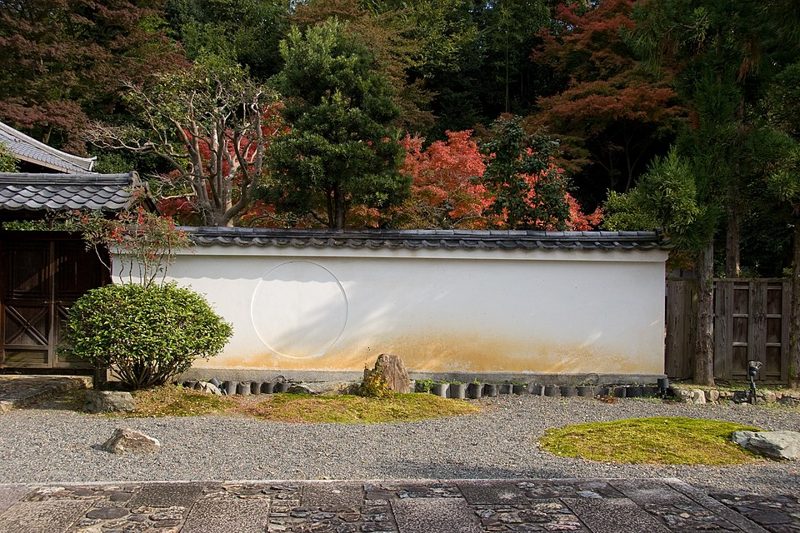
In 1606, Nene, the widow of Toyotomi Hideyoshi, established Kodaiji to commemorate her husband. The temple was created with substantial financial assistance from Tokugawa Ieyasu, the political successor to Hideyoshi. Its surviving mausoleum, lacquer decoration, historic halls and tea pavilions preserve the connection between private remembrance, political authority and the artistic culture of the Momoyama period.
Kyochika's take
Kyochika recommends Kodaiji to travelers interested in the lives of the people behind Japan's political history. Begin with the memorial story of Nene and Hideyoshi, then compare the elaborate lacquer decoration of the mausoleum with the restrained architecture of the tea pavilions.
For the 2026 autumn season, Kyochika suggests arriving before the illumination begins and remaining into the evening. The temple officially permits daytime visitors to continue through the nighttime viewing without a compulsory changeover, although re-entry is not allowed after leaving.
Hours, admission and access
- Hours
- Regular visiting hours: 9:00 AM–5:30 PM, with last admission at 5:00 PM. Autumn Night Special Viewing 2026: October 23–December 13, opening at 9:00 AM, last admission at 9:30 PM, gates close at 10:00 PM. Illumination begins at 5:00 PM. There is no daytime-to-evening changeover.
- Closed
- The official visitor page does not specify a regular weekly closing day. Hojo is closed for religious duties from 3:00 PM on October 17 and all day October 18, November 12 and November 13. Other areas, including Kaisando, Otamaya and the bamboo grove, remain visitable on these dates.
- Admission
- Adults ¥800; junior/high school students ¥400; groups of 30 or more ¥700 per person; combined Kodaiji and Entoku-in admission ¥1,200. Elementary school children and younger enter free when accompanied by an adult guardian, with at least one responsible adult per five children. Daytime and nighttime admission fees are the same during the 2026 autumn special viewing.
- Access
- Approximately 10 minutes from Keihan Gion-Shijo Station and 15 minutes from Hankyu Kyoto-Kawaramachi Station, according to the temple's official access guide. Kyoto City Bus Route 206 from Kyoto Station or Route 207 from the Gion-Shijo area to Higashiyama Yasui, followed by a 7-minute walk.
- Nearest station
- Gion-Shijo Station
Checked against official information on 2026-10-28. Details change, so check the official website before you go.
Sources: Kodaiji Official History, Kodaiji Official Visitor Information, Kodaiji Official Access, Kodaiji Official Autumn Events 2026, Japan National Tourism Organization Kodaiji Guide
 Pochikichi's story corner
Why did Nene build a temple for Toyotomi Hideyoshi?
Kodaiji stands at the foot of the Higashiyama mountains and belongs to the Kennin-ji branch of Rinzai Zen Buddhism. According to its official history, Nene, also known as Kita no Mandokoro, founded the temple in 1606 after the death of her husband, Toyotomi Hideyoshi. The temple's formal name is Kodai Jusho Zenji. Nene had received the court rank of Senior First Rank in 1588 and the title Kodai-in from Emperor Go-Yozei in 1603. The establishment of Kodaiji gave religious form to the remembrance of her husband and later became the location of her own burial.
The construction was supported by Tokugawa Ieyasu, who provided substantial financial assistance. The temple's official history explicitly connects this support with political considerations. The result was an elaborate religious establishment associated with the artistic culture of the late Momoyama period. Kodaiji therefore preserves a history that cannot be reduced to either private mourning or a conventional Zen foundation: its creation also reflects the relationships between powerful families during Japan's transition to Tokugawa rule.
In July 1624, Sanko, a monk from Kennin-ji, was installed as the founding abbot. Nene died on September 6 of that year, at the age of 76 according to the official temple history. Kodaiji's Otamaya mausoleum enshrines both Nene and Hideyoshi, and Nene's burial place lies beneath her memorial image. The altar and shrine cabinets are decorated with elaborate maki-e lacquer work, a form of ornament associated with the artistic achievements of the Momoyama period. These surviving objects make the mausoleum an important part of the temple's historical narrative.
Kodaiji's official history identifies Kaisando, Otamaya, Kasatei, Shiguretei, Omotemon and Kangetsudai among its nationally designated Important Cultural Properties. The pond garden spreading east and west of Kaisando is traditionally attributed to Kobori Enshu. The surviving buildings and garden continue to present aspects of the cultural world associated with Nene and Hideyoshi. So when you visit, look for the contrast between the gilded lacquer of the memorial interior, the timber structures of the tea pavilions and the garden landscape traditionally linked to early Edo design.
Sources: Kodaiji Official History, JNTO Kodaiji Guide
Long ago, around hereWhat historical world did Kodaiji emerge from?
Kodaiji's documented foundation dates to 1606, so its present institutional history does not reach back to Kyoto's earliest centuries. The temple's official history places it at the foot of the eastern mountains, northeast of Yasaka Hokan-ji. It does not identify a specific predecessor building on the precise site in the distant past. The secure historical story therefore begins with Nene's decision to create a memorial to Hideyoshi. The temple became a place where Buddhist observance and the remembrance of a major political figure were brought together.
In the early seventeenth century, Kodaiji was connected to leading figures in national politics. Tokugawa Ieyasu supported its construction, while Nene supervised the establishment of a lasting memorial to her husband. In 1624, Sanko became its founding abbot, and Nene died and was buried at the temple. The surviving mausoleum, halls, pavilions and garden carry this historical identity into the present. Their importance lies in the documented connection between the temple's creation and the political and artistic culture of its founding period.
Sources: Kodaiji Official History, JNTO Kodaiji Guide
Hidden highlights
- Otamaya
- The mausoleum commemorates both Hideyoshi and Nene. Nene's burial place is beneath her memorial image, while the shrine fittings preserve elaborate Kodaiji maki-e lacquer decoration.
- Kaisando
- The founder's hall is one of Kodaiji's nationally designated Important Cultural Properties. Its position is central to the pond garden traditionally attributed to Kobori Enshu.
- Kasatei and Shiguretei
- The two historic tea pavilions are designated Important Cultural Properties. JNTO attributes their designs to Sen no Rikyu, an important figure in the Japanese tea tradition.
- Kangetsudai
- The Moon Viewing Pavilion is among the Important Cultural Properties identified in the temple's official history.
- Bamboo Grove
- The bamboo grove is part of Kodaiji's paid garden precincts. The official visitor information confirms that temple admission is required to enter it.
- Sho Museum
- The temple's small museum displays objects associated with Nene and the cultural world of the Momoyama period.
Sources: Kodaiji Official History, Kodaiji Official Visitor Information, JNTO Kodaiji Guide
The widow and the political successor
Kodaiji's foundation brings together two figures whose historical roles are often considered separately: Nene, the widow of Toyotomi Hideyoshi, and Tokugawa Ieyasu, whose government succeeded the era of Toyotomi political dominance. Nene founded the memorial temple, but Ieyasu provided substantial financial support. Kodaiji's official history states that this assistance reflected political considerations at the time.
The relationship makes the temple more than an architectural tribute to a deceased ruler. It demonstrates how the memory of Hideyoshi remained significant as political authority changed. The surviving Otamaya keeps Nene and Hideyoshi at the center of the institution she created, while the history of its construction reveals the involvement of the new political order.
Sources: Kodaiji Official History, JNTO Kodaiji Guide
A temple that presents Buddhist teachings through an android
Kodaiji's contemporary religious presentation includes Mindar, an android representation of Kannon, the bodhisattva of compassion. The official visitor page describes Kannon as a being who can assume different forms in response to those seeking help. At the temple's teaching hall, Mindar presents teachings associated with the Heart Sutra.
Kodaiji also established Rishodo as a place for reflection on life and death. The hall was dedicated on December 17, 2016, and includes a representation of the Buddha's passing based on an older painting in the temple collection. These contemporary features extend the temple's religious activities beyond the preservation of historic buildings and artifacts. The official information does not establish that Mindar demonstrations are continuously available, so visitors should check the day's arrangements.
Sources: Kodaiji Official Visitor Information
How to walk it
- Entrance and Hojo — Begin with the main temple area and check whether the hall is accessible on the day of your visit. (10 min)
- Garden — Examine the pond garden and the landscape composition associated with Kobori Enshu. (15 min)
- Kaisando — Look at the historic founder's hall and its relationship with the surrounding garden. (10 min)
- Otamaya — Study the memorial space associated with Hideyoshi and Nene, paying attention to the lacquer decoration. (15 min)
- Kasatei and Shiguretei — Continue toward the historic tea pavilions, observing their different architectural character. (15 min)
- Bamboo grove — Follow the permitted route through the bamboo garden. (10 min)
- Rishodo — If accessible, explore the temple's contemporary presentation of Buddhist teachings about life and death. (10 min)
All durations are Kyochika estimates, not official walking times. The suggested route takes approximately 85 minutes. JNTO recommends allowing one to two hours for the temple's interiors, artworks and gardens. The Hojo is closed for religious duties on the dates announced by the temple, including November 12–13, 2026.
Sources: Kodaiji Official Visitor Information, Kodaiji Official History, JNTO Kodaiji Guide
Through the seasons
- Spring
- JNTO identifies spring as one of the seasons in which Kodaiji holds special nighttime illuminations.
- Summer
- JNTO notes summer illuminations and special cultural presentations associated with the Obon period.
- Autumn
- The temple garden includes maple trees, and Kodaiji organizes a special evening illumination.
- October 23–December 13, 2026
- The official Autumn Night Special Viewing runs through this period, with illumination beginning at 5:00 PM.
- Winter
- Explore the memorial buildings, surviving cultural properties and the history of Nene and Hideyoshi during ordinary visiting hours.
Getting there by taxi or bus
- Taxi
- The official Kodaiji access page estimates approximately 15 minutes by taxi from Kyoto Station. Taxi drop-off within 15 minutes is free under the temple parking arrangements.
- Bus
- Kyoto City Bus Route 206 from Kyoto Station or Route 207 from the Gion-Shijo area to Higashiyama Yasui (東山安井), followed by a 7-minute walk.
- Other
- The official access page gives approximately 10 minutes from Keihan Gion-Shijo Station and approximately 15 minutes from Hankyu Kyoto-Kawaramachi Station.
Sources: Kodaiji Official Access
Pair it with
- Entoku-in Temple — A combined admission ticket is officially offered for Kodaiji and Entoku-in. (5 min walk)
- Yasaka Shrine — JNTO identifies Yasaka Shrine as a nearby destination suitable for combining with a Kodaiji visit. (10 min walk)
- Kiyomizu-dera Temple — JNTO identifies Kiyomizu-dera as another destination accessible from Kodaiji. (20 min walk)
Good to know before you go
- Regular visiting hours are 9:00 AM–5:30 PM, with reception ending at 5:00 PM.
- During the 2026 autumn nighttime viewing, illumination begins at 5:00 PM and last admission is 9:30 PM.
- There is no compulsory changeover between daytime and nighttime admission.
- After leaving through the exit, visitors cannot re-enter using the same ticket.
- Adults pay ¥800 and junior/high school students pay ¥400.
- A combined Kodaiji and Entoku-in admission ticket costs ¥1,200.
- Children of elementary school age and younger enter free when accompanied by an adult guardian.
- The official rule requires at least one responsible adult for every five children.
- The temple does not accept elementary-school excursions or school-trip groups after 5:00 PM during November, regardless of group size.
- The Hojo is closed for religious duties from 3:00 PM on October 17 and throughout October 18, November 12 and November 13.
- Kaisando, Otamaya and the bamboo grove remain visitable during the announced Hojo closures.
- The bamboo grove is inside the paid temple garden.
- Visitors with disability certificates and one accompanying person may qualify for admission waivers when the certificate is presented at reception.
- The official visitor page includes videos introducing the main hall, Rishodo and Mindar.
- The temple provides parking information and a visitor parking discount service subject to conditions.
Next stop: book for later today PR
Tickets and experiences in Kyoto you can book on Klook. Filter by “Today” to see what is still open.
Kimono rental in Kyoto→Tea ceremony experiences in Kyoto→Kyoto one-day sightseeing tours→All things to do in Kyoto on Klook →Compare on GetYourGuide: Kimono rental in Kyoto · Tea ceremony experiences in Kyoto · Kyoto one-day sightseeing tours
Ad: Klook and GetYourGuide affiliate links.
🍜 Where to eat after
Restaurants near here on Google Maps→Many restaurants in Kyoto take reservations, and some are cash only. Check the restaurant page before you go.
Events nearby
Oct 23 (Fri) – Dec 13 (Sun) 17:00 – 22:00
See illuminated autumn gardens at Kodaiji, founded by Nene, the wife of Toyotomi Hideyoshi. Projection mapping also transforms the garden in front of the Hojo Hall. Last admission at 9:30 PM.
Details →Art exhibition
Entokuin Temple: Teikan-zu Folding Screens and Autumn Night Light-Up
Entokuin Temple (Kodaiji sub-temple) (Gion-Shijo Sta.)
Oct 23 (Fri) – Dec 13 (Sun) 10:00 – 22:00
The sub-temple of Kodaiji where Nene, the wife of Toyotomi Hideyoshi, spent her final years. It shows the Teikan-zu folding screens handed down in the Toyotomi family, and in autumn lights up its pond-stroll and dry landscape gardens at night. Lights come on at 17:00, last entry is 21:30 and the gate closes at 22:00, with no day/night changeover. Closed December 11 and 12 for temple services.
Details →Art exhibition
Autumn 2026 Exhibition: Sakamoto Ryoma and the Satsuma-Choshu Alliance at Ryozen Museum of History
Ryozen Museum of History (Bakumatsu Ishin Museum) (Gion-Shijo Sta.)
Sep 16 (Wed) – Nov 23 (Mon) Last entry 17:00. Closed Mondays (open November 2 and 23)
An exhibition for the 190th anniversary of Sakamoto Ryoma's birth and the 160th anniversary of the Satsuma-Choshu Alliance. It introduces recent research that re-examines Ryoma's role using records from Satsuma, Choshu and the shogunate. The second period runs from October 27.
Details →Nov 17 (Tue) – Dec 6 (Sun) 17:30 – 21:30
The illuminated highlights of the head temple of Jodo Buddhism include the Sanmon Gate, Yuzen-en Garden, and Miei-do Hall. In 2026, visitors can also access the corridor on the upper level of Sanmon Gate. Last admission at 9:00 PM.
Details →Festival & seasonal event
Kiyomizu-dera Jojuin Garden Special Viewing (Autumn Nights)
Jojuin, Kiyomizu-dera Temple (Kiyomizu-Gojo Sta.)
Nov 21 (Sat) – Nov 30 (Mon) 18:00 – 20:30
The garden of Jojuin, a sub-temple of Kiyomizu-dera, opens at night during the same period as the main temple's autumn night viewing. Admission closes at 8:30 PM.
Details →Festival & seasonal event
Autumn Special Night Viewing at Kiyomizu-dera Temple
Kiyomizu-dera Temple (Kiyomizu-Gojo Sta.)
Nov 21 (Sat) – Nov 30 (Mon) 17:30 – 21:30
Special evening viewing with illuminated autumn foliage in Kin'un Gorge and the National Treasure Main Hall. Last admission at 9:00 PM; gates close at 9:30 PM.
Details →
Tips from visitors
Been here? Leave a short tip for the next traveler — in any language. No name, no sign-up.
Thank you! We check every tip by hand and post it within a day or two.
How we post tips: we read every one before it goes up. We remove swear words, insults, ads, links and anything that could identify a person. Tips are shown in the language they were written in, with a translate link. Kyochika never writes or pays for tips, and there are no star ratings.
FAQ
- What is Kodaiji Temple?
- In 1606, Nene, the widow of Toyotomi Hideyoshi, established Kodaiji to commemorate her husband. The temple was created with substantial financial assistance from Tokugawa Ieyasu, the political successor to Hideyoshi. Its surviving mausoleum, lacquer decoration, historic halls and tea pavilions preserve the connection between private remembrance, political authority and the artistic culture of the Momoyama period.
- Hours at Kodaiji Temple?
- Regular visiting hours: 9:00 AM–5:30 PM, with last admission at 5:00 PM. Autumn Night Special Viewing 2026: October 23–December 13, opening at 9:00 AM, last admission at 9:30 PM, gates close at 10:00 PM. Illumination begins at 5:00 PM. There is no daytime-to-evening changeover.
- Closed at Kodaiji Temple?
- The official visitor page does not specify a regular weekly closing day. Hojo is closed for religious duties from 3:00 PM on October 17 and all day October 18, November 12 and November 13. Other areas, including Kaisando, Otamaya and the bamboo grove, remain visitable on these dates.
- Admission at Kodaiji Temple?
- Adults ¥800; junior/high school students ¥400; groups of 30 or more ¥700 per person; combined Kodaiji and Entoku-in admission ¥1,200. Elementary school children and younger enter free when accompanied by an adult guardian, with at least one responsible adult per five children. Daytime and nighttime admission fees are the same during the 2026 autumn special viewing.
- Access at Kodaiji Temple?
- Approximately 10 minutes from Keihan Gion-Shijo Station and 15 minutes from Hankyu Kyoto-Kawaramachi Station, according to the temple's official access guide. Kyoto City Bus Route 206 from Kyoto Station or Route 207 from the Gion-Shijo area to Higashiyama Yasui, followed by a 7-minute walk.
- When is Kodaiji's autumn illumination in 2026?
- October 23–December 13, 2026. Illumination begins at 5:00 PM, last admission is 9:30 PM, and gates close at 10:00 PM.
- Can I enter in daylight and stay for the illumination?
- Yes. The official event notice confirms there is no daytime-to-evening changeover. Re-entry is not permitted after leaving through the exit.
- Is Nene buried at Kodaiji?
- Yes. The temple's official history states that her burial place is beneath her memorial image inside Otamaya.
- Is the bamboo grove free to enter?
- No. The official visitor page specifies that the bamboo grove is within Kodaiji's paid garden precincts.