Shrines in Kyoto · Kamigamo, Kita Ward, northern Kyoto
Kamigamo Shrine (Kamo Wakeikazuchi-jinja)
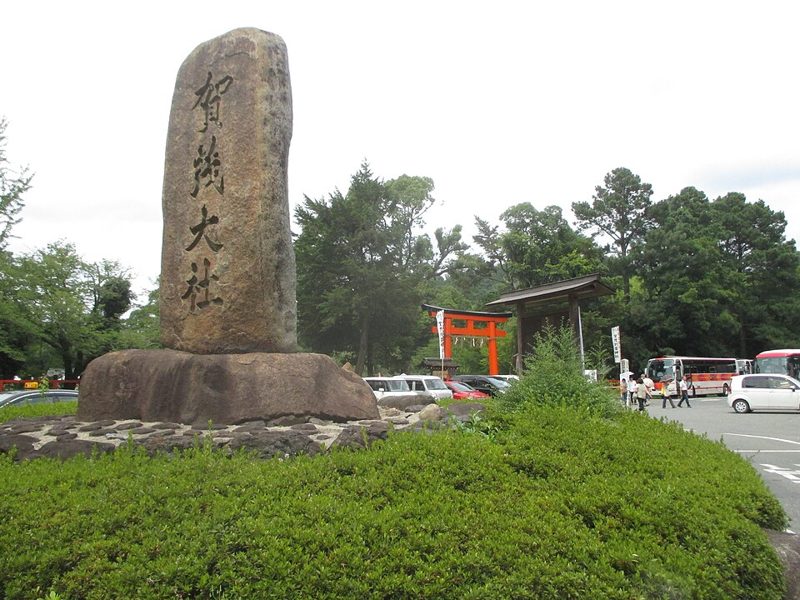
Kamigamo Shrine's official history records the construction of its sanctuary complex in 677, while its mythology traces the appearance of its thunder-associated deity to nearby Mount Koyama. Its two National Treasure sanctuary buildings were reconstructed in 1863, and the precinct contains another 41 Important Cultural Property buildings. The shrine combines monumental Shinto architecture, a sacred mountain tradition, historic equestrian ceremonies, and the continuing worship of Kamo Wakeikazuchi no Okami.
Kyochika's take
K
y
o
c
h
i
k
a
r
e
c
o
m
m
e
n
d
s
K
a
m
i
g
a
m
o
S
h
r
i
n
e
p
a
r
t
i
c
u
l
a
r
l
y
t
o
t
r
a
v
e
l
e
r
s
w
h
o
w
a
n
t
t
o
e
x
p
l
o
r
e
t
h
e
r
e
l
a
t
i
o
n
s
h
i
p
b
e
t
w
e
e
n
s
a
c
r
e
d
a
r
c
h
i
t
e
c
t
u
r
e
a
n
d
S
h
i
n
t
o
m
y
t
h
o
l
o
g
y
.
B
e
g
i
n
w
i
t
h
t
h
e
s
o
u
t
h
e
r
n
a
p
p
r
o
a
c
h
a
n
d
t
h
e
s
a
n
d
c
o
n
e
s
o
u
t
s
i
d
e
H
o
s
o
d
o
n
o
H
a
l
l
,
t
h
e
n
c
o
n
t
i
n
u
e
t
o
t
h
e
v
e
r
m
i
l
i
o
n
R
o
m
o
n
G
a
t
e
a
n
d
t
h
e
s
u
b
s
i
d
i
a
r
y
s
h
r
i
n
e
a
s
s
o
c
i
a
t
e
d
w
i
t
h
M
u
r
a
s
a
k
i
S
h
i
k
i
b
u
.
I
f
a
v
a
i
l
a
b
l
e
,
t
h
e
s
p
e
c
i
a
l
a
d
m
i
s
s
i
o
n
v
i
s
i
t
o
f
f
e
r
s
a
d
d
i
t
i
o
n
a
l
i
n
s
i
g
h
t
i
n
t
o
t
h
e
p
a
i
r
e
d
N
a
t
i
o
n
a
l
T
r
e
a
s
u
r
e
s
a
n
c
t
u
a
r
i
e
s
;
i
n
m
i
d
-
M
a
y
,
a
n
e
x
t
e
n
s
i
o
n
t
o
O
t
a
S
h
r
i
n
e
a
d
d
s
i
t
s
c
e
l
e
b
r
a
t
e
d
i
r
i
s
e
s
.
Hours, admission and access
- Hours
- Second torii gate: 5:30 AM–5:00 PM. Romon Gate and amulet office: 8:00 AM–4:45 PM. Special admission reception: 10:00 AM–4:00 PM. Prayer reception: 9:00 AM–4:00 PM.
- Closed
- The official visitor information does not specify regular closure days for general worship. Special admission may be suspended or have modified hours during particular periods.
- Admission
- General shrine worship: free. Special admission to the National Treasure sanctuary area: ¥500 per person. The shrine states that charges may differ during special programs.
- Access
- Kitayama Station or Kitaoji Station on the Karasuma Subway Line: approximately 25 minutes on foot. Kyoto City Bus route 4 to Kamigamo Jinja-mae stops directly by the shrine.
- Nearest station
- Kitayama Station
Checked against official information on 2026-10-28. Details change, so check the official website before you go.
Sources: Kamigamo Shrine official website, Kamigamo Shrine visitor information, Kamigamo Shrine access guide, Kamigamo Shrine official introduction, Kamigamo Shrine official history and emblem, Kamigamo Shrine official mythology, Kamigamo Shrine official English grounds guide, Kamigamo Shrine National Treasure sanctuaries, Kamigamo Shrine Katayama Miko Shrine, Kamigamo Shrine annual ceremonies, Kamigamo Shrine English ritual guide
 Pochikichi's story corner
How did a deity's descent onto a mountain shape one of Kyoto's oldest religious institutions?
Kamigamo Shrine venerates Kamo Wakeikazuchi no Okami. According to the shrine's official mythology, the deity was born to Kamo Tamayorihime no Mikoto after she discovered a mysterious red-painted arrow floating in a river. At a ceremonial celebration, the child declared his heavenly origin and ascended amid thunder. His family wished to see him again, and he later appeared to his mother in a dream, giving instructions for a welcoming ceremony. When those instructions were followed, he descended in divine form upon Mount Koyama. This is a religious origin story, rather than a historical account that can be independently established through archaeological evidence.
The shrine's official history records that a sanctuary complex was established in 677. After Kyoto became the imperial capital, Kamigamo acquired a special relationship with imperial worship and protection. Its history includes visits by emperors and prayers associated with the security of the capital. The shrine's official explanation identifies its status as an important religious institution of Yamashiro Province and describes reverence from imperial, aristocratic, and warrior households.
The surviving sanctuary architecture illustrates the renewal of an older tradition. The main sanctuary, Honden, and the temporary sanctuary, Gonden, stand beside one another. Their present structures were rebuilt in 1863 and are designated National Treasures. Both use the nagare-zukuri architectural style, distinguished by its asymmetrical roof form. The Gonden serves as a temporary place for the deity when repairs are carried out on the main sanctuary. This arrangement demonstrates how the shrine preserves continuity while rebuilding physical structures.
The shrine's official information identifies two National Treasure buildings and 41 Important Cultural Property buildings within a precinct included in the Historic Monuments of Ancient Kyoto World Heritage designation in 1994. Yet the buildings alone do not explain the shrine. Its sacred mountain, streams, ceremonial halls, and subsidiary sanctuaries remain central to worship. So when you visit, look for the relationship between the mountain represented by the sand cones, the bridges over the streams, and the two principal sanctuaries. Together, they reveal how architecture translates a sacred narrative into physical space.
Sources: Kamigamo Shrine official history and emblem, Kamigamo Shrine official mythology, Kamigamo Shrine official introduction, Kamigamo Shrine official English grounds guide, Kamigamo Shrine National Treasure sanctuaries
Long ago, around hereHow did this landscape change from an ancient sanctuary to the shrine seen today?
Approximately 1,200 years ago, Kamigamo was already an established shrine with a documented foundation tradition dating to 677. Its religious identity centered on Kamo Wakeikazuchi no Okami and the sacred landscape around Mount Koyama. Following the establishment of Kyoto as the imperial capital, the shrine became closely associated with imperial worship. The area also contained subsidiary religious sites, including the shrine now known as Ota Shrine, whose official account describes a history of local worship predating Kamigamo's established sanctuary.
During the Edo period, important buildings were reconstructed. The official English grounds guide dates the surviving Romon Gate, Hosodono Hall, and Hashidono Hall to 1628. The two principal sanctuaries were rebuilt in 1863. These layers of construction make the present precinct a record of successive architectural renewal rather than a set of structures dating entirely from the shrine's founding. The continuation of religious ceremonies, including those associated with the imperial court, helped maintain its identity through changes in political authority.
Sources: Kamigamo Shrine official history, Kamigamo Shrine official English grounds guide, Kamigamo Shrine National Treasure sanctuaries
Hidden highlights
- Tatesuna sand cones
- The twin cones outside Hosodono Hall represent Mount Koyama, where the shrine's deity is believed to have descended. The official guide identifies three pine needles in the left cone and two in the right, reflecting principles of yin and yang.
- Katayama Miko Shrine
- This subsidiary sanctuary venerates the mother of Kamigamo's main deity. The official shrine guide records that Murasaki Shikibu, author of The Tale of Genji, visited to pray for a favorable marriage.
- Shingu Shrine
- This shrine venerates Takaokami no Kami, a deity associated with water and rainfall. Its official English guide lists public access on the second and fourth Sundays of each month.
- Ota Shrine and its irises
- Approximately 800 meters east of Kamigamo, Ota Shrine is associated with Ame no Uzume no Mikoto. Its Otanosawa Pond is celebrated for purple kakitsubata irises blooming around mid-May.
- Hashidono Hall
- This open-sided ritual hall spans the Nara no Ogawa stream. During the Aoi Matsuri, it is used for an imperial messenger's ceremonial address to the deity.
- Shokeien Garden
- Created in 1960 by landscape architect Nakane Kinsaku, this garden includes a winding stream and a distinctive stone known as Onmyoseki or Negai-ishi. The official guide also records a poetry event held here in April.
Sources: Kamigamo Shrine official English grounds guide, Kamigamo Shrine Katayama Miko Shrine information
What does a red arrow have to do with a thunder deity?
Kamigamo's official mythology begins with Kamo Tamayorihime no Mikoto discovering a mysterious red-painted arrow floating down the river while she was purifying herself. She brought it home and treated it with reverence. According to the legend, the power contained within the arrow caused her to conceive a child. When the child reached maturity, his grandfather, Kamotaketsunumi no Mikoto, arranged a celebration and asked him to identify his father. The child announced his heavenly parentage and ascended through the roof amid thunder.
The deity's mother later received a dream instructing the family to prepare ceremonial objects, sacred plants, and horses. When the family followed these instructions, the deity returned and descended onto Mount Koyama. The shrine identifies this event as the origin of worship of Kamo Wakeikazuchi no Okami. The story is particularly useful when viewing the shrine's architectural and ritual features, because plants, mountains, horses, and ceremonial preparations all appear within the same sacred narrative.
Sources: Kamigamo Shrine official mythology
Why is Murasaki Shikibu remembered at a shrine dedicated to relationships?
The official Kamigamo Shrine guide connects Murasaki Shikibu, author of The Tale of Genji, with Katayama Miko Shrine. According to the shrine's tradition, she visited this subsidiary sanctuary to pray for a favorable marriage. The shrine preserves her association through a poem included in the Shin Kokin Wakashu and through votive tablets displaying her image.
Katayama Miko Shrine is dedicated to Kamo Tamayorihime no Mikoto, mother of Kamigamo's principal deity, and is associated with prayers for relationships, pregnancy, and childbirth. The story of Murasaki Shikibu gives the sanctuary an additional literary dimension. For travelers interested in classical Japanese literature, it provides a specific connection between religious practice and the emotional world represented in Heian-period poetry.
Sources: Kamigamo Shrine Katayama Miko Shrine official page, Kamigamo Shrine official English grounds guide
How to walk it
- Southern approach — Begin at the main approach and observe the relationship between the open grounds and the inner shrine. (5–10 min min)
- Hosodono Hall and tatesuna — Examine the twin sand cones representing Mount Koyama and compare the pine needles placed in their peaks. (10–15 min min)
- Romon Gate and Tamabashi Bridge — Study the vermilion gate and the ceremonial bridge. Visitors should use the neighboring crossings rather than the bridge reserved for rituals. (10–15 min min)
- Katayama Miko Shrine — Find the votive tablets associated with Murasaki Shikibu and prayers for relationships. (10–15 min min)
- Honden and Gonden special admission — If special admission is operating, examine the paired National Treasure sanctuaries and their distinctive roof design. (15–25 min min)
- Hashidono Hall and stream — View the ritual hall spanning the water and consider its ceremonial role during the Aoi Matsuri. (5–10 min min)
- Optional Ota Shrine extension — Walk east to explore the subsidiary shrine and its iris pond. (10–15 min walking min)
All stop durations are Kyochika estimates, not official touring times. The official grounds guide places Ota Shrine approximately 800 meters east of Kamigamo. Hosodono Hall and Hashidono Hall are not open for general entry, and the main sanctuary special admission follows separate conditions.
Sources: Kamigamo Shrine official English grounds guide, Kamigamo Shrine visitor information
Through the seasons
- January 7
- The official English grounds guide identifies the Hakuba Soran ritual, when the sacred horse is ceremonially presented.
- April
- Shokeien Garden hosts the Kamo Kyokusui no En poetry event, a modern reenactment of a historic courtly poetry competition.
- May 15
- The Aoi Matsuri includes a ceremonial address by an imperial messenger at Hashidono Hall.
- Mid-May
- Kakitsubata irises bloom at Otanosawa Pond within the nearby Ota Shrine grounds.
- June 30
- Nagoshi no Oharae, the summer purification ceremony, takes place at Hashidono Hall.
- September 9
- The official grounds guide identifies the Choyo ritual and Karasuzumo children's wrestling at the shrine.
- Autumn
- The official English guide describes maple foliage in Shokeien Garden.
- December and January
- Large votive tablets depicting the zodiac animal for the coming year are displayed near Hosodono Hall.
Getting there by taxi or bus
- Taxi
- The official shrine guide gives approximate driving times of 30 minutes from Kyoto Station, 20 minutes from the Karasuma area, and 10 minutes from Kitaoji Station. Actual taxi journeys depend on traffic. No current fare is confirmed.
- Bus
- Kyoto City Bus route 4: Kamigamo Jinja-mae (上賀茂神社前), directly beside the shrine. Route 9 from Kyoto Station or route 37 from Kitaoji Station: Kamigamo Misonobashi (上賀茂御薗橋), followed by a 5-minute walk. Route Kita 3 from Kitaoji Station: Misonoguchi-cho (御薗口町), followed by a 3-minute walk. Route 46 from Omiya Station also serves Kamigamo Jinja-mae.
- Other
- Karasuma Subway Line to Kitayama Station or Kitaoji Station, followed by approximately 25 minutes on foot. Kyoto City Bus route 4 also connects Demachiyanagi Station directly with Kamigamo Jinja-mae.
Sources: Kamigamo Shrine official access guide
Pair it with
- Ota Shrine — Visit the shrine dedicated to Ame no Uzume no Mikoto and its iris pond, especially around mid-May. (Approximately 800 meters east; 10–15 minutes on foot is Kyochika's estimate min walk)
- Katayama Miko Shrine — Explore the sanctuary associated with the mother of Kamigamo's deity and the poetry of Murasaki Shikibu. (Within Kamigamo Shrine's precinct min walk)
- Shokeien Garden — Explore a garden featuring a winding stream, the Onmyoseki wishing stone, and seasonal planting. (Within Kamigamo Shrine's precinct min walk)
Good to know before you go
- General shrine worship is free. Special admission is currently listed at ¥500 per person.
- The second torii gate opens at 5:30 AM, while Romon Gate and the amulet office open at 8:00 AM.
- Special admission reception operates from 10:00 AM to 4:00 PM, subject to changes or suspension.
- Prayer reception is from 9:00 AM to 4:00 PM, and the official visitor page states that advance reservations are unnecessary.
- The sacred horse usually appears on Sundays, national holidays, and festival days between approximately 9:30 AM and 3:00 PM, depending on weather and the horse's condition.
- The official guide asks visitors not to use flash photography around the sacred horse, not to touch its head, and to offer the provided carrots from a plate rather than from their hands.
- Hosodono Hall and Hashidono Hall are closed to general public entry.
- Visitors must not cross the ceremonial Tamabashi Bridge and should instead use the neighboring bridges.
- Hiking on Mount Koyama is prohibited according to the shrine's official English grounds guide.
- Shingu Shrine is open to the public on the second and fourth Sundays of each month.
- The shrine publishes an English-language guide to its architecture, mythology, and ceremonial spaces.
- Specific card acceptance, luggage storage, and general interior photography permissions were not established from the opened sources.
Next stop: book for later today PR
Tickets and experiences in Kyoto you can book on Klook. Filter by “Today” to see what is still open.
Kimono rental in Kyoto→Tea ceremony experiences in Kyoto→Kyoto one-day sightseeing tours→All things to do in Kyoto on Klook →Compare on GetYourGuide: Kimono rental in Kyoto · Tea ceremony experiences in Kyoto · Kyoto one-day sightseeing tours
Ad: Klook and GetYourGuide affiliate links.
🍜 Where to eat after
Restaurants near here on Google Maps→Many restaurants in Kyoto take reservations, and some are cash only. Check the restaurant page before you go.
Events nearby
Festival & seasonal event
Kyoto Botanical Gardens Autumn Night Illumination
Kyoto Botanical Gardens (Kitayama Sta.)
Nov 14 (Sat) – Dec 13 (Sun) 18:00 – 21:30
An evening stroll among lit-up autumn leaves and reflections on the water. Last entry 8:30 PM. Hand lanterns ¥1,500 extra.
Details →
Tips from visitors
Been here? Leave a short tip for the next traveler — in any language. No name, no sign-up.
Thank you! We check every tip by hand and post it within a day or two.
How we post tips: we read every one before it goes up. We remove swear words, insults, ads, links and anything that could identify a person. Tips are shown in the language they were written in, with a translate link. Kyochika never writes or pays for tips, and there are no star ratings.
FAQ
- What is Kamigamo Shrine (Kamo Wakeikazuchi-jinja)?
- Kamigamo Shrine's official history records the construction of its sanctuary complex in 677, while its mythology traces the appearance of its thunder-associated deity to nearby Mount Koyama. Its two National Treasure sanctuary buildings were reconstructed in 1863, and the precinct contains another 41 Important Cultural Property buildings. The shrine combines monumental Shinto architecture, a sacred mountain tradition, historic equestrian ceremonies, and the continuing worship of Kamo Wakeikazuchi no Okami.
- Hours at Kamigamo Shrine (Kamo Wakeikazuchi-jinja)?
- Second torii gate: 5:30 AM–5:00 PM. Romon Gate and amulet office: 8:00 AM–4:45 PM. Special admission reception: 10:00 AM–4:00 PM. Prayer reception: 9:00 AM–4:00 PM.
- Closed at Kamigamo Shrine (Kamo Wakeikazuchi-jinja)?
- The official visitor information does not specify regular closure days for general worship. Special admission may be suspended or have modified hours during particular periods.
- Admission at Kamigamo Shrine (Kamo Wakeikazuchi-jinja)?
- General shrine worship: free. Special admission to the National Treasure sanctuary area: ¥500 per person. The shrine states that charges may differ during special programs.
- Access at Kamigamo Shrine (Kamo Wakeikazuchi-jinja)?
- Kitayama Station or Kitaoji Station on the Karasuma Subway Line: approximately 25 minutes on foot. Kyoto City Bus route 4 to Kamigamo Jinja-mae stops directly by the shrine.
- Is Kamigamo Shrine free to visit?
- Ordinary shrine worship is free. The shrine currently lists ¥500 per person for special admission to the National Treasure sanctuary area, with possible changes during special programs.
- What are the opening hours?
- The second torii gate is open from 5:30 AM to 5:00 PM. Romon Gate and the amulet office are open from 8:00 AM to 4:45 PM. Special admission reception is normally from 10:00 AM to 4:00 PM.
- How do I reach Kamigamo Shrine from Kyoto Station?
- Kyoto City Bus route 4 travels to Kamigamo Jinja-mae, immediately beside the shrine. Route 9 serves Kamigamo Misonobashi, approximately 5 minutes away on foot.
- Can visitors see the sacred horse?
- The shrine lists appearances on Sundays, national holidays, and festival days, generally around 9:30 AM–3:00 PM. The horse may be absent depending on weather and its condition.