Shrines in Kyoto · Higashiyama, Kiyomizu
Jishu Shrine
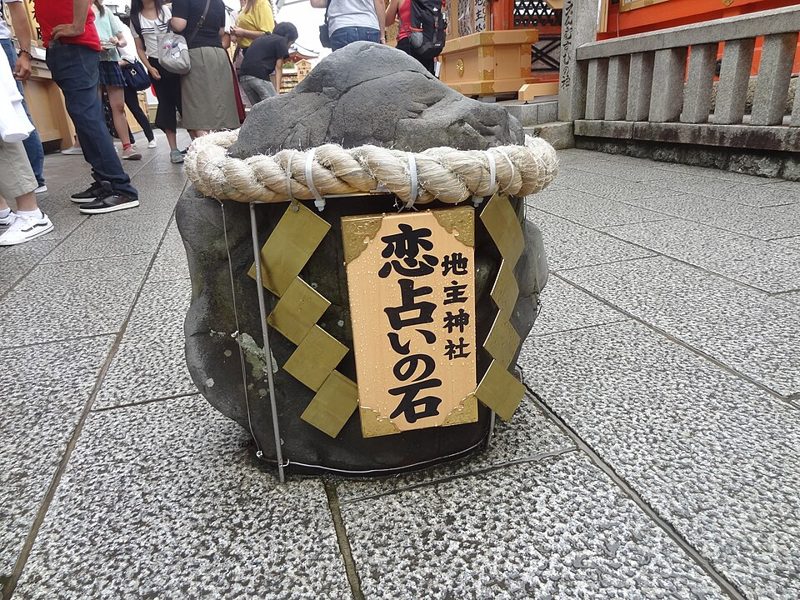
In 1633, Tokugawa Iemitsu rebuilt Jishu Shrine's buildings on a sacred hillside beside Kiyomizu-dera. The shrine's official history also records a visit by Emperor Saga in 811, when he reportedly turned his carriage around three times to admire its cherry blossoms. Famous for its Love Fortune Stones, the shrine has been closed for restoration since August 19, 2022, and its official website currently gives no reopening date.
Kyochika's take
Kyochika recommends exploring the shrine's history before visiting the Kiyomizu district, rather than planning to enter the closed sanctuary. Its combination of ancient religious traditions, imperial cherry-blossom stories and matchmaking rituals is particularly interesting for travelers curious about how sacred places acquire new meanings across centuries.
For a spring itinerary, consider reading about the Jishu-zakura legend and then exploring the surrounding historic streets. The shrine's famous stones and buildings are inaccessible during restoration, so they should not be presented as attractions visitors can currently experience.
Hours, admission and access
- Hours
- Currently closed for building and grounds restoration. The official website states that the construction period and reopening date are undecided.
- Closed
- Closed since August 19, 2022, with no announced reopening date.
- Admission
- Not applicable during the closure. No current admission charge is published for a future reopening.
- Access
- Kiyomizu-Gojo Station on the Keihan Railway: approximately 30 minutes on foot. Gojozaka or Kiyomizu-michi bus stop: approximately 10 minutes on foot. These are published approach directions; the shrine grounds are currently inaccessible.
- Nearest station
- Kiyomizu-Gojo Station
Checked against official information on 2026-10-28. Details change, so check the official website before you go.
Sources: Jishu Shrine Official Access and Current Closure, Jishu Shrine Original Closure Announcement, Jishu Shrine Official Origins, Jishu Shrine Official Historical Timeline, Jishu Shrine Official English Guide
 Pochikichi's story corner
How did an ancient guardian shrine become a sanctuary of love?
Jishu Shrine's official tradition places its origins in the age of the gods, before Japan's recorded national history. The shrine acknowledges that its original founding date is unknown. It associates the surrounding hillside with Horai-san, a sacred mountain traditionally connected with longevity. These accounts describe the shrine's religious understanding of its origins, rather than establishing a datable prehistoric foundation. The sanctuary's location beside Kiyomizu-dera eventually placed it within one of Kyoto's historically significant pilgrimage landscapes.
The shrine's historical record identifies three notable imperial visits. Emperor Saga is said to have visited in 811 and admired the shrine's cherry blossoms so intensely that he turned back his carriage three times. Emperor Enyu visited in 970, while Emperor Shirakawa reportedly undertook a 17-day period of religious retreat and prayer in 1082. These stories connect the shrine's landscape with imperial patronage and help explain the historical prestige of its cherry tree.
The most clearly documented architectural milestone in the shrine's published history is the reconstruction ordered by Tokugawa Iemitsu in 1633. The shrine's official English guide identifies its inner shrine, outer shrine and main gate as Important Cultural Properties and as part of the World Heritage heritage associated with the Kiyomizu area. The inner shrine enshrines Okuninushi-no-Mikoto, the deity closely associated with the shrine's traditions of love and relationships. The name Jishu also preserves its identity as a guardian sanctuary connected with the land.
During the Meiji period, the government-directed separation of Shinto and Buddhism changed the shrine's formal relationship with Kiyomizu-dera. Its historical timeline records its independence from the temple and the change of name from Jishu Gongen to Jishu Shrine. The shrine remains historically connected with the adjacent temple landscape, but it is a distinct religious institution. So when you visit the surrounding Kiyomizu area, look for the geographical relationship between temple and shrine, and consider how a sacred hillside became associated with imperial flower viewing, guardian deities and wishes for love.
Sources: Jishu Shrine Official Origins, Jishu Shrine Official History: Medieval to Modern Period, Jishu Shrine Official English Guide
Long ago, around hereWhat was this hillside like 1,200, 400 and 150 years ago?
Around 1,200 years ago, the site was already part of the sacred landscape described in the shrine's early traditions. Its official history places Emperor Saga's visit in 811, connecting the sanctuary with the cherry tree later called Mikuruma-gaeshi no Sakura. The shrine describes the hillside as an ancient place of worship, although the precise date and physical form of its earliest sanctuary are not established in the sources examined. The buildings seen in later historical photographs and descriptions should therefore not be projected unchanged into this early period.
Around 400 years ago, the shrine was approaching the major reconstruction of 1633. Its historical timeline records a cherry-blossom gathering by Toyotomi Hideyoshi in 1581 and a kabuki dedication by Izumo no Okuni in 1603. By approximately 150 years ago, the Meiji-period separation of Shinto and Buddhism had altered the institution's relationship with Kiyomizu-dera. A votive painting offered in 1886 and described by the shrine portrays women visiting to pray for favorable relationships, documenting the continuing importance of matchmaking in its modern history.
Sources: Jishu Shrine Official Origins, Jishu Shrine Official Historical Timeline
Hidden highlights
- Koiuranai-no-ishi — Love Fortune Stones
- The shrine's official English guide describes two stones roughly ten meters apart. According to tradition, walking successfully between them with closed eyes predicts the fulfillment of a romantic wish. The stones cannot currently be visited.
- Mikuruma-gaeshi no Sakura
- The shrine's cherry-blossom tradition commemorates Emperor Saga's visit in 811. His reported decision to turn his carriage back three times gave the tree its memorable name.
- Okuninushi-no-Mikoto
- The shrine's official English guide identifies Okuninushi-no-Mikoto as the deity of its inner shrine. The god is central to the sanctuary's association with relationships and matchmaking.
- Inori-sugi — Prayer Cedar
- The shrine's historical account connects this tree with ushi no toki mairi, a nighttime ritual that became an element of Japanese supernatural folklore. The story offers a contrasting perspective on the shrine's history of emotional wishes.
- Tokugawa Reconstruction
- The official history records the rebuilding of the shrine buildings by Tokugawa Iemitsu in 1633. This association places the sanctuary within the history of shogunal patronage.
- The 1886 Votive Painting
- The shrine describes a votive painting showing visitors praying for good relationships. It preserves evidence of how the sanctuary was represented during the Meiji period.
Sources: Jishu Shrine Official English Guide, Jishu Shrine Official Origins, Jishu Shrine Official Historical Timeline
Why did Emperor Saga turn his carriage around three times?
The shrine's story of Emperor Saga begins in 811. During an imperial visit, the emperor was reportedly so impressed by the cherry blossoms that he ordered his carriage to turn back three times. The incident gave the tree the name Mikuruma-gaeshi no Sakura, or the Cherry Tree That Turned Back the Imperial Carriage.
The account survives as a shrine tradition and should be presented as such. Its significance lies in the connection it draws between sacred geography, cherry-blossom appreciation and imperial memory. The story gives travelers a historical theme through which to understand the wider Kiyomizu landscape, even when the shrine's grounds cannot be entered.
Sources: Jishu Shrine Official Origins
Can walking between two stones predict love?
The Love Fortune Stones are among Jishu Shrine's most recognizable features. Its official English guide describes the traditional challenge: a visitor attempts to move from one stone to the other with closed eyes. Completing the journey is interpreted as a favorable sign for the person's wish for love.
The shrine attributes the stones themselves to the prehistoric Jomon period, describing them as objects connected with ancient religious practice. This is a claim made in the shrine's historical interpretation, not proof that the modern matchmaking ritual existed in prehistoric times. The two ideas should remain separate when explaining the shrine to international travelers.
Sources: Jishu Shrine Official English Guide, Jishu Shrine Official Origins
How to walk it
- Gojozaka or Kiyomizu-michi Bus Stop — Begin the approach to the Kiyomizu district. Follow the public route toward Kiyomizu-dera; Jishu Shrine itself is closed. (10 min)
- Kiyomizu-dera Area — Explore the surrounding temple district according to the temple's own visitor arrangements. Do not attempt to enter the closed shrine. (25 min)
- Sannenzaka — Walk along the traditional approach street and observe the historic streetscape. (10 min)
- Ninenzaka — Continue through the adjoining street as part of a wider Higashiyama walking route. (15 min)
- Maruyama Park — Finish with a longer walk connecting the Kiyomizu district with another established area of eastern Kyoto. (25 min)
Jishu Shrine is closed and cannot be included as an accessible stop. The shrine officially lists approximately 10 minutes from Gojozaka or Kiyomizu-michi bus stop, 5 minutes from Sannenzaka, and 30 minutes from Maruyama Park via Ninenzaka and Sannenzaka. Other durations and the proposed sightseeing sequence are Kyochika estimates, not official walking or visit times.
Sources: Jishu Shrine Official Access
Through the seasons
- Spring
- Explore the surrounding Kiyomizu district with the historical story of Emperor Saga and Jishu-zakura in mind. The shrine itself remains closed.
- Summer
- Read about the shrine's sacred mountain traditions before exploring the publicly accessible historic streets nearby.
- Autumn
- Consider combining the history of Jishu Shrine with a wider Higashiyama sightseeing walk. Verify separate access arrangements for other attractions.
- Winter
- Focus on the shrine's historical accounts of Tokugawa reconstruction and matchmaking rather than expecting access to the grounds.
Getting there by taxi or bus
- Taxi
- The shrine's official directions estimate approximately 15 minutes from Kyoto Station's Shinkansen Hachijo Exit. This is a published approach estimate, not a current travel-time guarantee or permission to enter the shrine.
- Bus
- From Kyoto Station, the shrine's published directions list Kyoto City Bus routes 86, 206 and 100 to Gojozaka (五条坂). From the Gion-Shijo or Kawaramachi area, they list route 207 to Kiyomizu-michi (清水道). Both stops are approximately 10 minutes on foot from the shrine's vicinity according to its official access page.
- Other
- Kiyomizu-Gojo Station on the Keihan Railway: approximately 30 minutes on foot according to the shrine. The final destination remains closed.
Sources: Jishu Shrine Official Access
Pair it with
- Kiyomizu-dera — The neighboring temple provides geographical context for understanding the shrine's historical relationship with the Kiyomizu area. (0 min walk)
- Sannenzaka — The shrine's official access page identifies this traditional street as approximately five minutes from the shrine. (5 min walk)
- Maruyama Park — The shrine's official access page gives approximately 30 minutes on foot via Ninenzaka and Sannenzaka. (30 min walk)
Good to know before you go
- The official shrine website states that the grounds are closed for building and site restoration.
- The closure began on August 19, 2022.
- The latest official access page gives no confirmed construction completion or reopening date.
- The former approximate construction period published in 2022 is not a current reopening commitment.
- The shrine's official website provides an English-language guide.
- The Love Fortune Stones are inaccessible during the closure.
- The shrine continues to accept special relationship-prayer applications by post.
- According to the official access page, priests continue to perform accepted special prayers daily.
- Do not assume that opening arrangements for Kiyomizu-dera also apply to Jishu Shrine.
- The shrine's published directions give a 30-minute walk from Kiyomizu-Gojo Station.
- Current photography, payment and on-site worship arrangements cannot be confirmed for a future reopening.
Next stop: book for later today PR
Tickets and experiences in Kyoto you can book on Klook. Filter by “Today” to see what is still open.
Kimono rental in Kyoto→Tea ceremony experiences in Kyoto→Kyoto one-day sightseeing tours→All things to do in Kyoto on Klook →Compare on GetYourGuide: Kimono rental in Kyoto · Tea ceremony experiences in Kyoto · Kyoto one-day sightseeing tours
Ad: Klook and GetYourGuide affiliate links.
🍜 Where to eat after
Restaurants near here on Google Maps→Many restaurants in Kyoto take reservations, and some are cash only. Check the restaurant page before you go.
Events nearby
Festival & seasonal event
Kiyomizu-dera Jojuin Garden Special Viewing (Autumn Nights)
Jojuin, Kiyomizu-dera Temple (Kiyomizu-Gojo Sta.)
Nov 21 (Sat) – Nov 30 (Mon) 18:00 – 20:30
The garden of Jojuin, a sub-temple of Kiyomizu-dera, opens at night during the same period as the main temple's autumn night viewing. Admission closes at 8:30 PM.
Details →Festival & seasonal event
Autumn Special Night Viewing at Kiyomizu-dera Temple
Kiyomizu-dera Temple (Kiyomizu-Gojo Sta.)
Nov 21 (Sat) – Nov 30 (Mon) 17:30 – 21:30
Special evening viewing with illuminated autumn foliage in Kin'un Gorge and the National Treasure Main Hall. Last admission at 9:00 PM; gates close at 9:30 PM.
Details →Art exhibition
Autumn 2026 Exhibition: Sakamoto Ryoma and the Satsuma-Choshu Alliance at Ryozen Museum of History
Ryozen Museum of History (Bakumatsu Ishin Museum) (Gion-Shijo Sta.)
Sep 16 (Wed) – Nov 23 (Mon) Last entry 17:00. Closed Mondays (open November 2 and 23)
An exhibition for the 190th anniversary of Sakamoto Ryoma's birth and the 160th anniversary of the Satsuma-Choshu Alliance. It introduces recent research that re-examines Ryoma's role using records from Satsuma, Choshu and the shogunate. The second period runs from October 27.
Details →Oct 23 (Fri) – Dec 13 (Sun) 17:00 – 22:00
See illuminated autumn gardens at Kodaiji, founded by Nene, the wife of Toyotomi Hideyoshi. Projection mapping also transforms the garden in front of the Hojo Hall. Last admission at 9:30 PM.
Details →Art exhibition
Entokuin Temple: Teikan-zu Folding Screens and Autumn Night Light-Up
Entokuin Temple (Kodaiji sub-temple) (Gion-Shijo Sta.)
Oct 23 (Fri) – Dec 13 (Sun) 10:00 – 22:00
The sub-temple of Kodaiji where Nene, the wife of Toyotomi Hideyoshi, spent her final years. It shows the Teikan-zu folding screens handed down in the Toyotomi family, and in autumn lights up its pond-stroll and dry landscape gardens at night. Lights come on at 17:00, last entry is 21:30 and the gate closes at 22:00, with no day/night changeover. Closed December 11 and 12 for temple services.
Details →Nov 17 (Tue) – Dec 6 (Sun) 17:30 – 21:30
The illuminated highlights of the head temple of Jodo Buddhism include the Sanmon Gate, Yuzen-en Garden, and Miei-do Hall. In 2026, visitors can also access the corridor on the upper level of Sanmon Gate. Last admission at 9:00 PM.
Details →
Tips from visitors
Been here? Leave a short tip for the next traveler — in any language. No name, no sign-up.
Thank you! We check every tip by hand and post it within a day or two.
How we post tips: we read every one before it goes up. We remove swear words, insults, ads, links and anything that could identify a person. Tips are shown in the language they were written in, with a translate link. Kyochika never writes or pays for tips, and there are no star ratings.
FAQ
- What is Jishu Shrine?
- In 1633, Tokugawa Iemitsu rebuilt Jishu Shrine's buildings on a sacred hillside beside Kiyomizu-dera. The shrine's official history also records a visit by Emperor Saga in 811, when he reportedly turned his carriage around three times to admire its cherry blossoms. Famous for its Love Fortune Stones, the shrine has been closed for restoration since August 19, 2022, and its official website currently gives no reopening date.
- Hours at Jishu Shrine?
- Currently closed for building and grounds restoration. The official website states that the construction period and reopening date are undecided.
- Closed at Jishu Shrine?
- Closed since August 19, 2022, with no announced reopening date.
- Admission at Jishu Shrine?
- Not applicable during the closure. No current admission charge is published for a future reopening.
- Access at Jishu Shrine?
- Kiyomizu-Gojo Station on the Keihan Railway: approximately 30 minutes on foot. Gojozaka or Kiyomizu-michi bus stop: approximately 10 minutes on foot. These are published approach directions; the shrine grounds are currently inaccessible.
- Is Jishu Shrine open in 2026?
- No. The official website states that the shrine is closed for restoration and that the reopening date is undecided.
- When did Jishu Shrine close?
- An official announcement dated August 8, 2022, states that the shrine would close from August 19, 2022.
- Can visitors try the Love Fortune Stones?
- No. The stones are inside the closed grounds.
- Can I still request a relationship prayer?
- Yes. The official shrine website states that special relationship-prayer applications are accepted by post and that priests perform accepted prayers daily.