Temples in Kyoto · Shimogyo Ward, Kyoto
Higashi Honganji Temple (Shinshu Honbyo)
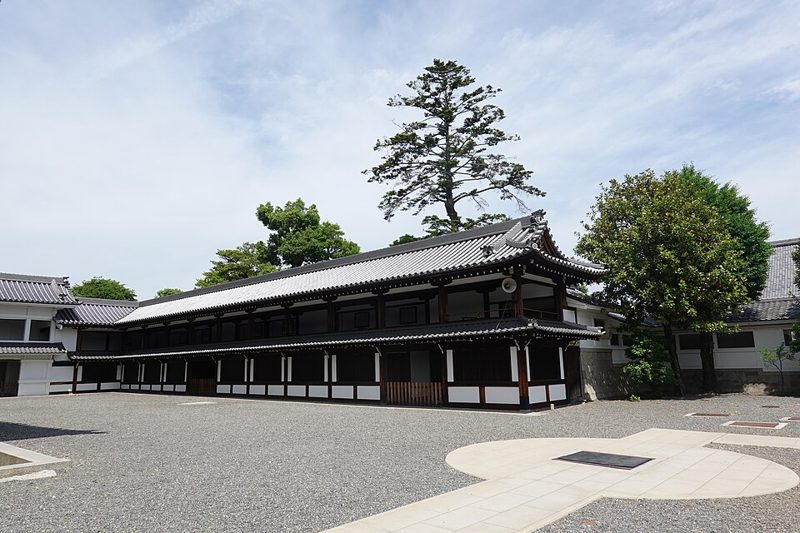
The Founder's Hall at Higashi Honganji measures 76 meters long, 58 meters wide and 38 meters high, with 927 tatami mats covering its floor and 175,000 tiles covering its roofs. It is one of the world's largest wooden structures, yet the present building is not a survivor from medieval Kyoto: it was reconstructed between 1879 and 1895 after the temple's fourth major destruction by fire. Those enormous dimensions tell the story of a religious community whose followers repeatedly rebuilt their spiritual home.
Kyochika's take
Kyochika recommends Higashi Honganji for visitors interested in Buddhist traditions, monumental timber architecture and the history of Kyoto beyond its famous Zen gardens. Consider beginning your visit in the morning, then spending time inside both principal halls to appreciate their different religious functions.
For a longer visit, combine the main temple with Shosei-en, its separate historical garden. The enormous gathering halls and the garden's ponds, bridges and reception buildings reveal contrasting aspects of the same institution.
Hours, admission and access
- Hours
- March to October: 5:50 am to 5:30 pm. November to February: 6:20 am to 4:30 pm.
- Closed
- The official website publishes daily opening hours but does not specify regular closing days.
- Admission
- Free.
- Access
- 7-minute walk from JR Kyoto Station; 5-minute walk from Gojo Station on the Karasuma Subway Line; 1-minute walk from Karasuma Shichijo bus stop.
- Nearest station
- Kyoto Station
Checked against official information on 2026-10-28. Details change, so check the official website before you go.
Sources: Higashi Honganji Official English Website, Higashi Honganji Official History, Higashi Honganji Official Temple Buildings, Higashi Honganji Official Access, Higashi Honganji Shosei-en Garden
 Pochikichi's story corner
Why did Tokugawa Ieyasu help establish a second Honganji temple?
The history of Higashi Honganji begins long before the construction of its present buildings. Its religious foundation lies in the teachings of Shinran, who lived from 1173 to 1262 and established the tradition now commonly known as Shin Buddhism. Following his death, his ashes were buried on Kyoto's eastern outskirts. His youngest daughter, Kakushin-ni, and her husband subsequently moved his grave to their own land, where they established a memorial hall for his followers. The hall enshrined both Shinran's image and his ashes. Kakushin-ni became its caretaker, beginning a tradition of stewardship that was passed down through her family.
Under Kakunyo, the memorial hall developed into a Buddhist temple called Honganji. Its influence grew substantially during the leadership of Rennyo, whose religious activities attracted followers in different parts of Japan. The institution nevertheless experienced repeated conflict. Its Kyoto temple was destroyed in 1465, and its later establishment at Yamashina was destroyed in 1532. During the leadership of Kennyo, Honganji became involved in prolonged warfare against Oda Nobunaga. These conflicts demonstrate that the institution was already a significant religious and political force before the establishment of Higashi Honganji.
After Kennyo's death, his eldest son Kyonnyo succeeded him but was subsequently ordered to retire by Toyotomi Hideyoshi. Kyonnyo continued his religious activities and developed a relationship with Tokugawa Ieyasu. Following Ieyasu's victory over opposing forces in 1600, he granted Kyonnyo land east of the existing Honganji establishment in Kyoto. Kyonnyo founded a new temple there in 1603. It became known as Higashi Honganji, or East Honganji, while the earlier institution became Nishi Honganji, or West Honganji. The two continued as separate religious institutions.
Higashi Honganji has occupied its present location since that foundation, but its buildings have been destroyed and rebuilt repeatedly. The last major fire occurred in 1864, during armed conflict in Kyoto. Reconstruction of the Founder's Hall took sixteen years, beginning in 1879 and ending in 1895. The temple credits the devotion of followers throughout Japan with making the undertaking possible. Its official history also records further major renovations between 2004 and 2016. So when you visit, look for the great Founder's Hall and its adjoining Amida Hall as evidence of a religious tradition repeatedly preserved through collective effort rather than an architectural complex left unchanged since its foundation.
Sources: Higashi Honganji Official History, Higashi Honganji Official Temple Buildings
Long ago, around hereWhat stood here before the enormous wooden halls?
The present Higashi Honganji precinct did not exist as this religious institution in the early history of Kyoto. Its documented foundation at this location dates to 1603, when Kyonnyo established the eastern Honganji after receiving land from Tokugawa Ieyasu. Earlier generations of the religious community had worshipped at different locations, including the memorial hall established by Shinran's family and later Honganji temples elsewhere in the Kyoto region. The institution's history therefore reaches further back than the history of its present site.
By the early seventeenth century, the land had become the center of the newly established eastern Honganji community. In the nineteenth century, its great buildings were destroyed again, and reconstruction began in 1879. The buildings that now define the precinct largely represent this rebuilding effort rather than structures surviving intact from 1603. The distinction is central to understanding the temple: the continuity lies in its religious community and teachings, while the architecture records successive acts of reconstruction.
Sources: Higashi Honganji Official History, Higashi Honganji Official Temple Buildings
Hidden highlights
- The Founder's Hall Floor
- The entire floor of the Founder's Hall, including the altar and seating areas, contains 927 tatami mats. Observe how the vast interior accommodates the temple's central religious function.
- The Founder's Hall Roof
- The double-layered hip-and-gable roofs are covered with 175,000 tiles. Compare their scale with the building's pillars and the surrounding courtyard.
- The Amida Hall
- The adjoining hall measures 52 meters long, 47 meters wide and 29 meters high. Its central image represents Amida Buddha, the primary object of veneration in Shin Buddhism.
- The Golden Altar
- The Amida Hall's altar area is covered with gold leaf and represents the world of enlightenment described in the Amida Sutra. Its religious symbolism provides a contrast to the architectural emphasis of the enormous Founder's Hall.
- The Founder's Hall Gate
- The main gate has a two-storied central structure and bears a framed calligraphic inscription of the temple's official name, Shinshu Honbyo.
- Shosei-en's Moon Image Pond
- The garden's Ingetsu-chi occupies much of its southeastern section. Its name refers to the reflection of the moon on the water.
Sources: Higashi Honganji Temple Buildings, Higashi Honganji Shosei-en Garden
The rebuilding that cost followers their lives
The reconstruction of the Founder's Hall following the 1864 fire was an immense undertaking. Work began in 1879 and continued until 1895. According to Higashi Honganji's official account, followers from across Japan devoted themselves to rebuilding the structure, including transporting enormous quantities of construction materials.
The temple records that dozens of followers lost their lives while transporting building materials through mountainous countryside. This gives the hall a significance beyond its exceptional measurements. Its great timber structure represents the sacrifices and participation of the religious community that made reconstruction possible.
The shogun's garden and the emperor's resting room
The origins of Shosei-en date to 1641, when the third Tokugawa shogun, Tokugawa Iemitsu, donated land to Sennyo, the thirteenth head priest of Higashi Honganji. A garden was developed as part of Sennyo's retirement residence. Later head priests used the property as a retreat and a place to receive important guests.
One of the garden's buildings, the Rofu-tei Reception Hall, contains a smaller room called Karaku. The temple records that Emperor Meiji rested there on July 14, 1880. The room and its historical association offer a more personal counterpart to the monumental religious architecture of the main temple.
Sources: Higashi Honganji Shosei-en Garden
How to walk it
- Main temple entrance — Begin by observing the monumental gate and the scale of the buildings beyond it. (5 min)
- Founder's Hall exterior — Examine the double-layered roof and the proportions of the timber structure. (8 min)
- Founder's Hall interior — Remove your shoes and respectfully observe the interior devoted to Shinran. (15 min)
- Amida Hall — Compare its proportions and gilded altar with the adjoining Founder's Hall. (12 min)
- Main courtyard — View the principal halls together before leaving the main precinct. (5 min)
- Shosei-en Garden — Enter through the West Gate and explore the pond, bridges and historic buildings from the designated garden paths. (35 min)
All durations are Kyochika estimates, not official visiting times. Shosei-en is a separate garden with its own admission charge and shorter hours. Its West Gate is the only public entrance and exit. Religious activities and posted access restrictions take priority.
Sources: Higashi Honganji Official Access, Higashi Honganji Shosei-en Garden
Through the seasons
- Spring
- Visit Shosei-en to see seasonal planting and the cherry blossoms near the Boka-kaku Pavilion.
- Summer
- The main temple follows its March-to-October visiting schedule, opening at 5:50 am.
- Autumn
- Explore the garden's landscape and note that the main temple switches to its winter opening schedule in November.
- Winter
- The main temple opens at 6:20 am and closes at 4:30 pm from November through February.
Getting there by taxi or bus
- Taxi
- Ask for Higashi Honganji near Kyoto Station. The temple is also accessible on foot from the station.
- Bus
- Karasuma Shichijo (烏丸七条), approximately one minute on foot. The temple's official access page does not specify a bus route number.
- Other
- JR Kyoto Station: 7 minutes on foot. Gojo Station on the Karasuma Subway Line: 5 minutes on foot.
Sources: Higashi Honganji Official Access
Pair it with
- Shosei-en Garden — Discover the temple's historic retreat garden and its pond-centered landscape.
- Kyoto Station — Combine the temple visit with arrival or departure by train. (7 min walk)
Good to know before you go
- The official English website provides historical information, building descriptions, opening hours and visitor guidance.
- Admission to the main Higashi Honganji temple precinct is free.
- Remove your shoes before entering the temple buildings.
- Leave wheeled luggage and strollers in the designated area before entering the buildings.
- Photography and video recording during services and rituals inside the halls are prohibited.
- Flash photography inside the halls is prohibited.
- Do not enter the altar areas.
- Smoking and open flames are prohibited within the temple precinct.
- Food and drink are prohibited inside the halls and corridors.
- Pets are prohibited except service animals.
- The temple welcomes voluntary donations.
- Shosei-en is open throughout the year.
- Shosei-en hours from March to October are 9:00 am to 5:00 pm, with reception closing at 4:30 pm.
- Shosei-en hours from November to February are 9:00 am to 4:00 pm, with reception closing at 3:30 pm.
- Shosei-en admission is 700 yen for adults aged 18 and older, 300 yen for visitors aged 13 to 18, and free for children aged 12 or younger.
- Only Shosei-en's outdoor areas are normally open to visitors. Its halls and teahouses are generally closed.
- At Shosei-en, remain on the paths and do not step on moss.
- Shosei-en permits personal photography, but tripods and selfie sticks are not allowed.
- Commercial photography at Shosei-en requires prior permission and payment.
- The garden's West Gate is its only entrance and exit.
Next stop: book for later today PR
Tickets and experiences in Kyoto you can book on Klook. Filter by “Today” to see what is still open.
Kimono rental in Kyoto→Tea ceremony experiences in Kyoto→Kyoto one-day sightseeing tours→All things to do in Kyoto on Klook →Compare on GetYourGuide: Kimono rental in Kyoto · Tea ceremony experiences in Kyoto · Kyoto one-day sightseeing tours
Ad: Klook and GetYourGuide affiliate links.
Tips from visitors
Been here? Leave a short tip for the next traveler — in any language. No name, no sign-up.
Thank you! We check every tip by hand and post it within a day or two.
How we post tips: we read every one before it goes up. We remove swear words, insults, ads, links and anything that could identify a person. Tips are shown in the language they were written in, with a translate link. Kyochika never writes or pays for tips, and there are no star ratings.
FAQ
- What is Higashi Honganji Temple (Shinshu Honbyo)?
- The Founder's Hall at Higashi Honganji measures 76 meters long, 58 meters wide and 38 meters high, with 927 tatami mats covering its floor and 175,000 tiles covering its roofs. It is one of the world's largest wooden structures, yet the present building is not a survivor from medieval Kyoto: it was reconstructed between 1879 and 1895 after the temple's fourth major destruction by fire. Those enormous dimensions tell the story of a religious community whose followers repeatedly rebuilt their spiritual home.
- Hours at Higashi Honganji Temple (Shinshu Honbyo)?
- March to October: 5:50 am to 5:30 pm. November to February: 6:20 am to 4:30 pm.
- Closed at Higashi Honganji Temple (Shinshu Honbyo)?
- The official website publishes daily opening hours but does not specify regular closing days.
- Admission at Higashi Honganji Temple (Shinshu Honbyo)?
- Free.
- Access at Higashi Honganji Temple (Shinshu Honbyo)?
- 7-minute walk from JR Kyoto Station; 5-minute walk from Gojo Station on the Karasuma Subway Line; 1-minute walk from Karasuma Shichijo bus stop.
- Is Higashi Honganji free to enter?
- Yes. The main temple is free. Shosei-en Garden has a separate admission charge.
- Can visitors enter the main halls?
- Yes, during the published opening hours, subject to temple rules and religious activities. Shoes must be removed before entering.
- What is the difference between Higashi Honganji and Nishi Honganji?
- They became separate religious institutions following Kyonnyo's establishment of Higashi Honganji in 1603 on land granted by Tokugawa Ieyasu.
- Can I take photographs inside the temple?
- Photography and video recording during services and rituals inside the halls are prohibited. Flash photography inside the halls is also prohibited.