Temples in Kyoto · Saga, Ukyo Ward, Kyoto
Daikaku-ji Temple
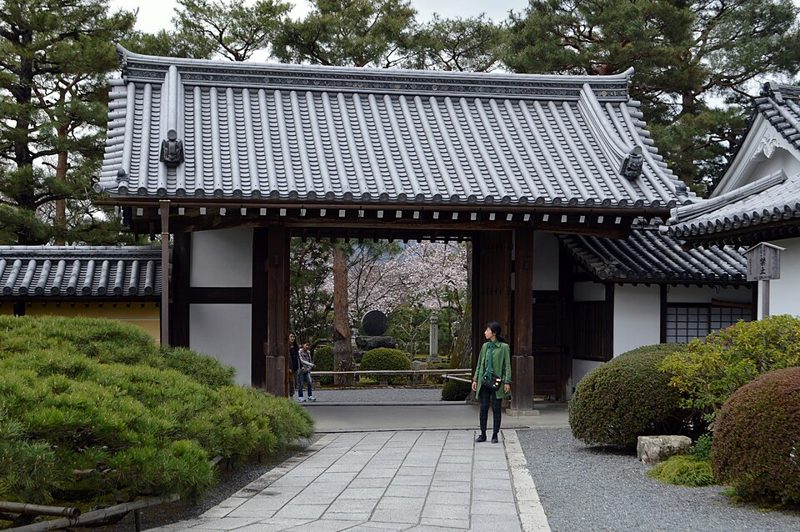
Daikaku-ji was established in 876 when Emperor Saga's former imperial villa was converted into a Buddhist temple. Its grounds contain Osawa Pond, an early Japanese garden landscape inspired by China's Dongting Lake, as well as an important imperial residence known as the Shinden. The temple remains closely connected with the imperial tradition of copying the Heart Sutra and with the Saga Goryu school of flower arrangement.
Kyochika's take
Kyochika recommends Daikaku-ji for travelers interested in imperial history, Buddhist art, classical garden design, and Japanese historical films. The temple's unusual strength is that its religious buildings and ancient garden preserve different aspects of the same imperial landscape.
Consider visiting both the temple-building area and Osawa Pond rather than choosing only one. Begin with the Shinden and the buildings connected to imperial Buddhist practice, then continue to the pond to understand how Emperor Saga's residence was organized around a water garden.
Spring blossoms and autumn foliage are documented seasonal attractions. For a cultural experience beyond sightseeing, consider the sutra-copying program described by Kyoto City's educational travel guide.
Hours, admission and access
- Hours
- Temple-building area: 9:00 AM–5:00 PM (last admission 4:30 PM). Osawa Pond area: 9:00 AM–5:00 PM (last admission 4:30 PM). Sutra-copying reception: 9:00 AM–3:30 PM.
- Closed
- Open year-round, although temple ceremonies and events may temporarily restrict admission or access to certain areas.
- Admission
- Temple-building area: adults 800 yen; elementary, junior high, and high school students 400 yen. Osawa Pond area: adults 500 yen; elementary, junior high, and high school students 100 yen. These are the current standard rates published by Kyoto City's official tourism guide and indexed official temple visitor information. Special-event arrangements may differ.
- Access
- Immediately beside Daikakuji bus stop, served by Kyoto City Bus and Kyoto Bus. Approximately 20 minutes on foot from the north exit of JR Saga-Arashiyama Station.
- Nearest station
- JR Saga-Arashiyama Station
Checked against official information on 2026-10-28. Details change, so check the official website before you go.
Sources: Kyoto City Official Tourism Guide, Daikaku-ji, Kyoto City Official Tourism Guide, Osawa Pond, Kyoto City Official English Travel Guide, Daikaku-ji, Kyoto City School Trip Guide, Daikaku-ji, Kyoto City School Trip Guide, Sutra Copying, Kyoto City Media Support Center, Daikaku-ji
 Pochikichi's story corner
How did Emperor Saga's lakeside residence become one of Kyoto's great Buddhist temples?
Daikaku-ji originated as Saga-in, an imperial villa associated with Emperor Saga. During the early Heian period, the Saga district provided an environment for courtly residence and recreation outside the center of Kyoto. The grounds included Osawa Pond, created as part of the villa's garden landscape and inspired by Dongting Lake in China. Its islands, rocks, water, and surrounding scenery reflected the cultural influence of continental garden traditions on Japan's imperial court. The pond was designed as a landscape to be experienced from its shores and from boats, and it developed enduring associations with the appreciation of flowers and the autumn moon.
In 876, the imperial residence was converted into Daikaku-ji, which became an important Shingon Buddhist institution. Kyoto City's official guide identifies it as the head temple of the Daikakuji branch of Shingon Buddhism and describes its special relationship with the imperial family. Emperors and members of the imperial household served as its religious leaders, giving the temple the character of a monzeki institution, a temple associated with imperial or aristocratic clergy. This history explains why Daikaku-ji is still known as the former Saga Imperial Palace.
A particularly important religious tradition links Emperor Saga with Kukai, the founder of Shingon Buddhism. According to the account preserved by Kyoto City's tourism guide, a severe epidemic prompted the emperor to copy the Heart Sutra at Kukai's suggestion. Kukai is also said to have prayed before the Five Great Wisdom Kings. The tradition holds that the epidemic subsided following these religious acts. The emperor's copied sutra became an object of special veneration, and the temple preserves Heart Sutras associated with several emperors. Kyoto City's guide explains that these scriptures are traditionally kept under imperial seal and opened at intervals of sixty years. The continued practice of copying the Heart Sutra is central to Daikaku-ji's religious identity.
Daikaku-ji also acquired political significance through its connection with the Northern and Southern Courts. Kyoto City's school-trip guide identifies the temple as the location where Emperor Go-Kameyama and Emperor Go-Komatsu discussed ending their conflict. Its surviving architecture preserves connections with later imperial history, particularly the Shinden associated with Tokugawa Masako, also known as Tofukumon-in. The building contains paintings attributed to Kano Sanraku, including peony and red-plum subjects. The complex therefore brings together early Heian imperial culture, Shingon religious practice, later court architecture, and political memory. So when you visit, look for the Shinden's ceremonial character, the historical artwork, the Five Great Wisdom Kings associated with the temple's principal worship, and the broad waters of Osawa Pond.
Sources: Kyoto City Official Tourism Guide, Daikaku-ji, Kyoto City Official Travel Guide, Daikaku-ji, Kyoto City School Trip Guide, Daikaku-ji
Long ago, around hereWhat stood here before Daikaku-ji became a temple?
About 1,200 years ago, this was the landscape of Emperor Saga's imperial villa. Kyoto City's official guide places the development of the original garden during the Konin era, from 810 to 824. Osawa Pond formed part of the residence's grounds and was modeled on China's Dongting Lake. The garden contained water features, stone arrangements, and islands. The official historical description also identifies the area north of the pond as the location of former Saga-in buildings. A waterfall garden once existed there, and its surviving stone remains are associated with the historic Nagoso Waterfall site. This was a landscape created for the court, combining residence, artistic appreciation, and the enjoyment of seasonal scenery.
Around 400 years ago, the former imperial residence had long since become a Buddhist institution, with a religious role extending well beyond its original function as a villa. Its history included the preservation of imperial associations and the development of ceremonial architecture. Approximately 150 years ago, the temple continued to occupy a landscape whose principal historical features had already acquired centuries of religious and literary meaning. The pond, islands, and waterfall remains preserve evidence of earlier garden traditions even though the original villa buildings no longer survive as an intact imperial residence.
Sources: Kyoto City Official Tourism Guide, Osawa Pond, Kyoto City Official Tourism Guide, Daikaku-ji
Hidden highlights
- Shinden
- An Important Cultural Property associated with Tofukumon-in, the daughter of Tokugawa Hidetada. The building preserves a connection between the Tokugawa family and the imperial court.
- Peony and Red-Plum Paintings
- The Shinden is associated with Important Cultural Property paintings attributed to Kano Sanraku. These subjects illustrate the decorative painting traditions preserved within Daikaku-ji's imperial architectural setting.
- Nagoso Waterfall Site
- The waterfall no longer flows, but its stone arrangement survives. Fujiwara no Kinto commemorated the waterfall in a poem about a sound that had disappeared while its name continued to be remembered.
- Kiku Island
- According to the temple tradition described by Kyoto City, Emperor Saga picked chrysanthemums from this island and placed them in a vase. This is regarded as the origin of the Saga Goryu tradition of flower arrangement.
- Tenjin Island
- One of the islands remaining within Osawa Pond, it contributes to the ancient garden's composition and helps visitors understand how water and land were arranged within the imperial landscape.
- Five Great Wisdom Kings
- The temple's principal objects of worship are the Five Great Wisdom Kings. Their religious significance is linked in the official account to the tradition of Kukai's prayers during an epidemic.
Sources: Kyoto City Official Tourism Guide, Daikaku-ji, Kyoto City Official Tourism Guide, Osawa Pond
The imperial sutras opened only at long intervals
One of Daikaku-ji's most significant religious traditions concerns the Heart Sutra. Kyoto City's official tourism guide relates how Emperor Saga copied the scripture on the advice of Kukai during an epidemic. The act of copying was understood as a religious offering, and the resulting sutra became an important part of the temple's sacred inheritance.
The temple preserves scriptures associated with Emperor Saga and other emperors, including Go-Kogon, Go-Hanazono, Go-Nara, Ogimachi, and Kokaku. Kyoto City's guide describes the imperial-seal tradition under which these sacred texts are opened only once every sixty years. Their preservation explains why copying the Heart Sutra remains especially meaningful at Daikaku-ji. Modern visitors can also take part in a sutra-copying experience.
Sources: Kyoto City Official Tourism Guide, Kyoto City School Trip Guide, Sutra Copying
Why do filmmakers use this former imperial palace?
Daikaku-ji's architecture and landscape have also made it a location for Japanese film and television productions. The Kyoto City Media Support Center identifies the site as suitable for period and contemporary dramas, noting the pond and the absence of modern utility poles and overhead wires within and around parts of the grounds.
The city's official filming record lists productions including The Last Chushingura, Tsukigami, Ooku, Chosokosoku! Sankin Kotai, and Kessan! Chushingura. These productions demonstrate how Daikaku-ji's historic buildings and waterside setting continue to be used as visual representations of different periods in Japanese history.
How to walk it
- Temple Entrance — Check which admission areas and building interiors are open on the day of your visit. (5 min)
- Shinden — Appreciate the imperial-associated architecture and its connection with Tofukumon-in. (12 min)
- Temple Buildings — Follow the permitted visitor route and examine the relationship between Buddhist worship and imperial ceremonial architecture. (10 min)
- Principal Worship Area — Consider the temple's dedication to the Five Great Wisdom Kings and its connection with the Heart Sutra. (8 min)
- Osawa Pond — Explore the historic garden landscape and its relationship with Emperor Saga's former villa. (20 min)
- Island and Waterfall Landscape — Look for garden features associated with Kiku Island, Tenjin Island, and the historic Nagoso Waterfall site, following permitted paths. (15 min)
- Return — Return toward the exit and allow time to examine the pond's shoreline from another viewpoint. (10 min)
The suggested 80-minute visit and all individual stop times are Kyochika estimates, not official walking times. Temple ceremonies, exhibitions, and accessibility restrictions may affect the route. Sutra copying requires additional time and a separate activity fee.
Sources: Kyoto City Official Tourism Guide, Daikaku-ji, Kyoto City Official Tourism Guide, Osawa Pond
Through the seasons
- Spring
- Cherry blossoms around Osawa Pond are identified as a seasonal highlight by Kyoto City's tourism and film-location guides.
- Summer
- Explore the historical garden setting and observe the relationship between the pond, islands, and surrounding trees.
- Autumn
- The pond is associated with moon-viewing traditions, and Daikaku-ji's Kangetsu no Yube is described in Kyoto City's educational travel guide.
- Autumn foliage season
- Maples surrounding the pond provide seasonal color, as documented by Kyoto City's official tourism guide.
- Autumn chrysanthemum season
- Kyoto City's school-trip guide describes a public display of Saga chrysanthemums at the temple.
- Winter
- Concentrate on the architectural history, religious traditions, and the garden's enduring structural features.
Getting there by taxi or bus
- Taxi
- Ask for Daikaku-ji Temple in Saga-Osawa-cho, Ukyo Ward. Kyoto City's educational guide identifies paid parking for private vehicles, but taxi fares and journey times were not verified.
- Bus
- Daikakuji (大覚寺), served by Kyoto City Bus and Kyoto Bus. The stop is immediately beside the temple according to Kyoto City's official guide.
- Other
- From JR Saga-Arashiyama Station, use the north exit and walk approximately 20 minutes. Kyoto City's school-trip guide also provides station access information, but the official tourism guide's estimate is used here.
Sources: Kyoto City Official Tourism Guide, Daikaku-ji, Kyoto City School Trip Guide, Daikaku-ji, Kyoto City School Trip Guide, Sutra Copying
Pair it with
- Osawa Pond — The former imperial garden pond belongs to Daikaku-ji's grounds and provides the essential landscape counterpart to the religious buildings. (0 min walk)
- Jojakko-ji Temple — Combine Daikaku-ji's imperial Shingon heritage with Jojakko-ji's Nichiren history and connections to Mount Ogura's classical poetry.
- Rakushisha — Kyoto City's official English travel guide lists this Sagano literary destination among nearby attractions, making it a complementary cultural stop.
Good to know before you go
- Standard opening hours are 9:00 AM–5:00 PM, with last admission at 4:30 PM.
- Standard temple-building admission is 800 yen for adults and 400 yen for elementary through high school students.
- Standard Osawa Pond admission is 500 yen for adults and 100 yen for elementary through high school students.
- These are separate admission areas; confirm current special-event ticketing before visiting.
- Sutra-copying reception is open from 9:00 AM to 3:30 PM.
- Kyoto City's June 2026 educational guide lists a standard Heart Sutra copying experience at 1,000 yen, excluding admission, lasting approximately 45 minutes.
- The same guide lists a short sutra-copying experience at 500 yen and a Buddhist-image copying experience at 1,000 yen, both excluding admission.
- Groups must arrange sutra-copying visits in advance. The official school-trip guide recommends contacting the temple two or three days beforehand.
- Indoor photography and video are prohibited in the temple-building area, including photography of Buddhist images and monks.
- Tripods, monopods, drones, and unauthorized commercial or costume photography are prohibited under the temple's published visitor rules.
- Do not feed fish or birds, fish in the pond, smoke, or enter restricted areas.
- Eating and drinking restrictions apply; the temple's published rules include an allowance for heat-related health precautions.
- Pets are not permitted except qualifying assistance animals.
- Kyoto City's educational guide identifies steps and level changes that restrict wheelchair access, including the connection between the temple-building and pond areas.
- English-language information is available through Kyoto City's official travel guide.
- Credit-card and electronic-payment acceptance could not be confirmed from an official page successfully opened during this review.
- The official temple's current visitor-information page could not be retrieved directly, so published standard fees were cross-checked against Kyoto City's official tourism guide.
Next stop: book for later today PR
Tickets and experiences in Kyoto you can book on Klook. Filter by “Today” to see what is still open.
Kimono rental in Kyoto→Tea ceremony experiences in Kyoto→Kyoto one-day sightseeing tours→All things to do in Kyoto on Klook →Compare on GetYourGuide: Kimono rental in Kyoto · Tea ceremony experiences in Kyoto · Kyoto one-day sightseeing tours
Ad: Klook and GetYourGuide affiliate links.
Tips from visitors
Been here? Leave a short tip for the next traveler — in any language. No name, no sign-up.
Thank you! We check every tip by hand and post it within a day or two.
How we post tips: we read every one before it goes up. We remove swear words, insults, ads, links and anything that could identify a person. Tips are shown in the language they were written in, with a translate link. Kyochika never writes or pays for tips, and there are no star ratings.
FAQ
- What is Daikaku-ji Temple?
- Daikaku-ji was established in 876 when Emperor Saga's former imperial villa was converted into a Buddhist temple. Its grounds contain Osawa Pond, an early Japanese garden landscape inspired by China's Dongting Lake, as well as an important imperial residence known as the Shinden. The temple remains closely connected with the imperial tradition of copying the Heart Sutra and with the Saga Goryu school of flower arrangement.
- Hours at Daikaku-ji Temple?
- Temple-building area: 9:00 AM–5:00 PM (last admission 4:30 PM). Osawa Pond area: 9:00 AM–5:00 PM (last admission 4:30 PM). Sutra-copying reception: 9:00 AM–3:30 PM.
- Closed at Daikaku-ji Temple?
- Open year-round, although temple ceremonies and events may temporarily restrict admission or access to certain areas.
- Admission at Daikaku-ji Temple?
- Temple-building area: adults 800 yen; elementary, junior high, and high school students 400 yen. Osawa Pond area: adults 500 yen; elementary, junior high, and high school students 100 yen. These are the current standard rates published by Kyoto City's official tourism guide and indexed official temple visitor information. Special-event arrangements may differ.
- Access at Daikaku-ji Temple?
- Immediately beside Daikakuji bus stop, served by Kyoto City Bus and Kyoto Bus. Approximately 20 minutes on foot from the north exit of JR Saga-Arashiyama Station.
- Are Daikaku-ji and Osawa Pond covered by the same admission ticket?
- The standard visitor information lists separate admission fees for the temple-building and Osawa Pond areas. Special-event ticketing may differ.
- Can I try copying a Buddhist sutra?
- Yes. Kyoto City's official educational guide describes a Heart Sutra copying experience, as well as shorter activities. The standard experience is listed at 1,000 yen, excluding temple admission.
- Is Daikaku-ji open every day?
- The standard information lists no regular closing day, but temple ceremonies and other activities may temporarily restrict admission.
- Why is Osawa Pond historically important?
- It survives from Emperor Saga's imperial garden landscape and was modeled on China's Dongting Lake. Its islands and garden features preserve a connection with early Japanese imperial landscape design.