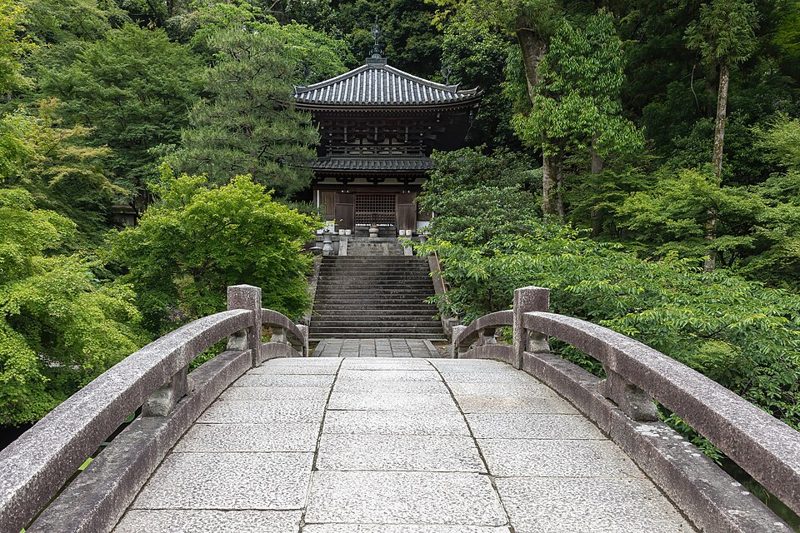
Festival & seasonal event in Kyoto
Chion-in New Year's Eve Bell (Joya no Kane)
Seventeen monks strike the temple bell of about 70 tons 108 times to see out the year. Visitors watch only, and advance registration is required.
- Dates
- Dec 31 (Thu)
- Hours
- From 10:20 PM (closing time: please check with the organizer)
- Venue
- Chion-in Temple
- Nearest station
- Higashiyama
- Admission
- ¥3,000 per person; free for elementary school children and younger
About this event
An immense Buddhist bell weighing approximately 70 tons is struck 108 times as Kyoto welcomes the new year. Chion-in's New Year's Eve bell-ringing ceremony is performed by seventeen monks working together. One monk controls the main rope while sixteen others pull supporting ropes, swinging the heavy wooden striker in a carefully synchronized movement. The number 108 symbolizes the worldly attachments and desires described in Buddhist teaching. The resonant sound marks a moment to reflect on the passing year and prepare for the next. Visitors attend as observers, and advance reservations are required.
Highlights
- One of Japan's largest temple bells, weighing approximately 70 tons
- Seventeen monks working together to strike the bell
- 108 strikes symbolizing the cleansing of worldly desires
- The deep sound of the bell echoing through Higashiyama
- Good for
- International visitors interested in a traditional Japanese New Year's Eve and Buddhist culture.
Good to know before you go
- Advance reservations are required.
- Visitors cannot ring the bell themselves.
- Follow the temple's safety and viewing instructions.
 Pochikichi's story corner
Why do Buddhist temples ring their bells 108 times on New Year's Eve?
The Japanese custom of ringing temple bells on New Year's Eve is closely connected with Buddhist teachings. The number 108 represents the worldly desires and attachments believed to trouble human beings. Ringing the bell symbolizes leaving these burdens behind and entering a new year.
Chion-in's great bell weighs approximately 70 tons and is counted among Japan's three famous large temple bells. Seventeen monks work together to swing the heavy wooden striker against it.
With each rhythmic call, the ropes are pulled and another resonant sound fills the surroundings. The ringing is not simply a performance but a Buddhist religious observance passed down through generations.
Chion-in is associated with Honen, the founder of the Jodo school, who began spreading his teachings in the Yoshimizu area of Higashiyama in 1175. So when listening to the New Year's Eve bell, remember the Buddhist history that has continued in these eastern Kyoto hills.
Sources: Kyoto City Official Guide: New Year's Eve Bell-Ringing Ceremonies for 2026 (Japanese), Chion-in Official Website: History and Highlights (Japanese)
Long ago, around hereWho lived and taught in Yoshimizu before Chion-in became a great temple?
Yoshimizu in Higashiyama is associated with Honen, the founder of the Jodo school of Buddhism. In 1175, he established a small hermitage there and began spreading the practice of devotion to Amida Buddha.
Honen was exiled to Sanuki in 1207. After returning to Kyoto in 1211, he lived at a retreat in the Otani area, near the present Seishido Hall.
Chion-in developed on land connected with Honen and remains the head temple of the Jodo school. Its New Year's Eve bell-ringing tradition belongs to this wider Buddhist heritage. So when walking through Higashiyama, look beyond the grand temple buildings and remember the landscape where Honen's teachings took root.
Sources: Chion-in Official Website: History and Highlights (Japanese)
FAQ
- What is Chion-in New Year's Eve Bell (Joya no Kane)?
- An immense Buddhist bell weighing approximately 70 tons is struck 108 times as Kyoto welcomes the new year. Chion-in's New Year's Eve bell-ringing ceremony is performed by seventeen monks working together. One monk controls the main rope while sixteen others pull supporting ropes, swinging the heavy wooden striker in a carefully synchronized movement. The number 108 symbolizes the worldly attachments and desires described in Buddhist teaching. The resonant sound marks a moment to reflect on the passing year and prepare for the next. Visitors attend as observers, and advance reservations are required.
- When is Chion-in New Year's Eve Bell (Joya no Kane)?
- On Dec 31 (Thu), 2026.
- What are the opening hours?
- From 10:20 PM (closing time: please check with the organizer)
- How much does it cost?
- ¥3,000 per person; free for elementary school children and younger
- Where is it and what is the nearest station?
- Chion-in Temple. The nearest station is Higashiyama.