Kimono & textiles in Kyoto · Uzumasa, Ukyo Ward, Kyoto
Uzumasa Kyoto Village (Toei Kyoto Studio Park)
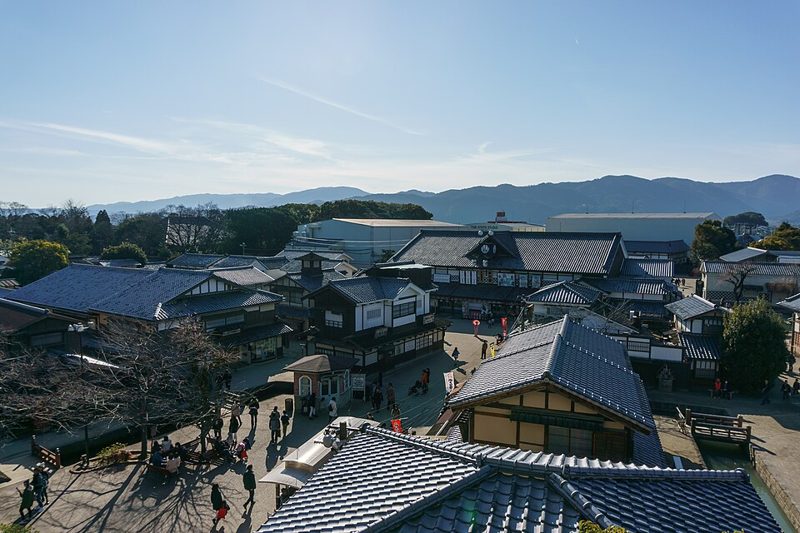
On November 1, 1975, Toei opened a theme park where visitors could experience the world of Japanese period-drama filmmaking. More than 70,000 people visited during its opening three days, following an experimental studio opening that had attracted approximately 20,000 people earlier that year. Now known as Uzumasa Kyoto Village, the attraction connects Kyoto's film-industry history with Edo-period sets, performances and interactive entertainment.
Kyochika's take
Kyochika recommends the park for travelers interested in Japanese period dramas, ninjas, filmmaking and interactive entertainment rather than exclusively visiting historical monuments.
Begin with the film-set streets and check the day's performance schedule before selecting additional attractions.
For an evening visit, verify which areas and activities remain open, because the published park closing time does not apply to every attraction.
Hours, admission and access
- Hours
- 10:00-21:00. Last admission at 20:00. Some areas close at 18:00. Admission through the studio entrance generally ends at 17:00, with exit through that entrance ending at 18:00; the official hours page lists an exception for weekends and public holidays in October and November. Individual attractions have separate schedules.
- Closed
- Tuesdays, except public holidays and Tuesdays in March, April and November. Consult the official operating calendar for specific dates.
- Admission
- Published rates until the second redevelopment-phase opening in spring 2027: 1-day admission, adults and junior-high-school students or older JPY 2,800; children aged 3 through elementary school JPY 1,600. Night admission, 17:00-21:00: adults JPY 2,000; children JPY 1,300. Under 3 free. Prices may vary by visit date. Attraction pass: JPY 1,500. Individual paid attractions and cultural experiences may require additional tickets.
- Access
- Main entrance: approximately 5 minutes on foot from Randen Uzumasa-Koryuji Station, 13 minutes from JR Hanazono Station, or 14 minutes from Uzumasa-Tenjingawa Subway Station. Studio entrance: approximately 2 minutes from Randen Satsueisho-mae Station or 5 minutes from JR Uzumasa Station.
- Nearest station
- Uzumasa-Koryuji Station (Randen)
Checked against official information on 2026-10-28. Details change, so check the official website before you go.
Sources: Uzumasa Kyoto Village - Official Website, Uzumasa Kyoto Village - Official History, Toei Kyoto Studio Park - 50 Years of History, Uzumasa Kyoto Village - Opening Hours and Admission, Uzumasa Kyoto Village - Official Access, Uzumasa Kyoto Village - Frequently Asked Questions, Uzumasa Kyoto Village - Rules and Manners
 Pochikichi's story corner
How did Kyoto's filmmaking district become a theme park?
Kyoto's film history began before the establishment of the Uzumasa studios. According to the park's official historical account, Katsutaro Inabata had studied in Paris and knew the Lumiere brothers. In 1897, he brought a cinematograph back to Japan and organized a screening in Kyoto's Kiyamachi area. The park identifies this episode as a foundational event in the history of Japanese cinema, while acknowledging that historical interpretations of the earliest screenings differ.
A major turning point came in 1926, when the young film star Tsumasaburo Bando established a studio in Uzumasa. The official history describes an area that had previously been covered with bamboo. The establishment of the studio encouraged the development of a filmmaking district, attracting actors and other production workers. At its peak, the district contained eight studios and acquired the nickname Japan's Hollywood.
Kyoto's filmmaking industry subsequently produced internationally recognized films. The official studio history identifies Akira Kurosawa's Rashomon, made at Daiei Kyoto Studio, and the 1963 Berlin International Film Festival success of Bushido as milestones in the international recognition of Kyoto's cinema. The region's filmmaking culture had become associated not only with domestic period dramas but also with important international achievements.
The later decline in theatrical film production challenged the viability of studios. Toei responded by exploring a new use for its outdoor filming facilities. On April 20, 1975, the studio held an experimental public opening that attracted approximately 20,000 visitors. The permanent Toei Uzumasa Eigamura opened on November 1, 1975 and welcomed more than 70,000 visitors during its first three days. It offered audiences a new way to encounter the world behind period-drama productions. So when you visit, look for the distinction between the constructed historical streets and the real filmmaking industry that inspired their creation.
Sources: Uzumasa Kyoto Village - Official History, Toei Kyoto Studio Park - 50 Years of History
Long ago, around hereWhat existed in Uzumasa before the film studios?
The park's official history does not identify the exact buildings or land use on the present site approximately 1,200 or 400 years ago. Its historically documented account concentrates on Kyoto's filmmaking development and the emergence of Uzumasa as a studio district. Visitors should therefore distinguish the reconstructed Edo-period townscape from original surviving buildings of that period.
The documented transformation of the district began in 1926, when Tsumasaburo Bando established a studio on land described by the official history as having been covered with bamboo. More studios followed, and Uzumasa became a significant concentration of Japanese film production. The present theme park represents a later adaptation of that industrial heritage.
Hidden highlights
- The Edo-period filming environment
- The park recreates the atmosphere of historical Japan as a setting for film-related entertainment. Consider how reconstructed streets help establish the visual world of a period drama.
- Karakuri Ninja House
- A separately ticketed interactive attraction listed on the official admission page. It is included in the attraction-pass program.
- NINJA BATTLE Uzumasa Oni Kessen
- This ninja-themed attraction is included among the official attraction-pass activities and is separately priced for visitors without the pass.
- Ninja Fortress Maze
- A three-dimensional ninja maze listed among the paid attractions. Check participation restrictions before entering.
- Kyoto Kitan Ichijo Modoribashi Haunted House
- The park's officially listed haunted-house attraction is also included in the attraction-pass program.
- Shinsengumi mystery experience
- A separately priced puzzle-solving activity based on the Shinsengumi and a mystery set in Kyoto. Its operating conditions differ from those of some other attractions.
Sources: Uzumasa Kyoto Village - Opening Hours and Admission
The experimental opening that changed the studio
On April 20, 1975, Toei Kyoto Studio opened to the public for an experimental event called One-Day Eigamura. The official anniversary history records approximately 20,000 visitors. The event tested public interest in experiencing the world of filmmaking from inside a studio environment.
The permanent park followed on November 1 of the same year. According to the official history, more than 70,000 visitors arrived during its first three days. The experiment had become a new form of entertainment centered on the production environment of Japanese historical cinema.
The filmmaker who helped establish Japan's Hollywood
Tsumasaburo Bando was a major figure in the early development of Uzumasa as a film production district. The park's official history identifies his 1926 studio as the catalyst for the emergence of other studios and filmmaking workers in the area.
The district eventually contained eight studios at its peak. This concentration of production facilities and talent earned Uzumasa the nickname Japan's Hollywood. The name reflects the scale and cultural importance of the district's filmmaking activity rather than any claim that the present theme park contains surviving Edo-period streets.
How to walk it
- Main entrance — Enter from the Uzumasa-Koryuji side and consult the official map and performance schedule. (10 minutes min)
- Historical townscape — Explore the Edo-period environment and consider how its streets and buildings function as cinematic settings. (35 minutes min)
- Scheduled performance — Choose an available show from the official daily schedule. (30 minutes min)
- Karakuri Ninja House — Try the separately priced interactive ninja attraction if its participation rules suit your group. (25 minutes min)
- Ninja Fortress Maze or NINJA BATTLE — Select another interactive attraction based on the current operating schedule. (25 minutes min)
- Shinsengumi mystery activity — Consider the separately ticketed puzzle-solving experience before leaving the park. (30 minutes min)
All activity durations are Kyochika estimates and not official operating times. This is a suggested thematic route rather than a verified shortest path. Consult the official map, attraction schedule and participation rules on arrival.
Sources: Uzumasa Kyoto Village - Official Website, Uzumasa Kyoto Village - Opening Hours and Admission
Through the seasons
- Spring
- Kyochika suggests combining the outdoor period-drama setting with scheduled performances and interactive attractions.
- Summer
- Plan around the separate schedules of outdoor areas, shows and paid attractions.
- Autumn
- Check the official event calendar for seasonal programs and consider the published evening admission option.
- Winter
- Review the current operating calendar and attraction availability before planning an extended visit.
Getting there by taxi or bus
- Taxi
- The official address is 10 Uzumasa Higashihachiokacho, Ukyo Ward, Kyoto. Specify the main entrance or studio entrance according to your intended arrival point. No official taxi fare was verified.
- Bus
- The official access page provides a bus-access section, but a specific route number and romanized stop name could not be reliably extracted from the opened page. Use the official access map before traveling.
- Other
- Main entrance: 5 minutes from Randen Uzumasa-Koryuji Station, 13 minutes from JR Hanazono Station, or 14 minutes from Uzumasa-Tenjingawa Subway Station. Studio entrance: 2 minutes from Randen Satsueisho-mae Station or 5 minutes from JR Uzumasa Station.
Sources: Uzumasa Kyoto Village - Official Access
Pair it with
- Uzumasa-Koryuji area — Explore the surroundings of the station used for access to the park's main entrance.
- Arashiyama — Continue a western Kyoto sightseeing itinerary after the studio park.
- Uzumasa-Tenjingawa area — Combine the visit with time in the surrounding district served by the subway.
Good to know before you go
- The official general operating hours are 10:00-21:00, with last admission at 20:00.
- Some areas close at 18:00.
- The park has a main entrance and a separate studio entrance with different access arrangements.
- The studio entrance generally stops admitting visitors at 17:00 and closes for exiting at 18:00, subject to specified exceptions.
- Re-entry after leaving the park is not permitted.
- Same-day admission tickets are available, but the park recommends advance purchasing for smoother entry.
- Some attractions require additional payment beyond the standard admission ticket.
- The attraction pass is priced at JPY 1,500 and applies to specified attractions; it does not cover every paid activity.
- Participation restrictions apply to some attractions, including restrictions related to age, physical condition and accompanying adults.
- Shows can be changed or cancelled because of weather, filming circumstances or performer availability.
- Food brought from outside is generally restricted, with specified exceptions. Nonalcoholic drinks may be brought inside.
- Pets are not admitted except for permitted assistance dogs.
- The official FAQ states that only elementary-school-age children and younger may enter wearing their own cosplay costumes.
- Wheelchair rental, accessible toilets and nursing facilities are listed among the park's visitor services.
- The park provides an English-language official website, but English interpretation for every individual show or activity was not verified.
Next stop: book for later today PR
Tickets and experiences in Kyoto you can book on Klook. Filter by “Today” to see what is still open.
Kimono rental in Kyoto→Tea ceremony experiences in Kyoto→Kyoto one-day sightseeing tours→All things to do in Kyoto on Klook →Compare on GetYourGuide: Kimono rental in Kyoto · Tea ceremony experiences in Kyoto · Kyoto one-day sightseeing tours
Ad: Klook and GetYourGuide affiliate links.
🍜 Where to eat after
Restaurants near here on Google Maps→Many restaurants in Kyoto take reservations, and some are cash only. Check the restaurant page before you go.
Events nearby
Festival & seasonal event
Kaikai YOKAI Festival 2026 at Toei Kyoto Studio Park
Toei Kyoto Studio Park (Uzumasa Eigamura) (Uzumasa-Koryuji Sta.)
Sep 12 (Sat) – Nov 29 (Sun) 10:00 – 21:00
The third autumn yokai festival, with the 2026 theme of dancing spooks. On weekends and holidays at 19:30 the Uzumasa Hyakki Yako parade winds through the renewed Edo-period streets, and at the finale visitors dance along. Choreography is by TERUPOP. The attraction plaza and floors 2-3 of Padios close at 18:00 (most areas stay open to 21:00 on weekends and holidays); rides cost extra.
Details →Festival & seasonal event
Daioin (Myoshinji) Autumn Special Viewing 2026 with Tatsuya Kinoshita Tanka Exhibition
Daioin, a sub-temple of Myoshinji (Hanazono Sta.)
Nov 7 (Sat) – Nov 29 (Sun) 10:00 – 16:00 (details on the official site)
An autumn special viewing at Daioin, inside the Myoshinji temple complex. See the sliding-door paintings by Shibata Zeshin in the main hall, the 'Senbon no Hana no Maru' sliding doors and the garden, alongside an exhibition of tanka poems by poet Tatsuya Kinoshita. General admission needs no reservation; the exhibition events (Nov 7, 8, 9, 27, 29), a Chinese tea gathering (Nov 27-28), a baobab concert (Nov 28, 18:30) and brush-written temple seals require booking. Closes at 14:00 on Nov 8.
Details →Festival & seasonal event
Tourin-in Temple Bonto Candlelight Evenings
Tourin-in Temple (Myoshinji sub-temple) (Hanazono Sta.)
Oct 30 (Fri) – Nov 8 (Sun) 18:00 – 20:30
A special night opening at Tourin-in inside the Myoshinji temple complex. About 800 candles set on the head priest's handmade lantern tiles and on old roof tiles light up the white-sand and moss garden. Last entry is 20:00. Cancelled in rain.
Details →
Tips from visitors
Been here? Leave a short tip for the next traveler — in any language. No name, no sign-up.
Thank you! We check every tip by hand and post it within a day or two.
How we post tips: we read every one before it goes up. We remove swear words, insults, ads, links and anything that could identify a person. Tips are shown in the language they were written in, with a translate link. Kyochika never writes or pays for tips, and there are no star ratings.
FAQ
- What is Uzumasa Kyoto Village (Toei Kyoto Studio Park)?
- On November 1, 1975, Toei opened a theme park where visitors could experience the world of Japanese period-drama filmmaking. More than 70,000 people visited during its opening three days, following an experimental studio opening that had attracted approximately 20,000 people earlier that year. Now known as Uzumasa Kyoto Village, the attraction connects Kyoto's film-industry history with Edo-period sets, performances and interactive entertainment.
- Hours at Uzumasa Kyoto Village (Toei Kyoto Studio Park)?
- 10:00-21:00. Last admission at 20:00. Some areas close at 18:00. Admission through the studio entrance generally ends at 17:00, with exit through that entrance ending at 18:00; the official hours page lists an exception for weekends and public holidays in October and November. Individual attractions have separate schedules.
- Closed at Uzumasa Kyoto Village (Toei Kyoto Studio Park)?
- Tuesdays, except public holidays and Tuesdays in March, April and November. Consult the official operating calendar for specific dates.
- Admission at Uzumasa Kyoto Village (Toei Kyoto Studio Park)?
- Published rates until the second redevelopment-phase opening in spring 2027: 1-day admission, adults and junior-high-school students or older JPY 2,800; children aged 3 through elementary school JPY 1,600. Night admission, 17:00-21:00: adults JPY 2,000; children JPY 1,300. Under 3 free. Prices may vary by visit date. Attraction pass: JPY 1,500. Individual paid attractions and cultural experiences may require additional tickets.
- Access at Uzumasa Kyoto Village (Toei Kyoto Studio Park)?
- Main entrance: approximately 5 minutes on foot from Randen Uzumasa-Koryuji Station, 13 minutes from JR Hanazono Station, or 14 minutes from Uzumasa-Tenjingawa Subway Station. Studio entrance: approximately 2 minutes from Randen Satsueisho-mae Station or 5 minutes from JR Uzumasa Station.
- What time does Uzumasa Kyoto Village open and close?
- The general published hours are 10:00-21:00, with last admission at 20:00. Some areas and attractions close earlier.
- How much is admission?
- Published standard admission is JPY 2,800 for adults and junior-high-school students or older, and JPY 1,600 for children aged 3 through elementary school. Night admission is available at separate prices. Rates may vary by visit date.
- Are all attractions included in admission?
- No. Some attractions require separate payment. The official attraction pass costs JPY 1,500 and covers specified activities.
- Can I leave the park and come back later?
- No. The official FAQ states that re-entry is not permitted.