Shrines in Kyoto · Uji City, Southern Kyoto Prefecture
Ujigami Shrine
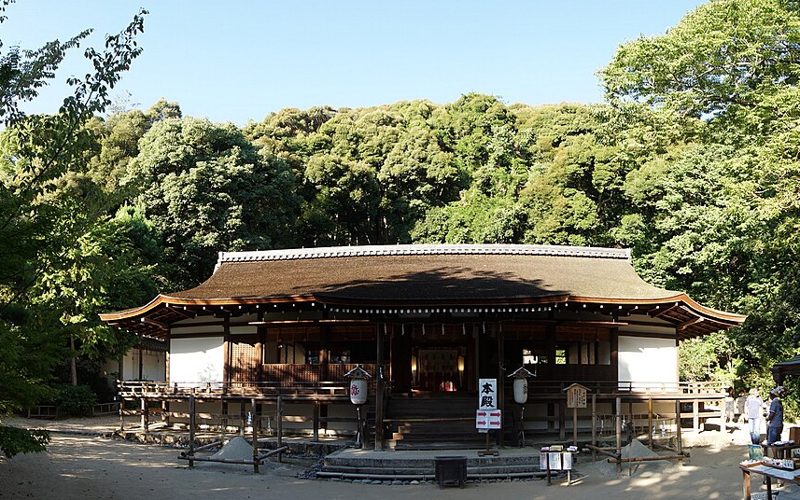
Scientific analysis of Ujigami Shrine's timber dates its oldest surviving structures to around 1060, making it home to Japan's oldest surviving original Shinto shrine architecture. The shrine's two National Treasures reveal different architectural traditions: a late Heian-period main sanctuary housing three inner shrines and an early Kamakura-period worship hall whose roof reflects aristocratic residential design.
Kyochika's take
Kyochika recommends Ujigami Shrine to travelers particularly interested in early Japanese architecture and the religious history of Uji. Rather than expecting a large temple complex, approach the visit as an opportunity to examine exceptionally old surviving buildings and the relationship between their different roof forms.
Plan to arrive before the official gate closes at 4:00 PM. If you want a goshuin or an amulet, visit while the counter is operating, and consider continuing on foot to neighboring Uji Shrine or the nearby Tale of Genji Museum.
Hours, admission and access
- Hours
- Gate opens at 5:00 AM and closes at 4:00 PM. Amulet and goshuin counter: 9:00 AM–3:50 PM, with final reception at 3:50 PM. Prayers by advance reservation: 9:30 AM–3:30 PM, with reception at 30-minute intervals. These are the hours published on the shrine's current official website.
- Closed
- No regular weekly closing day is specified on the official visitor-information page. Check the shrine's announcements for temporary changes.
- Admission
- Free, as confirmed by the shrine's current official website.
- Access
- Approximately 10 minutes on foot from Keihan Uji Station or 20 minutes from JR Uji Station, according to the shrine's official access guide.
- Nearest station
- Uji Station (Keihan Uji Line)
Checked against official information on 2026-10-28. Details change, so check the official website before you go.
Sources: Ujigami Shrine Official Website, Ujigami Shrine Official History, Ujigami Shrine Official Visitor Information, Ujigami Shrine Official Visitor Rules, Ujigami Shrine Official Access, Kyoto Prefectural Government Ujigami Shrine, Kyoto Prefecture Tourism Federation, JNTO Official Uji Guide, Uji Shrine Official Access
 Pochikichi's story corner
Why does Ujigami preserve Japan's oldest surviving shrine architecture?
Ujigami Shrine stands in a district deeply connected with the historical and legendary origins of Uji. Its official history identifies three enshrined figures: Uji no Wakiiratsuko, Emperor Ojin and Emperor Nintoku. According to shrine tradition, Uji no Wakiiratsuko was a learned son of Emperor Ojin who became involved in a dispute over imperial succession after his father's death. The younger prince wished to yield the throne to his older brother, but the older brother insisted that their father's choice should be respected. The story became central to the shrine's foundation tradition, although the exact date and circumstances of the original establishment are not documented in the sources reviewed.
The surviving architecture offers firmer historical evidence. Kyoto Prefecture identifies Ujigami's main sanctuary as the oldest surviving Shinto shrine building in Japan and dates it to the late Heian period. JNTO reports that scientific analysis of the wooden structures indicates that the oldest material dates to approximately 1060. The main sanctuary has an unusual arrangement: three separate inner sanctuaries stand side by side beneath a shared protective roof. The Kyoto Prefecture Tourism Federation notes that the left and right sanctuaries are larger, while the central sanctuary is smaller. This distinctive composition gives the building architectural importance beyond its age alone.
The worship hall belongs to the early Kamakura period. Kyoto Prefecture explains that it preserves features associated with shinden-zukuri, a style of aristocratic residential architecture. Its roof includes the distinctive sugaru-hafu form, which creates an important visual contrast with the main sanctuary. Both buildings are designated National Treasures. The sanctuary also contains other significant historic elements, including a subsidiary Kasuga Shrine dating to the Kamakura period and Kirihara-mizu, traditionally counted among Uji's seven famous waters.
The shrine's institutional history is closely tied to neighboring Uji Shrine. According to Kyoto Prefecture, the two were formerly part of a single religious institution known as Rikyu Kamisha until the Meiji period. The Kyoto Prefecture Tourism Federation also records the traditional association of the shrine complex with Byodoin Temple. Ujigami is included in the World Heritage listing of the Historic Monuments of Ancient Kyoto, and its value lies especially in the survival of structures representing different periods of Japanese architecture. So when you visit, look for the three inner sanctuaries beneath the protective roof, the distinctive lines of the worship hall and the architectural differences between these remarkable National Treasures.
Sources: Ujigami Shrine Official History, Kyoto Prefectural Government Ujigami Shrine, Kyoto Prefecture Tourism Federation, JNTO Official Uji Guide
Long ago, around hereWhat did this part of Uji look like before modern tourism?
Around 1,200 years ago, Uji was already part of the cultural geography associated with the imperial court. The shrine's foundation tradition links the district with a residence established by Uji no Wakiiratsuko, but this narrative should be distinguished from independently dated building evidence. In the following centuries, Uji became an important setting for aristocratic religious culture. The existing Ujigami sanctuary dates to the late Heian period, with JNTO identifying timber evidence from around 1060. Nearby Byodoin Temple was founded in 1052. These surviving monuments demonstrate how different religious traditions developed within the same historical district.
Around 400 years ago, the shrine was part of an established religious landscape connected with neighboring Uji Shrine. Kyoto Prefecture records that the two remained institutionally united until the Meiji period, when the older arrangement was separated. Around 150 years ago, this process was reshaping the administration of shrines throughout Japan. Today, visitors can still explore the neighboring sanctuaries as distinct sites while appreciating their historical relationship. The compact scale of Ujigami makes it possible to study the physical survival of early Japanese architecture directly, rather than through later reconstructions.
Sources: Ujigami Shrine Official History, Kyoto Prefectural Government Ujigami Shrine, JNTO Official Uji Guide
Hidden highlights
- Three Inner Sanctuaries
- The main sanctuary contains three separate shrines beneath a common protective roof. The two outer structures are larger than the central one, a distinctive architectural arrangement identified by Kyoto Prefecture.
- The Sugaru-hafu Roof
- The early Kamakura-period worship hall preserves a roof design connected with aristocratic residential architecture. Look carefully at its unusual form and how it differs from the main sanctuary.
- Kirihara-mizu Spring
- This spring is traditionally counted among the seven famous waters of Uji. Kyoto Prefecture identifies it as one of the historic features preserved within the shrine precinct.
- Kasuga Shrine
- The subsidiary Kasuga Shrine is identified by Kyoto Prefecture as a Kamakura-period building. It adds another architectural layer to the sanctuary.
- The Two National Treasures
- The main sanctuary and worship hall belong to different historical periods. Studying them together offers an unusually direct comparison of late Heian and early Kamakura religious architecture.
- Rabbit-themed Sacred Items
- The shrine's official website includes a section dedicated to rabbit-themed religious items. These can be explored at the shrine counter during its published opening hours.
Sources: Kyoto Prefectural Government Ujigami Shrine, Kyoto Prefecture Tourism Federation, Ujigami Shrine Official Website
The imperial prince who refused to become emperor
The shrine's official origin story concerns Uji no Wakiiratsuko, the youngest son of Emperor Ojin. According to the tradition, Ojin favored the prince as his successor because of his intelligence and learning. After the emperor's death, however, the younger prince wished to relinquish the throne in favor of his older brother, the future Emperor Nintoku. The older brother refused, arguing that their father's decision should be respected. The shrine recounts that the disagreement continued for three years.
The story ends tragically. Uji no Wakiiratsuko, distressed by the disorder resulting from the unresolved succession, took his own life. According to shrine tradition, his brother traveled from Naniwa to Uji and arranged a respectful burial. The shrine presents this narrative as the origin of its religious association with the prince. Visitors should understand it as a traditional account rather than an independently established sequence of historical events.
Sources: Ujigami Shrine Official History
What makes the main sanctuary older than its appearance suggests?
Ujigami's architectural importance is not based solely on an attribution to an ancient era. JNTO states that scientific analysis of its timber places the oldest surviving structures around 1060. Kyoto Prefecture independently identifies the main sanctuary as the oldest surviving Shinto shrine building and explains its unusual arrangement of three inner sanctuaries beneath one protective roof.
The difference between the main sanctuary and the worship hall is another essential detail. The hall in front belongs to the early Kamakura period and preserves elements associated with aristocratic domestic architecture. The combination allows visitors to examine how different architectural approaches coexist within one religious site. It is this survival of original building forms that gives Ujigami its exceptional historical significance.
Sources: JNTO Official Uji Guide, Kyoto Prefectural Government Ujigami Shrine
How to walk it
- Entrance and shrine approach — Begin by observing the arrangement of the precinct and the relationship between the entrance and its principal buildings. (5 min)
- National Treasure Worship Hall — Study the early Kamakura-period structure, especially the roof form associated with aristocratic residential architecture. (10 min)
- National Treasure Main Sanctuary — Examine the exterior and identify the protective structure containing three separate inner sanctuaries. (10 min)
- Kasuga Shrine — Find the subsidiary shrine identified by Kyoto Prefecture as a Kamakura-period structure. (5 min)
- Kirihara-mizu Spring — Visit the spring associated with Uji's traditional famous waters. (5 min)
- Shrine counter — If the counter is operating, explore the available amulets, rabbit-themed items or goshuin. (10 min)
Approximately 45 minutes in total. All stop durations are Kyochika estimates, not officially published visiting times. Remain in publicly accessible areas and follow posted restrictions. The official gate closes at 4:00 PM, and the shrine counter closes at 3:50 PM.
Sources: Ujigami Shrine Official Visitor Information, Kyoto Prefectural Government Ujigami Shrine
Through the seasons
- Spring
- Kyochika suggests combining the shrine's architecture with a walk through the surrounding Uji district.
- Summer
- Focus on Kirihara-mizu spring and the relationship between the buildings and their surroundings.
- Autumn
- Compare the historic wooden architecture with the surrounding seasonal vegetation.
- Winter
- Study the rooflines and the architectural differences between the main sanctuary and worship hall.
- Year-round
- The shrine's principal attraction is the survival of its historic National Treasure buildings, which can be appreciated independently of seasonal displays.
Getting there by taxi or bus
- Taxi
- Ask for Ujigami Shrine at 59 Uji Yamada, Uji City, Kyoto Prefecture. The official website confirms the address and provides driving instructions for reaching the designated parking area.
- Bus
- Keihan Bus services serving Keihan Uji (京阪宇治) can be considered for the neighboring Uji Shrine area. Uji Shrine's official website gives an approximately 8-minute walk from that stop. A specific bus route number serving Ujigami Shrine was not confirmed.
- Other
- Walk approximately 10 minutes from Keihan Uji Station or 20 minutes from JR Uji Station. The shrine's official access page also gives an approximate 30-minute rapid-train journey from Kyoto Station to JR Uji Station, followed by the walk.
Sources: Ujigami Shrine Official Access, Uji Shrine Official Access
Pair it with
- Uji Shrine — Visit the neighboring shrine that was historically part of the same religious institution as Ujigami. Kyoto Prefecture documents their earlier relationship, and the tourism federation identifies the sites as neighboring attractions. Walking time is a Kyochika estimate. (5 min walk)
- Byodoin Temple — Compare Ujigami's historic Shinto architecture with the Buddhist architecture and art of Byodoin, founded in 1052. Walking time is a Kyochika estimate. (20 min walk)
- The Tale of Genji Museum — Explore Uji's literary connections after visiting the shrine. Kyoto Prefecture Tourism Federation identifies the museum as a nearby attraction. Walking time is a Kyochika estimate. (10 min walk)
Good to know before you go
- Admission is free according to the shrine's official website.
- The gate opens at 5:00 AM and closes at 4:00 PM.
- The amulet and goshuin counter operates from 9:00 AM to 3:50 PM, with final reception at 3:50 PM.
- Formal prayers require advance reservations and are received at 30-minute intervals between 9:30 AM and 3:30 PM.
- Amulets, omikuji and goshuin are not distributed before the counter opens at 9:00 AM.
- The starting time for handwritten goshuin varies by day and is not guaranteed in advance.
- Groups requesting handwritten goshuin must contact the shrine ahead of time. Prepared paper goshuin may be supplied if handwritten preparation is unavailable.
- The shrine accepts cash only for religious offerings and purchases. Credit cards and QR-code payments are not accepted.
- The shrine does not provide public visitor toilets within the precinct. Its official website directs visitors to facilities along the Uji River or at The Tale of Genji Museum.
- The shrine does not have vending machines or rubbish disposal facilities. Bring any necessary drinks and carry away your rubbish.
- The official website confirms free parking for visitors using the shrine itself. A ¥3,000 charge applies if a visitor uses the parking area while going elsewhere.
- Vehicle pick-ups and drop-offs must take place within the designated parking area, not in front of the service gate.
- Kyoto Prefecture Tourism Federation describes wheelchair access as possible with assistance. Confirm individual access needs with shrine staff.
- Photography rules and the availability of English-language interpretation inside the shrine were not confirmed from the opened sources.
Next stop: book for later today PR
Tickets and experiences in Kyoto you can book on Klook. Filter by “Today” to see what is still open.
Kimono rental in Kyoto→Tea ceremony experiences in Kyoto→Kyoto one-day sightseeing tours→All things to do in Kyoto on Klook →Compare on GetYourGuide: Kimono rental in Kyoto · Tea ceremony experiences in Kyoto · Kyoto one-day sightseeing tours
Ad: Klook and GetYourGuide affiliate links.
🍜 Where to eat after
Restaurants near here on Google Maps→Many restaurants in Kyoto take reservations, and some are cash only. Check the restaurant page before you go.
Tips from visitors
Been here? Leave a short tip for the next traveler — in any language. No name, no sign-up.
Thank you! We check every tip by hand and post it within a day or two.
How we post tips: we read every one before it goes up. We remove swear words, insults, ads, links and anything that could identify a person. Tips are shown in the language they were written in, with a translate link. Kyochika never writes or pays for tips, and there are no star ratings.
FAQ
- What is Ujigami Shrine?
- Scientific analysis of Ujigami Shrine's timber dates its oldest surviving structures to around 1060, making it home to Japan's oldest surviving original Shinto shrine architecture. The shrine's two National Treasures reveal different architectural traditions: a late Heian-period main sanctuary housing three inner shrines and an early Kamakura-period worship hall whose roof reflects aristocratic residential design.
- Hours at Ujigami Shrine?
- Gate opens at 5:00 AM and closes at 4:00 PM. Amulet and goshuin counter: 9:00 AM–3:50 PM, with final reception at 3:50 PM. Prayers by advance reservation: 9:30 AM–3:30 PM, with reception at 30-minute intervals. These are the hours published on the shrine's current official website.
- Closed at Ujigami Shrine?
- No regular weekly closing day is specified on the official visitor-information page. Check the shrine's announcements for temporary changes.
- Admission at Ujigami Shrine?
- Free, as confirmed by the shrine's current official website.
- Access at Ujigami Shrine?
- Approximately 10 minutes on foot from Keihan Uji Station or 20 minutes from JR Uji Station, according to the shrine's official access guide.
- Is Ujigami Shrine the oldest shrine in Japan?
- It is recognized for having Japan's oldest surviving original Shinto shrine architecture. This distinction concerns the age of the surviving buildings, not a verified claim that Ujigami was the first shrine ever founded.
- How old are the main shrine buildings?
- Kyoto Prefecture dates the main sanctuary to the late Heian period and the worship hall to the early Kamakura period. JNTO reports that timber analysis places the oldest surviving structures around 1060.
- Is there an admission fee?
- No. The shrine's current official website confirms that admission is free.
- What are the current visiting hours?
- The shrine's current official website states that the gate opens at 5:00 AM and closes at 4:00 PM. Its goshuin and amulet counter operates from 9:00 AM to 3:50 PM.