Gardens & villas in Kyoto · Shimogyo Ward, Kyoto Station Area
Shosei-en Garden (Kikoku-tei)
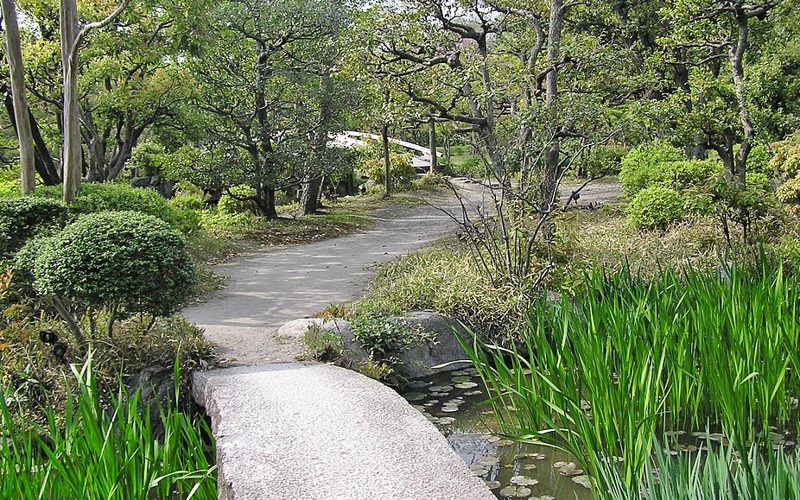
In 1641, Tokugawa Iemitsu, the third Tokugawa shogun, donated land to Sennyo, the thirteenth head priest of Higashi Honganji. Development of Shosei-en as Sennyo's retirement residence began in 1653. Today, this approximately 35,000-square-meter garden is celebrated for its Thirteen Views and its designation as a National Place of Scenic Beauty in 1936.
Kyochika's take
Kyochika recommends Shosei-en for travelers interested in the relationship between Buddhist architecture, classical literature and Japanese garden design. A morning visit is our suggestion for anyone planning to combine the garden with Higashi Honganji and the Kyoto Station area.
Rather than moving quickly between photo spots, use the garden's named features as a way to understand its history. In spring, pay particular attention to the cherry trees around Boka-kaku; in autumn, compare the seasonal colors with the architecture and the water of Ingetsu-chi.
Hours, admission and access
- Hours
- March–October: 9:00 AM–5:00 PM (last reception 4:30 PM). November–February: 9:00 AM–4:00 PM (last reception 3:30 PM).
- Closed
- Open year-round.
- Admission
- Garden maintenance contribution: adults 700 yen or more; junior and senior high school students 300 yen or more; elementary school students and younger free.
- Access
- 10 minutes on foot from JR Kyoto Station; 7 minutes from Gojo Subway Station; 5 minutes from Karasuma Shichijo bus stop. Reception is immediately inside the West Gate.
- Nearest station
- Kyoto Station
Checked against official information on 2026-10-28. Details change, so check the official website before you go.
Sources: Higashi Honganji — Visitor Guide, Higashi Honganji — Garden History, Higashi Honganji — Buildings and Scenery, Higashi Honganji — Plants, Higashi Honganji — Official English Garden Guide
 Pochikichi's story corner
Why did a Tokugawa shogun give land for a Buddhist garden?
Shosei-en is a separate garden precinct belonging to Higashi Honganji, a major center of Shin Buddhist religious life in Kyoto. Its official English history begins in 1641, when Tokugawa Iemitsu, the third shogun, donated land to Sennyo, the thirteenth head priest of Higashi Honganji. The Japanese historical account explains that development of the garden as a retirement residence began in 1653, when Sennyo withdrew from his position. These dates describe different stages of the estate's formation. The property was not originally established as a public sightseeing garden, but as a residence associated with the temple's religious leadership.
Successive generations continued developing Shosei-en. From the time of Takunyo, the fourteenth head priest, the garden became associated with poetry, tea gatherings, Noh and Kyogen performances. It also functioned as a place for welcoming distinguished guests of Higashi Honganji. These activities help explain why the grounds contain reception buildings, teahouses and Buddhist architecture in addition to ponds and planted scenery. The garden was a setting in which religious leadership, artistic enjoyment and hospitality could exist together.
The name Shosei-en comes from a passage in Return Home by the Chinese poet Tao Yuanming. According to the official history, Sennyo selected the name from words describing the pleasure of regularly walking through a garden. Another traditional name, Kikoku-tei, refers to the trifoliate-orange hedges planted around the estate. Its strolling-pond design is traditionally attributed to Ishikawa Jozan, who established Shisen-do in northern Kyoto. The attribution is presented by Higashi Honganji as a tradition rather than a definitively documented architectural commission. One particularly significant feature is the central alignment of Onrin-do, which houses an image of Amida Buddha, and Boka-kaku. The temple interprets this arrangement as an expression of Shin Buddhist teaching within the garden.
The garden's buildings have experienced destruction and reconstruction, and the property has continued to change across generations. Despite those changes, its combination of religious architecture and literary garden culture was formally recognized in 1936, when it was designated a National Place of Scenic Beauty. Today, the grounds are open to the public and are also used for tea gatherings, exhibitions, art fairs and filming. So when you visit, look for how the Buddhist hall, the reception buildings and the ponds form parts of one cultural landscape rather than unrelated attractions.
Sources: Higashi Honganji — Official History and Characteristics, Higashi Honganji — Official English Shosei-en Guide
Long ago, around hereWas this really the site of an ancient aristocrat's residence?
A long-established tradition associates the present garden with Rokujo Kawara-in, a residence built by Minamoto no Toru, an aristocrat active in the late ninth century. Shosei-en preserves features inspired by this connection, including a Shiogama water basin and a memorial associated with Toru. However, Higashi Honganji's official historical account explains that later research places Kawara-in north of today's Shomen Street and east of today's Yanaginobanba Street. The traditional identification of Shosei-en as the actual site of the ancient residence is therefore disputed. The legend remains an important part of the garden's cultural identity, but it should not be treated as verified archaeology.
The documented history of the present garden becomes much clearer in the seventeenth century. The shogunal land donation and Sennyo's retirement established the property as a separate residence of Higashi Honganji. Its later use for religious hospitality, poetry, tea and theatrical performances gave it a role distinct from the temple's main ceremonial precincts. For the period approximately 150 years ago, the official sources establish the continuing importance of the garden and its buildings, but they do not provide a complete inventory of everything occupying the grounds at that exact date.
Sources: Higashi Honganji — History and Traditions, Higashi Honganji — Official English Garden Guide
Hidden highlights
- Ingetsu-chi — Moon Image Pond
- This approximately 5,620-square-meter pond occupies much of the garden's southeastern quarter. Its name refers to the moon reflected on the water as it rises in the eastern sky.
- Rofu-tei Reception Hall
- The main room was designed so that removing its tatami mats would allow the space to function as a Noh stage. Although ordinary visitors cannot enter, the building's exterior reveals its importance to the estate.
- Boka-kaku
- This gate-like architectural feature stands on the garden's religious central axis in front of Onrin-do. Its relationship with the Buddhist hall is an important clue to the garden's underlying design.
- Shiogama Water Basin
- The basin is associated with the tradition connecting the garden with Minamoto no Toru and his ancient residence. It is a reminder that stories preserved in a landscape may remain meaningful even when their historical geography is disputed.
- Trifoliate-orange Hedges
- These plants explain the alternative name Kikoku-tei. Their presence connects the garden's present identity with an older form of enclosure.
- Shuzenji Kanzakura Cherry Trees
- The official flowering guide identifies early-blooming Shuzenji Kanzakura beside Boka-kaku, with a typical flowering period from late February to mid-March.
Sources: Higashi Honganji — Buildings and Scenery, Higashi Honganji — English Architectural Highlights, Higashi Honganji — Seasonal Plants, Higashi Honganji — Historical Traditions
Why could a Buddhist reception hall become a Noh stage?
Rofu-tei demonstrates that Shosei-en was designed for social and cultural activities as well as religious contemplation. Higashi Honganji's official English explanation describes a main reception room that could be converted into a Noh stage by removing its tatami mats. This unusual arrangement connects the architecture directly with the garden's documented history of Noh and Kyogen performances.
When looking at the hall from outside, consider the different roles that a single building could play: a place to welcome honored visitors, a room for conversation and a setting for performance. Its relationship with the nearby pond further emphasizes how architecture and landscape were designed to be appreciated together.
Sources: Higashi Honganji — Official English Shosei-en Guide
The aristocratic legend that shaped a Buddhist garden
The story of Minamoto no Toru and Rokujo Kawara-in belongs to a much earlier period than the foundation of Shosei-en. Nevertheless, the garden's designers incorporated features recalling that association. The Shiogama water basin and a memorial connected with Toru preserve the story within the estate.
The official history also explains why this tradition requires caution: subsequent historical research has placed the old residence elsewhere. For a visitor, the result is a compelling example of how a garden can preserve literary and cultural memories without necessarily occupying the exact site on which those memories originated.
Sources: Higashi Honganji — Official History
How to walk it
- West Gate — Enter through the official reception gate, make the garden maintenance contribution and orient yourself before beginning the walk. (5 min)
- High Stone Wall — Examine the entrance landscape and look for the plantings associated with the estate's traditional name. (7 min)
- Rofu-tei — View the reception hall from the permitted outdoor paths and consider its former use for entertaining guests and staging Noh. (8 min)
- Ingetsu-chi — Explore the pond landscape and compare the changing relationship between water, buildings and planted scenery. (12 min)
- Garden Bridges — Follow the designated paths around the pond and study how bridges connect different parts of the landscape. (8 min)
- Boka-kaku and Onrin-do — Look at the alignment of these structures and consider its connection with the temple's religious teachings. (10 min)
- Return to the West Gate — Use the remaining time to revisit a preferred view or examine seasonal plants before leaving. (10 min)
Approximately 60 minutes in total. Every stop duration is a Kyochika estimate, not an official walking time. The sequence is a suggested thematic walk rather than a verified official one-way route. Follow on-site directions and any restricted areas.
Sources: Higashi Honganji — Garden Highlights, Higashi Honganji — Visitor Guide
Through the seasons
- Late February–mid-March
- Shuzenji Kanzakura cherry blossoms appear beside Boka-kaku according to the official flowering calendar.
- Late March–early April
- Somei Yoshino, mountain cherry and weeping cherry trees flower around Boka-kaku and other garden areas.
- Spring
- The official plant calendar identifies several cherry varieties, with nearly 50 cherry trees across the grounds.
- Summer
- Explore the relationship between the pond landscape and its surrounding seasonal vegetation. Check the official plant guide for current highlights.
- Autumn
- Use the garden's official seasonal plant guide to identify changing foliage and compare the colors with the architecture around the ponds.
- Winter
- Focus on the outlines of the buildings, garden walls and pond scenery. Note that the garden closes earlier between November and February.
Getting there by taxi or bus
- Taxi
- Ask for Shosei-en Garden, Higashi Honganji, West Gate. The official garden entrance is on the western side of the property.
- Bus
- Kyoto City Bus to Karasuma Shichijo (烏丸七条), followed by approximately 5 minutes on foot. The garden's official access page does not specify a route number.
- Other
- JR Kyoto Station: approximately 10 minutes on foot. Gojo Station on the Karasuma Subway Line: approximately 7 minutes on foot.
Sources: Higashi Honganji — Official Access
Pair it with
- Higashi Honganji — Visit the main religious precincts of the institution to which the garden belongs.
- Kyoto Station — Combine a garden visit with arrival or departure from Kyoto; the official garden guide gives a 10-minute walk from the station. (10 min walk)
- Higashi Honganji Main Temple Precinct — Compare the religious role of the main temple with the garden's historical use as a retreat and reception estate.
Good to know before you go
- The regular visit covers the outdoor garden only; building interiors are generally not open.
- The maintenance contribution is expressed as a minimum requested donation rather than a fixed-price ticket.
- The official English guide is available online.
- Personal photography and video, including social media posting, are permitted.
- Tripods and selfie sticks are prohibited.
- Do not remain in one photography position for a prolonged period if it obstructs other visitors.
- Drone photography without authorization is prohibited.
- Commercial photography and wedding photography require advance application and payment.
- Smoking is prohibited.
- Eating and drinking are prohibited except for hydration.
- Use the West Gate for reception and entry.
- The official visitor page identifies paid parking opposite the West Gate, with a 40-minute free-parking benefit for garden visitors after reporting the parking use at reception.
- The official website does not confirm which electronic payment methods can be used for the garden maintenance contribution.
Next stop: book for later today PR
Tickets and experiences in Kyoto you can book on Klook. Filter by “Today” to see what is still open.
Kimono rental in Kyoto→Tea ceremony experiences in Kyoto→Kyoto one-day sightseeing tours→All things to do in Kyoto on Klook →Compare on GetYourGuide: Kimono rental in Kyoto · Tea ceremony experiences in Kyoto · Kyoto one-day sightseeing tours
Ad: Klook and GetYourGuide affiliate links.
Tips from visitors
Been here? Leave a short tip for the next traveler — in any language. No name, no sign-up.
Thank you! We check every tip by hand and post it within a day or two.
How we post tips: we read every one before it goes up. We remove swear words, insults, ads, links and anything that could identify a person. Tips are shown in the language they were written in, with a translate link. Kyochika never writes or pays for tips, and there are no star ratings.
FAQ
- What is Shosei-en Garden (Kikoku-tei)?
- In 1641, Tokugawa Iemitsu, the third Tokugawa shogun, donated land to Sennyo, the thirteenth head priest of Higashi Honganji. Development of Shosei-en as Sennyo's retirement residence began in 1653. Today, this approximately 35,000-square-meter garden is celebrated for its Thirteen Views and its designation as a National Place of Scenic Beauty in 1936.
- Hours at Shosei-en Garden (Kikoku-tei)?
- March–October: 9:00 AM–5:00 PM (last reception 4:30 PM). November–February: 9:00 AM–4:00 PM (last reception 3:30 PM).
- Closed at Shosei-en Garden (Kikoku-tei)?
- Open year-round.
- Admission at Shosei-en Garden (Kikoku-tei)?
- Garden maintenance contribution: adults 700 yen or more; junior and senior high school students 300 yen or more; elementary school students and younger free.
- Access at Shosei-en Garden (Kikoku-tei)?
- 10 minutes on foot from JR Kyoto Station; 7 minutes from Gojo Subway Station; 5 minutes from Karasuma Shichijo bus stop. Reception is immediately inside the West Gate.
- Is Shosei-en part of Higashi Honganji?
- Yes. It is a separate garden precinct belonging to the temple and historically served as a residence and hospitality estate for its head priests.
- Can visitors enter the historic buildings?
- Normally no. Standard admission permits visits to the outdoor garden rather than the interiors of its reception halls and teahouses.
- Is the connection to Minamoto no Toru historically certain?
- No. The connection is a longstanding tradition, but the official history acknowledges research placing the ancient Kawara-in residence elsewhere.
- Can visitors take photographs?
- Personal photography is permitted, but tripods, selfie sticks, unauthorized drones and obstructive prolonged photography are prohibited.