Shrines in Kyoto · Shimogamo, Sakyo Ward, Kyoto
Shimogamo Shrine (Kamomioya-jinja)
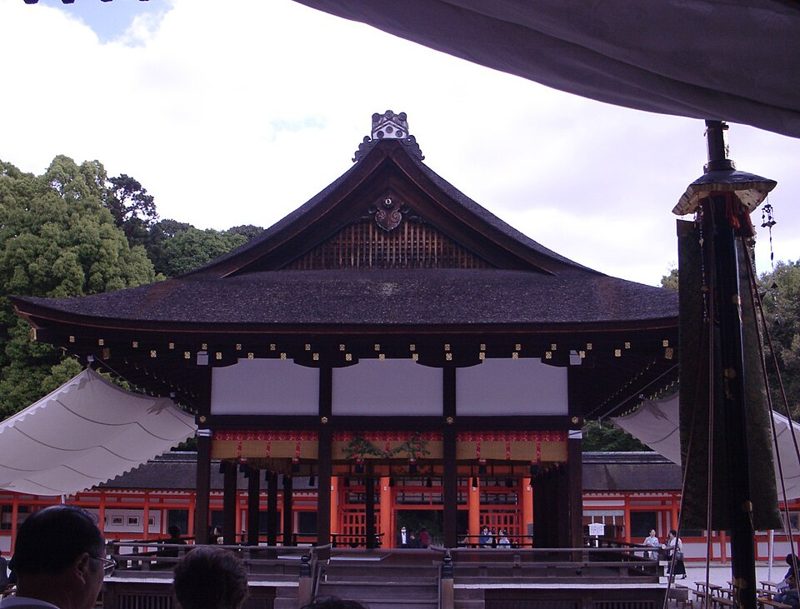
Shimogamo Shrine stands beside the meeting of the Kamo and Takano rivers, within a sacred woodland called Tadasu no Mori that covers approximately 124,000 square meters. The shrine's origins are not precisely known, but its official history records a government order concerning security at the Kamo Festival in 698, evidence that its ceremonies were already significant in ancient Japan. Today, its two National Treasure main sanctuaries, forest, subsidiary shrines, and continuing rituals preserve an extraordinary connection between Kyoto's natural landscape and its religious history.
Kyochika's take
K
y
o
c
h
i
k
a
r
e
c
o
m
m
e
n
d
s
b
e
g
i
n
n
i
n
g
a
t
t
h
e
s
o
u
t
h
e
r
n
e
n
t
r
a
n
c
e
a
n
d
w
a
l
k
i
n
g
t
h
r
o
u
g
h
T
a
d
a
s
u
n
o
M
o
r
i
b
e
f
o
r
e
r
e
a
c
h
i
n
g
t
h
e
m
a
i
n
s
a
n
c
t
u
a
r
y
.
T
h
i
s
a
p
p
r
o
a
c
h
r
e
v
e
a
l
s
w
h
y
t
h
e
f
o
r
e
s
t
a
n
d
f
l
o
w
i
n
g
w
a
t
e
r
a
r
e
i
n
s
e
p
a
r
a
b
l
e
f
r
o
m
t
h
e
s
h
r
i
n
e
'
s
r
e
l
i
g
i
o
u
s
i
d
e
n
t
i
t
y
.
T
r
a
v
e
l
e
r
s
i
n
t
e
r
e
s
t
e
d
i
n
J
a
p
a
n
e
s
e
l
i
t
e
r
a
t
u
r
e
s
h
o
u
l
d
i
n
c
l
u
d
e
K
a
w
a
i
S
h
r
i
n
e
a
n
d
t
h
e
r
e
c
o
n
s
t
r
u
c
t
e
d
d
w
e
l
l
i
n
g
a
s
s
o
c
i
a
t
e
d
w
i
t
h
K
a
m
o
n
o
C
h
o
m
e
i
;
t
h
o
s
e
i
n
t
e
r
e
s
t
e
d
i
n
f
o
o
d
t
r
a
d
i
t
i
o
n
s
s
h
o
u
l
d
p
a
y
p
a
r
t
i
c
u
l
a
r
a
t
t
e
n
t
i
o
n
t
o
M
i
t
a
r
a
s
h
i
P
o
n
d
.
Hours, admission and access
- Hours
- Inside Romon Gate: 6:30 AM–5:00 PM. Kawai Shrine: 6:30 AM–4:30 PM. Hours may change for religious ceremonies. Special admission: 10:00 AM–4:00 PM.
- Closed
- No regular closing days. Access and opening hours may change during religious ceremonies.
- Admission
- General shrine worship: free. Special admission to the Oidono area: adults ¥1,000; junior high school students and younger: free. Group cultural programs are separately priced and require arrangements with the shrine.
- Access
- Approximately 12 minutes on foot from Demachiyanagi Station on the Keihan Railway. Kyoto City Bus routes 4 and 205 stop at Shimogamo Jinja-mae or Tadasu no Mori-mae.
- Nearest station
- Demachiyanagi Station
Checked against official information on 2026-10-28. Details change, so check the official website before you go.
Sources: Shimogamo Shrine official website, Shimogamo Shrine official history, Shimogamo Shrine official precinct guide, Shimogamo Shrine official access, Shimogamo Shrine special admission, Shimogamo Shrine annual ceremonies
 Pochikichi's story corner
Why did a forest shrine become a guardian of Japan's ancient capital?
The official name Kamomioya-jinja refers to the ancestral deities of the Kamo clan. Shimogamo Shrine venerates Kamotaketsunumi no Mikoto in its western main sanctuary and Tamayorihime no Mikoto in its eastern main sanctuary. The shrine's own explanation identifies Kamotaketsunumi as a deity associated with the founding of ancient Kyoto. Tamayorihime is also central to the mythology of the Kamo shrines because she is the mother of Kamo Wakeikazuchi, worshipped at Kamigamo Shrine farther upstream. The religious connection between the two shrines therefore follows a family relationship preserved in sacred tradition.
The shrine's precise foundation date is unknown. Its official history records a tradition concerning the repair of a shrine enclosure in the seventh year of Emperor Sujin, while archaeological excavations in the Tadasu no Mori area have uncovered ancient pottery and traces of Yayoi-period dwellings. These findings demonstrate ancient human activity around the site, although they do not establish the precise date when the shrine was founded. A more clearly documented historical reference appears in the Shoku Nihongi, which records that in 698 an order was issued concerning security because large numbers of spectators attended the Kamo Festival.
Following the establishment of the imperial capital, Shimogamo and Kamigamo received particular reverence as protective shrines of the court. The official history describes their importance to imperial ceremonies and records the establishment of a regular rebuilding system in 1036. During the Heian period, Shimogamo appeared in the cultural world represented by literary works including The Tale of Genji and The Pillow Book. The shrine later endured changing political circumstances, warfare, and the decline of its estates, while continuing to receive religious support.
The institution of periodic rebuilding explains an essential feature of Shimogamo's history. Its religious traditions are older than the buildings visitors see, and the shrine's identity has been preserved through maintenance, reconstruction, ceremonial continuity, and the protection of its wooded setting. So when you visit, look for the contrast between the two main sanctuary buildings, the subsidiary shrines devoted to different aspects of life, and the forest through which worshippers approach them. Together, they show how an ancient religious institution remains connected to the landscape that shaped it.
Sources: Shimogamo Shrine official history and mythology, Shimogamo Shrine official precinct guide
Long ago, around hereWhat stood here before the modern city surrounded the sacred forest?
Around 1,200 years ago, Shimogamo was already part of the religious geography of the imperial capital. The shrine's official history describes its ancient relationship with the Kamo clan and its later role as a guardian of Kyoto. The shrine was associated with major ceremonies and imperial worship, while the surrounding forest formed part of the sacred precinct. The history of the site cannot be reduced to a single ancient building: its significance lay in the combination of sanctuary, woodland, water, and religious institutions.
During the Edo period, the shrine continued to receive support for ceremonies and maintenance, including lands provided by the military government. Its official history explains that successive generations preserved the sanctuary buildings through regular rebuilding, although the intervals were sometimes disrupted by warfare, famine, and natural disasters. The modern shrine therefore represents a preserved religious arrangement rather than an untouched collection of original ancient structures. Tadasu no Mori remains one of the clearest ways to understand this continuity, since the official precinct guide describes it as retaining vegetation associated with the ancient landscape.
Sources: Shimogamo Shrine official history, Shimogamo Shrine official precinct guide
Hidden highlights
- Koto-sha and the zodiac guardians
- The shrine's official precinct guide identifies seven sanctuaries associated with the twelve animals of the East Asian zodiac. Visitors can find the sanctuary corresponding to their birth-year animal.
- Mitarashi Pond
- The pond is associated with the purification ceremony of the Saio-dai and the summer foot-immersion ritual. The shrine also preserves the tradition that bubbles rising in the water inspired the shape of mitarashi dango.
- Aioi-sha and Renri no Sakaki
- Aioi-sha is associated with prayers for relationships and meaningful connections. Nearby, two trees joined together form Renri no Sakaki, which the shrine identifies as a symbol of matchmaking.
- Kawai Shrine
- Kawai Shrine is associated with prayers for beauty and protection. Its mirror-shaped ema allow worshippers to decorate a face as part of their prayer.
- Kamo no Chomei's reconstructed dwelling
- The shrine displays a researched reconstruction of the small dwelling associated with Kamo no Chomei, author of Hojoki. The reconstruction is displayed in the special admission area connected with the former Jinguji temple site.
- Kirihiba
- Within Tadasu no Mori, the shrine identifies Kirihiba as an ancient ceremonial site. It is a reminder that religious activity has long extended beyond the principal sanctuary buildings.
Sources: Shimogamo Shrine official precinct guide, Shimogamo Shrine special admission
Why does a sacred pond explain the name of a Kyoto sweet?
Mitarashi dango is associated with a local tradition recorded in Shimogamo Shrine's official precinct guide. According to that explanation, the shape of the dumplings was inspired by bubbles rising from the water of Mitarashi Pond. This is a traditional account of the sweet's origin, rather than a documented record identifying a particular inventor.
The pond also plays a role in ritual purification. The shrine identifies it as the setting of the Saio-dai's purification ceremony and the summer foot-immersion rite. These connections make the pond particularly interesting: a place of religious purification also provides an explanation for one of Kyoto's familiar food traditions.
What connects a medieval writer's small dwelling to this ancient shrine?
Kamo no Chomei, author of Hojoki, was born into a family associated with Kawai Shrine. The official precinct guide identifies him as the son of a shrine priest there and explains that a reconstruction of his dwelling is displayed within the shrine complex. The reconstruction has been prepared through historical and academic investigation; it should not be mistaken for a surviving original building.
Hojoki is remembered for its reflections on impermanence and the instability of worldly life. Kyochika suggests visiting the reconstruction as a literary stop rather than simply another architectural feature. The contrast between an established religious complex and the idea of a modest dwelling adds a revealing human story to the site's history.
Sources: Shimogamo Shrine official precinct guide, Shimogamo Shrine official special admission information
How to walk it
- Demachiyanagi Station — Follow the walking route toward the southern part of Shimogamo Shrine. (12 min min)
- Kawai Shrine — Look for the mirror-shaped ema and the shrine's connection with Kamo no Chomei. (10–15 min min)
- Tadasu no Mori — Follow the forest approach and observe the streams, vegetation, and sacred landscape. (10–15 min min)
- Aioi-sha — See the shrine associated with relationships and the joined trees of Renri no Sakaki. (5–10 min min)
- Romon Gate and main worship area — Explore the approach to the main sanctuaries and find the zodiac-related Koto-sha shrines. (15–20 min min)
- Mitarashi Pond — Find the pond and Inoue-sha, associated with purification and the mitarashi dango tradition. (5–10 min min)
- Optional special admission — If available, visit the Oidono displays and the reconstruction associated with Kamo no Chomei. (15–25 min min)
The 12-minute walk from Demachiyanagi Station is published by the shrine. All other durations are Kyochika estimates, not official touring times. Access to special admission areas is subject to the shrine's conditions.
Sources: Shimogamo Shrine official access, Shimogamo Shrine official precinct guide, Shimogamo Shrine special admission
Through the seasons
- May 3
- The shrine's official precinct guide lists the Yabusame horseback archery ceremony as a preliminary event associated with the Aoi Matsuri.
- Summer
- Mitarashi Pond is the setting of the traditional foot-immersion purification ceremony.
- Mid-August
- The shrine's official grounds guide identifies an antiquarian book festival held in Tadasu no Mori.
- Throughout the year
- Explore the forest, the main worship area, and the subsidiary shrines associated with relationships, family protection, and purification.
Getting there by taxi or bus
- Taxi
- The shrine's official access page gives an approximate journey from Kyoto Station of 20 minutes and an indicative fare of ¥2,000–¥3,000. This is the shrine's published estimate, not a live taxi quotation.
- Bus
- Kyoto City Bus routes 4 and 205: Shimogamo Jinja-mae (下鴨神社前) or Tadasu no Mori-mae (糺ノ森前). From Kitaoji Station, the shrine also lists routes 1 and 205.
- Other
- Keihan Railway to Demachiyanagi Station, followed by a 12-minute walk. From Kyoto Station, the shrine describes a connection via JR Nara Line to Tofukuji, then transfer to the Keihan Railway.
Sources: Shimogamo Shrine official access information
Pair it with
- Kawai Shrine — Combine the main shrine with its mirror-shaped votive tablets and the story of Kamo no Chomei. (Within the southern shrine precinct; walking time not officially specified min walk)
- Tadasu no Mori — Explore the woodland landscape that forms an essential part of the shrine's identity. (Within the shrine precinct min walk)
- Mitarashi Pond — Discover the purification traditions and the local legend associated with mitarashi dango. (Within the shrine precinct min walk)
Good to know before you go
- General worship is free, but the published special admission fee for adults is ¥1,000.
- The Oidono special admission area is listed as open from 10:00 AM to 4:00 PM.
- The official shrine website lists prayer reception from 9:00 AM to 4:30 PM, without advance reservation.
- Group programs featuring traditional court dress and dance require advance arrangements.
- The shrine's official special admission information lists a separate charge for group cultural programs.
- The main worship area and Kawai Shrine have different closing times.
- The shrine office provides information about wheelchair loans.
- The sacred pond is associated with organized purification ceremonies; visitors should follow the shrine's instructions rather than entering the water independently.
- Specific credit-card acceptance, photography restrictions, English audio guides, and luggage-storage arrangements were not confirmed in the opened official pages.
Next stop: book for later today PR
Tickets and experiences in Kyoto you can book on Klook. Filter by “Today” to see what is still open.
Kimono rental in Kyoto→Tea ceremony experiences in Kyoto→Kyoto one-day sightseeing tours→All things to do in Kyoto on Klook →Compare on GetYourGuide: Kimono rental in Kyoto · Tea ceremony experiences in Kyoto · Kyoto one-day sightseeing tours
Ad: Klook and GetYourGuide affiliate links.
🍜 Where to eat after
Restaurants near here on Google Maps→Many restaurants in Kyoto take reservations, and some are cash only. Check the restaurant page before you go.
Events nearby
Festival & seasonal event
62nd Kyoto Special Opening of Non-Public Cultural Properties at Shimogamo Shrine
Shimogamo Shrine (Kamo-mioya Jinja) (Demachiyanagi Sta.)
Oct 31 (Sat) – Dec 6 (Sun) 09:00 – 16:00 (details on the official site)
Part of the 62nd autumn special opening run by the Kyoto Association for the Preservation of Old Culture. At Shimogamo Shrine you can see the main sanctuary (National Treasure) plus the Mitsui Shrine, Oidono kitchen hall and Shinpukuden (all Important Cultural Properties), the ice house, the Ura-no-kairo corridor, the site of the shrine's former Buddhist temple and the Shuhosha archive. Reception 9:00 to 16:00 (until 14:30 on Nov 23). No reservation needed; groups of 15 or more should contact the office first.
Details →Market
50th Autumn Used Book Fair at Hyakumanben Chionji
Hyakumanben Chionji Temple grounds (Demachiyanagi Sta.)
Oct 30 (Fri) – Nov 3 (Tue) 10:00 – 17:00
The autumn used book fair of the Kyoto Antiquarian Booksellers' association, now in its 50th year, with secondhand bookshops lining the grounds of Hyakumanben Chionji Temple. On the first day stalls open after a memorial service for old books. A printed catalog (500 yen) themed on the 100th year of Showa is also available.
Details →Festival & seasonal event
Kyoto Botanical Gardens Autumn Night Illumination
Kyoto Botanical Gardens (Kitayama Sta.)
Nov 14 (Sat) – Dec 13 (Sun) 18:00 – 21:30
An evening stroll among lit-up autumn leaves and reflections on the water. Last entry 8:30 PM. Hand lanterns ¥1,500 extra.
Details →
Tips from visitors
Been here? Leave a short tip for the next traveler — in any language. No name, no sign-up.
Thank you! We check every tip by hand and post it within a day or two.
How we post tips: we read every one before it goes up. We remove swear words, insults, ads, links and anything that could identify a person. Tips are shown in the language they were written in, with a translate link. Kyochika never writes or pays for tips, and there are no star ratings.
FAQ
- What is Shimogamo Shrine (Kamomioya-jinja)?
- Shimogamo Shrine stands beside the meeting of the Kamo and Takano rivers, within a sacred woodland called Tadasu no Mori that covers approximately 124,000 square meters. The shrine's origins are not precisely known, but its official history records a government order concerning security at the Kamo Festival in 698, evidence that its ceremonies were already significant in ancient Japan. Today, its two National Treasure main sanctuaries, forest, subsidiary shrines, and continuing rituals preserve an extraordinary connection between Kyoto's natural landscape and its religious history.
- Hours at Shimogamo Shrine (Kamomioya-jinja)?
- Inside Romon Gate: 6:30 AM–5:00 PM. Kawai Shrine: 6:30 AM–4:30 PM. Hours may change for religious ceremonies. Special admission: 10:00 AM–4:00 PM.
- Closed at Shimogamo Shrine (Kamomioya-jinja)?
- No regular closing days. Access and opening hours may change during religious ceremonies.
- Admission at Shimogamo Shrine (Kamomioya-jinja)?
- General shrine worship: free. Special admission to the Oidono area: adults ¥1,000; junior high school students and younger: free. Group cultural programs are separately priced and require arrangements with the shrine.
- Access at Shimogamo Shrine (Kamomioya-jinja)?
- Approximately 12 minutes on foot from Demachiyanagi Station on the Keihan Railway. Kyoto City Bus routes 4 and 205 stop at Shimogamo Jinja-mae or Tadasu no Mori-mae.
- Is Shimogamo Shrine free to visit?
- General worship is free. The shrine lists adult special admission to the Oidono area at ¥1,000, with free admission for junior high school students and younger.
- What are the opening hours?
- The area inside Romon Gate is listed as open from 6:30 AM to 5:00 PM. Kawai Shrine is open from 6:30 AM to 4:30 PM. Hours can change for ceremonies.
- How do I reach Shimogamo Shrine by train?
- Take the Keihan Railway to Demachiyanagi Station. The shrine's official access guide gives a 12-minute walk.
- Where can I see the shrine's connection to mitarashi dango?
- Visit Mitarashi Pond, where the shrine preserves the tradition that bubbles rising from the water inspired the sweet's distinctive form.