Shrines in Kyoto · Kamigyo, Horikawa-Ichijo
Seimei Shrine
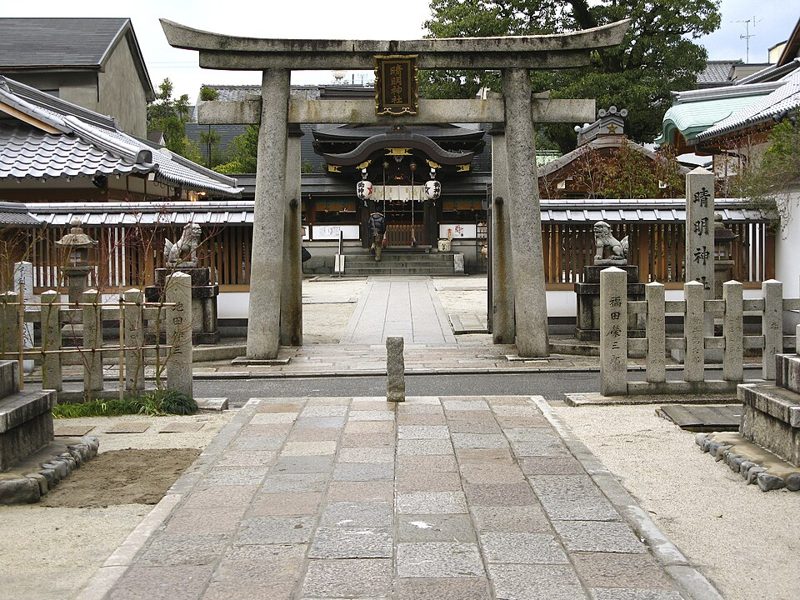
Seimei Shrine was founded in 1007 by order of Emperor Ichijo on land associated with the former residence of Abe no Seimei, who died in 1005. Its distinctive five-pointed emblem, sacred well and protective peach preserve religious traditions connected with the famous Heian-period onmyoji. A modern electrically operated gate recalls a legend in which Seimei's invisible spirit servants opened and closed the entrance.
Kyochika's take
Kyochika recommends Seimei Shrine to travelers interested in Japanese divination, religious symbolism and the historical figures behind supernatural folklore. Follow the five-pointed emblem from the entrance gate toward the well and Main Hall, then compare the shrine's religious features with the stories of shikigami.
For a seasonal visit, Kyochika suggests summer, when the bellflowers associated with the shrine emblem are in bloom, or the autumn festival period. The bridge display, protective peach, sacred camphor tree and Sen no Rikyu memorial provide several distinct themes for a visit.
Hours, admission and access
- Hours
- 9:00 AM–5:00 PM. The amulet counter closes at 4:30 PM.
- Closed
- Open daily; no regular closing days.
- Admission
- Free.
- Access
- Kyoto City Bus route 9 from Kyoto Station to Ichijo Modoribashi Seimei-jinja-mae, immediately beside the shrine. Route 12 from Karasuma or Shijo Station to the same stop. Routes 12 or 59 from Sanjo Station to Horikawa Imadegawa, approximately 2 minutes on foot. Kyoto Subway Imadegawa Station: approximately 12 minutes on foot.
- Nearest station
- Imadegawa Station
Checked against official information on 2026-10-28. Details change, so check the official website before you go.
Sources: Seimei Shrine Official Access and Hours, Seimei Shrine Official Grounds Guide, Seimei Shrine Official Annual Calendar, Seimei Shrine Official Visitor Restrictions, Seimei Shrine Official Historical Explanation, Seimei Shrine Official Gate Reconstruction Announcement
 Pochikichi's story corner
How did a Heian-period onmyoji become the guardian deity of a Kyoto shrine?
Abe no Seimei served the imperial court during the Heian period as a practitioner of onmyodo. The shrine's historical explanation identifies him as having served six emperors: Suzaku, Murakami, Reizei, Enyu, Kazan and Ichijo. Onmyodo involved divination, calendars, cosmological principles and ritual practices associated with yin and yang and the five elements. Seimei became renowned for his knowledge and abilities, while later stories credited him with extraordinary supernatural powers.
According to the shrine's official account, Seimei died in 1005. Two years later, Emperor Ichijo ordered the establishment of a shrine to honor and pacify his spirit. It was founded on the site associated with Seimei's former residence near Horikawa and Ichijo. This gives the shrine a particularly direct geographical connection to its principal deity: the place of worship occupies land remembered as the former home and working area of the person it commemorates.
The buildings on the grounds belong to different periods. The shrine's official guide dates the present Main Hall to 1905. It also explains that the old Ichijo Modoribashi was replaced in 1995 and that materials from the previous bridge were moved into the shrine grounds to create a historical display. The modern electrically operated gate was completed in 2010, according to a shrine announcement. These structures show how the institution continues to preserve and reinterpret older traditions rather than presenting an unchanged Heian-period building complex.
The shrine's central deity remains Abe no Seimei, but the grounds also contain features associated with purification, protection and other forms of religious practice. Visitors can examine the Seimei-kikyo pentagram, the Seimei well, the protective peach and the subsidiary Itsuki Inari Shrine. A memorial associated with tea master Sen no Rikyu adds another layer of historical interpretation. So when you visit, look for how the shrine combines the historical Seimei, stories about his supernatural abilities and tangible symbols of worship.
Sources: Seimei Shrine Official Historical Explanation, Seimei Shrine Official Grounds Guide, Seimei Shrine Official Gate Reconstruction Announcement
Long ago, around hereWhat stood here 1,200, 400 and 150 years ago?
Around 1,200 years ago, the shrine had not yet been established. Its documented foundation in the shrine's official account is 1007, when Emperor Ichijo ordered the sanctuary to be created on the site associated with Abe no Seimei's residence. Seimei's career belonged to the imperial world of Heian-period Kyoto, where onmyoji performed specialized roles involving calendars, divination and ritual matters. The history of the shrine must therefore be distinguished from the earlier history of the neighborhood: the religious institution commemorating Seimei was established after his death.
Around 400 years ago, the land had additional associations with Kyoto's tea culture. The shrine's official grounds guide states that Edo-period tea writings identify a residence of Sen no Rikyu within the area corresponding to the present grounds. A stone memorial now commemorates that connection, and shrine tradition also associates Rikyu with water from the Seimei well. Around 150 years ago, the shrine was approaching the modern period represented by its present Main Hall, built in 1905. The grounds now preserve evidence of later historical interpretation alongside their Heian-period associations.
Sources: Seimei Shrine Official Historical Explanation, Seimei Shrine Official Grounds Guide
Hidden highlights
- Seimei-kikyo Pentagram
- The golden five-pointed emblem above the first torii is described by the shrine as a distinctive symbol associated with Seimei and onmyodo. The official guide notes that displaying the emblem rather than a conventional shrine-name tablet is unusual.
- Seimei-i — The Sacred Well
- The shrine's tradition says Seimei caused water to emerge through spiritual power. Its outlet is turned on Risshun, the traditional beginning of spring, to face the year's auspicious direction.
- Yakuyoke Momo — Protective Peach
- The peach represents traditional protection against harmful influences. The shrine invites visitors to touch it symbolically to cast off misfortune.
- Old Ichijo Modoribashi
- The grounds preserve a bridge feature using materials from the former Ichijo Modoribashi. The real bridge, approximately 100 meters south, is associated with the legend of Watanabe no Tsuna and an oni.
- Sacred Camphor Tree
- The shrine estimates the age of its camphor tree at approximately 300 years. The official guide encourages visitors to place their hands on its trunk.
- Sen no Rikyu Residence Memorial
- A stone monument commemorates the tradition that Sen no Rikyu once maintained a residence on land corresponding to the shrine grounds. The account is based on Edo-period tea writings.
Sources: Seimei Shrine Official Grounds Guide
Why does Seimei Shrine have a gate that opens automatically?
A legend associated with Abe no Seimei says that he employed shikigami, invisible spirit servants that carried out tasks at his command. The shrine recounts a story in which these servants opened and closed his gate when visitors arrived. Because the servants could not be seen, the gate appeared to move on its own.
The shrine's modern interpretation of the legend was completed in 2010. A wooden gate equipped with an electric opening mechanism was installed, and the shrine explicitly described the result as a product of modern technology rather than supernatural power. The reconstructed experience allows visitors to connect a physical feature of the grounds with a well-known story about Seimei.
Sources: Seimei Shrine Official Gate Reconstruction Announcement, Seimei Shrine Official Grounds Guide
How did one neighborhood become associated with spirits and tea ceremony?
The nearby Ichijo Modoribashi is closely connected with Seimei folklore. According to the shrine's official guide, Watanabe no Tsuna, one of the warriors serving Minamoto no Yorimitsu, cut off the arm of a female oni at the bridge. Another tradition says Seimei concealed his shikigami beneath the bridge because his wife was frightened of them. These stories belong to folklore and should not be presented as independently established historical incidents.
Elsewhere in the grounds, the memorial to Sen no Rikyu recalls a very different cultural tradition. The shrine explains that Edo-period tea writings place one of Rikyu's residences within the area now occupied by the sanctuary. It also records the tradition that Rikyu used water from the Seimei well. Together, these stories connect the same urban site with supernatural legends, ritual water and the history of tea.
Sources: Seimei Shrine Official Grounds Guide
How to walk it
- First Torii Gate — Examine the golden Seimei-kikyo emblem above the entrance. (3 min)
- Old Ichijo Modoribashi — Inspect the reconstructed bridge feature and the shikigami statue. Consider their connection with the nearby original bridge. (5 min)
- Purification Basin — Follow the shrine's instructions to cleanse your hands and mouth before worship. (3 min)
- Seimei Well — Look at the well and the direction of its water outlet, which is changed annually at Risshun. (4 min)
- Shishinmon Gate — Observe the electrically operated gate and its relationship to the legend of Seimei's spirit servants. (3 min)
- Main Hall — Visit the principal worship area and look for the shrine's five-pointed emblem. (5 min)
- Protective Peach and Sacred Camphor Tree — Compare the traditional symbolism of the protective peach with the shrine's living sacred tree. (5 min)
- Sen no Rikyu Residence Memorial — Find the monument connected with the tea master and read it as part of the history of the surrounding neighborhood. (5 min)
- Ichijo Modoribashi — After leaving the shrine, walk south to the bridge over Horikawa and compare it with the reconstructed bridge feature in the grounds. (5 min)
All times in the steps are Kyochika estimates for viewing the features, not official walking or worship durations. The shrine's official grounds guide places Ichijo Modoribashi approximately 100 meters south of the shrine.
Sources: Seimei Shrine Official Grounds Guide
Through the seasons
- January 1
- The official annual calendar lists the Saitansai New Year ceremony, including an offering of fresh water drawn from the Seimei well.
- Setsubun in February
- The shrine conducts Setsubun Hoshisai, a purification ceremony associated with the seasonal transition and onmyodo.
- Mid-June to early autumn
- The official calendar says bellflowers begin opening around mid-June, are particularly noticeable in July and may continue into early autumn.
- Autumn equinox
- The Seimei Festival is associated with the autumn equinox. The official annual schedule describes ceremonies, performances and a procession. Check current festival announcements for any changes.
- September 26
- The shrine's annual calendar lists a memorial ceremony at Seimei's grave in Saga on the anniversary of his death.
- November 23
- The annual calendar lists the Ohitaki fire ceremony.
Getting there by taxi or bus
- Taxi
- The shrine's official access page gives approximately 20 minutes by taxi from Kyoto Station. Actual journey times depend on traffic.
- Bus
- From Kyoto Station, Kyoto City Bus route 9 serves Ichijo Modoribashi Seimei-jinja-mae (一条戻橋・晴明神社前), immediately beside the shrine. From Karasuma or Shijo Station, route 12 serves the same stop. From Sanjo Station, routes 12 and 59 serve Horikawa Imadegawa (堀川今出川), approximately 2 minutes on foot.
- Other
- Kyoto Subway Karasuma Line to Imadegawa Station, then approximately 12 minutes on foot. The official access page also identifies a coin-operated parking facility south of the shrine.
Sources: Seimei Shrine Official Access
Pair it with
- Ichijo Modoribashi — The bridge is directly connected with the shrine's supernatural folklore and is approximately 100 meters south according to the official guide. (2 min walk)
- Horikawa Imadegawa — The nearby bus-stop area provides a practical connection with the wider Horikawa district. (3 min walk)
- Imadegawa Station — Combine the shrine visit with travel through northern central Kyoto using the subway station listed in the official access directions. (12 min walk)
Good to know before you go
- Official visitor hours are 9:00 AM–5:00 PM.
- The amulet counter closes at 4:30 PM.
- There are no regular closing days.
- General admission is free.
- The official grounds guide instructs visitors to purify their hands and mouth at the purification basin before worship.
- The amulet counter distributes amulets, talismans and goshuin.
- The shrine prohibits visits accompanied by pets.
- The shrine prohibits unauthorized commercial activity and commercial use of shrine images, products and festival names.
- Unauthorized commercial photography and filming are prohibited.
- Unauthorized drone flights are prohibited.
- Stock-photo sales and photography intended for distribution as free image resources are restricted.
- Professional commercial photography requires permission.
- Media organizations wishing to use photographs or video for publication must follow the shrine's application procedure.
- Resale of amulets, talismans and goshuin is prohibited.
- Visitors must not disturb other worshippers.
- The official access page identifies a coin-operated parking facility south of the shrine.
- The official website provides a Chinese-language section.
- A blanket ban on ordinary personal photography was not stated in the official restrictions examined. Posted on-site instructions must still be respected.
- Card and electronic payment acceptance for all purchases could not be confirmed from the pages examined.
Next stop: book for later today PR
Tickets and experiences in Kyoto you can book on Klook. Filter by “Today” to see what is still open.
Kimono rental in Kyoto→Tea ceremony experiences in Kyoto→Kyoto one-day sightseeing tours→All things to do in Kyoto on Klook →Compare on GetYourGuide: Kimono rental in Kyoto · Tea ceremony experiences in Kyoto · Kyoto one-day sightseeing tours
Ad: Klook and GetYourGuide affiliate links.
🍜 Where to eat after
Restaurants near here on Google Maps→Many restaurants in Kyoto take reservations, and some are cash only. Check the restaurant page before you go.
Events nearby
Art exhibition
Toraya Collection Exhibition: Animals That Soothe the Heart
Toraya Kyoto Gallery (Imadegawa Sta.)
Oct 24 (Sat) – Nov 23 (Mon) 10:00 – 17:00
Animal-themed works from the collection of the wagashi maker Toraya: folding screens, hanging scrolls, tea bowls and netsuke. The gallery is next to Toraya Karyo Kyoto Ichijo, about a 7-minute walk from Exit 6 of Imadegawa subway station.
Details →Festival & seasonal event
Koseiji Temple Autumn Special Opening with Night Viewing
Koseiji Temple (Nijo Sta.)
Nov 21 (Sat) – Nov 23 (Mon) 18:00 – 20:00
The evening session of Koseiji Temple's three-day autumn special opening in Kamigyo Ward. A tea service is offered for ¥800; last entry at 7:30 PM.
Details →Festival & seasonal event
Myoken-ji Temple Illumination & Special Night Viewing
Myoken-ji Temple (Kuramaguchi Sta.)
Nov 21 (Sat) – Dec 13 (Sun) 18:00 – 20:30
Autumn illumination and special night viewing at Myoken-ji, a Nichiren Buddhist temple in Kamigyo Ward. Last entry at 8:00 PM.
Details →Festival & seasonal event
Myokakuji Temple Hoshien Garden Special Opening and Autumn Light-up
Myokakuji Temple (Kuramaguchi Sta.)
Nov 10 (Tue) – Dec 6 (Sun) 10:00 – 15:30
A head temple of the Nichiren school founded in the Muromachi period, once used by Oda Nobunaga as his lodging in Kyoto. The mossy Hoshien garden is open by day, and from November 21 to December 6 it is also illuminated from 6:00 to 8:00 PM, when the Kahoto stupa hall is opened. Closed 3:30-6:00 PM for changeover; last entry 3:00 PM by day and 7:30 PM at night.
Details →Art exhibition
Kyoto State Guest House Autumn Evening Extended Opening
Kyoto State Guest House (Imadegawa Sta.)
Dec 4 (Fri) – Dec 7 (Mon) Open until 7:15 PM (last entry 6:15 PM); check the official site for the opening time
For four days only, the national guest house inside Kyoto Gyoen is open until 7:15 PM. Admission closes at 6:15 PM; children of elementary school age and under cannot enter.
Details →Art exhibition
NAKED meets Nijo Castle 2026 at Former Imperial Villa Nijo Castle
Former Imperial Villa Nijo Castle (Nijojo-mae Sta.)
Oct 23 (Fri) – Dec 5 (Sat) 18:00 – 22:00
A night art exhibition marking 400 years since the Kan'ei imperial visit, exploring the aesthetics of Kan'ei-era culture that shaped kimono and everyday design. Inspired by the sensibility of Tokugawa Kazuko, it reinterprets traditional beauty as artworks, with audio guides in Japanese and English. Last entry 9:00 PM; open daily, rain or shine. Students and Kyoto City residents get a 500 yen cashback on site.
Details →
Tips from visitors
Been here? Leave a short tip for the next traveler — in any language. No name, no sign-up.
Thank you! We check every tip by hand and post it within a day or two.
How we post tips: we read every one before it goes up. We remove swear words, insults, ads, links and anything that could identify a person. Tips are shown in the language they were written in, with a translate link. Kyochika never writes or pays for tips, and there are no star ratings.
FAQ
- What is Seimei Shrine?
- Seimei Shrine was founded in 1007 by order of Emperor Ichijo on land associated with the former residence of Abe no Seimei, who died in 1005. Its distinctive five-pointed emblem, sacred well and protective peach preserve religious traditions connected with the famous Heian-period onmyoji. A modern electrically operated gate recalls a legend in which Seimei's invisible spirit servants opened and closed the entrance.
- Hours at Seimei Shrine?
- 9:00 AM–5:00 PM. The amulet counter closes at 4:30 PM.
- Closed at Seimei Shrine?
- Open daily; no regular closing days.
- Admission at Seimei Shrine?
- Free.
- Access at Seimei Shrine?
- Kyoto City Bus route 9 from Kyoto Station to Ichijo Modoribashi Seimei-jinja-mae, immediately beside the shrine. Route 12 from Karasuma or Shijo Station to the same stop. Routes 12 or 59 from Sanjo Station to Horikawa Imadegawa, approximately 2 minutes on foot. Kyoto Subway Imadegawa Station: approximately 12 minutes on foot.
- Is Seimei Shrine free to enter?
- Yes. The official access page lists no admission fee.
- What time does Seimei Shrine close?
- The shrine closes at 5:00 PM. Its amulet counter closes earlier, at 4:30 PM.
- Who was Abe no Seimei?
- He was a Heian-period onmyoji associated with the imperial court. According to the shrine's official account, he died in 1005, and Emperor Ichijo ordered the shrine's foundation two years later.
- Can visitors take photographs?
- The official rules prohibit unauthorized commercial photography, professional commercial shoots, drone flights and stock-photo use. Ordinary personal photography is not listed as universally prohibited, but visitors should obey posted instructions and avoid disturbing worshippers.