Temples in Kyoto · Ohara, Sakyo Ward, Northern Kyoto
Sanzen-in Temple
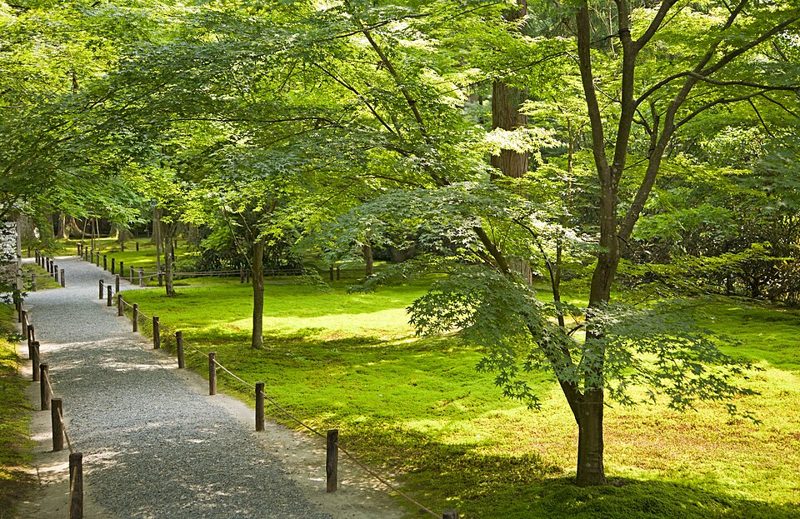
Between 782 and 806, the monk Saicho established a small Buddhist hall beneath a wild pear tree on Mount Hiei, beginning the history of the institution now known as Sanzen-in. Its most remarkable treasure is a National Treasure Amida Triad inside Ojo Gokuraku-in Hall: the attendant bodhisattvas lean forward on their knees, representing the moment they welcome a dying believer into the Pure Land. An inscription dated 1148, discovered inside one of the attendants, provides a rare historical connection to the sculptures' creation.
Kyochika's take
K
y
o
c
h
i
k
a
r
e
c
o
m
m
e
n
d
s
S
a
n
z
e
n
-
i
n
f
o
r
t
r
a
v
e
l
e
r
s
f
a
s
c
i
n
a
t
e
d
b
y
B
u
d
d
h
i
s
t
s
c
u
l
p
t
u
r
e
,
J
a
p
a
n
e
s
e
g
a
r
d
e
n
d
e
s
i
g
n
a
n
d
t
h
e
h
i
s
t
o
r
y
o
f
i
m
p
e
r
i
a
l
r
e
l
i
g
i
o
u
s
i
n
s
t
i
t
u
t
i
o
n
s
.
F
o
r
a
v
i
s
i
t
f
o
c
u
s
e
d
o
n
t
h
e
m
o
s
s
g
a
r
d
e
n
,
c
o
n
s
i
d
e
r
l
a
t
e
s
p
r
i
n
g
o
r
e
a
r
l
y
s
u
m
m
e
r
;
f
o
r
f
o
l
i
a
g
e
,
a
u
t
u
m
n
i
s
p
a
r
t
i
c
u
l
a
r
l
y
a
p
p
e
a
l
i
n
g
,
w
h
i
l
e
w
i
n
t
e
r
o
f
f
e
r
s
t
h
e
p
o
s
s
i
b
i
l
i
t
y
o
f
s
n
o
w
-
c
o
v
e
r
e
d
t
e
m
p
l
e
g
r
o
u
n
d
s
.
A
l
l
o
w
t
i
m
e
t
o
s
t
u
d
y
t
h
e
A
m
i
d
a
T
r
i
a
d
b
e
f
o
r
e
e
x
p
l
o
r
i
n
g
t
h
e
o
u
t
d
o
o
r
g
a
r
d
e
n
s
,
b
e
c
a
u
s
e
i
t
s
s
c
u
l
p
t
u
r
a
l
d
e
t
a
i
l
s
e
x
p
l
a
i
n
m
u
c
h
o
f
t
h
e
r
e
l
i
g
i
o
u
s
m
e
a
n
i
n
g
b
e
h
i
n
d
t
h
e
l
a
n
d
s
c
a
p
e
.
Hours, admission and access
- Hours
- November 2026: 8:45 AM–4:45 PM, according to the temple's official announcement dated October 23, 2026. The standing English visitor guide lists March–December 7: 8:30 AM–5:00 PM; December 7–February: 9:00 AM–4:30 PM. The November 2026 announcement takes precedence for that month.
- Closed
- Open all year round, according to the temple's official English visitor guide. Access to particular buildings may be restricted during religious ceremonies.
- Admission
- General admission: ¥700; groups of 30 or more: ¥600 per person. Junior high and high school students: ¥400; groups of 30 or more: ¥300 per person. Primary school students: ¥150. These prices are published on the temple's official English website.
- Access
- From Kyoto Station, take Kyoto Bus Route 17 bound for Ohara from bus stop C3, approximately 1 hour. Alternatively, take the Karasuma Subway Line to Kokusai Kaikan Station and transfer to a bus for Ohara. The temple's English guide specifies bus stop 3 and approximately 23 minutes on the bus; Kyoto City's official Ohara itinerary specifies Exit 1, bus stop 4 and approximately 20 minutes. Both sources agree that Sanzen-in is approximately 10 minutes on foot from Ohara bus stop. Confirm the current boarding position at the station.
- Nearest station
- Kokusai Kaikan Station (Karasuma Subway Line; transfer to a bus for Ohara)
Checked against official information on 2026-10-28. Details change, so check the official website before you go.
Sources: Sanzen-in Official Website, Sanzen-in Official English Visitor Guide, Sanzen-in Official History, Sanzen-in Official Grounds, Sanzen-in Official Cultural Heritage, Sanzen-in Official Access, Sanzen-in Official November 2026 Announcement, Sanzen-in Official Visitor Rules, Kyoto City Official Ohara Itinerary
 Pochikichi's story corner
How did a monk's retreat on Mount Hiei become an imperial temple in Ohara?
Sanzen-in's history began on Mount Hiei rather than at its present location in Ohara. The temple's official history dates its origins to the Enryaku era, from 782 to 806, when Saicho established a small religious hall beneath a large wild pear tree in the southern valley of Mount Hiei's eastern precinct. Saicho was central to establishing the Tendai Buddhist tradition in Japan, and the institution subsequently passed to the monk Ennin. Its original identity was therefore connected to the religious culture of Mount Hiei, not to the village architecture encountered by visitors today.
The institution later developed a close relationship with Japan's imperial family. According to the official temple history, the entry of Prince Saiun into the religious community led to its development as a monzeki temple, an institution whose leadership was associated with imperial princes and other members of the imperial family. This heritage explains the formal architecture and ceremonial character of the temple. Rather than serving only as a retreat for individual monks, Sanzen-in came to participate in the religious world surrounding the imperial court.
The temple moved repeatedly during its history. Its official account describes relocations between Mount Hiei, Sakamoto in present-day Shiga Prefecture and central Kyoto, influenced by fires and upheavals including the Onin War. It also records historical names such as Enyu-bo, Nashimoto-bo, Nashimoto Monzeki and Kajii-no-miya. In 1871, following changes to the status of imperial princes serving as Buddhist clergy, the institution adopted the name Sanzen-in from an inscription written by Emperor Reigen. After the Meiji Restoration, it moved to its present location in Ohara.
The present grounds contain several historical layers. Ojo Gokuraku-in Hall preserves Buddhist art associated with the Heian period, while the Shinden was constructed in 1926 to accommodate important ceremonies modeled on imperial religious traditions. The Kyakuden also connects the temple with Kyoto's modern painters, whose sliding-door paintings were donated in 1906. So when you visit, look for the contrast between the imposing Gotenmon entrance, the carefully composed gardens and the comparatively modest hall containing the monumental Amida Triad.
Sources: Sanzen-in Official History, Sanzen-in Official Grounds Guide, Sanzen-in Official Cultural Heritage Guide
Long ago, around hereWhat occupied this mountain landscape before Sanzen-in arrived?
Approximately 1,200 years ago, the institution that became Sanzen-in was developing on Mount Hiei rather than in Ohara. Kyoto City's official guide describes Ohara as a historic rural area associated with monks and aristocrats seeking retreat from ordinary life. The precise buildings occupying the present Sanzen-in grounds at that time cannot be established from the opened sources. What is clear is that Ojo Gokuraku-in already existed at the site before Sanzen-in relocated here. According to temple tradition, the hall was founded by the monk Genshin and Anyo-ni for the repose of their parents' souls, although the temple presents this as a historical tradition rather than a firmly documented foundation date.
Approximately 400 years ago, Ohara already possessed a religious landscape shaped by temples and Buddhist traditions. Sanzen-in's official guide associates the reconstruction of Shuheki-en Garden with the Edo-period tea master Kanamori Sowa, who lived from 1584 to 1656, while explicitly identifying the attribution as traditional. Approximately 150 years ago, the Meiji Restoration was transforming the relationship between imperial institutions and Buddhism. Sanzen-in's subsequent relocation to Ohara brought an imperial monzeki institution into a landscape where older Buddhist devotional traditions already existed.
Sources: Sanzen-in Official History, Sanzen-in Official Grounds Guide, Kyoto City Official Ohara Itinerary
Hidden highlights
- The Kneeling Attendants of Amida
- Look carefully at Kannon and Seishi beside Amida Buddha in Ojo Gokuraku-in. Their distinctive forward-leaning kneeling posture, called Yamato-zuwari, represents the compassionate movement of welcoming a believer into the Pure Land.
- The Boat-Shaped Ceiling
- The Amida Triad is unusually large in relation to its hall. To accommodate the sculptures, the ceiling was raised into a boat-bottom shape, with paintings of heavenly beings and bodhisattvas that are now difficult to distinguish with the naked eye.
- Gotenmon Stonework
- The temple attributes the construction of the gateway's substantial stone walls to the Anoshu stonemasons of Sakamoto. Examine how the natural stones fit together to create an entrance reminiscent of fortified architecture.
- Warabe Jizo
- Small childlike Jizo figures stand beside Benten Pond, south of Ojo Gokuraku-in. They were created by stone sculptor Takashi Sugimura and have become integrated into the surrounding moss.
- The Rainbow Room
- The Shinden contains a room associated with the reception of the emperor. Its name comes from a large rainbow depicted in sliding-door paintings by Shimomura Kanzan.
- Shichidanka Hydrangeas
- The temple's hydrangea garden includes the rare Shichidanka variety. The official grounds guide describes its flowering sequence alongside other hydrangeas beginning in mid-June.
Sources: Sanzen-in Official Grounds Guide, Sanzen-in Official Cultural Heritage Guide
The Buddha who leans toward the dying
The Amida Triad inside Ojo Gokuraku-in illustrates raigo, the Buddhist belief that Amida and accompanying bodhisattvas descend from the Pure Land to welcome believers approaching death. The central Amida forms the gesture associated with this arrival. On the viewer's right, Kannon holds a lotus pedestal for the departing soul, while Seishi joins his hands in prayer.
The attendants make the scene particularly expressive. Both kneel with their upper bodies inclined forward, as though they are about to approach the person they have come to receive. The official cultural heritage guide identifies an inscription dated 1148 inside the Seishi figure. Kyochika suggests studying the figures as a carefully composed encounter rather than merely as separate religious sculptures.
The Kyoto painters who transformed the Kyakuden
In 1906, artists representing different generations of Kyoto painting donated sliding-door works to Sanzen-in. The contributors included Takeuchi Seiho, Kikuchi Hobun, Mochizuki Gyokusen, Imao Keinen and Suzuki Shonen. Their works demonstrated differences in painting technique and artistic approach during a period when Japanese artists were responding to both inherited traditions and new influences.
Takeuchi Seiho's Gotemba landscape is particularly revealing. According to the temple's official cultural heritage guide, the work depicts the atmosphere around the foothills of Mount Fuji, and the influence of the British painter Turner has been suggested in relation to its treatment of mist and space. The paintings are now preserved in the Enyu-zo collection and exhibited on a rotating basis.
Sources: Sanzen-in Official Cultural Heritage Guide, Sanzen-in Official Grounds Guide
How to walk it
- Gotenmon Gate — Study the substantial stone walls and the imposing entrance associated with the temple's monzeki status. (5 min)
- Kyakuden and Shuheki-en Garden — Observe the relationship between the pond, garden plantings and sloping terrain from the designated viewing area. (10 min)
- Shinden — Examine the building associated with the temple's important imperial Buddhist ceremonies. (5 min)
- Yusei-en Garden — Follow the garden path through the moss-covered landscape, looking toward Ojo Gokuraku-in among the trees. (10 min)
- Ojo Gokuraku-in Hall — Study the National Treasure Amida Triad and the unusual shape of the ceiling above it. (10 min)
- Warabe Jizo and Benten Pond — Look for the small Jizo sculptures among the moss near the pond. (5 min)
- Hydrangea Garden and Konjiki Fudo Hall — Explore the upper grounds, including the hydrangea planting area and the hall associated with Fudo worship. (10 min)
- Enyu-zo Exhibition Room — Check the current display of cultural treasures and paintings connected with the temple. (10 min)
The walking sequence follows features documented in the official grounds guide. All stop durations are Kyochika estimates, not published official visiting times. The suggested circuit totals approximately 65 minutes, excluding the journey from Ohara bus stop. Follow current signs and restrictions when visiting.
Sources: Sanzen-in Official Grounds Guide, Sanzen-in Official Cultural Heritage Guide
Through the seasons
- Spring
- The official temple guide describes wild cherry blossoms and rhododendrons coloring Yusei-en Garden.
- May
- Fresh foliage and moss become prominent. The annual Osenbo ceremony takes place on May 30; the official 2026 announcement confirmed restricted access to the Shinden and Kyakuden during that observance.
- Mid-June–July
- The hydrangea garden begins flowering with smaller varieties, followed by Shichidanka, mountain hydrangeas and other varieties.
- October 24–December 6, 2026
- The officially announced 2026 Momiji Festival includes a special opening of the normally concealed Golden Fudo image, special temple seals and goma fire rituals on Saturdays and Sundays.
- Winter
- Snow can cover the gardens and surrounding Ohara landscape, as documented in Kyoto City's official winter itinerary.
Getting there by taxi or bus
- Taxi
- Taxi fares and journey times were not confirmed from the opened official sources. The temple does not provide its own visitor parking.
- Bus
- Kyoto Bus Route 17 from Kyoto Station bus stop C3 to Ohara (大原), approximately 1 hour according to the temple's official English guide. From Kokusai Kaikan, take a bus bound for Ohara (大原); confirm the current boarding stop because the temple and Kyoto City tourism pages publish different stop numbers.
- Other
- Take the Karasuma Subway Line to Kokusai Kaikan Station, then transfer to a bus for Ohara. The temple's official English guide gives approximately 23 minutes for the bus journey and approximately 10 minutes on foot from Ohara bus stop.
Sources: Sanzen-in Official English Visitor Guide, Kyoto City Official Ohara Itinerary, Sanzen-in Official Access
Pair it with
- Raigo-in Temple — Explore a temple associated with shomyo, the traditional melodic chanting of Buddhist scriptures. (6 min walk)
- Hosen-in Temple — Compare Sanzen-in's moss gardens with Hosen-in's framed garden view and its historic Buddhist architecture. (13 min walk)
Good to know before you go
- The temple has an official English-language website.
- Photography of outdoor gardens and building exteriors is permitted for personal use.
- Photography of Buddhist statues and cultural treasures is prohibited.
- Tripods and monopods are prohibited.
- Commercial photography requires prior permission.
- Eating and drinking inside the temple are prohibited.
- Visitors must avoid loud conversations, blocking passages, entering restricted areas and playing sound through speakers.
- Sutra copying is offered; Kyoto City's official guide recommends asking reception about participation.
- The temple has no dedicated parking lot. Public and private parking facilities are available nearby.
- The 2026 autumn announcement identifies goshuin locations at Konjiki Fudo Hall and Enyu-zo.
- Ohara is a residential and religious area. Kyoto City's official guide asks visitors not to enter private fields or residential properties and to take their rubbish away.
- Admission payment methods and building-specific shoe-removal requirements were not confirmed from the opened official sources.
Next stop: book for later today PR
Tickets and experiences in Kyoto you can book on Klook. Filter by “Today” to see what is still open.
Kimono rental in Kyoto→Tea ceremony experiences in Kyoto→Kyoto one-day sightseeing tours→All things to do in Kyoto on Klook →Compare on GetYourGuide: Kimono rental in Kyoto · Tea ceremony experiences in Kyoto · Kyoto one-day sightseeing tours
Ad: Klook and GetYourGuide affiliate links.
🍜 Where to eat after
Restaurants near here on Google Maps→Many restaurants in Kyoto take reservations, and some are cash only. Check the restaurant page before you go.
Tips from visitors
Been here? Leave a short tip for the next traveler — in any language. No name, no sign-up.
Thank you! We check every tip by hand and post it within a day or two.
How we post tips: we read every one before it goes up. We remove swear words, insults, ads, links and anything that could identify a person. Tips are shown in the language they were written in, with a translate link. Kyochika never writes or pays for tips, and there are no star ratings.
FAQ
- What is Sanzen-in Temple?
- Between 782 and 806, the monk Saicho established a small Buddhist hall beneath a wild pear tree on Mount Hiei, beginning the history of the institution now known as Sanzen-in. Its most remarkable treasure is a National Treasure Amida Triad inside Ojo Gokuraku-in Hall: the attendant bodhisattvas lean forward on their knees, representing the moment they welcome a dying believer into the Pure Land. An inscription dated 1148, discovered inside one of the attendants, provides a rare historical connection to the sculptures' creation.
- Hours at Sanzen-in Temple?
- November 2026: 8:45 AM–4:45 PM, according to the temple's official announcement dated October 23, 2026. The standing English visitor guide lists March–December 7: 8:30 AM–5:00 PM; December 7–February: 9:00 AM–4:30 PM. The November 2026 announcement takes precedence for that month.
- Closed at Sanzen-in Temple?
- Open all year round, according to the temple's official English visitor guide. Access to particular buildings may be restricted during religious ceremonies.
- Admission at Sanzen-in Temple?
- General admission: ¥700; groups of 30 or more: ¥600 per person. Junior high and high school students: ¥400; groups of 30 or more: ¥300 per person. Primary school students: ¥150. These prices are published on the temple's official English website.
- Access at Sanzen-in Temple?
- From Kyoto Station, take Kyoto Bus Route 17 bound for Ohara from bus stop C3, approximately 1 hour. Alternatively, take the Karasuma Subway Line to Kokusai Kaikan Station and transfer to a bus for Ohara. The temple's English guide specifies bus stop 3 and approximately 23 minutes on the bus; Kyoto City's official Ohara itinerary specifies Exit 1, bus stop 4 and approximately 20 minutes. Both sources agree that Sanzen-in is approximately 10 minutes on foot from Ohara bus stop. Confirm the current boarding position at the station.
- Is Sanzen-in within walking distance of Kokusai Kaikan Station?
- No. Kokusai Kaikan is a subway transfer station. Visitors must continue by bus to Ohara and then walk approximately 10 minutes to the temple.
- How much does admission cost?
- According to the official English visitor guide, general admission is ¥700, junior high and high school admission is ¥400, and primary school admission is ¥150.
- Can I photograph the Amida statues?
- No. The temple prohibits photography of Buddhist statues and cultural treasures, although outdoor gardens and building exteriors may be photographed for personal use.
- What should I see first?
- Kyochika recommends following the official garden route toward Ojo Gokuraku-in and taking time to study the National Treasure Amida Triad.