Shrines in Kyoto · Nishikyo Ward, Western Kyoto
Matsunoo Taisha Shrine
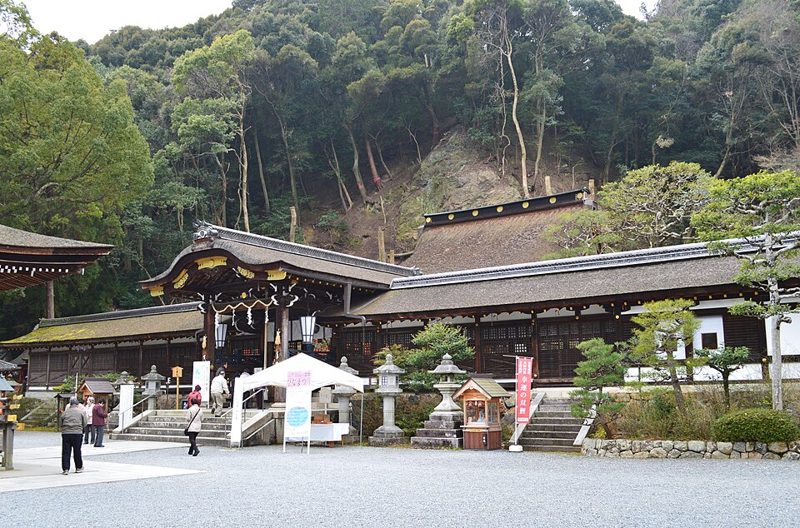
Founded at its present location in 701, Matsunoo Taisha was already an established religious institution before Kyoto became Japan's imperial capital. The shrine is revered by sake and miso brewers, but its attractions extend beyond the brewing tradition: three modern gardens completed in 1975 by Mirei Shigemori reinterpret ancient mountain worship, Heian aristocratic culture and the idea of an immortal paradise.
Kyochika's take
Kyochika recommends Matsunoo Taisha for travelers interested in the connection between religious tradition, landscape design and Japanese brewing culture. Plan your visit around the paid garden hours, especially if Mirei Shigemori's work is your main reason for coming.
Rather than treating the gardens as separate decorative attractions, compare how each interprets a different period of Japanese history. A visit becomes more revealing when you consider why a shrine rooted in ancient mountain worship commissioned a modern designer to express its heritage through stone, water and carefully controlled space.
Hours, admission and access
- Hours
- Shofuen Gardens and Shinzokan Museum: 9:00 AM–4:00 PM on weekdays and Saturdays; 9:00 AM–4:30 PM on Sundays and national holidays. The official website does not specify general shrine-ground opening and closing hours on the pages reviewed.
- Closed
- No regular weekly closing day is specified on the official pages reviewed. Check directly for restrictions during shrine ceremonies and special events.
- Admission
- Combined admission to Shofuen Gardens and Shinzokan Museum: Adults ¥500; students ¥400; children ¥300. These are the prices published on the shrine's official website. Admission to the general shrine grounds and the Sake Museum was not separately priced on the official pages reviewed.
- Access
- Take the Hankyu Railway Arashiyama Line to Matsunoo-taisha Station, or a Kyoto City Bus or Kyoto Bus service to Matsunoo Taisha-mae. The shrine's official website estimates approximately 40 minutes from Kyoto Station using its listed public-transport routes.
- Nearest station
- Matsunoo-taisha Station (Hankyu Arashiyama Line)
Checked against official information on 2026-10-28. Details change, so check the official website before you go.
Sources: Matsunoo Taisha Official Website, Matsunoo Taisha Official History, Matsunoo Taisha Official Gardens, Matsunoo Taisha Official Statue Museum, Matsunoo Taisha Official Sake Museum, Matsunoo Taisha Official Turtle and Carp Guide, Matsunoo Taisha Official Access, Matsunoo Taisha Official English Guide, JNTO Matsunoo Taisha Shrine
 Pochikichi's story corner
How did an ancient mountain sanctuary become a guardian of Japanese sake?
According to Matsunoo Taisha's official history, worship began long before the shrine buildings were constructed. Local inhabitants revered the spirit of Mount Matsunoo at a sacred rock formation called an iwakura, situated above the present sanctuary near the mountain's summit. The deity, Oyamaku-no-Kami, was honored as a protector of daily life. The original sacred setting was therefore not an architectural complex but a natural formation in the mountain landscape. This background is essential to understanding why rocks and mountain imagery remain important in the shrine's religious identity.
The history of Matsunoo is closely connected with the Hata clan. The shrine records a tradition that a large group of Hata people settled in the region around the fifth century and helped develop the surrounding countryside. The clan is associated with embankments, irrigation channels and agricultural cultivation around the Katsura River. Its members also became connected with silk production and sake brewing. In 701, Hata no Imiki Tori constructed a sanctuary at the foot of the mountain, transferring worship from the sacred rock formation to the present shrine location. His daughter Chimarume served in the shrine's religious ceremonies, and the family continued to occupy important priestly positions for generations.
As the imperial capital developed, Matsunoo's significance extended beyond its agricultural surroundings. The official shrine history records that Emperor Kanmu sent an imperial messenger when the capital moved to Nagaoka in 784. Following the establishment of Heian-kyo, Matsunoo and the Kamo shrines were revered as guardians of the imperial capital. The shrine also accumulated estates and received recognition from successive emperors. During the medieval period, its influence continued through relationships with the warrior class. Minamoto no Yoritomo, Ashikaga Yoshimasa and Toyotomi Hideyoshi appear in the shrine's historical account as figures who made offerings or expressed religious devotion.
The brewing connection developed into a defining characteristic of Matsunoo's identity. The shrine explains that sake production was traditionally associated with the Hata clan and that, from the late Muromachi period onward, Matsunoo became revered as a leading protective deity of sake brewing. Its sacred spring, Kame-no-I, became part of this tradition. In the modern era, a new artistic chapter began when Mirei Shigemori designed the Shofuen gardens, completed in 1975. Their purpose was not to reproduce one historical garden but to interpret different stages of religious and cultural history. So when you visit, look for the relationship between the mountain, sacred water, brewing traditions and stones arranged by Shigemori: these elements connect the shrine's ancient foundations with its modern identity.
Sources: Matsunoo Taisha Official History, Matsunoo Taisha Official Garden Guide, Matsunoo Taisha Official English Guide
Long ago, around hereWhat stood here before modern Kyoto?
Around 1,200 years ago, Matsunoo was already an established shrine at the western edge of the region that would become Japan's imperial capital. The sanctuary constructed in 701 had brought an older mountain-worship tradition into a permanent religious building. The surrounding landscape was associated with Hata clan agriculture, irrigation and development along the Katsura River. The shrine's official account also connects its increasing political importance with the movement of the capital to Nagaoka in 784 and later to Heian-kyo. Matsunoo thus served both the religious life of local agricultural communities and the ceremonial protection of the imperial court.
Around 400 years ago, during the Edo period, Matsunoo remained an established institution with extensive religious and economic connections. Its official history records shrine land assessed at 1,333 koku, substantial mountain forests and a community that included both Shinto priests and Buddhist clergy. Around 150 years ago, the Meiji government's reorganization of religious institutions transformed the shrine's administrative position. In 1871, Matsunoo entered the new state shrine system. Following the end of state shrine administration after World War II, the institution adopted the name Matsunoo Taisha in 1950. The modern visitor encounters a sanctuary whose identity has been reshaped repeatedly while retaining its relationship with Mount Matsunoo.
Sources: Matsunoo Taisha Official History
Hidden highlights
- Joko-no-niwa: The Ancient Garden
- This garden interprets the era before formal shrine buildings, when sacred rocks were regarded as places where divine spirits descended. Two prominent stones symbolize the shrine's principal deities, while smaller stones represent accompanying deities.
- Kyokusui-no-niwa: The Winding Stream Garden
- Shigemori created a modern interpretation of the garden culture associated with Heian-period aristocrats. The shrine emphasizes that its composition was designed to be appreciated from multiple viewing directions.
- Horai-no-niwa: The Paradise Garden
- The pond takes the form of a crane spreading its wings. Its islands refer to Horai, the imagined realm of immortals that influenced Japanese garden design during the Kamakura period.
- Kame-no-I: The Sacred Turtle Well
- Located before Reikii-no-Taki waterfall, this spring is associated with sake brewing and with traditional beliefs about longevity and renewal. The shrine records that brewers incorporated its water into their brewing water.
- Shinzokan Museum
- The museum displays 21 wooden images of Shinto deities. Among them are three important early Heian-period sculptures and another statue bearing an inscription dated 1143.
- Lucky Turtle and Paired Carp
- These animal figures stand near the gate facing the main sanctuary. The shrine explains that the turtle represents longevity, while the carp symbolizes advancement and good fortune.
Sources: Matsunoo Taisha Official Garden Guide, Matsunoo Taisha Official Statue Museum, Matsunoo Taisha Official Turtle and Carp Guide
Why are turtles and carp sacred messengers?
Matsunoo Taisha preserves a legend about its deity traveling upstream along the Hozu River while developing the lands of Yamashiro and Tanba. According to the shrine, the deity rode a carp through swift currents and a turtle where the water flowed more gently. The animals consequently became associated with the deity and were revered as sacred messengers.
The shrine explains that turtles are connected with longevity, while carp symbolize advancement and good fortune. This symbolism appears in the lucky turtle and paired carp figures near the main sanctuary. The story is best understood as religious tradition rather than a literal account of geographical development. It offers a way of interpreting the shrine's relationship with the river landscape and the agricultural communities that historically depended on it.
The final garden masterpiece of Mirei Shigemori
Mirei Shigemori's Shofuen gardens were completed in 1975, following approximately one year of construction. The shrine records a total construction cost of ¥100 million and the use of more than 200 pieces of blue-green schist from the Yoshino River in Shikoku. These details demonstrate the scale of the project and the importance placed on material selection.
Each garden interprets a distinct historical idea. Joko-no-niwa evokes ancient rock worship; Kyokusui-no-niwa responds to Heian aristocratic garden culture; and Horai-no-niwa imagines the realm of immortals through a pond and islands. JNTO describes Shofuen as Shigemori's final garden work. The result is particularly interesting because it combines the historical subject matter of ancient Japan with the artistic language of a modern landscape designer.
Sources: Matsunoo Taisha Official Garden Guide, JNTO Matsunoo Taisha Shrine
How to walk it
- Entrance and shrine approach — Begin by examining the shrine's setting at the foot of Mount Matsunoo, which provides the geographical context for its original mountain worship. (5 min)
- Main sanctuary precinct — Pay respects and observe the arrangement of the shrine buildings. The official English guide identifies the inner sanctuary as a Muromachi-period building. (10 min)
- Lucky turtle and paired carp — Find the animal figures near the main sanctuary gate and connect them with the shrine's river legend. (5 min)
- Kame-no-I and Reikii-no-Taki — Visit the sacred spring and waterfall, considering their place in Matsunoo's brewing tradition. (10 min)
- Shofuen Gardens — Compare Joko-no-niwa, Kyokusui-no-niwa and Horai-no-niwa, noting how each represents a different historical idea. (25 min)
- Shinzokan Museum — Examine the historical wooden deity statues, including the early Heian sculptures and the image inscribed with the year 1143. (15 min)
- Sake Museum — Finish with the exhibits explaining the relationship between Matsunoo Taisha, sake production and brewing culture. (10 min)
Approximately 80 minutes in total. All stop durations are Kyochika editorial estimates, not officially published visiting times. The official garden and museum hours should govern a visit that includes these paid areas. Public access to the sacred mountain rock formations is not established by the reviewed information.
Sources: Matsunoo Taisha Official Garden Guide, Matsunoo Taisha Official Statue Museum, Matsunoo Taisha Official Sake Museum
Through the seasons
- Spring
- Kyochika suggests concentrating on the relationship between the shrine buildings, the mountain and emerging seasonal vegetation.
- Summer
- Explore the use of water in the gardens and at Kame-no-I and Reikii-no-Taki.
- Autumn
- Compare the changing vegetation with the permanent stone compositions of Shofuen.
- Winter
- Study the rooflines and the shapes of Shigemori's stones, whose historical meanings remain relevant regardless of season.
- Year-round
- The shrine's brewing history, sacred spring, historic deity statues and Shofuen gardens provide subjects for a visit throughout the year, subject to access arrangements.
Getting there by taxi or bus
- Taxi
- Ask for Matsunoo Taisha at 3 Arashiyama Miyamachi, Nishikyo Ward, Kyoto. The address is confirmed by the shrine and JNTO.
- Bus
- Kyoto City Bus 28 or 71 to Matsunoo Taisha-mae (松尾大社前), as listed by JNTO. The shrine's official access guide also identifies Kyoto Bus services from Kyoto Station to Matsunoo Taisha-mae (松尾大社前).
- Other
- Travel by Hankyu Railway via Katsura Station and change to the Arashiyama Line for Matsunoo-taisha Station. The shrine's official website lists this route and gives approximately 40 minutes from Kyoto Station.
Sources: Matsunoo Taisha Official Access, JNTO Matsunoo Taisha Shrine
Pair it with
- Saihoji Temple — Compare Shigemori's modern stone gardens with Saihoji's moss landscape. JNTO states that Saihoji is approximately 20 minutes away on foot and requires advance reservations. (20 min walk)
- Arashiyama — JNTO recommends Matsunoo as a complementary excursion from Arashiyama. Combining the two adds the shrine's gardens and brewing history to a broader visit of western Kyoto.
Good to know before you go
- The shrine has an official English-language introduction at https://www.matsunoo.or.jp/en/.
- Shofuen Gardens and Shinzokan Museum share a combined admission ticket priced at ¥500 for adults, ¥400 for students and ¥300 for children.
- The published visiting hours for the gardens and museum are 9:00 AM–4:00 PM on weekdays and Saturdays, and 9:00 AM–4:30 PM on Sundays and national holidays.
- The Shinzokan Museum displays 21 wooden deity statues, including three early Heian-period examples.
- The Sake Museum uses exhibitions and video to explain the shrine's relationship with brewing history and production.
- The shrine offers priest-guided visits to the gardens and museum for groups by prior arrangement.
- Group-guided visits must be reserved by telephone or fax in advance.
- The official website advises that guided arrangements may not be available during the New Year period or on certain shrine ceremony dates.
- The shrine's contact telephone number is 075-871-5016.
- Photography restrictions, payment methods for admission and detailed accessibility arrangements were not established from the official pages reviewed. Confirm these with shrine staff.
Next stop: book for later today PR
Tickets and experiences in Kyoto you can book on Klook. Filter by “Today” to see what is still open.
Kimono rental in Kyoto→Tea ceremony experiences in Kyoto→Kyoto one-day sightseeing tours→All things to do in Kyoto on Klook →Compare on GetYourGuide: Kimono rental in Kyoto · Tea ceremony experiences in Kyoto · Kyoto one-day sightseeing tours
Ad: Klook and GetYourGuide affiliate links.
🍜 Where to eat after
Restaurants near here on Google Maps→Many restaurants in Kyoto take reservations, and some are cash only. Check the restaurant page before you go.
Tips from visitors
Been here? Leave a short tip for the next traveler — in any language. No name, no sign-up.
Thank you! We check every tip by hand and post it within a day or two.
How we post tips: we read every one before it goes up. We remove swear words, insults, ads, links and anything that could identify a person. Tips are shown in the language they were written in, with a translate link. Kyochika never writes or pays for tips, and there are no star ratings.
FAQ
- What is Matsunoo Taisha Shrine?
- Founded at its present location in 701, Matsunoo Taisha was already an established religious institution before Kyoto became Japan's imperial capital. The shrine is revered by sake and miso brewers, but its attractions extend beyond the brewing tradition: three modern gardens completed in 1975 by Mirei Shigemori reinterpret ancient mountain worship, Heian aristocratic culture and the idea of an immortal paradise.
- Hours at Matsunoo Taisha Shrine?
- Shofuen Gardens and Shinzokan Museum: 9:00 AM–4:00 PM on weekdays and Saturdays; 9:00 AM–4:30 PM on Sundays and national holidays. The official website does not specify general shrine-ground opening and closing hours on the pages reviewed.
- Closed at Matsunoo Taisha Shrine?
- No regular weekly closing day is specified on the official pages reviewed. Check directly for restrictions during shrine ceremonies and special events.
- Admission at Matsunoo Taisha Shrine?
- Combined admission to Shofuen Gardens and Shinzokan Museum: Adults ¥500; students ¥400; children ¥300. These are the prices published on the shrine's official website. Admission to the general shrine grounds and the Sake Museum was not separately priced on the official pages reviewed.
- Access at Matsunoo Taisha Shrine?
- Take the Hankyu Railway Arashiyama Line to Matsunoo-taisha Station, or a Kyoto City Bus or Kyoto Bus service to Matsunoo Taisha-mae. The shrine's official website estimates approximately 40 minutes from Kyoto Station using its listed public-transport routes.
- Why is Matsunoo Taisha associated with sake?
- The shrine connects its brewing identity with the Hata clan and its traditional brewing skills. From the late Muromachi period, Matsunoo became especially revered as a protector of sake production.
- How much does it cost to visit the gardens?
- The combined Shofuen Gardens and Shinzokan Museum ticket costs ¥500 for adults, ¥400 for students and ¥300 for children, according to the shrine's official website.
- Are the Shofuen gardens ancient?
- No. Mirei Shigemori designed them, and they were completed in 1975. They reinterpret ancient and medieval traditions rather than reproducing surviving gardens from those periods.
- Can I combine Matsunoo Taisha with Saihoji?
- Yes. JNTO gives approximately 20 minutes on foot between the two locations. A visit to Saihoji requires an advance reservation.