Shrines in Kyoto · Yawata City, Kyoto Prefecture, Mount Otokoyama
Iwashimizu Hachimangu Shrine
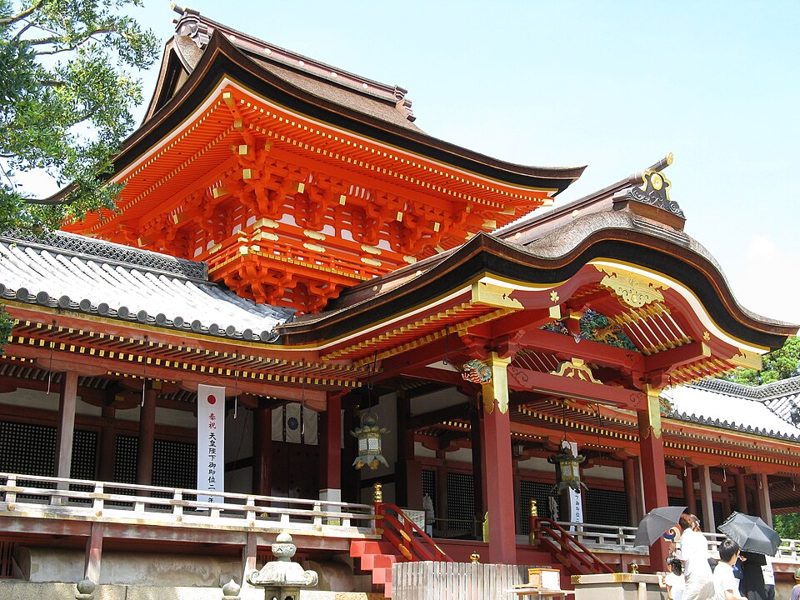
Founded in 859 by the monk Gyokyo, Iwashimizu Hachimangu grew into a shrine visited more than 240 times by emperors and retired emperors. Its present main sanctuary was reconstructed under Tokugawa Iemitsu in 1634, and its historic buildings were designated National Treasures in 2016. A golden rain gutter donated by Oda Nobunaga in 1580 survives within the sanctuary, although it is not normally open to public view.
Kyochika's take
Kyochika recommends Iwashimizu Hachimangu for travelers interested in warrior history, historic religious architecture and places where landscape helps explain political power. Consider riding the cable railway to the mountaintop and allowing time to investigate the smaller monuments around the sanctuary. Travelers particularly interested in traditional ritual may want to research the Iwashimizu-sai festival held on September 15.
Hours, admission and access
- Hours
- South Main Gate: 6:00 AM–6:00 PM, except December 31–January 3, when different arrangements apply.
- Closed
- No regular closing days.
- Admission
- Free for ordinary shrine visitation. Separate arrangements apply to special prayers.
- Access
- From Keihan Iwashimizu-hachimangu Station, transfer to the Iwashimizu Hachimangu Sando Cable. Travel from Cable Hachimangu-guchi to Cable Hachimangu-sanjo, approximately 3 minutes, then walk approximately 5 minutes. Alternatively, the Kyoto Prefecture tourism guide gives approximately 30 minutes on foot from Iwashimizu-hachimangu Station via the main approach.
- Nearest station
- Iwashimizu-hachimangu Station (Keihan Railway); Cable Hachimangu-sanjo Station (Sando Cable)
Checked against official information on 2026-10-28. Details change, so check the official website before you go.
Sources: Iwashimizu Hachimangu Official History and Grounds, Iwashimizu Hachimangu Official Access, Iwashimizu Hachimangu Official FAQ, Yawata City Official English Guide, Kyoto Prefecture Official Tourism Guide, Japan Tourism Agency: Main Shrine, Japan Tourism Agency: Deities and History, Japan Tourism Agency: Shrine and Mount Otokoyama, Kansai MaaS Visitor Information
 Pochikichi's story corner
Why did Japan's emperors and warriors worship Hachiman on Mount Otokoyama?
According to the shrine's traditional history, the monk Gyokyo of Daianji received an oracle while praying at Usa Jingu in Kyushu in 859. Hachiman declared that he wished to move to Mount Otokoyama near the imperial capital and protect the nation. Gyokyo transferred the deity's sacred presence to the mountain, and a sanctuary ordered by the imperial court was completed in 860. The site occupied a significant position near the meeting of the Kizu, Uji and Katsura rivers, along routes between Kyoto and the Osaka region.
The shrine became closely associated with the protection of the imperial family and the Japanese state. The shrine's history records more than 240 visits by emperors and retired emperors. Hachiman was also revered by the Minamoto warrior family. Minamoto no Yoshiie underwent his coming-of-age ceremony at Iwashimizu and adopted the name Hachimantaro Yoshiie, expressing his association with the deity. The Minamoto family's devotion helped spread Hachiman worship to other regions of Japan.
For centuries, Mount Otokoyama supported a religious complex in which Shinto and Buddhism were practiced together. The Japan Tourism Agency explains that the shrine's influence expanded to encompass much of the mountain from the medieval period into the nineteenth century. The complex included the main sanctuary, subsidiary shrines and numerous Buddhist temples. Its religious character changed dramatically after the Meiji government ordered the separation of Shinto and Buddhism in 1868, after which Buddhist elements were removed from the shrine precincts.
The surviving main shrine was reconstructed in 1634 under Tokugawa Iemitsu. Its Hachiman-zukuri architectural form combines an inner and outer sanctuary beneath two connected roofs. The shrine's buildings also feature elaborate decorative carvings. On February 9, 2016, ten buildings of the main shrine and three accompanying building plaques received National Treasure designation. So when you visit, look for the connected roof structure, the elaborate carvings, the surrounding historic sites and the remaining evidence of the mountain's former religious complexity.
Sources: Iwashimizu Hachimangu Official History and Grounds, Yawata City Official English Guide, Japan Tourism Agency: Main Shrine, Japan Tourism Agency: Deities and History, Japan Tourism Agency: Shrine and Mount Otokoyama
Long ago, around hereHow did the sacred mountain change from a combined religious complex into today's shrine?
Around 1,200 years ago, Mount Otokoyama was becoming a major religious center after Gyokyo transferred the worship of Hachiman there in 859. The sanctuary was completed in 860, and its connections with the imperial court and later with the Minamoto clan established its importance. The shrine grew over subsequent centuries into a complex containing Shinto shrines and Buddhist temples. Its location between Kyoto and Osaka also made the settlement at the foot of the mountain important for pilgrims and travelers.
Around 400 years ago, the shrine was approaching the rebuilding of its main sanctuary under Tokugawa Iemitsu, completed in 1634. The broader religious establishment still included Buddhist institutions. Around 150 years ago, the consequences of the 1868 separation of Shinto and Buddhism had transformed the mountain's religious landscape. The Buddhist elements that had once formed part of the complex were removed, leaving the Shinto sanctuary as its principal surviving institution. The historic buildings and scattered sacred sites now preserve evidence of different stages in that long history.
Sources: Japan Tourism Agency: Shrine and Mount Otokoyama, Iwashimizu Hachimangu Official History
Hidden highlights
- Golden Rain Gutter
- Oda Nobunaga donated this remarkable feature in 1580. It is located between the roofs of the main sanctuary and is normally closed to public view, but its existence connects the shrine's architecture with the military leaders of the sixteenth century.
- Shokado Hermitage Site
- The former hermitage is associated with the origin of the name Shokado bento. Its presence recalls the mountain's cultural and religious life beyond the principal sanctuary.
- Iwashimizu Sacred Spring
- The shrine's name comes from the sacred spring on Mount Otokoyama. The official grounds guide identifies the spring and its associated shrine as a sacred place predating Iwashimizu Hachimangu's foundation.
- Edison Memorial
- This monument commemorates the historical connection between Thomas Edison and bamboo from Yawata. It is an unexpected reminder of the area's contribution to the history of electric lighting.
- Shoin Stone Garden
- The grounds contain a stone garden created by Shigemori Mirei. Look for it as an example of garden design within the wider historical shrine landscape.
- Nobunaga Wall and Northeast Corner
- The earthen enclosure around the sanctuary is popularly known as the Nobunaga Wall. At the northeast corner, the stonework has a deliberately cutaway form associated with protection from an inauspicious direction.
Sources: Iwashimizu Hachimangu Official Grounds Guide
The warrior who became Hachimantaro Yoshiie
Minamoto no Yoshiie underwent his coming-of-age ceremony at Iwashimizu Hachimangu and adopted the name Hachimantaro Yoshiie. The shrine's official history identifies this event as an important example of the Minamoto family's devotion to Hachiman. The name proclaimed an association with the deity who was revered as a protector of warriors.
The relationship between the Minamoto clan and Hachiman helped extend the deity's worship across Japan. Iwashimizu's significance therefore reaches beyond its immediate landscape. Its history connects imperial protection, religious devotion and the emergence of warrior power. Visitors looking at the shrine's architecture can understand it not only as a ceremonial building but as a place that helped define the religious identity of influential military families.
The festival that carries the deity down the mountain
The Iwashimizu-sai festival takes place on September 15. According to the Japan Tourism Agency's official historical explanation, the deities are transferred into three portable shrines and carried to the foot of Mount Otokoyama. An imperial messenger then offers prayers for national peace and protection. The procession preserves the shrine's historic relationship with the imperial court.
The festival also includes traditional music and dance, together with the ceremonial release of birds and fish. These practices are particularly significant in light of the shrine's long history of combined Shinto and Buddhist worship. The ritual provides a visible link between the religious traditions of the old sacred mountain and its continuing ceremonial life.
How to walk it
- Iwashimizu-hachimangu Station — Arrive on the Keihan Railway and follow directions to the Sando Cable. (5 min)
- Sando Cable — Ride from Cable Hachimangu-guchi to Cable Hachimangu-sanjo. (3 min)
- Upper cable station — Follow the approach toward the shrine precincts. (5 min)
- South Main Gate — Enter the principal precincts and observe the arrangement of the shrine buildings. (5 min)
- National Treasure Main Shrine — Study the connected Hachiman-zukuri roofs and the decorative elements of the sanctuary. (15 min)
- Nobunaga Wall and Northeast Corner — Look for the earthen wall and the cutaway stone corner. (8 min)
- Edison Memorial — Visit the monument commemorating the connection between Edison and Yawata bamboo. (8 min)
- Other historic sites on Mount Otokoyama — Use the official grounds guide to identify the sacred spring, former Shokado hermitage and smaller shrines, subject to the paths available. (30 min)
The approximately 3-minute cable ride, 5-minute walk from the upper cable station, and 30-minute traditional walking approach from the main railway station are documented in official tourism sources. All other times are Kyochika planning estimates, not published walking durations. The wider mountain sites are dispersed and may require additional walking or a different route. Check cable operations before travel.
Sources: Iwashimizu Hachimangu Official Access, Kyoto Prefecture Official Tourism Guide, Kansai MaaS Visitor Information, Iwashimizu Hachimangu Official Grounds Guide
Through the seasons
- Spring
- Consider exploring the mountain approaches as well as the main sanctuary.
- Summer
- An early visit within the official gate hours may be preferable for travelers who wish to avoid the warmest part of the day.
- September 15
- The Iwashimizu-sai festival includes the movement of the deities to the foot of Mount Otokoyama and imperial ceremonial traditions.
- Autumn
- Allow time to explore the wooded mountain as well as the central shrine buildings.
- New Year
- Check the shrine's announcements because the ordinary South Main Gate opening schedule does not apply from December 31 through January 3.
Getting there by taxi or bus
- Taxi
- The shrine's official FAQ gives an approximate driving time of 30 minutes from Kyoto Station by its stated expressway route. This is not a guaranteed taxi duration or fare. Road access leads to the lower shrine parking area, with a cable or walking approach to the mountaintop.
- Bus
- No regular local bus route is required for the official Keihan Railway and Sando Cable approach.
- Other
- From Kyoto Station, change to Keihan Railway at Tambabashi using Kintetsu Railway or at Tofukuji using JR. Travel to Iwashimizu-hachimangu Station, take the Sando Cable from Cable Hachimangu-guchi to Cable Hachimangu-sanjo, and walk approximately 5 minutes. The traditional walking approach from the Keihan station takes approximately 30 minutes according to Kyoto Prefecture.
Sources: Iwashimizu Hachimangu Official Access, Iwashimizu Hachimangu Official FAQ, Kyoto Prefecture Official Tourism Guide
Pair it with
- Kora Shrine — A smaller historic shrine appearing in the literary work Tsurezuregusa, identified on the official Iwashimizu grounds guide. (Walking time not independently verified min walk)
- Shokado Hermitage Site — A historic site associated with the name Shokado bento and the mountain's earlier religious community. (Walking time not independently verified min walk)
- Iwashimizu Sacred Spring — The spring associated with the shrine's name and identified as a sacred site predating the main shrine. (Walking time not independently verified min walk)
Good to know before you go
- Ordinary shrine visitation is free according to the Kansai MaaS visitor listing.
- The South Main Gate is ordinarily open from 6:00 AM to 6:00 PM, excluding December 31–January 3.
- The shrine's FAQ states that special prayers do not operate with fixed starting times or an advance booking system; visitors are served as preceding prayers finish.
- The Golden Rain Gutter donated by Oda Nobunaga is normally closed to public view.
- The Sando Cable avoids the full climb up Mount Otokoyama, but the shrine confirms that some steps remain near the purification area, main gate and principal sanctuary.
- The shrine warns that staff may not be able to help physically lift wheelchairs, so visitors requiring assistance should plan accordingly.
- The official FAQ identifies toilets near the eastern approach from the cable station and near the South Main Gate.
- The Japan Tourism Agency provides official historical interpretation in English for the main sanctuary and the shrine's history.
- Ordinary vehicle parking costs a maximum of ¥500 during the published 9:00 AM–4:00 PM period, but the shrine warns that prices change during the New Year period and cherry-blossom season.
- Photography, cashless payments and luggage storage were not confirmed from the opened official pages. Follow notices and ask shrine staff about arrangements.
Next stop: book for later today PR
Tickets and experiences in Kyoto you can book on Klook. Filter by “Today” to see what is still open.
Kimono rental in Kyoto→Tea ceremony experiences in Kyoto→Kyoto one-day sightseeing tours→All things to do in Kyoto on Klook →Compare on GetYourGuide: Kimono rental in Kyoto · Tea ceremony experiences in Kyoto · Kyoto one-day sightseeing tours
Ad: Klook and GetYourGuide affiliate links.
🍜 Where to eat after
Restaurants near here on Google Maps→Many restaurants in Kyoto take reservations, and some are cash only. Check the restaurant page before you go.
Tips from visitors
Been here? Leave a short tip for the next traveler — in any language. No name, no sign-up.
Thank you! We check every tip by hand and post it within a day or two.
How we post tips: we read every one before it goes up. We remove swear words, insults, ads, links and anything that could identify a person. Tips are shown in the language they were written in, with a translate link. Kyochika never writes or pays for tips, and there are no star ratings.
FAQ
- What is Iwashimizu Hachimangu Shrine?
- Founded in 859 by the monk Gyokyo, Iwashimizu Hachimangu grew into a shrine visited more than 240 times by emperors and retired emperors. Its present main sanctuary was reconstructed under Tokugawa Iemitsu in 1634, and its historic buildings were designated National Treasures in 2016. A golden rain gutter donated by Oda Nobunaga in 1580 survives within the sanctuary, although it is not normally open to public view.
- Hours at Iwashimizu Hachimangu Shrine?
- South Main Gate: 6:00 AM–6:00 PM, except December 31–January 3, when different arrangements apply.
- Closed at Iwashimizu Hachimangu Shrine?
- No regular closing days.
- Admission at Iwashimizu Hachimangu Shrine?
- Free for ordinary shrine visitation. Separate arrangements apply to special prayers.
- Access at Iwashimizu Hachimangu Shrine?
- From Keihan Iwashimizu-hachimangu Station, transfer to the Iwashimizu Hachimangu Sando Cable. Travel from Cable Hachimangu-guchi to Cable Hachimangu-sanjo, approximately 3 minutes, then walk approximately 5 minutes. Alternatively, the Kyoto Prefecture tourism guide gives approximately 30 minutes on foot from Iwashimizu-hachimangu Station via the main approach.
- Is Iwashimizu Hachimangu free to enter?
- Yes. Ordinary shrine visitation is free, according to the Kansai MaaS listing. Special prayers are separate.
- Can I reach the shrine without climbing the mountain?
- Yes. The Sando Cable connects the base of Mount Otokoyama with the upper station. From there, the shrine is approximately 5 minutes on foot, although some steps remain near the sanctuary.
- Why is this shrine important to samurai history?
- The Minamoto family revered Hachiman as a protective deity. Minamoto no Yoshiie underwent his coming-of-age ceremony at Iwashimizu and took the name Hachimantaro Yoshiie.
- Can visitors see the Golden Rain Gutter?
- The shrine's official grounds guide confirms that the gutter was donated by Oda Nobunaga in 1580, but states that it is normally not open to the public.