Temples in Kyoto · Shishigatani, Sakyo Ward, Kyoto
Honen-in Temple
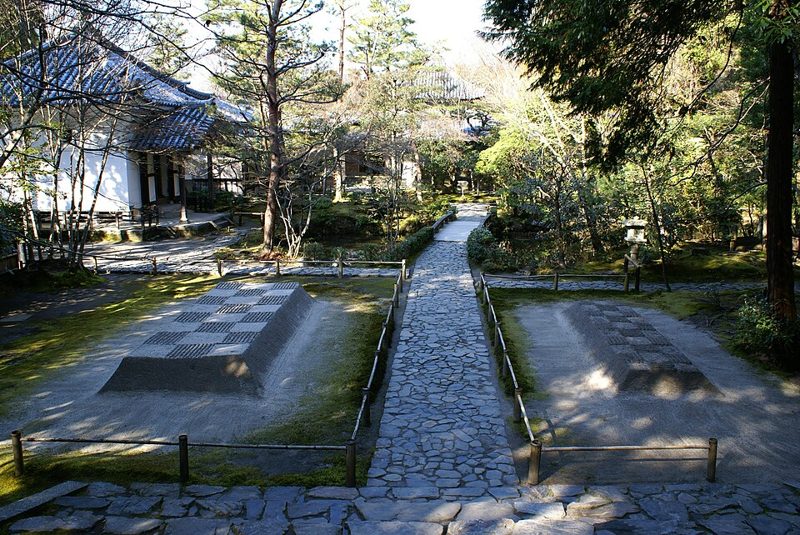
Honen-in preserves a religious tradition associated with Honen, the Buddhist teacher who practiced devotional chanting at Shishigatani with his disciples Anraku and Juren. The temple was revived in 1680 by the monk Banbu and established in its renewed form in 1681. Its thatched entrance gate and paired white-sand terraces introduce visitors to a landscape in which architecture and religious symbolism are closely connected.
Kyochika's take
Kyochika recommends Honen-in for travelers interested in Buddhist history, traditional architecture, and the relationship between religious ideas and garden design. Begin at the thatched gate, then examine the paired white-sand terraces before continuing toward the main hall.
For visitors interested in Buddhist paintings and historic interiors, the announced autumn opening offers access to buildings that are normally closed. The temple also makes a natural addition to a walk through the eastern Kyoto temple district.
Hours, admission and access
- Hours
- 6:00 AM–4:00 PM for the grounds. The main hall and other inner buildings are normally closed.
- Closed
- No regular closing days are listed for the grounds.
- Admission
- Grounds: free. Special inner-hall opening, November 18–24, 2026: adults ¥800; university students ¥400; high-school students and younger free.
- Access
- Kyoto City Bus to Kinrin Shako-mae, approximately 10 minutes on foot. Alternatively, Jodoji bus stop is approximately 10 minutes on foot, or Minamidacho approximately 5 minutes on foot.
- Nearest station
- Keage Station
Checked against official information on 2026-10-28. Details change, so check the official website before you go.
Sources: Kyoto City Official Tourism Guide — Honen-in, Kyoto City Official Tourism Guide — Autumn Special Opening 2026, Kyoto Prefecture Tourism Federation — Autumn Special Opening, Keihan Group — Honen-in, information updated April 2026, KYOTOdesign — Autumn Special Opening 2026
 Pochikichi's story corner
How did Honen's place of Buddhist practice become Honen-in?
Honen-in's origins are associated with the Buddhist teacher Honen and his disciples Anraku and Juren. According to Kyoto City's official tourism information, Honen practiced the devotional ritual known as Rokujirai-san with these disciples at Shishigatani. The ritual tradition connects the location to the religious world of medieval Pure Land Buddhism. The buildings visitors encounter today, however, belong to a much later phase of the site's history.
The decisive revival took place in 1680. Banbu, the 38th head priest of Chion-in, restored the location as a religious institution. Kyoto City's official tourism guide dates the renewed establishment to May 1681. Honen-in therefore brings together an earlier association with Honen and the architectural history of a temple restored during Japan's early modern period.
The temple developed important religious and artistic features. Its principal image is Amida Buddha, while the hojo contains sliding-door paintings by Kano Mitsunobu. Kyoto City's tourism information identifies these paintings as Important Cultural Properties. The grounds also contain a pond garden, raised sand terraces, and a spring known as Zenki-sui. These elements express different aspects of the temple's role: Buddhist worship, artistic patronage, and the symbolic organization of sacred space.
The entrance is especially significant. Beyond the thatched gate stand paired white-sand terraces called byakusadan. Kyoto City's official description explains that water patterns are drawn on their surfaces. The garden arrangement connects the entrance experience with the idea of purification. So when you visit, look for the relationship between the gate, the sand terraces, and the route leading farther into the grounds.
Sources: Kyoto City Official Tourism Guide — Honen-in, Keihan Group — Honen-in
Long ago, around hereWhat stood on the hillside before the present temple?
The earliest historically significant association identified by the consulted sources is Honen's religious activity with Anraku and Juren at Shishigatani. The sources do not establish the precise appearance of the buildings or structures used at that time. It is therefore important not to confuse the medieval religious tradition with the later temple complex. The location's association with Honen continued to shape its identity even though the present institutional history begins with a subsequent revival.
By 1680, the site had entered the period of its documented restoration under Banbu. The renewed establishment followed in 1681. In later centuries Honen-in remained an important religious and cultural location, and its cemetery became associated with prominent intellectual and literary figures. Kyoto City's official tourism guide identifies Junichiro Tanizaki and Hajime Kawakami among those buried here. The result is a site whose historical importance extends beyond Buddhist worship into Japanese literature and intellectual history.
Sources: Kyoto City Official Tourism Guide — Honen-in, Keihan Group — Honen-in
Hidden highlights
- Byakusadan white-sand terraces
- The raised sand terraces stand immediately beyond the entrance gate. Their water patterns are an important part of the temple's symbolic landscape.
- The thatched entrance gate
- The traditional gate is one of Honen-in's defining architectural features. Observe how its roof and wooden structure introduce the approach to the temple precinct.
- Zenki-sui spring
- Kyoto City's official tourism guide identifies Zenki-sui as a celebrated spring in the garden north of the main hall. That garden is not part of the ordinary publicly accessible grounds.
- Kano Mitsunobu's sliding-door paintings
- The hojo contains Important Cultural Property paintings attributed to Kano Mitsunobu. These are among the artistic highlights associated with the temple's special openings.
- Amida Buddha
- The principal image is a seated figure of Amida Buddha, central to the temple's Buddhist identity. Access to the interior is normally restricted.
- The literary cemetery
- The cemetery contains graves associated with Junichiro Tanizaki and Hajime Kawakami. Their presence connects the temple with Japan's literary and intellectual history.
Sources: Kyoto City Official Tourism Guide — Honen-in, Keihan Group — Honen-in
Why does Honen-in's entrance feature white sand?
One of Honen-in's most recognizable features is the arrangement of raised white sand just beyond the thatched gate. These structures are known as byakusadan. Kyoto City's official guide records that patterns representing water are drawn on their surfaces. Their placement makes them part of the entrance sequence rather than an isolated garden ornament.
The sand terraces have traditionally been interpreted as symbols of purification. Their meaning is best understood in relation to the act of entering the temple. Visitors pass between the paired forms as they move from the gate into the religious precinct. Kyochika suggests pausing here to consider how a simple architectural arrangement can give a physical shape to a Buddhist idea.
Sources: Kyoto City Official Tourism Guide — Honen-in, Keihan Group — Honen-in
What can visitors see during the 2026 autumn opening?
Honen-in normally restricts access to its main buildings, but Kyoto City's official tourism calendar confirms an autumn inner-hall opening from November 18 through November 24, 2026. During this period, visitors can see areas that are ordinarily closed.
The Kyoto Prefecture Tourism Federation identifies the seated Amida Buddha image and sliding-door paintings by Kano Mitsunobu among the features presented during the special opening. The event provides an opportunity to connect the exterior landscape with the religious images and artistic traditions preserved inside the buildings.
Sources: Kyoto City Official Tourism Guide — Autumn Special Opening 2026, Kyoto Prefecture Tourism Federation — Honen-in Autumn Special Opening
How to walk it
- Temple approach — Follow the approach toward the thatched entrance gate. (Self-paced min)
- Thatched gate — Examine the traditional roof and its relationship to the entrance. (Self-paced min)
- Byakusadan terraces — Look at the paired sand structures and their water patterns. (Self-paced min)
- Main-hall approach — Continue along the publicly accessible route toward the worship buildings. (Self-paced min)
- Temple grounds — Observe the garden and architectural features accessible during an ordinary visit. (Self-paced min)
- Return to the entrance — Retrace the designated route toward the gate. (Self-paced min)
The consulted official sources do not publish a standard walking duration for this route. No estimated minutes have been presented as verified facts. Interior access is restricted outside special openings.
Sources: Kyoto City Official Tourism Guide — Honen-in, Keihan Group — Honen-in
Through the seasons
- Spring
- The temple's inner buildings are opened for a limited period in spring. Dates and admission conditions require a separate announcement.
- Summer
- The entrance gate, sand terraces, and temple architecture remain the principal features of an ordinary grounds visit.
- Autumn
- Kyoto City's official foliage guide identifies mid-to-late November as the usual period for autumn colors. In 2026, the special inner-hall opening is scheduled for November 18–24.
- Winter
- The thatched gate, white-sand terraces, and publicly accessible grounds remain the principal features.
Getting there by taxi or bus
- Taxi
- The verified address is 30 Shishigatani Goshonodancho, Sakyo Ward, Kyoto. No specific official taxi drop-off point was established.
- Bus
- Kyoto City Bus to Kinrin Shako-mae (錦林車庫前), approximately 10 minutes on foot. Jodoji (浄土寺), approximately 10 minutes on foot, and Minamidacho (南田町), approximately 5 minutes on foot, are alternative documented approaches.
- Other
- Keage Station is the supplied railway reference. The official tourism sources consulted provide bus-stop approaches rather than a verified walking time from Keage.
Sources: Kyoto City Official Tourism Guide — Honen-in, Keihan Group — Honen-in, Kyoto City Official Tourism Guide — Autumn Special Opening, KYOTOdesign — Honen-in Autumn Special Opening 2026
Pair it with
- Philosopher's Path — A suggested companion walk for exploring the eastern Kyoto temple district. (Walking time not verified min walk)
- Ginkaku-ji Temple — A suggested comparison between Honen-in's small-scale religious landscape and a more elaborate temple garden. (Walking time not verified min walk)
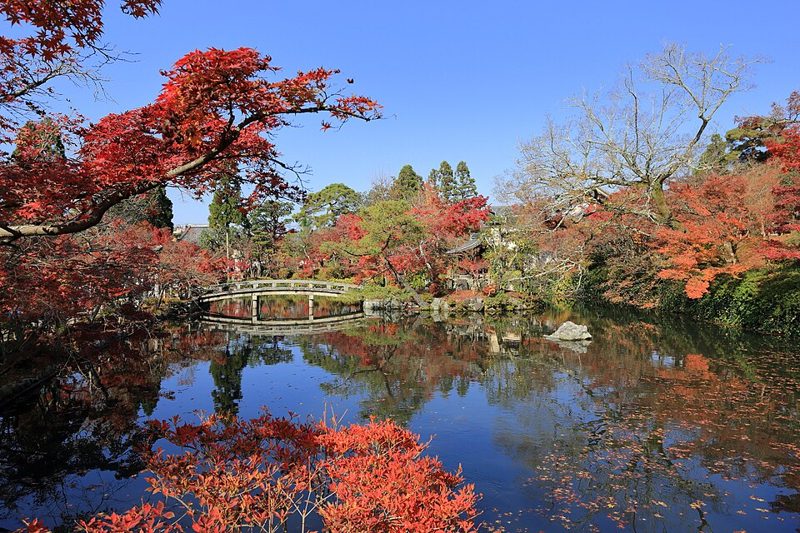
- Eikan-do Temple — A suggested addition for travelers interested in Buddhist history and seasonal foliage. (Walking time not verified min walk)
Good to know before you go
- The grounds are free to enter.
- The published ordinary grounds hours are 6:00 AM–4:00 PM.
- The main hall and hojo are ordinarily closed to the public.
- The 2026 autumn special opening is scheduled for November 18–24, from 9:30 AM to 4:00 PM.
- Autumn special-opening admission is ¥800 for adults and ¥400 for university students; high-school students and younger visitors enter free.
- Kyoto Prefecture tourism information lists no visitor parking.
- The consulted sources do not establish a general photography policy covering all buildings and special-opening rooms.
- The consulted sources do not confirm card-payment acceptance, luggage storage, or an English audio-guide service.
Next stop: book for later today PR
Tickets and experiences in Kyoto you can book on Klook. Filter by “Today” to see what is still open.
Kimono rental in Kyoto→Tea ceremony experiences in Kyoto→Kyoto one-day sightseeing tours→All things to do in Kyoto on Klook →Compare on GetYourGuide: Kimono rental in Kyoto · Tea ceremony experiences in Kyoto · Kyoto one-day sightseeing tours
Ad: Klook and GetYourGuide affiliate links.
🍜 Where to eat after
Restaurants near here on Google Maps→Many restaurants in Kyoto take reservations, and some are cash only. Check the restaurant page before you go.
Events nearby
Festival & seasonal event
Shinnyodo Exclusive Night Viewing
Shinnyodo (Shinsho Gokurakuji) Temple (Demachiyanagi Sta.)
Nov 18 (Wed) – Dec 8 (Tue) 17:30 – 19:30
The first night illumination of the grounds in seven years: the three-storey pagoda, stone approach and maples. Booked through JR Central's EX travel service (membership required). Main hall interior not open. Last entry 7:00 PM.
Details →Festival & seasonal event
Autumn Special Opening: Night Viewing at Kurodani Konkai Komyo-ji
Kurodani Konkai Komyo-ji Temple (Keage Sta.)
Nov 13 (Fri) – Dec 6 (Sun) 17:30 – 20:30
Maples reflected in the pond of the Shiun Garden, with the main hall, gate, bell tower and approach lit up. Live koto and shinobue performances three times each night. Last entry 8:00 PM.
Details →Festival & seasonal event
Eikando Autumn Illumination and Special Night Viewing
Eikando Temple (Zenrin-ji) (Keage Sta.)
Nov 20 (Fri) – Dec 6 (Sun) 17:30 – 21:00
Enjoy around 3,000 maple trees glowing with autumn colors around a traditional strolling pond garden. Last admission at 8:30 PM; lights out and gates close at 9:00 PM.
Details →Art exhibition
Sumitomo Shunsui 100th Memorial Special Exhibition: The Sumitomo Collection of Modern Art at Sen-oku Hakukokan Museum
Sen-oku Hakukokan Museum (Kyoto, Shishigatani) (Keage Sta.)
Oct 31 (Sat) – Dec 20 (Sun) Last entry 16:30. Closed Mondays (open November 23, closed November 24)
Marking 100 years since the death of Sumitomo Tomoito (Shunsui), the 15th head of the Sumitomo family, the exhibition shows the modern paintings and crafts he collected, including Claude Monet's Parc Monceau and Itaya Hazan's Important Cultural Property porcelain vase.
Details →Nov 2 (Mon) – Nov 29 (Sun) 17:30 – 21:30
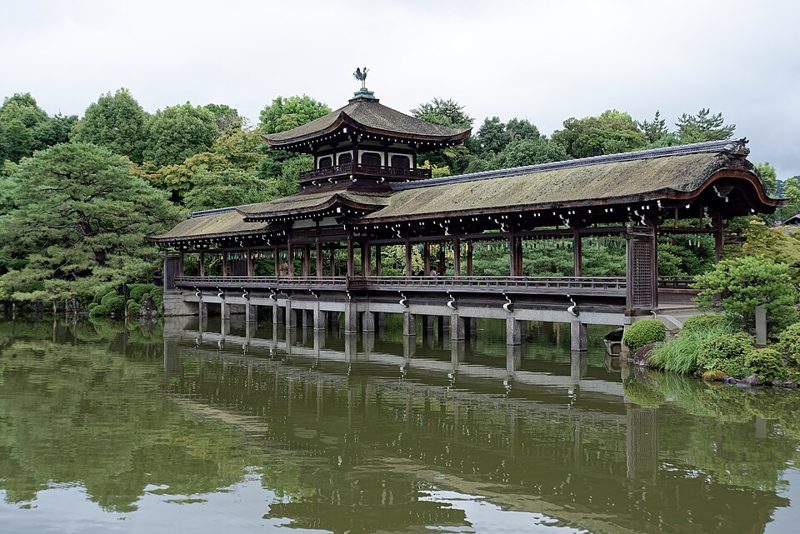
An immersive night walk through Heian Shrine in autumn colors, with light shows in five areas such as LUNAR BLOOM, FLORAL GLOW and LUNAR MIRROR. Last entry 9:00 PM; may be canceled in bad weather. No dedicated parking.
Details →Nov 6 (Fri) 10:00 – 16:00
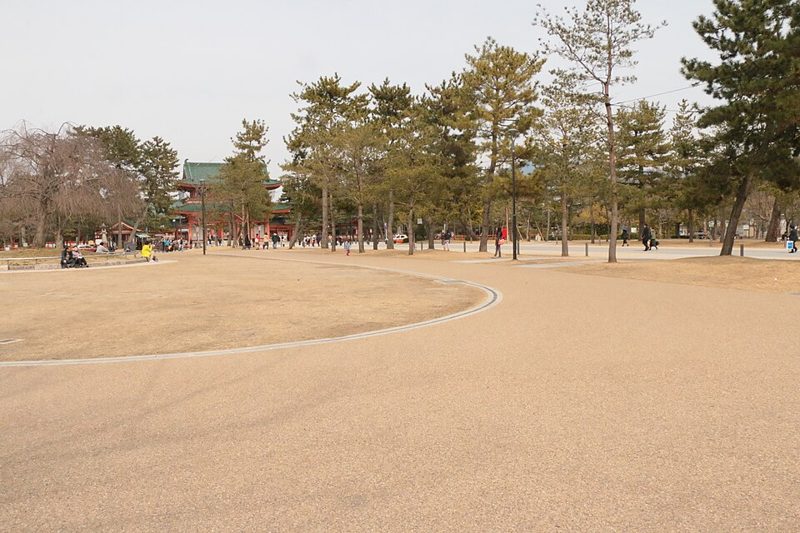
Scheduled market dates during the featured period are November 6 and December 4, not every day. Up to around 160 stalls gather against the backdrop of Heian Jingu Shrine. Held even in rainy weather.
Details →
Tips from visitors
Been here? Leave a short tip for the next traveler — in any language. No name, no sign-up.
Thank you! We check every tip by hand and post it within a day or two.
How we post tips: we read every one before it goes up. We remove swear words, insults, ads, links and anything that could identify a person. Tips are shown in the language they were written in, with a translate link. Kyochika never writes or pays for tips, and there are no star ratings.
FAQ
- What is Honen-in Temple?
- Honen-in preserves a religious tradition associated with Honen, the Buddhist teacher who practiced devotional chanting at Shishigatani with his disciples Anraku and Juren. The temple was revived in 1680 by the monk Banbu and established in its renewed form in 1681. Its thatched entrance gate and paired white-sand terraces introduce visitors to a landscape in which architecture and religious symbolism are closely connected.
- Hours at Honen-in Temple?
- 6:00 AM–4:00 PM for the grounds. The main hall and other inner buildings are normally closed.
- Closed at Honen-in Temple?
- No regular closing days are listed for the grounds.
- Admission at Honen-in Temple?
- Grounds: free. Special inner-hall opening, November 18–24, 2026: adults ¥800; university students ¥400; high-school students and younger free.
- Access at Honen-in Temple?
- Kyoto City Bus to Kinrin Shako-mae, approximately 10 minutes on foot. Alternatively, Jodoji bus stop is approximately 10 minutes on foot, or Minamidacho approximately 5 minutes on foot.
- Is Honen-in free to visit?
- Yes. Entry to the ordinary temple grounds is free. Special openings of the inner buildings have separate admission charges.
- Can I enter the main hall?
- The main hall is normally closed. Kyoto City's official tourism calendar confirms a special inner-hall opening from November 18 to November 24, 2026.
- What are the white-sand terraces?
- They are called byakusadan. Their surfaces feature water patterns, and the arrangement has traditionally been interpreted as symbolizing purification.
- What are the official visiting hours?
- The published grounds hours are 6:00 AM–4:00 PM. The announced 2026 autumn special opening operates from 9:30 AM to 4:00 PM.