Temples in Kyoto · Yasaka, Higashiyama, Kyoto
Hokan-ji Temple (Yasaka Pagoda)
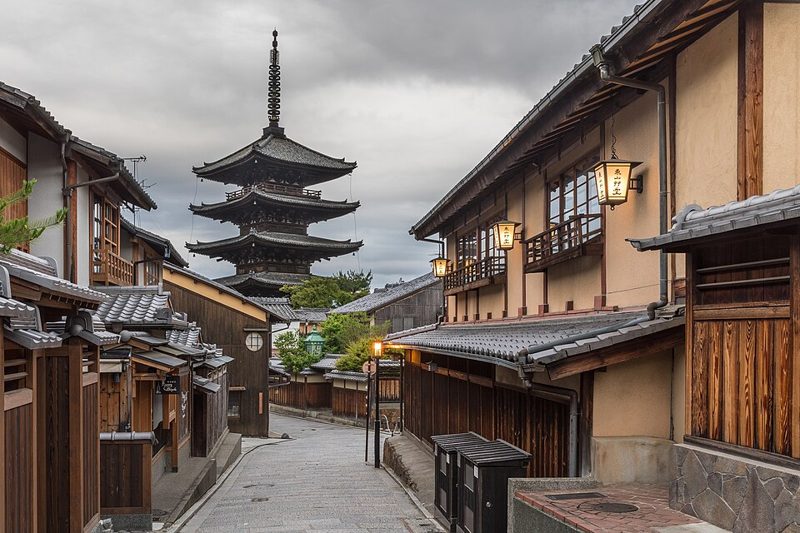
The five-story Yasaka Pagoda rises approximately 46 meters above Kyoto's historic Higashiyama district. The surviving structure dates to 1440 and was rebuilt under the patronage of Ashikaga Yoshinori, while the temple's traditional foundation story connects its origins with Prince Shotoku and the year 589. Rather than standing within an expansive temple precinct, the pagoda rises among the buildings of an old Kyoto neighborhood between Kiyomizu-dera Temple and Yasaka Shrine.
Kyochika's take
Kyochika recommends experiencing Yasaka Pagoda as part of a walk through Higashiyama rather than treating it exclusively as an interior temple visit. Consider approaching along Yasaka-dori, where the arrangement of surrounding buildings provides changing views of the tower.
For travelers interested in photography and architecture, we suggest allowing time to study the pagoda from different public-street viewpoints. Since interior opening arrangements are irregular, plan an exterior-focused visit first and regard any opportunity to enter as an additional experience.
Hours, admission and access
- Hours
- 10:00 AM–3:00 PM for interior visits, as published by the Kyoto Prefecture Tourism Federation. Opening is irregular, and daily interior access is not guaranteed.
- Closed
- Irregular closures. No fixed weekly opening schedule is published by the Kyoto Prefecture Tourism Federation.
- Admission
- Junior high school students and older: ¥400. Elementary school children and younger are not admitted to the interior. Published by the Kyoto Prefecture Tourism Federation. Direct confirmation from the temple operator for 2026 was not obtained.
- Access
- Approximately 5 minutes on foot from Higashiyama Yasui or Kiyomizu-michi city bus stop, according to the Kyoto Prefecture Tourism Federation.
- Nearest station
- Gion-Shijo Station (Keihan Main Line; geographic nearest-station status not independently verified)
Checked against official information on 2026-10-28. Details change, so check the official website before you go.
Sources: Kyoto City Official Travel Guide — Hokan-ji Temple (Yasaka Pagoda), Kyoto Prefecture Tourism Federation — Yasaka Pagoda, Agency for Cultural Affairs — Cultural Heritage Database
 Pochikichi's story corner
Why does a medieval pagoda stand among the streets of Higashiyama?
Hokan-ji is associated with a traditional foundation story involving Prince Shotoku. Kyoto City's official travel guide gives 589 as the date of the original construction and explains that the pagoda is said to have been inspired by a dream. This account should be understood as part of the temple's traditional history rather than independent archaeological confirmation of the first structure. Nevertheless, the story illustrates the connection between Hokan-ji and the early development of Japanese Buddhism.
The present pagoda is much younger than the foundation tradition. The Kyoto Prefecture Tourism Federation records that the structure was rebuilt under Ashikaga Yoshinori, while the Agency for Cultural Affairs identifies the surviving building as dating to 1440, in the middle of the Muromachi period. The distinction matters: travelers are looking at medieval architecture associated with an older religious institution, not an original surviving building from the time of Prince Shotoku.
The Agency for Cultural Affairs records the building as a five-story pagoda with a tiled roof and recognizes it as an Important Cultural Property. Its official cultural-heritage database gives the designation date as December 28, 1897. The Kyoto Prefecture Tourism Federation describes the tower as approximately 46 meters tall and 6.4 meters square. These measurements help explain its strong visual presence above the neighboring buildings.
The pagoda's importance extends beyond its external silhouette. Kyoto City's official guide describes religious statues, architectural details and fading paintings within the building. The Kyoto Prefecture Tourism Federation states that visitors may view the interior of the first level and reach the second level when admission is available. So when you visit, look for the relationship between the successive tiled roofs, the surrounding streets and the interior religious spaces, if the temple is open. Together they demonstrate how the pagoda functions as both a Buddhist monument and a landmark within Kyoto's urban landscape.
Sources: Kyoto City Official Travel Guide — Hokan-ji Temple, Kyoto Prefecture Tourism Federation — Yasaka Pagoda, Agency for Cultural Affairs — Cultural Heritage Database
Long ago, around hereWhat stood here before the surviving Yasaka Pagoda?
The traditional history of Hokan-ji places its origins in 589, connecting the site with Prince Shotoku and the establishment of Buddhist architecture in Japan. The surviving sources do not establish the precise physical appearance of the temple complex approximately 1,200 years ago. Kyoto City's official guide does, however, describe the pagoda as standing within an old Kyoto neighborhood between Kiyomizu-dera Temple and Yasaka Shrine, placing it within the broader religious landscape of Higashiyama.
The surviving pagoda was rebuilt in 1440, so it had already been standing for generations approximately 400 years ago. By the late nineteenth century, it was recognized as a culturally important historic building, receiving Important Cultural Property designation in 1897. The Agency for Cultural Affairs confirms both the medieval construction date and the designation. The history of the immediate surrounding plots approximately 150 years ago could not be reconstructed from the sources opened, so no specific former buildings or land uses are asserted.
Sources: Kyoto City Official Travel Guide — Hokan-ji Temple, Agency for Cultural Affairs — Cultural Heritage Database
Hidden highlights
- The first-level interior
- The Kyoto Prefecture Tourism Federation confirms that the first level can be visited when interior admission is available. Look for the relationship between the building's timber construction and its Buddhist religious setting.
- The second level
- The prefectural tourism listing states that visitors can reach the second level. This opportunity depends on the temple being open and current access instructions.
- The fading interior paintings
- Kyoto City's official English guide specifically mentions fading paintings inside the pagoda. Their preservation and appearance form part of the monument's historical interest.
- The five tiled roofs
- The Agency for Cultural Affairs identifies the building as a five-story pagoda with a traditional tiled roof. Study the repetition and proportions of the roof tiers from a public viewpoint where the full tower is visible.
- The square structural plan
- The Kyoto Prefecture Tourism Federation gives the pagoda's dimensions as approximately 6.4 meters square. Comparing the relatively compact base with the full 46-meter height helps explain the tower's vertical presence.
- The surrounding neighborhood
- Kyoto City's official travel guide emphasizes that the pagoda stands among buildings in an old Kyoto neighborhood. Its relationship with the surrounding urban streets is one of the defining features of the site.
Sources: Kyoto City Official Travel Guide — Hokan-ji Temple, Kyoto Prefecture Tourism Federation — Yasaka Pagoda, Agency for Cultural Affairs — Cultural Heritage Database
The dream associated with Prince Shotoku
Kyoto City's official English travel guide connects the foundation of Hokan-ji's pagoda with Prince Shotoku and the year 589. It also records the tradition that the original construction was inspired by a dream. The story belongs to the temple's inherited religious history and should not be treated as documentary proof of the exact circumstances surrounding the earliest building.
Its significance lies in the way successive generations connected the monument with the early history of Buddhism in Japan. Visitors looking at the existing structure encounter a building dated to 1440, yet the stories associated with the temple reach much further into the past. Recognizing the distinction between traditional foundation accounts and surviving architecture makes the site's history more understandable.
The shogun who rebuilt the pagoda
The Kyoto Prefecture Tourism Federation attributes the reconstruction of Yasaka Pagoda to Ashikaga Yoshinori. The Agency for Cultural Affairs dates the surviving structure to 1440, establishing its place within the Muromachi period. The building therefore preserves a connection not only with Buddhist religious traditions but also with the political patronage of medieval Japan.
The monument's history can be understood through the different periods represented by its foundation story, reconstruction and modern cultural protection. The traditional foundation is associated with Prince Shotoku, the surviving medieval building with Ashikaga Yoshinori, and the formal heritage designation with 1897. Each of these periods helps explain why the pagoda remains an important cultural landmark.
Sources: Kyoto Prefecture Tourism Federation — Yasaka Pagoda, Agency for Cultural Affairs — Cultural Heritage Database
How to explore Yasaka Pagoda
- Yasaka-dori approach — Begin from a public-street viewpoint where the pagoda appears above the surrounding buildings. Observe how its position changes as you approach. (5 minutes min)
- Main exterior view — Study the five roof tiers, the building's vertical proportions and the relationship between the pagoda and nearby structures. (5 minutes min)
- Pagoda surroundings — Approach the building where public access is permitted and examine its architectural details without entering restricted areas. (5 minutes min)
- First-level interior, if open — If admission is available, follow the designated visitor route and examine the architecture, statues and paintings described by Kyoto City's guide. (10 minutes min)
- Second level, if accessible — The prefectural listing confirms access as far as the second level when the pagoda is open. Follow the temple's current instructions. (5 minutes min)
- Continue toward Ninenzaka — Extend the walk into the surrounding Higashiyama district, examining the relationship between traditional-looking streets and the pagoda. (10 minutes min)
All durations are Kyochika estimates and are not official visiting times. The suggested route is editorial rather than an officially prescribed temple itinerary. Interior admission is irregular and may not be available on the day of a visit.
Sources: Kyoto Prefecture Tourism Federation — Yasaka Pagoda, Kyoto City Official Travel Guide — Hokan-ji Temple
Through the seasons
- Spring
- Kyochika suggests including the pagoda in a longer Higashiyama walking itinerary. The tower's architectural form remains the central attraction.
- Summer
- Consider an outdoor visit during the earlier part of the day when planning around summer heat. This is a Kyochika travel suggestion, not an official visitor recommendation.
- Autumn
- Combine exterior views of the pagoda with a walk through Higashiyama. Different daylight conditions can provide opportunities to study the tower's timber and tiled roofs.
- Winter
- The pagoda remains visible from surrounding public streets even when interior access is unavailable. Check weather conditions before exploring the neighborhood on foot.
Getting there by taxi or bus
- Taxi
- Ask for Hokan-ji Temple or Yasaka Pagoda in Higashiyama. The address published by the Kyoto Prefecture Tourism Federation is 388 Yasaka Kamimachi, Higashiyama-ku, Kyoto.
- Bus
- Kyoto City Bus to Higashiyama Yasui (東山安井) or Kiyomizu-michi (清水道), followed by approximately 5 minutes on foot. The prefectural source does not specify route numbers.
- Other
- Gion-Shijo Station on the Keihan Main Line is the railway station supplied in the original place data. The opened official sources do not confirm its walking duration or establish it as the geographically nearest station.
Sources: Kyoto Prefecture Tourism Federation — Yasaka Pagoda, Kyoto City Official Travel Guide — Hokan-ji Temple
Pair it with
- Ninenzaka — The Kyoto Prefecture Tourism Federation explicitly places Yasaka Pagoda near Ninenzaka, making it a natural continuation of a neighborhood walk. (Walking time not officially confirmed min walk)
- Kodai-ji Temple — Kyoto City's official travel guide lists Kodai-ji among nearby destinations, offering an opportunity to extend the visit into the religious history of Higashiyama. (Walking time not officially confirmed min walk)
- Kiyomizu-dera Temple — Kyoto City's official guide places Yasaka Pagoda between Kiyomizu-dera Temple and Yasaka Shrine, making Kiyomizu-dera a relevant destination for a wider district itinerary. (Walking time not officially confirmed min walk)
Good to know before you go
- The Kyoto Prefecture Tourism Federation lists interior visiting hours as 10:00 AM–3:00 PM.
- The temple has irregular closures, and the published hours do not guarantee daily admission.
- The Kyoto Prefecture Tourism Federation lists admission at ¥400 for junior high school students and older.
- Elementary school children and younger are not admitted to the interior according to the prefectural listing.
- The prefectural tourism listing states that visitors may see the first-level interior and reach the second level when the pagoda is open.
- Kyoto City's official travel guide describes religious statues and fading paintings inside the building.
- The Agency for Cultural Affairs identifies the existing structure as an Important Cultural Property dating to 1440.
- The Kyoto Prefecture Tourism Federation lists no dedicated parking.
- Official English-language audio guides, printed interior pamphlets, reservations, payment-card acceptance, luggage storage and photography restrictions could not be confirmed from the opened sources.
- Plan an exterior-focused visit unless interior access has been confirmed.
- The 2026 operating arrangements were verified against the opened prefectural tourism listing but not independently confirmed directly with the temple operator.
Next stop: book for later today PR
Tickets and experiences in Kyoto you can book on Klook. Filter by “Today” to see what is still open.
Kimono rental in Kyoto→Tea ceremony experiences in Kyoto→Kyoto one-day sightseeing tours→All things to do in Kyoto on Klook →Compare on GetYourGuide: Kimono rental in Kyoto · Tea ceremony experiences in Kyoto · Kyoto one-day sightseeing tours
Ad: Klook and GetYourGuide affiliate links.
Tips from visitors
Been here? Leave a short tip for the next traveler — in any language. No name, no sign-up.
Thank you! We check every tip by hand and post it within a day or two.
How we post tips: we read every one before it goes up. We remove swear words, insults, ads, links and anything that could identify a person. Tips are shown in the language they were written in, with a translate link. Kyochika never writes or pays for tips, and there are no star ratings.
FAQ
- What is Hokan-ji Temple (Yasaka Pagoda)?
- The five-story Yasaka Pagoda rises approximately 46 meters above Kyoto's historic Higashiyama district. The surviving structure dates to 1440 and was rebuilt under the patronage of Ashikaga Yoshinori, while the temple's traditional foundation story connects its origins with Prince Shotoku and the year 589. Rather than standing within an expansive temple precinct, the pagoda rises among the buildings of an old Kyoto neighborhood between Kiyomizu-dera Temple and Yasaka Shrine.
- Hours at Hokan-ji Temple (Yasaka Pagoda)?
- 10:00 AM–3:00 PM for interior visits, as published by the Kyoto Prefecture Tourism Federation. Opening is irregular, and daily interior access is not guaranteed.
- Closed at Hokan-ji Temple (Yasaka Pagoda)?
- Irregular closures. No fixed weekly opening schedule is published by the Kyoto Prefecture Tourism Federation.
- Admission at Hokan-ji Temple (Yasaka Pagoda)?
- Junior high school students and older: ¥400. Elementary school children and younger are not admitted to the interior. Published by the Kyoto Prefecture Tourism Federation. Direct confirmation from the temple operator for 2026 was not obtained.
- Access at Hokan-ji Temple (Yasaka Pagoda)?
- Approximately 5 minutes on foot from Higashiyama Yasui or Kiyomizu-michi city bus stop, according to the Kyoto Prefecture Tourism Federation.
- Can visitors enter Yasaka Pagoda?
- Yes, when the temple opens for admission. The Kyoto Prefecture Tourism Federation publishes interior visiting hours of 10:00 AM–3:00 PM but also states that closures are irregular.
- How much does admission cost?
- The Kyoto Prefecture Tourism Federation lists ¥400 for junior high school students and older. Elementary school children and younger are not admitted to the interior.
- How old is the surviving pagoda?
- The Agency for Cultural Affairs dates the existing building to 1440. The temple's traditional foundation account connects its earlier history with Prince Shotoku and the year 589.
- Is it worthwhile to visit when the pagoda is closed?
- Kyochika recommends an exterior visit for travelers interested in historic architecture and Kyoto's urban scenery. Kyoto City's official guide specifically highlights the building's relationship with its surrounding neighborhood.