Temples in Kyoto · Murasakino, Kita Ward, Kyoto
Daitokuji Temple
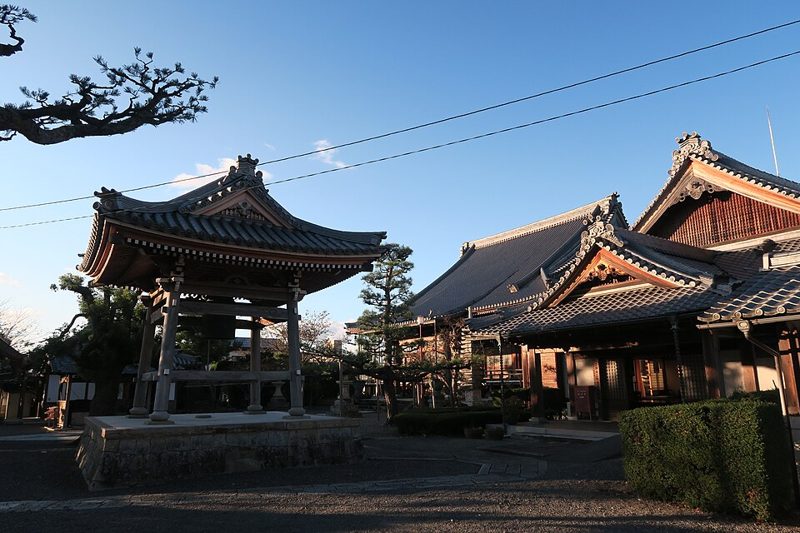
Daitokuji was founded in 1315 by the Zen master Shuho Myocho, according to the official Rinzai Buddhist organization, and later became closely associated with Ikkyu, Sen no Rikyu, Oda Nobunaga and Toyotomi Hideyoshi. Its buildings suffered extensive destruction during the Onin War, but the monastery recovered and attracted patronage from powerful military families. Today, its compound contains two affiliated temples and twenty subtemples, preserving an extensive collection of Zen architecture, gardens and religious art.
Kyochika's take
Kyochika recommends Daitokuji to travelers interested in Zen Buddhism, tea ceremony history, historic gardens and the relationships between Buddhist institutions and Japan's military rulers. Rather than treating the entire complex as a single museum, choose the subtemples that are actually admitting visitors and explore their different historical connections.
Autumn 2026 offers an opportunity to visit Kohrin-in, Oubai-in and Soken-in during their published special-opening periods. Bring cash, verify the day's opening arrangements and allow time to appreciate the architecture as well as the gardens.
Hours, admission and access
- Hours
- No universal admission hours apply to the entire Daitokuji compound. Verified autumn 2026 special openings: Kohrin-in, 10:00 am to 4:30 pm, last entry, with reception closing at 4:00 pm from December 1; Oubai-in, 10:00 am to 3:45 pm, last entry; Soken-in, 10:00 am to 4:00 pm, reception closing.
- Closed
- Kohrin-in is normally closed and has special openings from September 5 to 29 and October 3 to December 15, 2026; September 23 is listed as a closed day. Oubai-in opens from October 9 to December 6, 2026, excluding October 10, 11 and 28. Soken-in opens from October 10 to November 30, 2026, excluding November 4, 5, 21 and 22. Additional closures for religious activities may occur.
- Admission
- Kohrin-in: adults 800 yen, junior-high and high-school students 400 yen, elementary-school students 300 yen with a guardian. Oubai-in: adults 1,000 yen, junior-high and high-school students 500 yen, elementary-school children and younger free with a guardian. Soken-in: adults 800 yen, junior-high and high-school students 400 yen, elementary-school children and younger free with a guardian. Cash only at these special openings.
- Access
- From Kyoto Station, take the Karasuma Subway Line to Kitaoji Station, then use city bus route 1, M1, Kita 8, 204, 205 or 206 from Kitaoji Bus Terminal to Daitokuji-mae. Kohrin-in and Oubai-in are approximately five minutes on foot from that stop, according to their published access guides. Japan Guide also describes Daitokuji as approximately a 15-minute walk from Kitaoji Station.
- Nearest station
- Kitaoji Station
Checked against official information on 2026-10-28. Details change, so check the official website before you go.
Sources: Rinzai Buddhist Organization, Daitokuji, Japan Guide, Daitokuji, Kohrin-in Official History, Kohrin-in Official Highlights, Kohrin-in Official Visiting Information, Oubai-in Official History, Oubai-in Official Visiting Information, Soken-in Official Special Opening
 Pochikichi's story corner
How did a Zen monastery become connected with Japan's most powerful warlords?
Daitokuji is the head temple of the Daitokuji school of Rinzai Zen. The official Rinzai Buddhist organization's account dates its foundation to 1315 and identifies Shuho Myocho, honored as Daito Kokushi, as its founder. The monastery emerged as part of medieval Kyoto's developing Zen Buddhist culture. Its religious identity remains central to the institution, even though the compound is also known for its exceptional buildings, gardens and connections with important historical figures.
The Onin War devastated the temple, as it did many parts of Kyoto. Its subsequent revival is associated with the Zen monk Ikkyu. The rebuilding restored Daitokuji's position as an important religious center and provided the foundation for the later development of its subsidiary temples. These smaller establishments became associated with influential military families, whose patronage helped expand the complex.
Daitokuji's history became particularly closely intertwined with military power during the age of Oda Nobunaga and Toyotomi Hideyoshi. Following Nobunaga's death, Hideyoshi conducted funeral observances at Daitokuji and established Soken-in to commemorate him. Hideyoshi also donated temple land. The official Rinzai Buddhist account identifies this patronage as an important factor behind the subsequent establishment of subtemples by military leaders. Sen no Rikyu, one of the most important figures in Japanese tea culture, also became associated with Daitokuji through his contribution to the upper story of the Sanmon gate.
The principal buildings follow a traditional Zen monastic arrangement, with the Chokushimon, Sanmon, Butsuden, Hatto and Hojo forming a ceremonial sequence. The Hojo is designated a National Treasure, while several other buildings are Important Cultural Properties. The Hojo garden is a designated Special Place of Scenic Beauty and Historic Site, and the temple preserves works attributed to Kano Tanyu and other important artists. Not all these spaces are normally accessible to visitors. So when you visit, look for the relationship between the monumental central monastery and the smaller subtemples, whose architecture and gardens reflect the religious and political networks that shaped Daitokuji.
Sources: Rinzai Buddhist Organization, Daitokuji, Japan Guide, Daitokuji
Long ago, around hereHow did this part of northern Kyoto become a Zen monastery?
Daitokuji's documented foundation dates to 1315 in the official Rinzai Buddhist account. The monastery therefore belongs to Kyoto's medieval religious history rather than the earliest phase of the city's development. The available sources establish its foundation by Shuho Myocho and its subsequent destruction during the Onin War, but they do not identify a specific earlier structure occupying the exact site before the monastery was founded.
By the early seventeenth century, Daitokuji had developed strong connections with influential military families, particularly following Hideyoshi's patronage and the establishment of subsidiary temples commemorating important figures. Much of its present historical character reflects these relationships. The official Rinzai Buddhist account identifies important surviving buildings from the early Edo period, including the Dharma Hall rebuilt in 1636 and the Buddha Hall rebuilt in 1665. The complex's present architectural character consequently represents several periods of construction and preservation rather than a single founding moment.
Hidden highlights
- Sanmon and Kinmokaku
- Sen no Rikyu contributed the upper story of the Sanmon, called Kinmokaku. The official temple account connects a statue of Rikyu installed there with a famous story about his conflict with Toyotomi Hideyoshi.
- The Dharma Hall Dragon
- The Dharma Hall ceiling contains a dragon painting attributed to Kano Tanyu, created when the artist was 35 according to the official Rinzai Buddhist account. The building is not normally open for unrestricted interior visits.
- Kohrin-in's Front Gate
- The gate is designated an Important Cultural Property and preserves the architectural character of the temple's early history. It is one of the principal features presented in Kohrin-in's official visitor guide.
- Kohrin-in's Hojo Garden
- The dry landscape garden represents the mythical paradise of Horai through white sand and stones. Landscape designer Kinsaku Nakane recreated it using historical documents during restoration of the main hall.
- Kohrin-in's Kankyo-tei
- This compact tearoom includes a four-and-a-half-tatami space and an adjoining preparation area, providing an architectural example of the relationship between Zen temples and tea culture.
- Soken-in's Nobunaga Statue
- The temple preserves a seated wooden statue of Oda Nobunaga commissioned by Hideyoshi. The Important Cultural Property measures approximately 115 centimeters in height and is attributed to the Buddhist sculptor Kosei.
Sources: Rinzai Buddhist Organization, Daitokuji, Kohrin-in Official Highlights, Soken-in Official Special Opening
The tea master whose statue angered a ruler
Sen no Rikyu is remembered as a central figure in the development of Japanese tea culture, but his association with Daitokuji also appears in a famous political story. According to the official Rinzai Buddhist organization, Rikyu added the upper story of the Sanmon gate, known as Kinmokaku, and an image of him was installed there.
The temple's account says the installation angered Toyotomi Hideyoshi and became one of the factors associated with Rikyu's forced suicide. The story is best understood as a traditional historical account rather than a complete explanation of the political circumstances. It nevertheless illustrates the close relationship between cultural authority, religious patronage and military power.
The temple that preserved Nobunaga's memory
Following Oda Nobunaga's death in the Honnoji Incident, Toyotomi Hideyoshi established Soken-in as a memorial temple. According to the temple's official special-opening information, it was founded in 1583, the year of Nobunaga's first death anniversary. The temple preserves a seated wooden image of Nobunaga that Hideyoshi donated, along with memorials to members of Nobunaga's family.
Soken-in's surviving historical features include its front gate and earthen walls, which the official guide dates to its foundation in 1583. The compound also contains three tearooms. The source records that Hideyoshi established a tea gathering space in Soken-in's Hojo during the great Daitokuji tea gathering. These details connect the memory of a military leader with the development of tea culture.
Sources: Soken-in Official Special Opening
How to walk it
- Daitokuji-mae bus stop — Approach the monastery and check which subsidiary temples are admitting visitors. (5 min)
- Sanmon Gate — Examine the monumental gateway associated with Sen no Rikyu and Kinmokaku. (10 min)
- Principal monastery precinct — View the ceremonial arrangement of the central buildings from permitted public areas. (10 min)
- Kohrin-in — During its advertised opening, see the historic gate, main hall and dry landscape garden. (25 min)
- Oubai-in — During its advertised opening, explore the temple's gardens and connections with Nobunaga and Hideyoshi. (30 min)
- Soken-in — During its advertised opening, see the Nobunaga statue, historical memorials and architectural features. (20 min)
All durations are Kyochika estimates, not official tour times. Each subtemple has independent opening arrangements and admission charges. The proposed route assumes the advertised autumn 2026 special openings are operating. Religious activities may cause additional closures, and access to the main monastery buildings is restricted.
Sources: Rinzai Buddhist Organization, Daitokuji, Kohrin-in Visiting Information, Oubai-in Visiting Information, Soken-in Special Opening
Through the seasons
- Spring
- Explore the monastery precinct and check individual subtemple schedules before traveling.
- Summer
- Focus on the monastery's architecture and the subtemples that confirm public access.
- September 2026
- Kohrin-in has advertised a special opening from September 5 to 29, excluding September 23.
- October 2026
- Kohrin-in opens again from October 3, Oubai-in from October 9 and Soken-in from October 10, subject to their announced closures.
- November 2026
- The published autumn special openings continue at Kohrin-in, Oubai-in and Soken-in, subject to the individual restrictions and exceptions.
- December 2026
- Oubai-in's advertised opening continues through December 6 and Kohrin-in's through December 15. Kohrin-in changes its reception closing time from December 1.
Getting there by taxi or bus
- Taxi
- Ask for Daitokuji in Murasakino, Kita Ward. If your destination is a specific subtemple, give its name because different entrances serve different buildings.
- Bus
- From Kitaoji Bus Terminal, take Kyoto City Bus route 1, M1, Kita 8, 204, 205 or 206 to Daitokuji-mae (大徳寺前). From Kyoto Station, routes 205 and 206 also serve Daitokuji-mae (大徳寺前).
- Other
- Take the Karasuma Subway Line from Kyoto Station to Kitaoji Station, then continue by bus. Japan Guide also describes Daitokuji as approximately a 15-minute walk from Kitaoji Station.
Sources: Kohrin-in Official Access, Oubai-in Official Access, Japan Guide, Daitokuji Access
Pair it with
- Kohrin-in — See the Important Cultural Property gate and main hall, and the restored Horai-inspired dry landscape garden during special openings.
- Oubai-in — Explore a subtemple associated with Oda Nobunaga, Toyotomi Hideyoshi and other powerful military families.
- Soken-in — Encounter the historical commemoration of Oda Nobunaga and the temple's connections with Toyotomi Hideyoshi.
Good to know before you go
- Daitokuji is a functioning Rinzai Zen monastery with independently managed subtemples.
- There is no single admission ticket or universal visiting schedule covering all its buildings and subtemples.
- The main monastery buildings are not normally accessible for unrestricted interior visits.
- Kohrin-in is normally closed to the public and opens during designated special periods.
- Kohrin-in's autumn 2026 visiting hours are 10:00 am to 4:30 pm, last entry, with reception closing at 4:00 pm from December 1.
- Kohrin-in charges 800 yen for adults, 400 yen for junior-high and high-school students, and 300 yen for elementary-school students accompanied by a guardian.
- Oubai-in's autumn 2026 visiting hours are 10:00 am to 3:45 pm, last entry.
- Oubai-in charges 1,000 yen for adults and 500 yen for junior-high and high-school students; elementary-school children and younger enter free with a guardian.
- Soken-in's autumn 2026 visiting hours are 10:00 am to 4:00 pm, reception closing.
- Soken-in charges 800 yen for adults and 400 yen for junior-high and high-school students; elementary-school children and younger enter free with a guardian.
- All three published 2026 special openings specify cash-only admission.
- Kohrin-in and Oubai-in do not require advance reservations for individual visitors during their advertised special openings.
- Soken-in requires advance reservations for groups of ten or more.
- Soken-in prohibits photography inside its main hall.
- Soken-in asks visitors to carry their belongings in front of their bodies to protect cultural properties.
- Soken-in states that wheelchair access is unavailable because of the historical building structure.
- Additional closures may occur for religious services.
- Soken-in's official guidance also warns of possible closures during severe weather or other conditions affecting visitor safety and cultural property protection.
- Check the individual temple's official announcements before visiting rather than assuming all subtemples are open.
Next stop: book for later today PR
Tickets and experiences in Kyoto you can book on Klook. Filter by “Today” to see what is still open.
Kimono rental in Kyoto→Tea ceremony experiences in Kyoto→Kyoto one-day sightseeing tours→All things to do in Kyoto on Klook →Compare on GetYourGuide: Kimono rental in Kyoto · Tea ceremony experiences in Kyoto · Kyoto one-day sightseeing tours
Ad: Klook and GetYourGuide affiliate links.
Tips from visitors
Been here? Leave a short tip for the next traveler — in any language. No name, no sign-up.
Thank you! We check every tip by hand and post it within a day or two.
How we post tips: we read every one before it goes up. We remove swear words, insults, ads, links and anything that could identify a person. Tips are shown in the language they were written in, with a translate link. Kyochika never writes or pays for tips, and there are no star ratings.
FAQ
- What is Daitokuji Temple?
- Daitokuji was founded in 1315 by the Zen master Shuho Myocho, according to the official Rinzai Buddhist organization, and later became closely associated with Ikkyu, Sen no Rikyu, Oda Nobunaga and Toyotomi Hideyoshi. Its buildings suffered extensive destruction during the Onin War, but the monastery recovered and attracted patronage from powerful military families. Today, its compound contains two affiliated temples and twenty subtemples, preserving an extensive collection of Zen architecture, gardens and religious art.
- Hours at Daitokuji Temple?
- No universal admission hours apply to the entire Daitokuji compound. Verified autumn 2026 special openings: Kohrin-in, 10:00 am to 4:30 pm, last entry, with reception closing at 4:00 pm from December 1; Oubai-in, 10:00 am to 3:45 pm, last entry; Soken-in, 10:00 am to 4:00 pm, reception closing.
- Closed at Daitokuji Temple?
- Kohrin-in is normally closed and has special openings from September 5 to 29 and October 3 to December 15, 2026; September 23 is listed as a closed day. Oubai-in opens from October 9 to December 6, 2026, excluding October 10, 11 and 28. Soken-in opens from October 10 to November 30, 2026, excluding November 4, 5, 21 and 22. Additional closures for religious activities may occur.
- Admission at Daitokuji Temple?
- Kohrin-in: adults 800 yen, junior-high and high-school students 400 yen, elementary-school students 300 yen with a guardian. Oubai-in: adults 1,000 yen, junior-high and high-school students 500 yen, elementary-school children and younger free with a guardian. Soken-in: adults 800 yen, junior-high and high-school students 400 yen, elementary-school children and younger free with a guardian. Cash only at these special openings.
- Access at Daitokuji Temple?
- From Kyoto Station, take the Karasuma Subway Line to Kitaoji Station, then use city bus route 1, M1, Kita 8, 204, 205 or 206 from Kitaoji Bus Terminal to Daitokuji-mae. Kohrin-in and Oubai-in are approximately five minutes on foot from that stop, according to their published access guides. Japan Guide also describes Daitokuji as approximately a 15-minute walk from Kitaoji Station.
- Is Daitokuji one temple or several temples?
- Daitokuji is the head temple of a Rinzai Zen school. Its official profile identifies two affiliated temples and twenty subtemples within the compound.
- Do I need a reservation to visit?
- Kohrin-in and Oubai-in do not require reservations for ordinary individual visitors during their advertised 2026 special openings. Other temples have different arrangements. Soken-in requires reservations for groups of ten or more.
- Which Daitokuji subtemples have announced autumn 2026 openings?
- Kohrin-in, Oubai-in and Soken-in have published autumn 2026 special-opening schedules, each with its own dates, admission charges and possible additional closures.
- Can I enter the principal buildings of Daitokuji?
- The main monastery buildings are not normally open for unrestricted visits. Visitors should follow posted signs and enter only buildings explicitly open to the public.