Temples in Kyoto · Higashiyama, Kyoto
Chion-in Temple
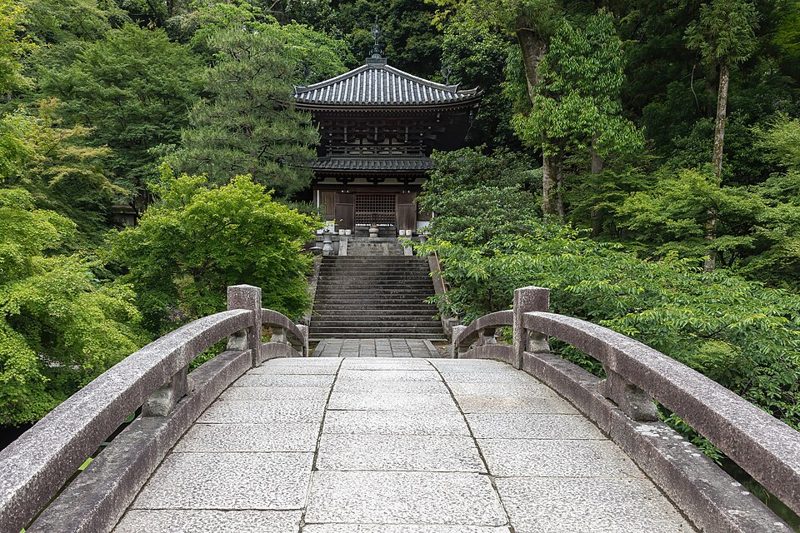
In 1175, the Buddhist teacher Honen established a small grass hermitage in Kyoto's Higashiyama district and began spreading the practice of exclusive nembutsu. That modest beginning eventually developed into Chion-in, the head temple of Jodo Shu, the Pure Land school of Japanese Buddhism. Its monumental Sanmon gate was completed in 1621 under Tokugawa patronage, creating a striking contrast with the humble origins of Honen's teaching.
Kyochika's take
Kyochika recommends Chion-in to travelers interested in the relationship between Buddhist belief, architecture and the political history of Kyoto. Begin at the Sanmon, continue to Mieido and consider adding the Hojo Garden to explore the temple beyond its monumental buildings. Spring and autumn are particularly appealing because the temple's own visitor information identifies cherry blossoms and autumn foliage within its grounds.
Hours, admission and access
- Hours
- The current Japanese official visitor page lists gate opening hours as 6:00 AM–4:00 PM. Reception counters open from 9:00 AM. Yuzen-en Garden: 9:00 AM–4:00 PM. Hojo Garden: 9:00 AM–3:50 PM. Combined garden tickets are sold until 3:20 PM. During conservation work at Seishido, the mausoleum visiting hours are 9:00 AM–4:00 PM. Opening hours differ on certain religious observance days.
- Closed
- No regular closing days. Individual facilities and viewing areas may be affected by ceremonies or conservation work.
- Admission
- Temple grounds: free. Yuzen-en Garden: adults ¥300, elementary and junior-high-school students ¥150. Hojo Garden: adults ¥400, elementary and junior-high-school students ¥200. Combined garden ticket: adults ¥500, children ¥250. Adult prices apply to high-school students and older. Visitors with a disability certificate may enter the gardens free of charge; accompanying persons must pay.
- Access
- From Kyoto Station, take the subway Karasuma Line to Karasuma Oike, transfer to the Tozai Line and get off at Higashiyama Station; the temple is approximately 8 minutes on foot. Alternatively, Kyoto City Bus 206 from Kyoto Station to Chion-in-mae, followed by approximately 5 minutes on foot.
- Nearest station
- Higashiyama Station (Kyoto Municipal Subway Tozai Line)
Checked against official information on 2026-10-28. Details change, so check the official website before you go.
Sources: Chion-in Official Visitor Guide, Chion-in English Visitor Guide, Chion-in Official Historical Timeline, Chion-in Official Japanese History, Chion-in Official Buildings, Chion-in Official Seven Wonders, Chion-in Official FAQ, Chion-in Official Access, JNTO — Chionin Temple
 Pochikichi's story corner
How did Honen's humble hermitage become a great Tokugawa temple?
Chion-in's history begins with Honen, the founder of Jodo Shu. In 1175, he established a grass hermitage in the Yoshimizu area of Higashiyama and began spreading the practice known as exclusive nembutsu. This teaching placed recitation of Amida Buddha's name at the center of religious practice. Rather than depending upon the monumental buildings that would later define Chion-in, the movement began with a religious teacher and his followers.
Honen faced opposition from established Buddhist institutions. In 1207, he was exiled to Sanuki on the island of Shikoku. He returned to Kyoto in 1211 and entered a hermitage on Mount Otani, at the location associated with the present Seishido. He died in 1212, and his disciples established a mausoleum at Otani. In 1227, monks from Mount Hiei destroyed the mausoleum. Honen's disciple Genchi subsequently constructed temple buildings in 1234 and formally recognized Honen as the temple's founder. The memorial site thus became the foundation of a lasting religious institution.
Chion-in's transformation into a major architectural complex accelerated under Tokugawa patronage. In 1603, Tokugawa Ieyasu designated the temple as an enduring memorial institution for his family and granted it an estate. In 1604, he allocated land previously belonging to Shoren-in for temple construction. Work on the Sanmon and sutra repository began in 1619 and was completed two years later. The new structures gave the temple a monumental presence that reflected both religious importance and shogunal support.
The complex suffered a major fire in 1633. According to the temple's official historical timeline, the Sanmon and sutra repository survived while other principal buildings were destroyed. The Japanese and English versions of the official timeline give different completion years for the subsequent reconstruction, so the precise completion year is omitted here. Chion-in remained an important institution through the Meiji era, when it served as an exhibition venue visited by Emperor Meiji in 1872. So when you visit, look for the contrast between the monumental Sanmon, the main worship hall and the older memorial landscape associated with Honen.
Sources: Chion-in Official Historical Timeline, Chion-in Official Japanese History
Long ago, around hereWhat existed here before the monumental temple?
The consulted official sources do not establish exactly what occupied the present temple grounds approximately 1,200 years ago. The earliest directly documented stage relevant to Chion-in begins in 1175, when Honen established his hermitage in Higashiyama. Following his death in 1212, the Otani area became associated with his mausoleum and the preservation of his teachings. The destruction of that mausoleum in 1227 and the construction of temple buildings by Genchi in 1234 demonstrate how the site changed from a memorial landscape into a more established religious complex.
Around four centuries ago, Chion-in was undergoing major expansion under the Tokugawa shogunate. The Sanmon and sutra repository were completed in 1621, and the complex was rebuilt following the fire of 1633. In the nineteenth century, the temple continued to adapt to changing circumstances. Its official timeline records an exhibition held there in 1872, attended by Emperor Meiji, followed by the establishment of a religious educational institution within the temple in 1875. The present complex therefore reflects religious, architectural and institutional changes across different historical periods.
Sources: Chion-in Official Historical Timeline, Chion-in Official Japanese History
Hidden highlights
- The Forgotten Umbrella
- Look beneath the front eaves of Mieido for the remains of an umbrella. Temple legends connect it with protection against fire, including a story involving a white fox.
- The Nightingale Corridor
- The corridor connecting Mieido with other temple buildings is associated with a birdlike sound produced when someone walks on it. Traditionally, this feature was said to help detect intruders. Parts of the corridor may be inaccessible.
- The White Wooden Coffins
- The upper level of the Sanmon contains coffins associated with the traditional story of Gomi Kinemon and his wife. The upper level is normally closed to visitors.
- The Missing Sparrows
- A traditional story tells of sparrows painted by Kano Nobumasa that appeared so lifelike they flew away, leaving only traces in the picture. The tale belongs to Chion-in's Seven Wonders.
- The Cat Painting
- Another Seven Wonders story concerns a painted cat that appears to face the viewer from different directions. The temple interprets the image as an expression of parental affection and Buddhist compassion.
- The Great Ladle
- A large ladle traditionally associated with the temple's Seven Wonders measures 2.5 meters in length and weighs approximately 30 kilograms. Its association with serving or scooping food is linked symbolically to Amida Buddha's compassion.
Sources: Chion-in Official Seven Wonders
Why would a fox leave an umbrella at a Buddhist temple?
Chion-in's Forgotten Umbrella is explained through more than one traditional story. One account attributes it to the craftsman Hidari Jingoro, who supposedly placed it beneath the eaves to ward off evil. Another story concerns a white fox whose dwelling was disturbed during the construction of Mieido under the temple's thirty-second head priest, Yuyo Reigan. The fox is said to have requested a new home and, in gratitude, left the umbrella as a promise to protect the temple.
The temple connects the umbrella with protection from fire because umbrellas are associated with rain and water. This is religious folklore rather than a verified explanation of the object's origin. It remains a memorable example of how traditional stories give symbolic meaning to architectural details.
Sources: Chion-in Official Seven Wonders
The tragic legend associated with the Sanmon
According to one of Chion-in's traditional Seven Wonders stories, Gomi Kinemon was responsible for overseeing construction of the Sanmon. Determined to complete an extraordinary building, he and his wife were said to have devoted themselves completely to the project. The story claims that the construction exceeded its budget and that the couple took their own lives to accept responsibility.
Two plain wooden coffins and wooden figures associated with the couple are kept in the upper level of the gate. The story should be understood as a temple tradition rather than an independently established historical account. Since the Sanmon interior is ordinarily closed, visitors should not assume the coffins can be seen during a regular visit.
Sources: Chion-in Official Seven Wonders, Chion-in Official FAQ
How to walk it
- Sanmon Gate — Begin at the monumental gate and examine its timber construction and roof before moving into the temple complex. (10 min)
- Mieido — Continue to the main worship hall associated with Honen. Follow the instructions for entering and observing religious etiquette. (15 min)
- Hojo Garden — Enter using the official route through Mieido and the connecting corridor. Study the garden's composition and its relationship to the surrounding buildings. (20 min)
- Yuzen-en Garden — Consider adding the separate garden near the Sanmon, using either its individual ticket or the combined garden ticket. (15 min)
- Return to the Sanmon — Finish by viewing the entrance architecture from another position and checking any accessible outdoor features of the Seven Wonders. (10 min)
Times are Kyochika estimates rather than official walking durations. The temple's FAQ suggests approximately 40 minutes for an ordinary visit and about one hour for a more leisurely visit. The temple operates a free shuttle between the Sanmon and Mieido from 9:00 AM to 4:00 PM, excluding 1:00 PM–2:00 PM. Access to some historic areas is restricted during conservation work.
Sources: Chion-in Official Visitor Guide, Chion-in Official FAQ
Through the seasons
- Spring
- Cherry blossoms can be seen near the Sanmon, Mieido and within the gardens. The temple also holds seasonal illumination events.
- Summer
- Kyochika suggests using the earlier gate-opening period for an outdoor exploration before continuing with the ticketed gardens after reception opens.
- Autumn
- Look for autumn foliage within the gardens and along the approach toward Seishido. The temple's FAQ also confirms that autumn illuminations are held during designated periods.
- Winter
- The temple holds a well-known New Year's Eve bell ceremony. According to its official FAQ, visitors cannot ring the bell themselves.
Getting there by taxi or bus
- Taxi
- The temple's official English access guide lists approximately 15 minutes by taxi from Kyoto Station.
- Bus
- Kyoto City Bus 206 from Kyoto Station to Chion-in-mae (知恩院前), approximately 23 minutes by bus, followed by a 5-minute walk.
- Other
- From Kyoto Station, take the Karasuma subway line to Karasuma Oike and transfer to the Tozai Line for Higashiyama Station. The temple is approximately 8 minutes on foot from the station.
Sources: Chion-in Official Access Guide
Pair it with
- Shoren-in Temple — A possible extension for travelers interested in the historical relationship between religious institutions in Higashiyama.
- Maruyama Park — A possible combination with a visit to Chion-in, particularly for a walk focused on seasonal scenery.
Good to know before you go
- The temple's official English-language website provides historical and visitor information.
- The main temple grounds are free to visit, while Yuzen-en and Hojo Garden require tickets.
- Combined garden tickets are sold until 3:20 PM.
- The temple's Japanese visitor guide currently gives gate hours of 6:00 AM–4:00 PM, whereas its English visitor guide and Japanese FAQ give different visiting-hour information.
- Photography, video recording and audio recording are prohibited inside temple halls.
- Tripods, monopods and drones are prohibited.
- Commercial photography requires advance permission.
- Smoking and the use of open flames are prohibited.
- Pets are not permitted except assistance dogs.
- The Sanmon interior is ordinarily closed, although special openings may be arranged.
- The temple provides wheelchair access and lends wheelchairs upon request.
- The official FAQ advises using public transportation because parking is limited.
- Some Seven Wonders objects are not publicly accessible during conservation work.
- The official sources opened do not confirm available cashless payment methods or a general luggage-storage service.
Next stop: book for later today PR
Tickets and experiences in Kyoto you can book on Klook. Filter by “Today” to see what is still open.
Kimono rental in Kyoto→Tea ceremony experiences in Kyoto→Kyoto one-day sightseeing tours→All things to do in Kyoto on Klook →Compare on GetYourGuide: Kimono rental in Kyoto · Tea ceremony experiences in Kyoto · Kyoto one-day sightseeing tours
Ad: Klook and GetYourGuide affiliate links.
Tips from visitors
Been here? Leave a short tip for the next traveler — in any language. No name, no sign-up.
Thank you! We check every tip by hand and post it within a day or two.
How we post tips: we read every one before it goes up. We remove swear words, insults, ads, links and anything that could identify a person. Tips are shown in the language they were written in, with a translate link. Kyochika never writes or pays for tips, and there are no star ratings.
FAQ
- What is Chion-in Temple?
- In 1175, the Buddhist teacher Honen established a small grass hermitage in Kyoto's Higashiyama district and began spreading the practice of exclusive nembutsu. That modest beginning eventually developed into Chion-in, the head temple of Jodo Shu, the Pure Land school of Japanese Buddhism. Its monumental Sanmon gate was completed in 1621 under Tokugawa patronage, creating a striking contrast with the humble origins of Honen's teaching.
- Hours at Chion-in Temple?
- The current Japanese official visitor page lists gate opening hours as 6:00 AM–4:00 PM. Reception counters open from 9:00 AM. Yuzen-en Garden: 9:00 AM–4:00 PM. Hojo Garden: 9:00 AM–3:50 PM. Combined garden tickets are sold until 3:20 PM. During conservation work at Seishido, the mausoleum visiting hours are 9:00 AM–4:00 PM. Opening hours differ on certain religious observance days.
- Closed at Chion-in Temple?
- No regular closing days. Individual facilities and viewing areas may be affected by ceremonies or conservation work.
- Admission at Chion-in Temple?
- Temple grounds: free. Yuzen-en Garden: adults ¥300, elementary and junior-high-school students ¥150. Hojo Garden: adults ¥400, elementary and junior-high-school students ¥200. Combined garden ticket: adults ¥500, children ¥250. Adult prices apply to high-school students and older. Visitors with a disability certificate may enter the gardens free of charge; accompanying persons must pay.
- Access at Chion-in Temple?
- From Kyoto Station, take the subway Karasuma Line to Karasuma Oike, transfer to the Tozai Line and get off at Higashiyama Station; the temple is approximately 8 minutes on foot. Alternatively, Kyoto City Bus 206 from Kyoto Station to Chion-in-mae, followed by approximately 5 minutes on foot.
- Is admission to Chion-in free?
- Yes. The temple grounds are free to enter. The Hojo and Yuzen-en gardens charge separate admission fees.
- Can visitors enter the Sanmon?
- The Sanmon interior is ordinarily closed to the public. Special openings may be announced separately.
- How long should I spend at Chion-in?
- The temple's official FAQ suggests around 40 minutes for a standard visit or approximately one hour for a leisurely circuit. Allow additional time if visiting both gardens.
- Can I photograph the temple?
- Photography is permitted in outdoor areas subject to temple restrictions. Photography and recording inside temple halls are prohibited, as are tripods, monopods and drones.