Temples in Kyoto · Fushimi / Uji
Byodo-in Temple
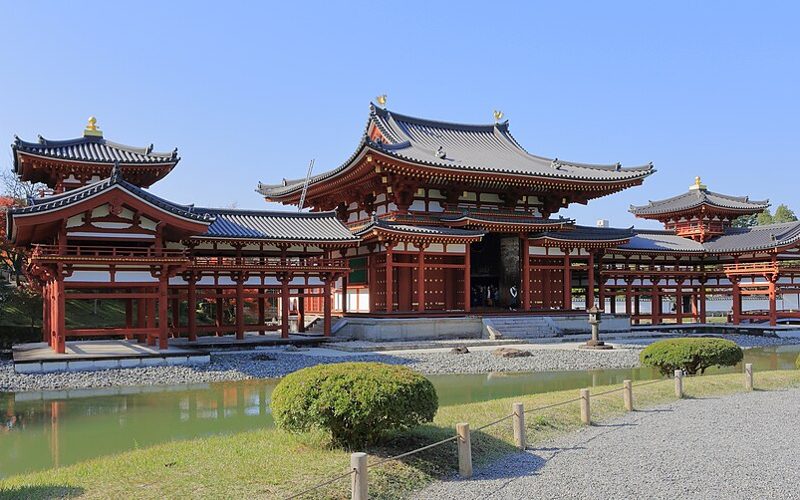
The Phoenix Hall, built in 1053, is a rare survivor of Japan's Heian-period court culture, standing for nearly a thousand years. Rising from an island in a pond, it was designed as an earthly vision of the Buddhist Pure Land paradise. The temple began when Fujiwara no Yorimichi transformed a riverside villa inherited from his father, the powerful statesman Michinaga, into a place of worship.
Kyochika's take
Allow about 1–1.5 hours for the garden and Hoshokan Museum, or around 2 hours if you also hope to enter the Phoenix Hall, including possible waiting time. Check the availability of interior visits as soon as you arrive, then explore the museum while waiting for your allocated time. A walk along the Uji River makes an excellent addition.
Hours, admission and access
- Hours
- Garden: 8:45–17:30 (last admission 17:15). Phoenix Hall interior: 9:30–16:10 (registration from 9:10, first come, first served). Hoshokan Museum: 9:00–17:00 (last admission 16:45).
- Closed
- The garden and Hoshokan Museum are open year-round. Phoenix Hall interior visits may be suspended for religious services or other events.
- Admission
- Combined garden and Hoshokan Museum admission: adults ¥700, junior and senior high school students ¥400, elementary school students ¥300. Phoenix Hall interior visits require an additional ¥300 donation per person.
- Reservations
- Phoenix Hall interior visits are allocated on the day, on a first-come, first-served basis. Tours take place every 20 minutes, with a maximum of 35 visitors per session.
- Access
- The main entrance is near the Uji River, at 116 Uji Renge, Uji.
- Nearest station
- Uji
Checked against official information on 2026-10-28. Details change, so check the official website before you go.
Sources: Byodo-in Official Website: Visitor Information (Japanese), Byodo-in Official Website: Access (Japanese)
 Pochikichi's story corner
Why does the Phoenix Hall seem to float on a pond?
In 1052, Fujiwara no Yorimichi, one of the most powerful aristocrats in Japan, converted a villa inherited from his father Michinaga into Byodo-in Temple. That year was widely believed to mark the beginning of mappo, the age when the Buddha's teachings would decline. Fear about the future spread across society, from the aristocracy to ordinary people, and devotion to Amida Buddha offered hope of rebirth in the Pure Land paradise. Even the extraordinarily wealthy Fujiwara family sought reassurance about what would happen after death.
In 1053, Yorimichi commissioned the Amida Hall, the building now known as the Phoenix Hall. Inside, the master sculptor Jocho created an image of Amida Buddha. Around it, celestial bodhisattvas ride clouds, play musical instruments and dance, while paintings depict Amida descending to welcome the faithful into paradise. The building stands on an island in the Aji Pond, creating the appearance of a heavenly palace across the water. Worshippers could stand on the eastern side of the pond and imagine the Western Pure Land before their eyes.
The name Phoenix Hall became popular around the beginning of the Edo period. It refers both to the building's birdlike silhouette, with wings seemingly spread across the pond, and to the pair of phoenix figures on its roof. Other parts of the temple complex have changed over the centuries, but the hall still communicates the spiritual imagination of Heian-period aristocrats. So resist the temptation to rush toward the building. First, stand on the eastern bank and look at the Phoenix Hall reflected in the water.
Sources: Byodo-in Official Website: History (Japanese), Byodo-in Official Website: Architecture (Japanese), Byodo-in Official Website: The Origins of the Temple (Japanese)
Long ago, around hereWhy was Uji a favorite retreat of Kyoto's aristocracy?
During the Heian period, Uji occupied an important position on the route between Kyoto and Nara. Its river, wooded hills and scenic landscape made it an attractive place for aristocratic villas. Noble families came here to escape the political intensity of the capital and enjoy life surrounded by nature. Byodo-in itself began as one such retreat: a residence belonging to Fujiwara no Michinaga, later inherited by his son Yorimichi. For the aristocracy, a country villa offered a distinctive setting for leisure, poetry and cultivated living.
In 1052, Yorimichi turned the villa into a Buddhist temple. The surrounding landscape was no longer simply somewhere to relax; it became the setting for a vision of paradise. The Aji Pond, the mountains beyond and the Amida Hall were composed as a single spiritual scene. This is what makes Byodo-in remarkable: its message is conveyed not only through architecture but also through the natural geography of Uji. So when you admire the Phoenix Hall, look beyond the building to the relationship between the pond and the hills behind it.
Sources: Byodo-in Official Website: The Origins of the Temple (Japanese), Byodo-in Official Website: Architecture (Japanese)
Details worth looking for
- Cloud-Borne Bodhisattvas
- These celestial figures float on clouds, dance and play musical instruments. They are rare surviving examples of 11th-century Buddhist sculpture, and some can be viewed in the Hoshokan Museum.
- The Phoenix Hall's Orientation
- The hall faces east, with the Buddhist paradise represented across the pond to the west. Even the direction of the architecture carries religious meaning.
- Kannon-do Hall
- An Important Cultural Property rebuilt in the early Kamakura period on the site of the original main hall. Its architecture reflects earlier Japanese styles. It is currently closed for restoration.
- Yorin-an Shoin
- An early Edo-period building at the Jodo-in subtemple, with paintings associated with the Kano Sanraku and Sansetsu school and a garden traditionally attributed to Hosokawa Sansai. It is normally closed to visitors.
Sources: Byodo-in Official Website: Architecture (Japanese), Byodo-in Official Website: History (Japanese)
Through the seasons
- Spring
- Wisteria in the grounds usually reaches its peak from mid-April to early May.
- Summer
- The Phoenix Hall and its reflection can be admired across the garden pond.
- Autumn
- The garden trees change color, while the garden and Hoshokan Museum remain open as usual.
- Winter
- The garden and Hoshokan Museum remain open throughout the year.
Good to know before you go
- Phoenix Hall interior tours are first come, first served. Registration may close before the final scheduled session if all places are taken.
- Entry to the Phoenix Hall requires an additional ¥300 donation beyond the general garden admission fee.
- There is no garden-only ticket; garden admission includes the Hoshokan Museum.
- The temple does not provide a dedicated parking lot. Visitors should use nearby privately operated parking facilities.
FAQ
- What is Byodo-in Temple?
- The Phoenix Hall, built in 1053, is a rare survivor of Japan's Heian-period court culture, standing for nearly a thousand years. Rising from an island in a pond, it was designed as an earthly vision of the Buddhist Pure Land paradise. The temple began when Fujiwara no Yorimichi transformed a riverside villa inherited from his father, the powerful statesman Michinaga, into a place of worship.
- Hours at Byodo-in Temple?
- Garden: 8:45–17:30 (last admission 17:15). Phoenix Hall interior: 9:30–16:10 (registration from 9:10, first come, first served). Hoshokan Museum: 9:00–17:00 (last admission 16:45).
- Closed at Byodo-in Temple?
- The garden and Hoshokan Museum are open year-round. Phoenix Hall interior visits may be suspended for religious services or other events.
- Admission at Byodo-in Temple?
- Combined garden and Hoshokan Museum admission: adults ¥700, junior and senior high school students ¥400, elementary school students ¥300. Phoenix Hall interior visits require an additional ¥300 donation per person.
- Reservations at Byodo-in Temple?
- Phoenix Hall interior visits are allocated on the day, on a first-come, first-served basis. Tours take place every 20 minutes, with a maximum of 35 visitors per session.
- Access at Byodo-in Temple?
- The main entrance is near the Uji River, at 116 Uji Renge, Uji.