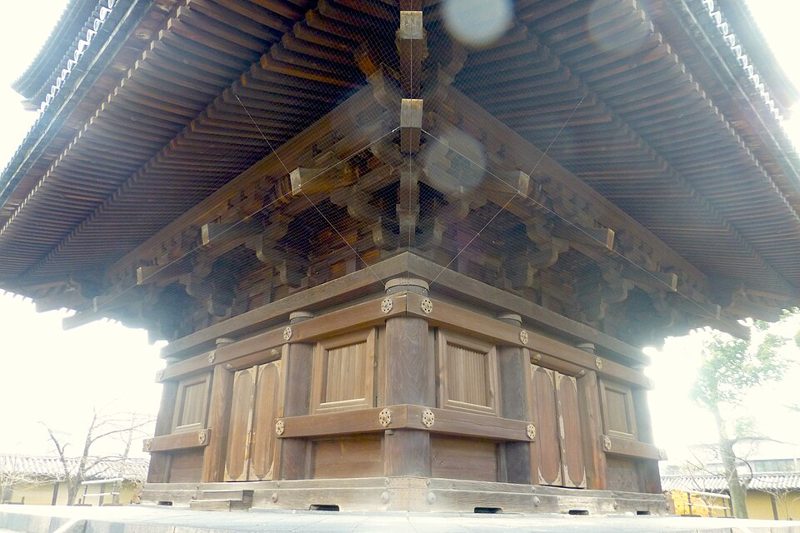
Festival & seasonal event in Kyoto
Shimai Kobo — Year's Final Kobo Market at Toji
The final Kobo Market of the year, originating from the monthly memorial day of Buddhist monk Kukai. Stalls throughout the temple grounds sell antiques, vintage clothing, household goods, plants, and lucky decorations for the New Year.
- Dates
- Dec 21 (Mon)
- Hours
- 08:00 – 15:00
- Venue
- Toji Temple
- Nearest station
- Toji
- Admission
- Check the official website for prices
About this event
A market rooted in devotion to Kobo Daishi, the Buddhist monk Kukai, becomes one of Kyoto's defining year-end traditions. The Kobo Market takes place on the 21st of each month, commemorating the monk's monthly memorial day. Its final edition of the year is known as Shimai Kobo. Stalls sell antiques, vintage clothing, household goods, food, plants and lucky items for the coming new year. The market developed alongside religious observances at the temple's Mieido Hall, where worshippers gathered to honor Kukai. Today, shopping and prayer remain intertwined, offering a glimpse of how religious traditions became part of daily life in Kyoto.
Highlights
- A monthly market linked to Kukai's memorial day
- Stalls selling antiques, vintage clothing, plants and food
- Year-end shopping for traditional lucky items
- A market tradition connected with ceremonies at Mieido Hall
- Good for
- Travelers interested in Kyoto's traditional year-end customs, antiques and vintage objects.
Good to know before you go
- Admission conditions for individual temple buildings may differ from those for the outdoor market.
 Pochikichi's story corner
Why does a market take place at Toji on the 21st of every month?
The Kobo Market is closely associated with Kobo Daishi, also known as Kukai, one of the most influential figures in Japanese Buddhism. The 21st is his monthly memorial day, and a religious ceremony called Mieku is held at the temple's Mieido Hall. Market stalls developed to serve the worshippers visiting the temple.
Toji itself is deeply connected with the founding of Heian-kyo, the ancient capital. In 823, Emperor Saga entrusted the temple to Kukai, who had studied esoteric Buddhism in China. Kukai developed Toji into a major center of Shingon Buddhist teaching.
Over time, the market associated with this religious center also became part of ordinary people's lives. Visitors came not only to pray but to buy food, household goods, antiques and other everyday necessities.
Shimai Kobo, the last market of the year, reveals how closely temple worship and the rhythms of city life have remained connected. So when browsing the stalls, look beyond the market toward Mieido Hall and the religious history behind it.
Sources: Toji Official Website: History and Heritage (Japanese), Kyoto City Official Tourism Guide: Shimai Kobo (Japanese)
Long ago, around hereWhat was Toji's role in the ancient capital?
Toji was founded in connection with the construction of Heian-kyo, Japan's ancient capital. It was developed as part of the city's religious and political landscape, alongside institutions such as Saiji Temple and the Daigokuden ceremonial hall.
In 823, Emperor Saga entrusted Toji to Kukai, who had returned from China after studying esoteric Buddhism. Kukai established the temple as a principal center for Shingon Buddhist practice and teaching.
Its influence eventually extended beyond religion. Worshippers gathered on Kukai's memorial day, and stalls selling food and everyday goods became a regular feature. So when walking through Toji, look for the two histories that coexist here: an ancient state-supported temple and a market deeply connected with ordinary people.
Sources: Toji Official Website: History and Heritage (Japanese), Kyoto City Official Tourism Guide: Shimai Kobo (Japanese)
FAQ
- What is Shimai Kobo — Year's Final Kobo Market at Toji?
- A market rooted in devotion to Kobo Daishi, the Buddhist monk Kukai, becomes one of Kyoto's defining year-end traditions. The Kobo Market takes place on the 21st of each month, commemorating the monk's monthly memorial day. Its final edition of the year is known as Shimai Kobo. Stalls sell antiques, vintage clothing, household goods, food, plants and lucky items for the coming new year. The market developed alongside religious observances at the temple's Mieido Hall, where worshippers gathered to honor Kukai. Today, shopping and prayer remain intertwined, offering a glimpse of how religious traditions became part of daily life in Kyoto.
- When is Shimai Kobo — Year's Final Kobo Market at Toji?
- On Dec 21 (Mon), 2026.
- What are the opening hours?
- 08:00 – 15:00
- How much does it cost?
- Check the official website for prices
- Where is it and what is the nearest station?
- Toji Temple. The nearest station is Toji.